BE OPEN Academy Poll. The Best Logo Tutorial by How to Architect

Bad Logos Made Good! Logo Design Process by Will Paterson shows the viewers how to train critical analysis of logo designs and find creative ways to make it look perfect. The course wins in our first online March poll about The Best Logo Tutorial by How to Architect.

The other entries in the pole were:

  • Abstract Logo Tutorial | Adobe Illustrator CC by Will Paterson. In this video Will Patterson dwells on abstract iconography logo design.
  • 5 MIND BLOWING Logo Design Tips by Will Paterson. Will Paterson introduces 5 essential skills every logo designer can find useful in their work.
  • How To Mood Board For a Logo Design by Will Paterson. Have you ever wondered how a logo design is created? It all starts with a mood board. Find out how Will Paterson’s inspirational mood board looks like.
  • How To VECTORISE Your Logo Lettering by Will Paterson, Graphic Designer. In this video a logo designer Will Paterson shows how he vectorises his hand lettering and pick out the best design.

BE OPEN Academy Poll. Best School with Environmental Architecture Degree in the US

University of California – Berkeley – has won in our second offline March poll about the Best School with Environmental Architecture Degree in the US. It gained more points than other highly-regarded universities that offer degrees in that discipline:

  • Cornell University in Ithaca, NY
  • Carnegie Mellon University in Pittsburgh, PA
  • University of Minnesota – Twin Cities in Minneapolis, MN
  • University of Washington in Seattle, WA
  • North Carolina State University in Raleigh, NC
  • University of California in Irvine, CA
BE OPEN: Fashion Education: Fight for Inclusivity and Diversion

BE OPEN: Fashion Education: Fight for Inclusivity and Diversion

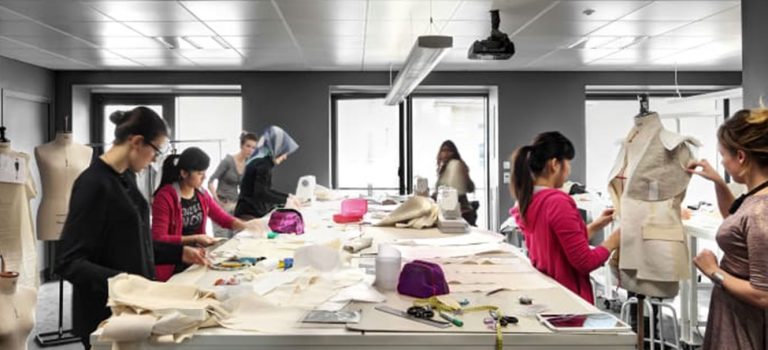
For many years, fashion, perhaps more than any other creative sphere, has been biased with narrow ideas of who should be included in the industry. Even today, the industry has a lot of work to do when it comes to inclusivity and diversity — race, gender, body size, or disability. And although this seems to be the-chicken-and-the-egg situation, there are many reasons to believe that to break the obsolete societal norms within the industry, we need to start not from the runways or editorial spreads, but from the fashion education as the true birthplace of the thinking and practices of the next generation, which shapes the future of the industry.

Dr. Ben Barry, former Chair and Associate Professor of Equity, Diversity, and Inclusion at the Ryerson School of Fashion, in Toronto and new Dean of Fashion at Parsons School of Design in New York City, has rightfully noted that typically, when talking about inclusion in fashion, we talk about welcoming or inviting groups who have been excluded, in. However, he goes on, this has to be changed, for in many ways, this approach assumes that they are invited into a place that operates on values and principles and practices that are not theirs.

According to Barry, in fashion education “we try to teach one way of thinking about and practicing fashion rather than valuing the diverse ways of knowing fashion and practicing fashion,” and this needs to be reformed.  From the USA and Canada, where Barry comes from, to the UK and EU, programming has largely remained unchanged, offering the same fundamental courses including pattern making and creation, construction, business management, and styling. Not only much of what is taught centres on European fashion, tailoring and designs, only rarely and marginally touching on other forms of dress; the same can be said of the business side of fashion, including supply chain management, labour practices and commerce. The debates about the white and Western-cehtric canon has been ongoing in many creative disciplines, but in fashion schools students also have to deal with a culture that praises specific types of bodies.

Not often students are taught about the different range and types of individuals, including plus-size bodies and disabled bodies; generally the marginalized groups remain excluded from the fashion education system. For instance, in 2016, Nayyara Chue, a fashion design student at Parsons School of Design in New York City, petitioned to the school that she would be unable to finish her collection, as they didn’t have plus-size mannequins. Izzy Camilleri, the owner and designer behind IZ Adaptive, confesses that having been taught to design clothes in a traditional way she found herself unprepared to the numerous limitations disabled people face around clothing. She explains that making adaptive clothing is so much more than just designing, pattern making, and drafting, for on top of that, it has to do with learning to understand the issues that people with physical disabilities face.

Students of colour are similarly alienated by fashion institutions. Last year, many prestigious and influential design schools and universities were facing accusations of racism, despite pledging support of Black Lives Matter on social media.

According to data from Hesa, the UK’s higher education statistics authority, and the National Center for Education Statistics in the US, despite diversity, equality and inclusion policies, student and staff recruitment in UK and US higher education largely remains white. While research has proved that same race teachers positively affect student attainment levels and academic progress, only 6% of full-time faculty in US universities were Black in autumn 2018, compared to 73% of white staff. In the UK, the proportion was 2%.  “We perform race equality; we have wonderful policies, great legislations, but nothing changes because fundamentally the structures remain unchanged,” says Heidi Safia Mirza, professor of race, faith and culture at Goldsmiths, University of London and author of Dismantling Race in Higher Education.

Apart from the lack of diversity in terms of race and ethnicity, students and alumni accuse fashion schools of nepotism and classism, which goes hand in hand with discrimination. They claim that wealthy, predominantly white, students with connections have an apparent advantage over those from lower-income communities, many of whom are people of color. According to Angela Bacskocky, a Textile and Apparel Merchandising and Management professor and program coordinator at Virginia State University, Black graduates are often overlooked if they don’t have the right contacts in the industry, which proves how essential in internships focused on inclusion for minorities are. “These students don’t want a hand out, they want to be given the chance to learn and to be trained and succeed,” she says.

This is echoed by Kimberly Jenkins, assistant professor of fashion studies at Ryerson University, a noted fashion scholar and creator of a groundbreaking class called ‘Fashion and Race’ that ran in 2016-2019 at Parsons: “There are countless Black millennials and Gen Z creatives trying to study fashion, but academic deans and professors are making the experience difficult — dismissing their designs, blocking them out of internships that could transform their lives, denying them mentorships, empathy and support. So there’s this whole generation of black students, graduating by the skin of their teeth or dropping out altogether. It’s a small pool of Black survivors from the fashion education system who may not have the same resources or Rolodex as their white peers.”

Fashion institutions globally are aware of these issues. Though it is impossible to change the whole system in an instant, plenty of schools are slowly starting to implement the fundamentals of diversity and inclusion into their curriculum.

Aiming to decolonize its programming, Parsons has widened its curriculum by including African garment construction and pattern-making strategies in its BFA fashion design course. The school’s fashion students are also taught about taking responsibility for the system in which their collections are being produced, including labour practices, consumption and after life. The appointment of Barry, who helped transform everything from curriculum to hiring practices to prioritize inclusion, decolonization and sustainability at Ryerson University, as Dean of Fashion also proves the school’s intention to shape and introduce new fashion norms.

The University of Arts, London, revalidates its courses every four years to revisit the curriculum under the lense of topics including decolonisation, emerging industry themes and new technologies. In autumn 2020, the institution launched the Decolonising Arts Institute seeking to “challenge colonial and imperial legacies and drive social, cultural and institutional change” through interdisciplinary collaborations, research-based projects and seminars.

At New York’s Fashion Institute of Technology (FIT), the Office of Diversity, Equity and Inclusion organises a Diversity Ambassador training programme for their faculty, which includes four mandatory sessions. Diversity Ambassadors are then tasked to encourage and support diversity initiatives throughout the campus.

The fashion industry landscape has been undergoing a drastic shift and fashion education, being vital to implementing real change, should follow suit. Ensuring diverse voices are in positions of power will enable to move towards fashion education that does not exclusively center whiteness or thinness or gender normativity but encourages the new generation of talents to express themselves freely.

BE OPEN Academy Poll. Best Master Degree in Jewelry Art

BE OPEN Academy Poll. Best Master Degree in Jewelry Art
University of Gothenburg, Sweden, wins our online poll about the best Jewelry Art Master degree. 
It has gained more votes than other highly-regarded universities that offer Master degrees in this discipline:

·       Royal College of Art, London, UK

·       Rhode Island School of Design (RISD), Providence, USA

·       Istituto Europeo di Design

·       University of the Arts London, UK

BE OPEN: Preparing for the Business of Art

BE OPEN: Preparing for the Business of Art

If you make up your mind to study a creative subject at a university, you will most probably get your share of family members arguing that this kind of a degree will not secure you a job that comes with a decent wage. Despite the work of Sir Ken Robinson and many others, there is a long-held assumption that creativity is not as valuable as STEM subjects these days. In the meantime, the statistics show that creative industries contribute significantly to the economy, which makes one believe that the landscape of what an artist is and does to live a creative life changes.

Although many of us think that “true” artists have to pretend that orbits of art and business never touch, in fact, whether you are a commercial banker or a conceptual artist, we all have to deal with the market. History shows, that despite the popular misconception, artists in all times had to be entrepreneurial, being fundamentally responsible for earning a living. Today, as the career path of artist is changing, public funding for the arts has declined and funding for individual artists is especially difficult to find, artists are self-employed, building their own brands and businesses, and defining themselves what their creative career should look like. The digital age has created unprecedented access and opportunities for artists to reach their audience directly, challenging traditional training and education practices and career expectations. According to 2016 NEA Study, Creativity Connects: Trends and Conditions Affecting U.S. Artists, the population of artists is growing and diversifying, which also means change in the norms about who is considered an artist. Other findings reveal that substantial numbers of artists now work in interdisciplinary and transdisciplinary ways and find work as artists in non-arts contexts.

At the same time, the study confirmed that artist-training programs are not adequately teaching creative students the non-arts skills they need to support their work (business practices, entrepreneurship, and marketing) nor how to effectively apply their creative skills in a range of contexts.

This is echoed by the report by CRE Research for Creative and Cultural Skills (CC Skills) and Arts Council England (ACE), which reveals that 33% of creative businesses identified a skills gap, with the most common gaps being in business marketing and communication skills (53%), and general problem-solving skills (48%). 44% of businesses identified a fundraising skills gap.

This makes the industry’s experts and leaders express their concern about whether higher education institutions are adequately preparing students for careers in art and design. With 66% of recent art school graduates carrying substantial debt as the cost of art degrees increases, students expect their institutions to prepare them with entrepreneurial skills to find or establish creative careers and teach them how to live creative lives. The shift for artist’s independence and a considerable change in the way artists pursue their creative career mean that the conventional approach adopted in education of creatives — the “just focus on your art as if the money part does not exist” approach – should give way to new paradigms.

While the incredible success of the UK’s art and cultural sector, which brings  hundreds billion pounds to the country’s economy, has resulted in a desperate need for managerial skills in creative industry, only a few arts and design schools and career service departments are taking note, offering courses in creative and professional practice as well as entrepreneurship. For example, in Australia, UNSW Art & Design has rethought its design degree, encouraging students to be entrepreneurial in their thinking. The university even offers a start-up accelerator that provides art and design students opportunities to incubate new business ideas.

In the meantime, only 34% of recent art school alumni believe their institution helped them develop entrepreneurial skills during the years of their education. Another survey initiated by US’s Strategic National Arts Alumni Project (SNAAP) shows that 71% of arts graduates indicated managerial skills were “Very” or “Somewhat important” to their profession or work life but only 26% of alumni reported their institution helped them develop entrepreneurial skills “Some” or “Very much.” In total, the difference between these responses was 45%, leaving a substantial gap between the reported need for managerial skills and the number of alumni who feel they attained them at their institution.

According to the research by Alec Dudson, founder of Intern Magazine, nine out of ten creative students say they do not even receive any insight into how to price their work, which leads to them being exploited early in the career, either as a freelancer or working in-house. Dudson points it out that only few art and design programmes have a ‘professional practice’ module embedded and even if they do, it seldom runs across each of the three years. In cases where there is no module-level provision, career departments and employability teams are left to pick up the slack, while being restricted to sign-up sessions and ‘employability weeks’.

In addition to developing artistic techniques, contemporary artists have to master managerial, financial, and organizational skills that are essential to manage the business side of their creative practice, early on in their art school education. The fundamental list of skills includes business and career planning tools, strategies to market and sell their work, basic budgeting and financial management, legal requirements for protecting creative works, communication and negotiation skills, and networking tools to succeed in the digital world.

Holding both an MBA and an MFA in painting, Amy Whitaker, Assistant Professor at NYU Steinhardt School of Culture and an author outside of academia, believes that teaching business to artist should be, however, broader than merely teaching them how to market their work. Her approach comprises presenting business as a set of structural tools and building blocks that anyone can use in service of their larger, non-business lives. She encourages creative students to embrace business not as “an identity or a belief system, but a skill — like writing or calculating or drawing.” “Like any other medium — wood, oil paint, steel — capitalism has strengths and weaknesses,” she writes. “It is only by understanding those possibilities and limitations that you can use the medium well.”

To thrive in their creative career, artists do not have to become business people but they do need to understand business. This means that art schools and design education institutions must move towards a mode of teaching that properly trains their graduates to navigate the creative industry effectively.

BE OPEN Academy Poll. Best Fashion Design Course in a USA University

BE OPEN Academy Poll. Best Fashion Design Course in a USA University
According to the visitors of the BE OPEN Academy platform, the best Fashion Design course in a USA university is offered by Parsons School of Design, NYC.
The other contestants in the poll were:

·       Fashion Institute of Technology, NYC

·       Massachusetts College of Art and Design, Boston

·       Maine College of Art, Portland

·       Columbus College of Art & Design, Columbus