




BE OPEN: Learning Revolution by Sir Ken Robinson: Creativity and Personalization is the Key

BE OPEN: Learning Revolution by Sir Ken Robinson: Creativity and Personalization is the Key

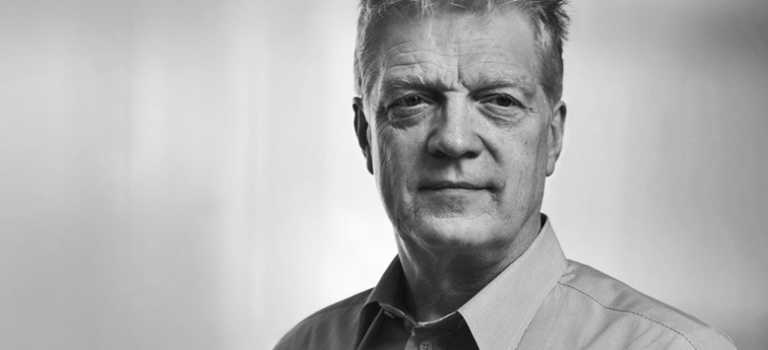
Sir Ken Robinson, an internationally acclaimed expert on creativity and innovation, and the author of several bestsellers on creativity in education, passed away this August at the age of 70 after a battle with cancer. His TED Talk “Do Schools Kill Creativity?” is the most watched in history, with 66 million views by people in over 150 countries. We are sure that his influence on the thinking of educators around the world will have a lasting and profound impact for decades to come. We offer everyone in the field of education to honor Sir Ken by reflecting on his ideas of ‘learning revolution’.

According to Sir Ken Robinson, reforming education is rightly seen as one of the biggest challenges of our times. He argued that the challenge is to transform education from a 19th century industrial model into a 21st century process based on different principles.

“Universities have important roles in bringing about the changes that are now needed in education as a whole. Some universities have long been centers of innovation and radical thinking.  The cultural and economic circumstances we’re now living in require a radical rethink of how universities work as a sector and of what they’re really for.”

End of industrial system of education

Mass systems of education mainly came about in the 19th century in the context of the Industrial Revolution. Designed to meet the social and economic needs of industrialism, these systems are rooted in a relatively narrow conception of subjects, and consequently, narrow view of intelligence.

The industrial character of these educational systems is expressed through two main principles. First, they emphasize conformity and standardization, which s rooted in the need to inculcate certain skills in the people who were destined to take on certain roles in the industrial economies. At the same time, they are linear: they are designed around various ‘gateways’, which students need to get through to progress to the next stage. Within this approach, vocational programs are generally seen as a lesser species than academic degrees, which is why going to college to do an art course or a dance program is commonly seen as less demanding than studying for academic degrees in universities.

Despite the fact that such systems based on the manufacturing principles of linearity, conformity and standardization have long been out of date, they still exist, even in universities. However, human development is not linear and standardized, it is organic and diverse. “People, as opposed to products, have hopes and aspirations, feelings and purposes.” That is why the existing system often fails both students and teachers. “We have created artificial learning environments for the kids,” Robinson wrote. “We have them in classrooms, in desks, day after day and hour after hour, and then we wonder why they fidget and why they get bored. Because (school is) boring.” He believed education in the classroom should shift away from this kind of an environment to a more diverse one, which would accommodate all types of student learning.

Moving away from the standardized to the personalized

“Education is a personal process,” Sir Ken insisted. Addressing the 2010 TED Conference, he delivered a funny and refreshing look at education today, making a reference to fast food.

According to him, there are two main methods of quality assurance in the catering business.  The first is standardizing. If you have a favorite fast food brand, you can go to any outlet anywhere and know exactly what you will find: same burger, fries, cola, décor, and attitudes. Everything is standardized and guaranteed.

Another quality assurance method is the star ratings guides, like Michelin. They set out criteria of excellence and each restaurant is free to meet them in their own way. Institutions can be French, Mexican, Italian, Indian, American, they can open when they choose, and hire anyone they want. Customized to local markets and personalized to the people they serve, such restaurants appear to be much better than cheap impersonal fast food and they surely offer a higher standard of service.

Sir Ken offered educators to address the reform in education system in the following way. “We have built our education system on the model of fast food,” he said – that is, on standardization and conformity.  In his opinion, what needs to be done is not to take a single model to scale but to offer a much higher standard of provision based on the principle of personalized learning and to encourage schools and universities to develop their own approaches to the unique challenges they face in their own communities. Robinson said he believes every school should be different because the world is a community of learners, and diversity is an important base to facilitate learning.

“Standardization tends to emphasize the lowest common denominator. Human aspirations reach much higher and if the conditions are right, they succeed. Understanding those conditions is the real key to transforming education for all our children.”

Agile teacher

Robinson saw the main task in facilitating the learning process. Education should be ‘active, nimble and responsive’, while the teacher in it should be an example of vitality rather than passivity. Many forms of understanding that education has to cultivate include factual information, practical skills, and knowledge about the nature of human experience. These all require different strategies in teaching and learning. For example, to learn a foreign language, it would be better to practice with a native speaker rather than just doing grammar exercises. If you are learning to repair an engine, reading the manual is not enough; it needs to be supplemented with stripping an engine down and putting it back together again.

So, what does it mean to be an agile teacher? “People learn in different ways and at different rates… Good teachers are sensitive to those differences and tack and weave accordingly. They draw from a wide repertoire of activities, techniques, and strategies, and adapt them to the needs of the learners and the material.”

The challenge is in knowing how to use the tools

Robinson considered technology as ‘the design and use of tools’. “A pencil is technology. So is a piece of paper or a book or a laptop.” He believed, that good tools can do two things – just like they extend our physical abilities enabling us to do things that would be physically difficult or impossible, they aim to extend our mind: they enable us to think things that might otherwise be inconceivable. The bow and arrow enabled early hunters to capture prey which they couldn’t have done unassisted, while the telescope helped astronomers rethink our place in the cosmos.

“Technology has always gone hand in hand with human culture and innovation. The challenge is in knowing how to use the tools. Faced with the immense capacities of a desktop computer, some people just use it as a fancy typewriter. Others compose symphonies and elaborate works of visual art. The machine doesn’t have the ideas – at least not yet – the users do.” Notwithstanding the fact that digital tools today offer unprecedented opportunities to enhance education in ways that we could not before, they do not replace the need for teachers to understand how learning works and what their roles as teachers are.

Teaching is a conversation, not a monologue

When asked what one quick change that an instructor or professor could make to the way that they teach could be, Robinson opted for turning teaching and learning into “a dynamic process, rather than a one-way channel of transmission.”

Learning is a social and a cultural process, he believed: we learn with and from each other. It can be immensely valuable to stand in front of the class delivering the knowledge to students, but even more important is to engage their minds and hearts in the ideas and materials delivered.

Passion is essential in education. What and how young people are taught has to engage their energies, imaginations and their different ways of learning. “If you are doing something you love, an hour feels like five minutes. If you are doing something that doesn’t resonate with your spirit, five minutes feels like an hour,” Sir Ken said.

Creativity now is as important in education as literacy

This year, the top in-demand soft skill according to LinkedIn, is creativity. It has been at the top of the list for the last few years in terms of what employers are seeking most, and it is understandable. The world’s most pressing problems are not likely to be solved by applying a fixed set of rules to arrive at a single correct answer. They will rather be solved through creativity and divergent thinking with our imaginations running unfettered and any number of potential solutions generated.

The current system of education teaches us that there is always one correct answer, which instills in children the fear of taking risks. Robinson warned us against that. “We stigmatize mistakes. And we’re now running national educational systems where mistakes are the worst thing you can make – and the result is that we are educating people out of their creative capacities.” However, “if you’re not prepared to be wrong, you are not prepared to think of something original.”

“Creativity is about new ideas. New ideas are challenging,” Sir Ken said. “They can disrupt the status quo; they can involve taking risks; they can make people nervous.’

“Creativity, and its good friend innovation, depend on collaboration,” he went on. Innovation usually results from people working across disciplines or connecting with people in different fields. “We live in highly complicated urban settings and our global systems are deeply intricate, and they all work through collaboration,” Robinson said. Collaboration is at the very heart of the sustainability and nature of human societies and we should have these practices being cultivated in our education systems.

The luminary passed away but his call for creativity caught on, as many educators around the globe start on their long and winding road to the personalized learning environment, with its diversity and collaboration, divergent thinking and agility in the classroom, teaching the people of tomorrow to shape the world they live in.
BE OPEN: Number One School: Should One Rely on University Rankings?

BE OPEN: Number One School: Should One Rely on University Rankings?

For those considering their study options, university rankings might seem to be the best way to find the course that gives them the highest chance at a bright professional and personal future. Whether it’s international university rankings like THE – World University Rankings by Times Higher Education, ARWU – Academic Ranking of World Universities by Shanghai University, QS Rankings by TopUniversities, or local ones, these lists of the most prestigious institutions have their place in the education world, but they have their limitations as well.

If you take some top universities and see how they score on various rankings, you will be surprised. The difference can be huge, the rank given to the same university in different lists can vary between the 25th place and a 100-something. Who are you supposed to trust?

The truth is that each university ranking uses its own criteria. If you know how to interpret them, you can really benefit from the significantly differing outcomes of these tops.

Among the aspects considered by the major rankings to come up with the final score of a university there are academic reputation, graduation rates, research citations and papers published, internationality of faculty and students, and employer reputation. Student to faculty ratio, industry income, award winners among academia and alumni and funding offered to students also count. However, no ranking includes all the markers mentioned above. This suggests some rankings may be more appropriate for certain types of students. Based on the categories each ranking prefers, you can find out if what you are interested in is better represented by a certain ranking.

ARWU, also known as the Shanghai ranking, originated in 2003 with Chinese government backing to provide a global benchmark against which Chinese universities could assess their progress. As the ranking relies on long-term factors such as the number of staff affiliated with an institution who have won Nobel Prizes, number of highly cited researchers, as well as number of articles published in influential Nature and Science journals, it is a rather stable list. High-achievers and Ph.D. students may find the ranking useful, given the emphasis it puts on institution reputation and “raw research power.”

Those interested in teaching quality, however, could benefit more from the THE and QS rankings that have their peculiarities too. Before THE broke away to form its own table, the two ranking were one and the same. The reason for the separation lies in the preferred methodology and the ways the two metrics collect their data. Although both target students interested in an international environment, QS ranking is largely based on a global survey of academics, who are asked to identify the leading institutions in their field, while THE ‘stand up to more academic scrutiny’.

“We produce high-end rankings which are used by governments around the world,” says THE rankings editor Phil Baty. “And we’re the only global rankings that take teaching seriously.” All in all, THE has five different measures of teaching quality – a reputation survey, staff-to-student ratio, doctorate-to-bachelor’s ratio, doctorates-awarded-to-academic-staff ratio, and institutional income.

According to the Telegraph, both rankings use surveys to collect data, but while THE does some reputation surveying, sending invitation-only questionnaires to a limited number of institutions around the world, QS opts for quantity to achieve reliability, mass-mailing some 46,000 academics before weighting the results to preclude regional bias.

Reputation factors can be rather subjective, as academics participating in the surveys the rankings are derived from are asked to identify what university they consider being leading in their field. The answers they give may just reflect what institutions are already considered famous. Moreover, differences between ranked universities are not always obvious. In rankings, many universities have very similar scores, with only minor differences. That is why institutions that are ranked lower shouldn’t be immediately dismissed, for the difference is more likely just a perceived one.

However, higher education is not only about the best reputation, research, salaries, and internationality. Some important factors appear not to be taken into consideration by the major rankings, and some of them cannot even be measured. For rankings to be meaningful, it should incorporate factors like student experience, says the University of British Columbia’s professor Michelle Stack, who does not believe rankings to be the best barometer to use selecting a university. She points it out that many of the rankings are owned by businesses, thus their aim is on profits, not education. Stack finds methodology behind such rankings as THE, QS and ARWU problematic as well – in her opinion, the way they collect data changes too frequently.

Stack explains that most university leaders agree that the rankings are flawed, however, they know they need to be visible in order to attract international students, which the institutions need to make up for the state funds that have been on the decline for years. They cannot afford to lose international students.

Still, more and more international students set aside rankings to look and rely on more representative indicators instead. A survey by student recruitment company Hobsons shows they are now placing top priority on teaching quality, staff qualification and student satisfaction instead of rankings.

The experiences you gather during your study years, finding and connecting with people you share passions with, peers and academics who inspire you to continue on the path you have chosen, emotional support and campus diversity – all this results in a mix that is very personal, and often unique for each prospective student. An all these subtle elements are impossible for any ranking to capture.

“It really depends on what the student wants, and what kind of experience they want. That’s more important than a ranking,” Stack adds.

This is echoed by educators Richard Ashford, Shampa Biswas and Mohan J. Dutta. They point out that the popularity of alternative rankings such as Forbes’s America’s Best Value Colleges or the existence of metrics such as Princeton Review’s “Happiest College Students List” suggest that such tables operate like market signals. In a context of rising tuition fees, they communicate to potential customers – parents and prospective students – within an increasingly corporatized academy a very different vision of a higher education.

The authors are concerned that none of the major university lists includes academic freedom considerations in calculations of rankings, while free inquiry, creative practice and innovative thinking that are implied by this important educational aspect are “the hallmarks of sound education on any campus.”

A truly rewarding study experience is difficult to rank. Some lesser-known universities that do not have a budget to promote themselves or do not meet all the criteria set by the major rankings can be equally satisfying as far as the study experience is concerned. Educators warn students not to be misguided by the global rankings, for they are certainly not the only way to choose a university. Comparing study options, checking subject-specific rankings targeting a discipline you are interested in, and asking questions on forums and other platforms can also help.

“Rankings are a useful source of information that wouldn’t otherwise be available – but they don’t make your decision for you,” says Danny Byrne of QS. “It’s about knowing what they do, and applying them intelligently. More is more.

BE OPEN: Back to School

BE OPEN: Back to School

This spring universities all over the world were forced to close their campus doors because of coronavirus outbreak.  Life has changed considerably since, and the coming academic year brings with it a new set of obstacles for educators to surmount. The universities and colleges are working hard mapping out their plans of actions that would ensure that students stay safe in the coming academic year, but also gain the maximum experience from their time at university.

The pandemic has changed the way that universities function, replacing on-campus lectures with online ones, introducing social distancing measures in classroom-based seminars and going virtual with students social activities. Although the measures will vary across universities and countries, notable changes expect students when classes start again in September.

Some students acknowledge they find it hard to figure out what classes will be like in the coming academic year. According to a recent survey, more than one in five students applying for undergraduate places are even considering deferring for a year if their university will not be operating as it usually would.

New realities of campus life

As universities work to adapt to the ‘new normality’, the changes will touch all aspects of life on college campuses. With slight variations, default measures will include enhanced hygiene and cleaning protocols, reduced density of classrooms, consistent signage across campus, and various “physical aids”, like perspex screens, to ensure distancing. Students will need to wear face masks when on campus, and those of them who travel outside the local area will be asked to self-isolate upon their return.

Notwithstanding the fact that teaching will be mostly carried out remotely, many campuses are still planning to offer housing to students. In California, according to the guidance released by the state, housing should be limited to one student per room whenever possible. University of California, Berkeley, plans to house about 3,200 students, especially those who have disabilities or are low-income, although the university is planning to start the year with no in-person classes. Accommodation in Loughborough University, UK will be open and if for any reason lockdown measures are reintroduced, students will not be charged for any weeks that they have to return home while the lockdown is in place.

Limitations on gatherings would change the approach to students social activities, as social interaction will be mostly carried out through a wide range of virtual events.

All university are working hard to support their students both financially and psychologically. For example, Simon Fraser University in Canada are planning to have an additional mental health care manager to support students who are struggling during this time. They have also created a website aiming to help students find work and learn about financial aid available to them.

Blended learning in the new norm

According to Times Higher Education, who has prepared a breakdown of how some universities will be implementing social distancing this year, blended learning will be the norm in most of them, which means some content will be delivered online, while other lessons will be taught in person.

University of Surrey, UK, will use a hybrid teaching model, which involves face-to-face teaching with reduced venue capacities to ensure the maintenance of social distancing protocols for most seminars, workshops and practical sessions, supported by online lectures and assessments. Aiming to maximize learning from all available learning modes, teaching in Loughborough University, UK, will be delivered in person where it can be done safely, while additional learning will be provided online through a combination of real-time interactive sessions and materials for students to study in their own time. University of Toronto, Canada, is also planning to prioritise in-person classes where possible, mixing smaller, on-campus seminars, labs and experiential learning with larger online and remote lectures.

Though most of the undergraduate teaching in Stanford University, USA, will be carried out online, the university is looking at ways to better replicate features of in-person teaching, such as small group interactions, academic support and peer-to-peer learning. It is expected that all classes larger than 50 students will be taught online (the limits could be even smaller depending on local health conditions), and, since some classes can only be held in person, they may need to be offered multiple times as different populations return to campus throughout the year.

UC Berkley will offer classes virtually except for limited hands-on courses that will require physical distancing and other protocols to limit contact between students. Some institutions, however, will transition to a virtual campus completely cancelling all their on-campus classes – for at least the first term of the academic year. University of Melbourne is one such example. Any physical attendance requirements for seminars will be waived, and classes will be delivered remotely. There will be specific arrangements for specialist and practical classes, performances and design studios.

The Royal College of Art, UK, ranked as the best art and design school in the world, will forgo all classroom-based teaching either. According to Ashley Hall, professor of design innovation at the RCA, one of the reasons for this is the institution’s distinctly international cohort, which means some students may have to go into quarantine if they come back to the UK. “Students in these circumstances would lose quite a significant block of time out of the academic year,” he explains.

Recreating studio model online

However, as far as art and design education is concerned, the challenges of blended learning go beyond providing rigorous hygiene measures and learning new technologies. One of the issues is reduced access to institutional resources, as not every design student has access to the latest programmes, 3D printers and tools at home.

“As a creative institution, having access to our facilities and workshops, as well as the expertise of academic and technical staff, is very important,” assistant vice-chancellor of University for the Creative Arts, UK, Terry Perk tells Design Week. UCA are attempting to address the problem by providing students with free licenses to software like the Adobe Creative Suite. Additionally, improvements are being made to the university’s online infrastructure.

What is even of more importance is ensuring ‘studio culture’ and environment of ‘practical collaborative work among students and staff’ remain intact. “I think now the project has really become more of a social and cultural mission – how can we maintain the ethos and feel of belonging to a group, especially when that group are dispersed globally?” says Ashley Hall.

Aiming to “reproduce the kind of physical interactions, as simple as knocking on a professor’s door, that we all miss”, the Royal College of Art has introduced an ‘open office’ approach that creates a kind of virtual studio space, beyond just online teaching. The approach involves teachers leaving open their Zoom channels for a specific time period, so that students are able to “drop in” to ask questions, or simply talk to their peers.

Although 2020/21 university experience won’t be what you normally expect it to be, Graham Baldwin, Vice-Chancellor at the University of Central Lancashire, UK, stresses that “a degree that has been achieved through online or blended learning will have the same value in the job market as one that has been achieved through face-to-face learning alone.”

BE OPEN: Teaching Art Online: Challenges and Opportunities

BE OPEN: Teaching Art Online: Challenges and Opportunities

The crisis brought about by the COVID-19 has forced education – just like many other aspects of social and economic life  – to shift online. This makes educators wonder if a practical subject like art can be taught online at all. Though particular challenges posed by the shift vary widely across disciplines and institutions, the question provides much food for reflection on the fundamentals of how art is taught.

Unlike, text-based subjects, teaching practical art courses online has always been a challenge for both teacher and student. In her recent article Teaching Art Online Under COVID-19 artist and educator Kaitlin Pomerantz has even compared teaching art online to teaching people in a land-locked town to swim without a swimming pool. She points it out that during the period of art school closings caused by the pandemic, educators faced the challenge of trying to “figure out how they could switch their materials, tools, and techniques-dependent, in-person, community-reliant, hands-on teaching of studio-based art to virtual platforms.”

The problems outlined by Pomerantz are echoed by many educators across art institutions. One of the challenges that first come to mind in relation with teaching art by distance learning is unavailability of physical resources—studios, kilns, editing software, darkrooms, woodshops, and peers— which in the online realm are replaced with on-screen communication. While certain screen-based mediums only need the technology to work perfectly, which is not always the case in remote rural areas, there is a fundamental problem concerning spatial mediums like sculpture that need comprehensive video instructions as well as a well-equipped studio, also not so often found in every home. For these mediums, a question arises of what remains of art-making when the institutional resources are not accessible. Is that possible to keep the studio practice standards high?

The same can be said about teaching materials and instructions. The ones previously used in the classroom appear not to be so simple to adapt for online teaching. Delivering practical activities online requires a radical rethinking of lesson content.

Another obvious disadvantage to working online is the lack of face-to-face contact between tutors and students, and further, the loss of the interaction between peers that forms a vital part of any classroom-based experience. Design critiques that generally provide art education with a structured means for intensifying the learning process may have certain detriments too, when performed online. According to Brad Hokanson, professor in Graphic Design at the University of Minnesota and author of papers on design critiques, online crits provide less opportunity for the informal, spur-of-the moment critique. The difficulty with text-mediated online critique, he explains, is that while written comments are recorded for later use, they take significantly more time to review and process by the critic, while online time and involvement is all defined, conscious, metered, and, hence, limited.

However, there are still media, such as synchronous video conference software or shared desktops that quite closely replicate the direct connection of the in-person design crit.  As explained by Hokanson, the key thing in this case is to replicate the fluidity of conversation inherent to face-to-face art education, as it adds much to a critique, even if done through sharing screens and talking synchronously. Speaking of hands-on media, he gives an example of online music lessons connecting a violin player in Japan with an instructor in Finland. Asynchronous critique may be less effective as it cannot ensure the same interaction as an in-class conversation, but it can still provide direction and formative assessment through mark-up and annotation.

Authenticity issue is yet another common criticism of any form of distance learning. On top of that, there are numerous pain points connected with validity of online assessments and cheat prevention in art education.

All these issues that remain to be resolved make many higher education professionals believe that art and design education with its visually or interactionally intensive pedagogical models such as the studio model is impossible to do effectively online. However, there are some successful examples that demonstrate how art education can effectively exist in the online realm.

Many potential disadvantages are outweighed by the advantages. Accessibility is certainly one of these. From the very beginning, distance learning’s target student groups include those in rural communities, those with irregular patterns of employment, single and working parents, and adult returnees to education and careers. Often, these students are frustrated by the lack of viable alternatives to attendance-based courses and feel isolated and excluded by their circumstances.

In his article Can You Teach Art Online? Kyle Dancewicz, Director of Exhibitions and Programs at SculptureCenter, New York, describes the strategy used by Constantina Zavitsanos, who teaches art at the New School. Her approach underscores the common paradigm of equating physically showing up in the classroom with learning.  According to Dancewicz, Zavitsanos has always allowed students to attend class using Zoom, an option often necessary for those who cannot attend in person because they are disabled or sick, or because the work they create is best presented outside of traditional classroom critique. In addition, Zavitsanos sometimes offers instruction via Zoom or accepts students’ prerecorded performances for group critique. This access-driven approach elevates distance learning from its perceived status of a disruption to the norm, while also opening deeper questions about the presumed defaults of art-making as a whole: When a student has a reason not to use the physical classroom to display their work, it reveals the physical and conceptual limits the classroom imposes.

Modern students often seek the same degree of flexibility they are accustomed to in other spheres of life. “Like it or not, we live in an age where consumers want what they want, when they want it; that’s why we have the 24-hour supermarket and the all-night garage,” says Michael Stewart, founder director at Interactive Design Institute, UK.

With their Studio Art School that is the only institution in the UK approved to offer the Level 3 Diploma in Art and Design by distance learning, everything is online. Each student is given access to their personal online studio where they can download learning materials and communicate with their tutors at any time, by simply logging on. Lessons are presented as a series of step-by-step demonstrations that  do not require specialized software or bandwidth.

Stewart recalls that the criticism he and his colleagues faced when they first suggested delivering practical art and design courses online came from two distinct fronts: the “technically, it can’t be done” crowd, and the “aesthetically, it shouldn’t be done” crowd. “Each side seemed determined to believe I was claiming e-learning to be superior to classroom learning; I never have and never will,” he explains.

Recognizing the limitations of teaching art online, Stewart provides a number of arguments for the model. While lacking the amount of peer-to-peer communication that class-based education has to offer, the online studio can give students as much time as is necessary letting them proceed at a pace which is best suited to each of them. The advantages also include the fact that online art students do not have to compete against their peers for tutor attention, or endure the distractions that can sometimes be part of the group experience.

All conversations with tutors, including advice, guidance, and comments on works-in-progress, are recorded and stored for future reference within the student’s personal studio area, providing both student and tutor with a complete history of their interaction. Similarly, with the use of the stored images, specific points in the creation of the student work can be referred to at each stage. Unlike traditional forms of learning in the visual arts, where once completed, the piece of work only exists in its final manifestation, within the online studio, the piece exists as an ongoing process, recorded at every stage of its development. At the same time, this method provides little opportunity for cheating. Not only dozens of images for each piece are stored in the system documenting all stages of the process, but also sketchbook notes and other supportive materials can be requested at any time.

As Studio Art School team is aware that many students may not have access to dedicated studio facilities, specialized equipment or unlimited budget for materials, all demonstrations are conducted and photographed on a standard kitchen table.

Some institutions attempt at re-creating the studio-based model in online design education courses. One of them is Minneapolis College of Art and Design, USA, with its Distance Learning Initiative, intended to appeal to a diverse audience – degree seeking students, high school students interested in attending art school, arts professionals, arts educators, and other life-long learners. The program maintains the role of the instructor in the studio model using well-formed, guided, direct questions and instructions and features online sketchbooks and portfolios providing a complete documentation of students’ work throughout a course, as well as visual examples of past student work that are used to set standards for work level expectations. The online format also allows bringing in guest artists from remote locations to some of its online courses whom students otherwise could not access. The team admits that the program is still small and evolving – e.g. online design critique still remains a “special challenge”.

The existing examples prove that in certain circumstances e-learning could be as effective as classroom-based teaching. It would be irrational to deny that  there is quite a number of challenges related to delivering practical art and design courses online – rewriting syllabi, redesigning courses and teaching materials, reinventing assessment and critique approaches, and learning new technologies, just to name a few. Still, the COVID-19 crisis has demonstrated that shift in this direction from traditional classroom-based education should not be perceived as a departure from normal, but quite on the contrary, as a way to expand the kinds of places where art school happens and where art is made.

BE OPEN: Diversity in Design Education – Diversity of Thought

BE OPEN: Diversity in Design Education – Diversity of Thought

Sad but true: Design is dominated by white, able-bodied men. Reports on the design economy demographics make for rather depressing reading in this regard. The analysis reveals that the industry is mostly white, male and from “more advantaged groups”. A whole list of challenges – from inaccessible mentoring schemes for graduates to 20% gender pay gap – results in the fact that even in such economies as the UK, where design is thriving, the profession is 78% male and 87% white. The research finds that women are less likely than men to be in senior roles; while 88% of design managers are white, compared to 7% from an Asian background, 2% from Black, Asian and ethnic minorities, and 3% from other ethnic groups.

The design industry is lacking diversity and it is obvious that one of the biggest reasons to that is education with its high tuitions, unbalanced curriculum focusing mainly on Western design tradition and “mostly white, mostly male” staff. Notwithstanding the fact that creative arts and design are often thought as disciplines of expression and liberal thinking, it appears that it is the pedagogies themselves that are contributing to a crisis of diversity, leaving women and Black, Asian and ethnic minority students feeling excluded of the practice.

There are many areas of art and design pedagogical practice in which inclusivity, equality and diversity can be enhanced. Education systems rarely connect with students outside of the Eurocentric narrative. In the academic year 2018/2019, 108,965 white students were enrolled in creative arts and design-related undergraduate degrees, compared with just 5,855 and 5,155 from Black and Asian backgrounds respectively.

However, the diversity problem in design education is not only in the numbers, but also in the lack of diverse role models. Students and educators point out that most design courses taught in the higher education institutions focus on “Anglocentric and Eurocentric ways of seeing”, just as most publications focus on Western design tradition. Movements such as Swiss Modernism, Bauhaus, Dada, De Stijl, and Art Deco are all heavily emphasized in design education, leaving non-Western tradition (such as design from Latin America, South America, Africa, and all of Asia) under-represented.

Danah Abdulla, designer, researcher, current programme director of graphic design at the Camberwell and Chelsea colleges, University of the Arts (UAL), explains, “Students are aware of the histories they’re being shown, and not shown. How often does a student of Indian origin gets to hear about a good Indian designer? What effect do you think that eventually has on how they perceive the profession?”

“Diversity in design means diversity of experience, perspective and creativity”

That is the position supported by Harriet Harriss, dean of the Pratt School of Architecture and former architecture and interior design research lead at the Royal College of Art. “You can’t be what you can’t see,” she says. ”And if marginalised students don’t see themselves represented on their reading lists and in their curriculum, this in turn leads to a feeling of being marginalised in the discipline”.

Here, we come across another term often being used interchangeably with “diversity” – “decolonization.” Though the terms are linked, diversity is about bringing more people to the table, while decolonization is about changing the way we think. For many decades, design values and history have been taught through a canon, the accepted pantheon of work by predominantly European and American male designers, that sets the basis for what is “good” or “bad.” The sad truth is that authority of the canon has undermined the work produced by non-Western cultures and those from poorer backgrounds so that Ghanaian textiles, for example, get classified as craft rather than design.

Abdulla is a part of the founding team of the Decolonising Design initiative, collectively curated online platform that looks to put design pedagogies under a lens, touching on issues such as post-colonialism and decolonialism, feminism, queerness and activism and exploring how these fit in to modern understandings and teachings of design by way of articles, resources and events. She points it out that we often consider design and design education as “neutral”, where we should go further into the politics of design practice. “For far too long, designers have remained married to the concept that what we do is neutral, universal, that politics has no place in design,” says Abdulla. Yet the choices we make as designers are intrinsically political: With every design choice we make, there’s the potential to not just exclude but to oppress; every design subtly persuades its audience one way or another and every design vocabulary has history and context. Learning about the history of colonialism will open our eyes to how power structures have formed society today, and how they dominate our understanding of design.”

Both Abdulla and Harriss suggest that radical curriculum changes should be a necessary approach to diversifying design education. Another direction in this work is propose by Aisha Richards, a MA tutor in applied imagination in the creative industries in University of Arts, London, and director of the Shades of Noir (SoN) programme, supporting race equality and its presence in art, design and communication higher education.

In her “Embedding equality and diversity in the curriculum: an art and design practitioner’s guide” co-authored with Terry Finnigan, Head of Widening Participation at London College of Fashion, UAL, she highlights that although an increasing number of students from black and minority ethnic backgrounds are choosing to study creative subjects, the large majority of staff employed to teach the subject remain mainly white. Although this area has been researched for over fifteen years, however, only recently some concrete actions have been taken. “When you don’t have the diversity of staff to offer the diversity of perspectives to the diversity of students, this is where a big part of the problem lies,” she says.

Richards insists that the higher education institutions should focus on ensuring whether or not minority students are “valued in a way that means they complete their education successfully,” rather than just seeking out ways to enroll more such students. She sees solutions for this challenge in curriculum design, staff training, establishment of safe spaces and community support. These are, according to Richards, an important part of levelling a historically and systematically uneven playing field.

At UAL, Richards and Finnigan created a unit entitled ‘Inclusive learning and teaching in higher education’ (ILTHE), that encourages students (academic members of staff) to reflect on themselves and their practice. They are required to discuss a range of diversity and equality issues through a blog, study literature and write an essay illustrating their understanding of these topics, and then undertake a curriculum innovation linked to their professional teaching context, which has proved to be the most transformational component. It has created some very interesting and proactive outcomes, such as the support of critical thinking including critical race theory, creation of pedagogical interventions, and support of innovation through collaborative working practices.

At the same time, in her work with Shades of Noir, Richards has begun to implement change at UAL with the final goal of equal representation throughout all levels of the institution. Lobbying with UAL’s Group for the Equality of Minority Staff (GEMS) for equal representation on interview panels and committees. The next target is to get equal representation on all committee co-chairs.

SoN has recently begun working with other institutions and is actively seeking to share its expertise and collaborate nationally and internationally. SoN offers higher education a range of activities that support change in behaviour and practice, through an online resource database, debates, exhibitions, workshops, curriculum design, audits, validation and reviews. Described as art schools’ critical friend and movement for change, SoN aims to address a lack of embedded representation, cultural currency and accessible knowledge in the creative curriculum and pedagogy within art, design and communication higher education.

It is crucial that race and gender are only part of the picture. According to American Institute of Graphic Arts (AIGA), the largest professional association of designers in the world, diversity in design means diversity of experience, perspective and creativity—otherwise known as diversity of thought—and these can be shaped by multiple factors including race, ethnicity, gender, age, sexual identity, ability/disability and location, among others. Lack of diversity – both in education and in profession – leads to apathy, insensitivity and even discrimination. On the contrary, from a practical (not to mention ethical) standpoint, diversity and inclusion within the field of design lead to more innovation through problem-solving, whether in service to business or society. And that’s what design is all about.

BE OPEN: Higher Education Despite the Coronavirus Outbreak: Is Online Learning a Panacea

BE OPEN: Higher Education Despite the Coronavirus Outbreak: Is Online Learning a Panacea

The novel coronavirus is already upending higher education as we know it, with many universities and other higher education institutions all over the globe being forced into online teaching. This has led many evangelists of online learning to make ambitious statements that the new golden era of online education has finally come, not only for the time of the crisis but with a potential to replace the face-to-face teaching altogether in the future.  It is impossible to overlook online learning’s positive aspects; however, the way it is presented as a simple and practical solution might be misleading.

Kyungmee Lee, Lecturer in Technology Enhanced Learning, Lancaster University, points out that the current rapid global adoption of online education is astonishing. To promote social distancing during the pandemic, most universities all over the globe have placed their courses and are delivering their teaching online. Many South Korean universities have moved their teaching online, providing students with the required number of classes without face-to-face contact with educators. In the UAE, the ministry of education announced that university teaching in the country would move online. In Italy, all universities closed, switching to online learning. In the USA, colleges were among the first institutions to take drastic action in response to the virus, cancelling in-person classes and moving most or all coursework online. This global shift to online learning follows the example set by universities in China, where the outbreak first began.

Peter Mayo, Professor at the University of Malta and author of Higher Education in a Globalising World: Community engagement and lifelong learning, believes that the good thing about the current situation is that “ it makes those who are resistant to modern digitally mediated technology take the plunge, whether adequately trained for this purpose or not. Many academics from Greece, Italy, Cyprus and the UK revealed that online learning is a new experience foisted on unprepared academics. It might enable them to transcend archaic ways.”

According to Bloomberg, many elite colleges, including small liberal arts schools, have resisted online teaching by trumpeting their small classes, mentoring from professors, and extracurricular activities, mostly in order to justify their tuition cost, which can top $70,000 a year. Still, even they are forced by the pandemic to switch to distance learning for at least the rest of the school year.

The history of education is full of episodes whereby necessity led to ingenuity. Mayo recalls the “flying university” in Poland that appeared under Nazi occupation, when Polish universities went underground and operated as distance learning institutions, with material “flying” from one place to another. It was innovative and attested to the resilience of the Polish academic community, both students and professors, involved. However, the present crisis, Mayo goes on, resembles, in certain cases, the situation during the immediate post revolution literacy campaigns in Latin America and elsewhere when young literacy workers were rushed to the field without adequate preparation.

Today we see educators throughout the world urged, if not compelled, to carry out their teaching online, irrespective of their training for this purpose. Lee warns that although undoubtedly, “online learning can make university education more accessible, affordable, interactive and student-centred”, when carefully implemented, it is important to “set realistic understandings and expectations of how it can support students affected by coronavirus measures.” This is especially the case for universities that disregarded online education before the coronavirus outbreak. The Bloomberg cites Michael Horn, co-founder of the Clayton Christensen Institute for Disruptive Innovation and a higher education consultant, who shares this concern: “Schools that haven’t historically embraced online education are now being forced into it. Rather than becoming a crowning moment for online education, this crisis could provoke a backlash.”

Basically, both academics and students may lack the training needed for quality online learning.  It is true that some higher education institutions have had adequate preparation for moving to online teaching, as a good percentage of their students are distance learning students. But it also should be mentioned that adequate training for teachers in this case implies that of a year’s duration. Describing the process of developing online course, Lee stresses that normally it involves a team of experts including academics, instructional designers, programmers and illustrators, who collectively follow systematic design processes. Still, Bloomberg refers to education technology researcher Bay View Analytics, saying that 70% of 1.5 million America’s faculty members have never taught a virtual course before.

This would mean that academics who have never taught online would be offering courses that have not been adequately developed. Many unprepared academics forced to suddenly adopt virtual learning  choose to read their lectures using a webcam and the same slides they used for face-to-face teaching as well as teach using Skype or software for videoconferencing to deliver the same lectures for the same 45 minutes. Phil Regier, the ASU dean, predicts that would be challenging to hold students’ attention in this case. “Here’s the first lesson,” he says. “There’s nothing more boring than a 45-minute video. They’re horrible; nobody can get through those.”

Lee also points out another problem connected with this simple ‘onlinification’: there are significant differences between presenting slides on projection screens in lecture theatres and on a smartphone screen. “The font size and page ratio of the slides needs to be carefully checked and revised to improve their readability,” she writes. “If course materials such as key texts are not properly digitised, students’ learning can be completely disrupted.”

This brings up another topic – student engagement. Retaining student interest in online learning can be even harder that in face-to-face classes – a fact proved by higher drop-out rates in online courses when compared to in-class teaching. Online learning can address mass students anywhere and at any time throughout the world, yet this form of delivery requires at least adequate access to high-speed internet from where they are self-isolated. This could be a problem for low-income students who do not have basic technological tools or for those in rural areas often lacking reliable internet access and videoconferencing capabilities. Some institutions in the US have responded to such concerns by expanding wireless internet hotspots into parking lots, allowing students without Wi-Fi at home to complete coursework and log in to online classes from their cars, but this looks more like a band-aid solution.

Researchers working on the use of online learning in higher education point out that dissatisfied students who find online learning inferior to face-to-face lectures may take action against universities. Thus, Lee provides an example of Korean students who, frustrated by the switch to online learning because of coronavirus measures, requested a refund of their tuition payment.

Another thing to be taken into consideration by academic staff is how to use modern technology in what Mayo calls “appropriate ways.” By appropriate ways he means avoiding the use of this technology as another surveillance mechanism: “Recorded sessions, ostensibly for the benefit of those who could not tune into the live session, can inhibit student participation in the discussions.” But as there are two parties participating in the remote learning process, Emma Pettit explores this topic at a different perspective in her article A Side Effect of Remote Teaching During Covid-19? Videos That Can Be Weaponized, after the head of the conservative political-action group Turning Point USA told college students whose professors had switched to online classes to share with Turning Point videos of “blatant indoctrination.”

During the ongoing crises, development of a plausible system of assessment and evaluation of student learning outcomes opens a new set of challenges. According to the Chronicle of Higher Education, many academics are trying to “keep their instruction simple, and to communicate to their students that they care.” For that purpose, institutions have relaxed their grading policies, requiring the courses be graded pass/fail. Such a measure can only be accepted as a temporary one, while the spread of the virus implies the situation in higher education will not change in a couple of weeks. Alternative assessment methods are necessary, for after the crisis is over, the degree programme must be recognised and therefore all learning outcomes must still be achieved and demonstrated despite contingency measures that were in place.

All above said proves that going online has to be carefully planned, and faculty members at the front line of this movement need clear communication and a whole university approach. To May Lim, an associate professor at the Singapore Institute of Technology, shares their experience of educating in the time of coronavirus. She writes, “While some faculty members already had competencies in online or remote teaching in four areas – live streaming, pre-recorded teaching sessions, facilitating discussions in a digital platform and providing assessment and receiving feedback – much background preparation still had to be done to get academic staff, students and infrastructure ready for lessons to transition seamlessly into online learning.»

A lot of training in all shapes and sizes was carried out for lecturers, including face-to-face workshops, walk-in consultations, online training and self-help guides. The topics covered how to create narrated slides, how to run effective live streaming classes, how to design alternative assessments, and the use of online proctoring tools for assessments. Students were also provided with guides how to use the tools and much was said about self-management and managing procrastination in order to work with students’ motivation and engagement. What also helped is pulse checking done on a regular basis two weeks after the online replacement of the classes, which enabled further tweaks to improve the experience. At the same time, online meetings conducted with teaching staff to share experiences helped rectify common mistakes that were made.

All said, distant learning has a huge potential to grow into the dominant form of teaching in higher education despite all the challenges. However rapid implementation of online education as the expense of quality may result in online education being discarded after the coronavirus outbreak ends. Universities should consider online learning not solely as a way for them to survive this moment but also an opportunity to thrive in the future.

BE OPEN: Is Campus Life Relic of the Past or Tool for the Future Success?

BE OPEN: Is Campus Life Relic of the Past or Tool for the Future Success?

Traditionally, campus is perceived to be ‘the face of the university’, and the very idea of ‘going to the university’ is connected in our mind to the image of the campus as a physical place. However, given all the debate of the value of ‘traditional’ university education today, little is said about the value of campus life. There is every reason to believe that the impact of higher education increases dramatically when students in the university live on or attend campus offering a robust campus life program and an opportunity to interact with a range of people and ideas.

The  emergence  of  the  campus can  be  traced  back  to  the  universities  of medieval  Europe  where  scholarly  exchanges  occurred  in  intimate cloistered  settings.  Since then, universities created  a  strong  relationship between  learning  and  physical  place, with campus being a space that gives meaning to the learning process. Today, it is still a setting that provides the opportunity for social and intellectual interaction with a scholarly community as well as a place that engenders knowledge, self-discovery and personal transformation.

Dr Sarah French and Professor Gregor Kennedy of Melbourne Centre for the Study of Higher Education point it out, that over  the  course  of the  twentieth  century  the  role  of  the  campus  underwent  a  series  of  transitions. Universities  gradually  became  less  elite  and  more  inclusive  as  student  populations  expanded  beyond  the demographic  of  the  white  upper-class  male.  To accommodate  expanding  student  numbers,  they  became increasingly  larger  in  scale.

On the other hand, with the advance of distant education and online learning as well as development of social networks into informal learning communities, it became possible for students to study without physically attending a campus. The historical role of the campus was therefore displaced, giving way to non-campus based forms of learning. As a result, the pattern of students participation is changed correspondingly. According to the studies conducted by the Melbourne Centre for the Study of Higher Education, university students are attending campus less and choosing online modes of learning more due to the availability of online resources such as lecture recordings and class notes, and the increased number of hours students spend in paid employment and family commitments. To put it short, modern students are viewing physical attendance at campus more as an option than a necessity.

However, as Dr. Loren Rullman, Vice Provost for Student Affairs and Dean of Students at Grand Valley State University, perfectly puts it: ‘Going to a football game is very different than watching it on television, and experiencing new music, food, people, languages, music and ideas is very different than simply reading about them.’ As some formal learning activities move online, the reasons that students attend campus are changing too, mainly centering on opportunities to engage with academic staff directly, to participate in collaborative and interactive learning with peers and to be involved in social networks and activities.

The changing educational environment has prompted universities of the 21st century to reconsider the role of the physical campus and redefine the campus experience. In his provocative  report  on  the  issues  facing  Canadian universities today, Stephen J. Toope argues that students will only continue to attend campus if two conditions are met: first, the  university  must  have  a  superior reputation or ‘brand,’ and second, the university must create an on-campus experience that is ‘so rich and unique that students feel drawn to participate actively’. Dr French and Professor Kennedy refer to University Trends: Contemporary Campus Design by Coulson, Roberts and Taylor, saying that the past decade has seen extensive interest in  the  physical  spaces  of  universities  within  the  fields  of  architecture  and  design.

There is a reverse side of the coin, as Dr. Rullman highights. With media constantly reporting about higher education spending on lavish campus facilities in recent years, campus today is often associated with “luxury dorms” or “amazing recreation centers,” and other seemingly excessive amenities. This makes one think that students are only attracted to luxurious campus facilities and that universities are motivated solely by the pressure of an amenities arms race.

Rullman emphasizes that to improve value for students and their families and aid public understanding, colleges and universities must insist on educational and institutional outcomes for facility development, having a clear picture of how the creation of new recreation centers, student center buildings, student success offices and similar facilities will contribute to the sum of a student’s education. “They do not replace what is in the classroom, and they should not be the primary reason a student selects a college. Most important, they must be responsibly developed to serve the institution’s mission,” he goes on.

Put it another way, newly designed  university  buildings  and  campus  spaces  should reflect  key  shifts in approaches to teaching and learning. For example, as lecture-based teaching methods have  become less dominant and collaborative  learning  more prominent, new campus designs should include fewer lecture theatres and more spaces designed for conversation and  interaction.

So what are the real reasons why colleges and universities should invest in their facilities? What is the true value of campus these days?

In their eponymous article, Dr Sarah French and Professor Gregor Kennedy centre around six broad interrelated areas:

  • involvement in a scholarly community
  • face-to-face interaction with academic staff
  • opportunities to engage with campus-based modes of teaching and learning
  • opportunities for collaborative, interactive and informal learning
  • opportunities for student engagement through participation in extra-curricular activities
  • opportunities for social contact and developing friendships.

According to the authors, ‘coming  to  campus provides students with the opportunity to be immersed in an intellectual culture, to gain expert knowledge from scholars and to explore ideas with peers <…> Aspects such as an institution’s architectural history, contemporary design features, landscaping, and the provision of accessible and appealing spaces in libraries, cafes and outdoor areas can all enhance the sense of involvement in a scholarly community.’ But what is more important, being on campus allows students to interact with academic staff benefiting from their expertise in specific disciplinary areas. Quality feedback and advice from scholars can often be more effectively delivered in face-to-face discussions rather than in written or online formats.

Adam Weinberg, president of Denison University, supports this opinion, as he explains how students might benefit from mentorship on campus. Student development staff, such as deans, health and counseling professionals, push students to get outside their comfort zones, to listen and hear other students, to reflect on their own world views and choices, and to learn. This happens when students come into their offices, when they supervise student employees, in meetings with student organizations, and when they bump into students walking around campus.

Weinberg also quotes the book How College Works by Dan Chambliss and Christopher Takacs, which presents research from a ten-year study of 100 students to learn what makes a successful college experience. They write, that  mentors “shape in detail a student’s experience: what courses they take or majors they declare; whether they play a sport or join an extracurricular activity; whether they gain skills, grow ethically, or learn whatever is offered in various programs.” Simply put, mentoring relationships “raise or suppress the motivation to learn.”

Speaking of opportunities for interactive and informal learning, Peter Jamieson argues that the entire campus should be viewed as a learning space. Outside the classroom, campus spaces should foster face-to-face communication, conversation and interaction between students in informal settings, which develops such skills as problem solving and critical thinking as well as values and habits students will need as adults.

As Weinberg put its, ‘the learning happens everywhere in formal and informal ways. For example, residential halls become places where students take what they are learning in classrooms and use it to learn to live and work with a diverse array of people in an ever-changing environment.’

Weinberg also connects campus experience and success in life. In his article he cites the research by the Gallup organization (presented in the Gallup-Purdue Index) which finds participation in extra-curricular activities and other activities outside the classroom to be one of the most significant predictors of success. “Students need to develop a broad array of soft and hard skills. No single curriculum can do it all. There is too much to learn and too few classes and courses to teach it all. Campus life is crucial to closing the gaps between what we teach in the curriculum and what students need to succeed,” Weinberg advises.

Indeed, the campus experience provides opportunities for an extensive range of academic, co-curricular and social forms of engagement. Activities organized by universities include orientation programs, competitions, workshops, public presentations, career information sessions, leadership and mentoring programs, engagements with workplace and industry and internships. Equally, student-led activities provide important opportunities for students to be involved in clubs and societies, sporting activities, the performing arts and music, creative writing, journalism, student politics and various other activities that can cultivate skills in areas such as leadership and communication. Students who take on a leadership role in a campus organization face all the usual management challenges in the workplace and in civic life that will help them build leadership in the future ‘grown-up’ lives.

Last but not least are social possibilities of on-campus study. Significant number of people report than they have met  their spouse and closets friends at university. The same is true about collegial networks cultivated by social encounters while studying, which often prove to be valuable in the workplace.

To sum it up, campus-based education is a great way for students to learn to voice views, hear others, and understand how to work together to create the communities they want to live in. Some campus facilities are designed to expose students to people with different backgrounds and ideas that may be new to them, others offer spaces for them to learn about organizing people and managing meetings, while the third are entirely educational. “Recreation facilities, dining centers, cultural spaces and the like give students opportunities to practice, make mistakes, form opinions, explore values and learn, lead and follow,” writes Rullman. “These facilities are worthy of investment because student learning is worthy of investment.”

BE OPEN: Why Design Graduates Are Crucial to High-tech Industries of Today

BE OPEN: Why Design Graduates Are Crucial to High-tech Industries of Today

Have you ever thought what you are going to do after you get your degree in design? Despite the generally accepted misconception, design graduates are not at all limited to career paths within the artistic sector. It may not seem obvious but companies like Google and IBM rely on design graduates to move their industry forward. Design mindset and qualified designers who act as problem-solvers are eagerly sought after in this type of industry, and design advocates of these forward-thinking corporations explain why.

Times Higher Education stresses that it’s a common misconception that designers should be employed in design companies – a misconception that the Design Council is determined to challenge; designers are needed in every organisation and in every industry.

As a design advocate for Google, Mustafa Kurtuldu is charged with championing design to the technology industry and everyone internally at Google.

“Design used to be seen as a bunch of creative people wasting their time,” he says. “But that is not the case any more as some of the most successful businesses are discovering.”

He is not wrong. Industries are elevated by pioneering designs every day. “Big companies are looking at industries and saying: ‘I can change this, this is failing, and we can do better’,” he says.

It is this type of industry insight that has shaped the Design Council’s innovative learning programme for students – the Design Academy.

The programme has three ambitions. First, to make graduates more employable across a wider range of industries while equipping them with the skills to navigate evolving businesses.

Second, to provide a space where faculties may collaborate, bringing together students and staff from a range of disciplines to work on challenges.

Finally, to enable designers to become more strategic in their thinking and support students from other disciplines (such as engineering, business and science) to think in a more design-led manner.

Google is an engineering company – so it’s not obvious that the company runs on design thinking, Mustafa points out.

But it is at the heart of everything that Google does. The Double Diamond, developed by the Design Council, is implemented at the company. This process generates several ideas before choosing the best one.

So, in practice, this means that at Google different people from different specialisms and departments get together to discuss problems.

Evidence and data are brought to the table and ideas start flowing. When a consensus is reached, a design (often more than one) is sketched out and everyone votes. The winning idea enters testing and, if it gets past that point, it could reach the pilot stage.

Lots of Google products have used this methodology including self-driving cars and Google Maps. “Design is not about designers”, Mustafa says, “it’s about collaboration. At university, we were taught to work in isolation but actually the opposite approach is needed.”

IBM is another huge tech company that recognises the invaluable input that design graduates can provide.

“We have a programme and a mission to [inspire] a designers’ mindset in our company,” Matt Candy, the vice-president for IBM iX, says. “We need everyone to think like a designer, but we don’t need everyone to be a designer.”

He oversees a multidisciplinary team across the UK, the Republic of Ireland and Europe that applies design thinking and puts emerging technology to work, helping clients with the biggest business challenges of the future.

IBM have hired approximately 1,800 designers but have an employee base approaching 400,000 “non-designers” all incorporating design ideas into their roles.

When designers come to the organisation, IBM trains them in the “missing semester of design school”, Matt explains. “We are talking about critical problem-solving skills, applying design skills to business and bridging this intersection with technology.”

As a forerunner to the missing semester programme, Matt sees the Design Council’s Design Academy as the perfect kick-off point. “At IBM Design, we strongly believe that great design is about crafting memorable experiences that delight users and help shape the future. We believe that the Design Academy offers a fantastic opportunity for students to begin that journey.”

“Our belief is that brands and businesses need to be redesigned and not re-amplified through better messages, better advertising. Design thinking is the science of the 21st century, so using that approach for problem-solving is the way in which businesses will reinvent themselves and still be here in five years’ time,” Matt adds.

IBM launched its corporate design programme in 1956. “[Even back then,] we looked at [the] reinvention and redesign of our processes and we are still looking at them. This includes marketing, how we go about our HR practices, our products and [the] services we produce, how we help our clients [with] how they design their businesses, [and] how they build new experiences and engage with their customers. Design is essential.”

When IBM say that everyone must have a design mindset, they mean everyone. Those at the top live and breathe design as much as those working on the ground. “We have top-down conviction. Our chairman and chief executive officer are leading our transformation through design and agile ways of working. We tell everyone that we are a 106-year-old start-up,” adds Matt.

When recruiting, Matt says that they look for graduates who “approach problems from a different perspective. I need designers because designers are problem-solvers. And the problems that the world has today need a different way [of thinking] to solve those problems. It is the best time ever if you are a creator. Design is the new frontier for business.”

BE OPEN: Multidisciplinary Approach in Design Education

BE OPEN: Multidisciplinary Approach in Design Education

As Alain de Botton, British philosopher and author, once stated, ‘problems that people have in advanced societies, that show up in novels, poetry, the therapist’s couch are really problems of architecture’. In other words, nowadays design has grown to be a major discipline that describes the process of shaping how humans interact with objects, experiences, and environments. No wonder, the requirements to a modern designer have grown too: the designer of today must consider aesthetic, functional, economic, and sociopolitical aspects of both design objects and the design process. And within design, different design disciplines often come together and combine their practices to provide better solutions to the addressed problems.

In his article Sharpen Your Skills: The Value of Multidisciplinary Design designer Peter Varadi mentions that designers only benefit their careers when they dare to venture beyond boundaries of their own disciplines. ‘Learning about different methods, tools, and skills’ he goes on, ‘helps broaden our internal problem-solving libraries and provides us with deeper decision-making context’.

Martin Temple, chairman of the UK Design Council, points it out that ‘the economic goal of generating more wealth from new science demands multidisciplinary teams of designers, engineers and technologists designing around the needs of customers.’ As their National Survey of Firms shows, 45% of firms in the UK that don’t use design compete mainly on price, while just 21% of firms where design is significant do so. Research has also shown that between 1995 and 2004, the share prices of design-conscious companies outperformed other firms by 200%. Therefore, the use of design is linked to improved business performance including turnover, profit and market share. On top of that, design can enhance the outcomes of numerous innovation activities, through increased quality of goods and services, improved production flexibility and reduced materials costs. The role of design in mobilising innovation is constantly increasing as well.

Therefore, the goal of design education today is to train specialists with broad set of skills, ‘who can turn ideas into working products’, as Sir James Dyson puts it. To which multidisciplinary approach to design education is the answer.

According to the report by the UK Design Council, unlike ‘interdisciplinarity’ which attempts to integrate or synthesise perspectives from several disciplines, ‘multidisciplinarity’ describes situations in which several disciplines cooperate but remain unchanged. This is the case with the ongoing attempts to teach design and creative problem solving alongside business and management education and/or technical and science subjects (the so-called STEM subjects).

Despite the fact cross-disciplinary practice has been embedded in universities for more than 40 years, it is only over the last decade, leading higher education institutions have grown to be actively engaged in developing new curricula, which enable design students to work in collaboration with other disciplines. In some cases this has led to the formation of new teaching and research centres, while in others the focus has been on integrating design within existing courses.

Design schools in the UK and USA have been integrating design and business education for years. For example, Kingston University which was named by the Guardian the best university to study design in in 2020, offers a suite of Masters in Creative Economy (MACE) courses. These multidisciplinary, one-year full-time (two-year part-time) courses are directed by the Faculty of Business and Law in partnership with the Faculty of Art, Design and Architecture and cover five areas of study: Built Environment, Design Industries, Heritage and Visual Arts, Performing Arts, and Media.

Similarly, the Royal College of Art in London has announced plans to expand its science and technology programme, adding courses focused on topics like nano-robotics and machine-learning, as well as embedding scientific collaboration into its existing postgraduate programmes. Aiming to ‘transform the accepted paradigm of an art and design university’ and ‘reverse the current orthodoxies’, RCA also plans to strengthen ties with Imperial College and other London institutions offering science and engineering courses. ‘This is a move away from the paradigm of the 20th-century art school to a 21st-century trans-disciplinary graduate school,’ said the college’s vice-chancellor Paul Thompson. ‘Our academic vision brings creative arts and design together with science, technology and medicine.’

Finland with its pioneering role in developing education in Europe has started Aalto University, an entirely multidisciplinary university that brings together the University of Art and Design Helsinki, the Helsinki University of Technology and the Helsinki School of Economics. Offering multidisciplinary courses including the International Design Business Management programme, the university has also established an experimental platform for multidisciplinary education and innovation, the Design Factory, which is designed to enable conversations, connections and creativity between business, design and engineering.

More recently, Asian countries have been investing in multidisciplinary design education. Design is the third most popular university subject in China after English and Computer Science. For instance, South Korea has set up a Convergent Design Education Programme, aimed to develop multidisciplinary activities in eight universities. The leading industry players of the country, such as Samsung, are also involved in design education, funding multidisciplinary programmes and supporting main design universities to embed such initiatives.

As the industry’s leading minds agree that most wanted nowadays are the so called T-shaped people, who combine depth of highly trained specialists with understanding of other disciplines and professional contexts, it is crucial that multidisciplinary courses and projects help design students develop this sought-after mix of skills. The offered experience of working with business schools, science, technology faculties and engineering courses should not only broaden design students’ skills sets but also better prepare them for working in the industry. Among other benefits of multidisciplinary approach to design education, it is important products designers understand materials and production methods as well as be able to decide where it is appropriate to shift away from traditional tooling towards rapid manufacturing, and this is only possible  while working with engineering students, materials scientists and computing specialists. Similarly, working with scientists and technologists will broaden design graduates’ knowledge of emerging technologies, to say nothing of complex global issues, such as climate change, which can only be addressed by teams whose members understand issues outside of their individual field of specialization. Last but not least, tomorrow’s designers need to be able to understand their clients’ businesses and the markets in which those businesses operate. Having design students work in multidisciplinary teams, especially on real-life briefs, helps them to develop a deeper understanding of business contexts.

Multidisciplinarity is by no means a one way street. Other disciplines, particularly business, computing and science, engineering and technology subjects, also benefit from connecting with design disciplines. Such collaborations between institutions as Design London building on heritage of cross-institutional collaboration between Imperial College Business School, Imperial College Faculty of Engineering and the Royal College of Art, and Centre for Competitive Creative Design (C4D) is a partnership between Cranfield University and the London College of Communication, University of Arts London, enable students of other non-design disciplines to develop design thinking and creativity.

It is obvious, that with developing and converging of industries, traditional education will fail to supply them with people who have an appropriate and useful mix of skills and experience. It is also no secret, that a team of differently skilled people working together and bringing into the project the mix of their skills drives innovation. As UK Design Council reports, skills that are increasingly valued by companies in all sectors include creativity, flexibility and adaptability, communication and negotiation skills, and management and leadership skills. All of those are the main focus of multidisciplinary courses and programmes that exist today and are yet to come, for being a designer means being able to push past obvious answers in order to create solutions that enhance the human experience.


BE OPEN: Jack of All Trades. Specialization in Design Education

BE OPEN: Jack of All Trades. Specialization in Design Education

The role of designers nowadays has changed significantly, as design simultaneously both broadens and specializes. On the one hand, it grows to be more interdisciplinary, designers finding themselves within unexpected industries; while on the other hand, the number of design fields is so vast, it is not  enough to make up your mind to simply ‘go into design’, you have to be more specific and decide what your path in design will be – branding or digital design, design of experiences or design or strategic design. The question arises: should modern designers be trained as specialists or generalists? Should they choose to be a jack of all trades or aim to deliver well-crafted products based on their focused expertise?

There are different opinions on this among design leaders. Chris Thelwell, winning design director and digital product innovator, admits his company looks for generalists when they hire, preferring to have a team built from generalists who can handle any design task. “We need people who have a wide range of skills”, he writes. “One day they can be doing user research—interviewing customers, writing surveys, analyzing results, etc.—and the next day they’ll be doing interaction work and visual design”. This approach helps Thelwell to overcome quite a number of issues, making the team more efficient without designers waiting around for the next task that required their specialization. Having on board designers with strong multidisciplinary skills lessens loss of context on projects during handoffs as well as helps to build a stronger relationship with the development team.

Uday Gajendar, UX-consultant, speaker and writer, who used to teach Design Fundamentals at San Jose State University, appeals to novice designers to strike a balance between generalist and specialist. He believes, in the field of design it is not about one versus the other, the spectrum of possibilities being much wider. Gajendar suggests the optimal middle strategy for those who aspire to be a design leader with legitimacy and credibility among non-designers: “Think (strategize) like a generalist, and make (deliver) like a specialist.”

To strike this balance, Gajendar suggests enabling deep analysis of the problem and potential solutions. For this he advises to get diversified knowledge across a range of design-related topics, situations, or modalities, draw inspirations from a multitude of sources: history, politics, philosophy, even science fiction and cinema, as well as think like a generalist when dealing with product management and engineering.

However, the value of a deep and focused specialist who delivers can’t be ignored. “Proving that you can deliver what you’re paid to do (in the superficial, unknowing eyes of non-designers) is the key to your success at a basic level, and it serves as a stepping stone towards greater influence and impact down the road,” Gajendar highlights. Especially when it is blended with generalist thinking about the essence of the problem. Supporting this way of thinking, the global design company IDEO came up with the term “T-shaped designer,” which is a person who has deep knowledge about a single expertise but understands general ideas across a broad range of topics.

So, T-shaped designers are in demand, and design education needs to react. A design student’s knowledge cannot be any longer limited to the elements and principles of design, as innovative designer jobs require an interdisciplinary approach. Don Norman, the father of UX, is certain that “to deal with today’s large, complex problems, design education needs to change to include multiple disciplines, technology, art, the social sciences, politics, and business.”

According to Jordan DeVos, designer and strategist who used to work in Central Saint Martins – University of the Arts London, the Royal College of Art, a world-renowned design university in London, has recently announced its reimagined curriculum—one that spans far beyond design as a discipline and offers design students such areas of study as environmental architecture and nanotechnology. “The world is too complex and interconnected for designers to not be versed in a variety of disciplines.”

But what do universities have to offer to those seeking expertise and tangible specialized skills? Do established schools leave this to hyper-specialized non-traditional education?

Exploring this, Meg Miller of Eye on Design magazine published by AIGA, America’s oldest association of professionals for design, reports that incoming college students today have a higher level of exposure to design than in the past. According to John Caserta, an associate professor at Rhode Island School of Design, this results in students coming to school already with strong opinions about design and what they want to learn. At RISD, this has led the design program to expand elective options to include more classes in specialized skills like UX design, software development, interaction design, and form-making. They’ve also added to the curriculum four-week-long workshops to learn things like Risograph printing, calligraphy, or digital design. Similarly, CalArts have developed their Open Learning initiative, which offers to the broader public free, no-credit online courses ranging from typography to digital arts to game design.

With generalist/specialist balance in mind, RISD also offers incoming students to take a foundational year and a half, during which they will be exposed to different kinds of design and gain a more expansive understanding of the field, before they choose which one to specialize in. “A four-year undergraduate degree is a significant commitment, financially and time-wise, but there’s so much that comes along with that in terms of community and finding yourself,” says Caserta.

As Don Norman puts it, “design is not about interacting with a computer; it’s about interacting with the world.” Choosing a straight and narrow path weakens one in the long run, making them less valuable as a designer.