





A school of art teaches you technical and creative skills, the business side of art, networking, and how to develop an artist’s attitude. These things are hard to learn on your own and require guidance from people with experience in careers in art.
Pros and Cons of Formal School
There are pros and cons of attending a school of art.
Pros:
- Discipline: The demands of deadlines teach you to develop a habit of consistent work
- Mentors: Good instructors help you develop your strengths and minimize weaknesses
- Networking: Making acquaintances, both students and teachers, can build a network for later support and opportunities
Cons:
- Cost: Tuition is the biggest drawback. Good schools of art aren’t cheap, and loans can leave you with student debt that alternative schools don’t
- Pressure: While deadlines can help you to build discipline, they can also take some or all the fun out of art making
- Prescribed Curriculum: You are stuck with the knowledge and skills the school thinks you should learn and how you should learn them, like doing research projects
Can You Be an Artist Without Going to School?
You can become an artist without going to a school of art. If you are a self-starter, disciplined, and have a passion for art, you have a good chance of becoming a professional artist.
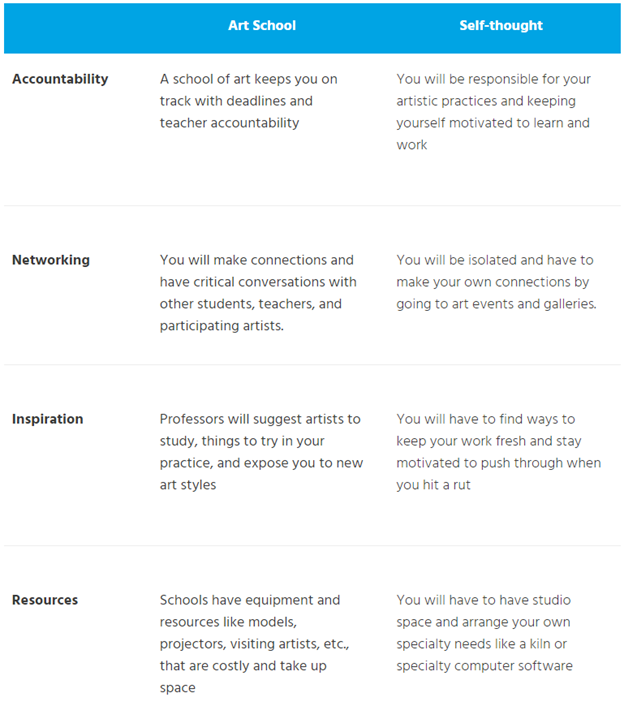
By art school, we mean any commercial program that offers a structured curriculum and feedback, whether online or in person. Self-taught means you read and research techniques in books and online and practice under your own direction.
School vs Self Taught
Art Mentorships
Finding an art mentor can be a good idea whether you go to school or not.
What Does an Art Mentor Do?
An art mentor is like a sounding board for ideas for artworks, methods of artmaking, finding opportunities for selling your work, or other topics of critical engagement a professional artist will have experience with. Most often, they are paid, but sometimes, you can develop a relationship with a late-career artist who just wants to help younger artists.
Are Art Mentorships Worth It?
Art mentorships are worth it if you find the right person and have specific goals. You can learn things from an experienced artist that you won’t find in internet searches, and they will help you discover any blind spots you have around your art. Learning from someone else’s mistakes and experiences can save you time, money, and frustration.