


Research Literacy: Why Creative Students Need to Learn How to Ask Better Questions (Pt.1)

Research Literacy: Why Creative Students Need to Learn How to Ask Better Questions (Pt.1)

PART 1. From Inspiration to Inquiry

Creative students are surrounded by references. A new brief can trigger an immediate search through images, articles, portfolios, trend reports and now generative AI. Within minutes, a student can assemble a moodboard, list competitors, produce a set of keywords and generate several plausible directions. The process feels productive because material is accumulating quickly.

But collecting material is not the same as understanding a problem. A reference can show what already exists without explaining why it exists, who it works for, what it excludes or which conditions make it possible. A polished summary can compress a complex issue while hiding uncertainty. An interview can produce a memorable quote that is not representative. A large dataset can reveal a pattern without explaining the lived experience behind it.

For designers, artists and architects, research literacy is the ability to move deliberately between these forms of evidence. It means knowing how to formulate useful questions, choose methods that fit those questions, distinguish observation from interpretation, compare sources, notice who is missing and decide when evidence is strong enough to support a design move.

Research literacy does not turn a studio into an academic laboratory. Its purpose is practical. It helps students avoid solving the first version of a problem they are given. It makes concepts more specific, more accountable and often more original because the designer is responding to conditions that could not have been invented from behind a screen.

The Moodboard Is Not Research

Moodboards are useful for establishing atmosphere, visual language and precedent. The problem begins when reference gathering becomes a substitute for inquiry. If every project starts by looking at existing design, the field of possibility is already shaped by what other designers have chosen to publish, what platforms rank highly and what visual styles are easiest to find.

Research begins earlier. Before asking what a solution should look like, students can ask what is actually happening. Who experiences the issue? Where does it occur? What do people currently do instead? What constraints are material, financial, legal, cultural or emotional? Which parts of the brief are facts, and which are assumptions repeated so often that they now sound like facts?

This distinction matters because creative work often rewards the appearance of certainty. A strong presentation can make a weak premise look resolved. Research introduces useful friction. It slows the jump to form long enough for the student to discover that the original brief may contain several different problems, or that the people affected would define the situation differently.

BE OPEN Insight
Research does not begin when a designer starts collecting answers. It begins when the designer becomes precise about what is not yet known.The goal is not to remove uncertainty from a project. It is to make uncertainty visible enough that choices can be tested, explained and changed.

Why Research Literacy Is Becoming a Creative Skill

Design has always involved investigation, but the information environment has changed. Students can now retrieve enormous quantities of material instantly. The scarce resource is no longer access to information; it is judgment about what information deserves weight and what should change as a result.

A research-literate designer knows that different questions require different evidence. A survey can indicate frequency but may not explain motivation. An interview can reveal meaning but cannot establish how common an experience is. Observation can reveal workarounds people have stopped noticing. Technical data can define what is physically possible. Historical research can show that a supposedly new problem has already been approached in another form.

This makes research part of creative intelligence rather than a preliminary administrative stage. The student is not trying to collect everything. The aim is to reduce uncertainty in the places that matter, expose assumptions that could distort the project and create enough understanding to make a more deliberate choice.

Case Study: The Design Council Double Diamond

The Design Council’s Double Diamond remains useful because it separates two activities that students often collapse: understanding a challenge and developing a solution. In the Discover phase, the first task is to understand rather than assume what the problem is, including by speaking to and spending time with people affected by it. In Define, the evidence gathered is used to frame the challenge more precisely.

The visual model matters because the first diamond expands before it narrows. Research is not simply a search for confirmation of the original brief. It is permission to discover that the brief is incomplete, too broad, too narrow or focused on a symptom rather than a cause. The moment of definition is therefore a design decision in its own right.

For students, this suggests a useful discipline: do not allow the first attractive concept to close the first diamond too early. Keep a visible record of what was assumed at the beginning, what the research changed and why the eventual design question is different from the one that appeared on day one.

Source:
https://www.designcouncil.org.uk/resources/the-double-diamond/

Start with the Question, Not the Method

Students sometimes begin research by choosing a method because it feels professional: make a survey, conduct ten interviews, create personas. A stronger process begins with the uncertainty. What do we need to know before making this decision? Which assumption would be most dangerous if it were wrong? What could we observe directly rather than ask people to remember or predict?

A useful research question is open enough to generate learning but specific enough to influence a decision. ‘Do people like public spaces?’ is too vague. ‘What makes students choose one route across this square after dark?’ can be observed and compared. ‘Would you use a repair service?’ invites a hypothetical answer. ‘Tell me about the last time something you owned broke and what you did next’ begins with actual behaviour.

The method follows from the question. Interviews are valuable when meaning, motivation and lived experience matter. Observation is useful when behaviour and environment are central. Secondary sources add context, history and scale. Prototypes create evidence about how people respond to something that does not yet exist. Good research often combines several of these rather than expecting one method to carry the whole argument.

Case Study: GDS Turns Assumptions into Research Questions

The UK Government Service Manual offers a particularly practical model for research planning. Teams are asked to capture and prioritise research questions and, importantly, to turn unsupported assumptions and opinions into questions that can be investigated. The guidance treats research as an ongoing part of development rather than a single discovery exercise at the start.

This is relevant beyond digital services. A student team designing a museum experience, neighbourhood intervention or educational product can maintain an assumptions list throughout the project. Each assumption can be marked as observed, supported by secondary evidence, tested through a prototype or still unresolved.

The value of this approach is not bureaucratic completeness. It helps the team spend time where learning can change a decision. Research becomes a way to manage uncertainty: the riskiest unknowns are examined first, while questions that do not affect the direction of the project can remain unanswered.

Source:
https://www.gov.uk/service-manual/user-research/plan-user-research-for-your-service

Observation Before Interpretation

Observation sounds simple, but it requires discipline. Designers are trained to interpret quickly: a crowded entrance becomes a circulation problem, a scratched object becomes evidence of poor material choice, a repeated workaround becomes an opportunity for a new service. These interpretations may be right, but they should not be confused with what was actually seen.

A useful field note keeps the two layers separate. First record concrete detail: where people pause, what they carry, what they touch, what sequence they follow, which object has been repaired with tape, which sign is ignored, which route is taken despite a barrier. Interpretation can follow: perhaps the sign is unclear, perhaps the informal route is more convenient, perhaps the repaired object has emotional value. The distinction makes it possible to challenge the explanation later without losing the observation.

This practice also protects against the designer’s desire to find an elegant story too early. Real life is contradictory. People may say they value sustainability and still choose the cheapest disposable option. They may report that a service is easy while repeatedly asking for help. The contradiction is not bad data; it is often where the design problem becomes interesting.

Case Study: IDEO.org Interviews and Immersion

IDEO.org’s Design Kit treats interviews and immersion as ways to encounter people in context rather than extract answers from them. Its interview guidance recommends beginning broadly with a person’s life, values and habits, recording what the person actually says and paying attention to body language and surroundings. Its immersion method goes further by asking designers to spend time where people live and work, observing routines and decisions directly.

The distinction is important for creative students. A participant explaining a kitchen from a classroom gives one kind of information; watching them cook in a crowded kitchen gives another. A commuter describing a difficult station may forget the small adaptations they make automatically. Context reveals objects, timings, relationships and constraints that an abstract interview cannot reproduce.

The lesson is not that fieldwork is always superior. It is that evidence becomes stronger when method and context match the question. Research literacy means knowing what a desk can tell you, what only another person can tell you and what you may need to witness for yourself.

Source:
https://www.designkit.org/methods/interview.html
https://www.designkit.org/methods/immersion.html

Update: BOA added Disorder

BE OPEN Academy has added Disorder by Chris Ashworth, Marvin Scott Jarrett and Adrian Shaughnessy to its Bookshelf. The book traces Ashworth’s ‘Swiss Grit’ graphic-design practice from Ray Gun magazine to recent typographic work, celebrating handmade process, imperfection, found type and creative experimentation as a counterpoint to screen-dependent digital culture.

Disorder by Chris Ashworth, Marvin Scott Jarrett and Adrian Shaughnessy

Disorder

Disorder is the first book devoted to the work of graphic designer Chris Ashworth, tracing the ‘Swiss Grit’ approach that has shaped his practice from Ray Gun magazine in the late 1990s to contemporary typography, branding and music-related projects.

Across 488 pages, the book brings together published and unpublished work from 1997 to 2024, including marked-up chromalins, diary entries, discarded layouts, found-type photography and hands-on typographic experiments. Ashworth combines modernist principles with a rougher street sensibility, treating imperfection, revision and serendipity as part of the creative process rather than noise to be removed.

For students of graphic design and visual communication, Disorder offers a valuable counterpoint to a screen-dependent workflow. The book deliberately positions itself as an AI-free zone and argues for the creative value of working away from the computer. Its pages show how physical materials, manual interventions and unexpected mistakes can generate ideas that might never emerge from a perfectly controlled digital process.

This BE OPEN Pick follows August’s focus on AI and digital art with a different question: what remains uniquely valuable about making by hand? Disorder does not reject technology so much as defend the role of friction, accident and personal judgement in creative work. It encourages young designers to see process itself as a visual language – one in which corrections, scraps, tests and imperfections can become part of authorship.

Free download exhausted

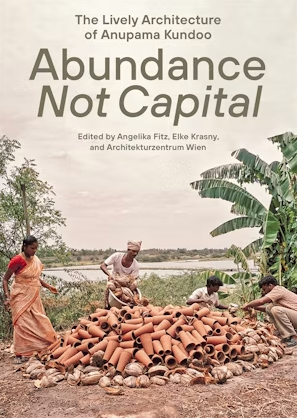
Update: BOA added Abundance Not Capital: The Lively Architecture of Anupama Kundoo

BE OPEN Academy has added Abundance Not Capital: The Lively Architecture of Anupama Kundoo, edited by Angelika Fitz, Elke Krasny and Architekturzentrum Wien, to its Bookshelf. Using Kundoo’s work as a case study, the book explores non-extractivist architecture and shows how local resources, craft knowledge, building skills, climate and technological experimentation can support more responsible ways of designing and building.

Abundance Not Capital: The Lively Architecture of Anupama Kundoo by Angelika Fitz, Elke Krasny and Architekturzentrum Wien

Abundance Not Capital

Abundance Not Capital: The Lively Architecture of Anupama Kundoo asks what architecture might become if extraction, endless growth and the intensive use of resources were no longer treated as unavoidable conditions of building.

Edited by Angelika Fitz, Elke Krasny and Architekturzentrum Wien, the book develops the idea of non-extractivist and non-exploitative architecture through the work of architect Anupama Kundoo. Her practice combines technological experimentation with traditional craft, local materials, regional building skills and close attention to climate and environment. Rather than presenting sustainability as an additional layer applied to a finished project, the book shows how ecological and social responsibility can shape the design process from the beginning.

For students of architecture and design, this expands the usual conversation about sustainable materials. It asks readers to consider labour, local knowledge, cultural continuity and resource use as interconnected design questions. The editors use the concept of abundance to propose a different way of thinking about value and possibility in architecture, looking beyond the assumption that better building must depend on ever greater material and financial input.

At BE OPEN Academy, Abundance Not Capital works particularly well as a deeper review because it connects environmental responsibility with questions of power, economics and practice. It makes a strong case that sustainable architecture is not only about reducing damage. It can also involve designing systems of making that preserve knowledge, respect people and produce buildings that are materially expressive without depending on ever greater extraction.

Find out more aboutAbundance Not Capital: The Lively Architecture of Anupama Kundoo by Angelika Fitz, Elke Krasny and Architekturzentrum Wien →

Update: BOA added Observations, Research, and Design

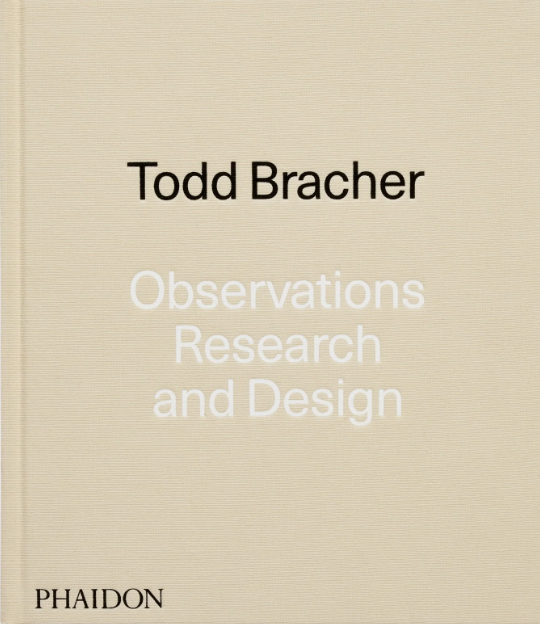
BE OPEN Academy has added Observations, Research, and Design by Todd Bracher to its Bookshelf. The first monograph devoted to the American industrial designer brings together more than twenty-five years of work across furniture, product and interior design, showing how observation, research and a science-based approach can turn knowledge and context into practical design solutions.

Observations, Research, and Design by Todd Bracher

Observations, Research, and Design

Observations, Research, and Design by Todd Bracher offers a close look at how design develops before it becomes a finished object. The first monograph devoted to the American industrial designer brings together more than twenty-five years of work across furniture, product and interior design, as well as design consulting, while focusing on the research methods and decisions behind the outcomes.

Organised into 26 thematic chapters, the book follows Bracher’s collaborations with companies including Humanscale, Issey Miyake, Georg Jensen and 3M through his distinctive science-based approach. Observation is treated not as a preliminary exercise, but as a core design tool: understanding behaviour, materials, systems and context can reveal the real problem before a solution is proposed.

For students and emerging designers, the book is useful precisely because it shifts attention away from style alone. It presents design as a disciplined process of asking questions, testing assumptions and translating knowledge from other fields into practical responses. At a time when new tools can make it increasingly easy to produce polished outputs quickly, Observations, Research, and Design is a reminder that strong work still begins with curiosity, evidence and a clear understanding of why something should exist.

Find out more about Observations, Research, and Design by Todd Bracher →

Futures Literacy: Why Creative Students Need to Learn How to Imagine Alternatives (Pt.2)

Futures Literacy: Why Creative Students Need to Learn How to Imagine Alternatives (Pt.2)

PART 2. From Possibility to Responsibility

Imagination Is Never Neutral

Futures work can appear open and playful, but every imagined future is shaped by a point of view. Who is assumed to have access to technology? Whose labour remains invisible? Which bodies, languages, family structures and cultural practices are treated as normal? Which places are shown as centres of innovation, and which appear only as sources of raw materials, risk or crisis?

Popular images of the future often repeat a narrow visual vocabulary: frictionless interfaces, autonomous vehicles, gleaming towers, empty public spaces and technologies without maintenance, politics or waste. These images may look advanced while preserving existing inequalities and removing the people who repair, clean, care, teach, organise and adapt systems in everyday life.

Futures literacy therefore includes critical attention to representation. Students need to ask not only whether a scenario is imaginative, but whether it expands agency. A future can be technically innovative and socially regressive. It can be environmentally efficient while politically authoritarian. It can solve one problem by transferring costs to people or ecosystems that remain outside the frame.

Who Gets to Imagine the Future?

If the future is treated only as the territory of specialists, technology companies or professional forecasters, many forms of knowledge are excluded. Communities understand risks, resources and relationships that may be invisible to external designers. Children, older people, disabled people, migrants, makers, care workers and local organisations may notice different signals and imagine different priorities.

Participatory futures practice brings these perspectives into the process before the concept is fixed. This does not mean that every participant must agree on one shared vision. The purpose may be to reveal disagreement, compare experiences and understand why some futures create hope for one group and fear for another.

For design students, the principle is similar to co-design but with a longer time horizon. Instead of asking only what people need now, students can ask what they hope to preserve, what they fear losing, what changes they consider desirable and what futures have been repeatedly denied to them.

Case Study: Futures Literacy in Museums and Municipalities

A 2026 UNESCO contribution on futures literacy describes work with museums and municipalities to make futures practice more accessible and participatory. Museum staff were supported in creating experiences that encourage visitors to question assumptions and contribute their own stories rather than receive a single institutional vision of the future.

The work also included municipalities, residents, policymakers, young people and entrepreneurs exploring climate adaptation and community futures together. The examples show that futures thinking can become a public learning process connected to decision-making, not only an academic exercise.

For creative education, this suggests that exhibitions and student projects can operate as spaces of collective imagination. Instead of displaying a finished future, a project can invite visitors to compare possibilities, add perspectives and identify what should be protected, changed or refused.

Source:
https://www.unesco.org/en/articles/opening-futures-literacy-and-foresight-learnings-museums-and-municipalities

Prototypes from Possible Worlds

One strength of artists and designers is the ability to make ideas encounterable. A future scenario can be translated into a poster, interface, object, policy form, map, film, performance, service journey or fragment of an imagined everyday life. These artefacts are sometimes called prototypes from possible worlds.

The prototype should contain enough detail to create consequences. A future food system is more meaningful when students consider packaging, labour, access, cultural preference and waste. A future mobility service becomes more credible when they show pricing, maintenance, rural access, emergency use and what happens when the system fails.

Detail creates friction. It prevents a scenario from remaining an attractive moodboard and allows people to ask practical and ethical questions. Who owns it? Who repairs it? What data does it collect? What material flows support it? What behaviour does it reward? What happens to people who refuse to participate?

Case Study: RCA Grand Challenge – Ocean & Cities

The Royal College of Art’s 2023/24 Grand Challenge brought together 140 student teams to explore relationships between London and the ocean. Students worked with communities across the city, ocean science and co-design methods on topics including flood mitigation, marine ecosystems, sustainable fishing, packaging and sewage systems.

The shortlisted projects were described as creative speculative design proposals grounded in real locations and stakeholder relationships. This combination is important. The projects looked beyond present systems, but their speculation was connected to place, evidence and community participation.

For students, the lesson is that futures thinking does not need to choose between imagination and reality. Strong future proposals can be ambitious while remaining accountable to ecological conditions, local knowledge and the people who may live with their consequences.

Source:
https://www.rca.ac.uk/research-innovation/projects/grand-challenge-2023-24-ocean-cities/

AI Can Multiply Futures – and Narrow Them

Generative AI can help students visualise scenarios quickly, create variations, generate fictional documents or explore how an environment might change under different conditions. This can make futures work more accessible: an idea can move from text to image, interface or story in minutes.

But generative systems are trained on existing material. They are especially good at producing images that look recognisable and statistically plausible. This creates a paradox. A tool that appears to expand imagination may repeatedly return familiar futures: established visual clichés, dominant cultural references and technologies already overrepresented in its training data.

Students therefore need to use AI as a provocation rather than an authority. They can compare outputs, identify repeated assumptions, deliberately alter who has power in the scenario, introduce local histories or non-dominant perspectives, and combine generated material with interviews, field research, drawing, making and lived experience.

An AI-generated image should not be treated as evidence that a future is likely, desirable or inclusive. It is one visual hypothesis. The creative work begins when the student asks why this future appeared so easily, what it leaves out and how it might be rewritten.

From Futures Theatre to Responsible Practice

Futures projects can become a form of theatre: dramatic images, provocative language and immersive installations that create attention but do not influence decisions or learning. The work may look visionary while leaving its assumptions, methods and consequences unexplained.

Responsible futures practice makes the logic visible. Students should explain which signals or trends informed the scenario, what uncertainties were selected, whose perspectives were involved, what values shaped the preferred direction and what limitations remain. They should distinguish evidence from invention and make clear where the project is intentionally speculative.

The purpose is not to remove ambiguity. Futures work is valuable precisely because it can hold uncertainty and contradiction. But ambiguity should open inquiry, not hide weak reasoning. A responsible speculative project gives audiences enough context to question it intelligently.

How Design Students Can Practise Futures Literacy

Futures literacy can be integrated into ordinary studio work without turning every project into a formal foresight exercise. Students can begin by identifying the future assumptions already present in a brief. What is expected to remain stable? What is assumed to grow, disappear, become cheaper or become normal?

They can then collect signals of change: emerging behaviours, experimental technologies, new regulations, local adaptations, changing language, material innovations or cultural tensions. Signals are not predictions. Their value is that they suggest multiple directions and help students notice developments outside the most visible trend.

A simple studio exercise might create three contrasting scenarios for the same brief: continuation, transformation and breakdown. Students can design one artefact or service for each, compare who benefits and identify which choices remain useful across several futures. They can also work backwards from a preferred future to ask what decisions, capabilities and relationships would be needed today.

Another method is to create a future stakeholder story. Rather than describing a system from above, students follow one person, household, organisation or ecosystem through an ordinary day. This reveals practical consequences and helps prevent the future from becoming an abstract technological landscape without lived experience.

Futures Thinking in the Portfolio

A futures-oriented portfolio should show more than a final speculative image. It can document the question, present-day evidence, key uncertainties, alternative scenarios, stakeholders, artefacts, feedback and reflection. The student should explain what the scenario made visible and how it changed the direction of the project.

This process is valuable to employers and educators because it demonstrates a transferable form of design intelligence. The student can work with incomplete information, challenge assumptions, compare options and make decisions without pretending to know the future.

The Royal College of Art’s Futures Through Design programme reflects the growing professional relevance of these capabilities. Its methods include scenario planning, STEEPV analysis and design fiction, with the aim of turning strategic uncertainty into opportunities for action. For students, learning these approaches can connect speculative creativity with strategy, innovation and organisational change.

Source:
https://www.rca.ac.uk/study/programme-finder/futures-through-design/

What Design Schools Can Teach

Design schools can support futures literacy by creating briefs that reward multiple possibilities rather than one polished prediction. Students can be asked to produce contrasting scenarios, identify assumptions, include affected stakeholders and explain which values guide their preferred direction.

Critique can also change. Instead of asking only whether a future concept is original or visually convincing, tutors can ask: What conditions would make this scenario possible? What evidence supports it? Who gains or loses power? Which parts are desirable? What unintended consequences might emerge? What would have to change now?

Most importantly, futures education should protect imagination from both technological determinism and empty optimism. Students need permission to question dominant narratives, but they also need methods for connecting imagination to evidence, participation and responsibility.

Key Takeaways for Creative Students

  • Do not confuse the strongest current trend with the only possible future.
  • Treat futures as plural: probable, plausible, possible and preferable.
  • Use scenarios to reveal assumptions, not to claim certainty.
  • Make future ideas tangible through objects, services, stories and environments.
  • Ask whose knowledge, labour and experience are included or excluded.
  • Use AI to widen exploration, but question the futures it produces most easily.
  • Connect speculation to evidence, place, material conditions and stakeholder perspectives.
  • Explain the difference between research, assumption and invention.
  • Show future-thinking methods and decisions in your portfolio.
  • Remember that imagining alternatives is valuable only when it expands responsible choice in the present.

Looking Ahead

Creative education has always involved imagination. What is changing is the urgency with which students must learn to use imagination deliberately. Climate disruption, artificial intelligence, demographic change, new material systems and social fragmentation make the future more uncertain, but they also make inherited assumptions easier to question.

Futures literacy gives young creatives a way to work with this uncertainty without pretending to predict it. It helps them move from one inevitable story to a field of alternatives; from visualising technology to examining relationships; from producing future aesthetics to understanding future consequences.

The most valuable future project may not be the one that looks most advanced. It may be the one that reveals a hidden assumption, gives form to a neglected possibility, allows different people to recognise themselves in the conversation and changes what can be considered in the present.

For the next generation of artists, designers and architects, imagining the future is not an escape from today’s challenges. It is a method for seeing them differently – and for recognising that what comes next is still open to design.