



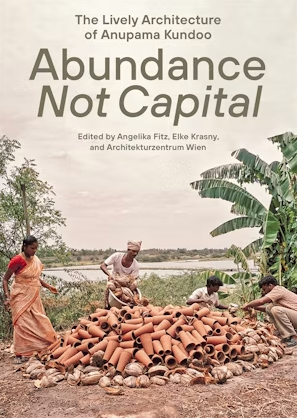
Abundance Not Capital: The Lively Architecture of Anupama Kundoo asks what architecture might become if extraction, endless growth and the intensive use of resources were no longer treated as unavoidable conditions of building.
Edited by Angelika Fitz, Elke Krasny and Architekturzentrum Wien, the book develops the idea of non-extractivist and non-exploitative architecture through the work of architect Anupama Kundoo. Her practice combines technological experimentation with traditional craft, local materials, regional building skills and close attention to climate and environment. Rather than presenting sustainability as an additional layer applied to a finished project, the book shows how ecological and social responsibility can shape the design process from the beginning.
For students of architecture and design, this expands the usual conversation about sustainable materials. It asks readers to consider labour, local knowledge, cultural continuity and resource use as interconnected design questions. The editors use the concept of abundance to propose a different way of thinking about value and possibility in architecture, looking beyond the assumption that better building must depend on ever greater material and financial input.
At BE OPEN Academy, Abundance Not Capital works particularly well as a deeper review because it connects environmental responsibility with questions of power, economics and practice. It makes a strong case that sustainable architecture is not only about reducing damage. It can also involve designing systems of making that preserve knowledge, respect people and produce buildings that are materially expressive without depending on ever greater extraction.