




The Primacy of Drawing by Deanna Petherbridge

The Primacy of Drawing

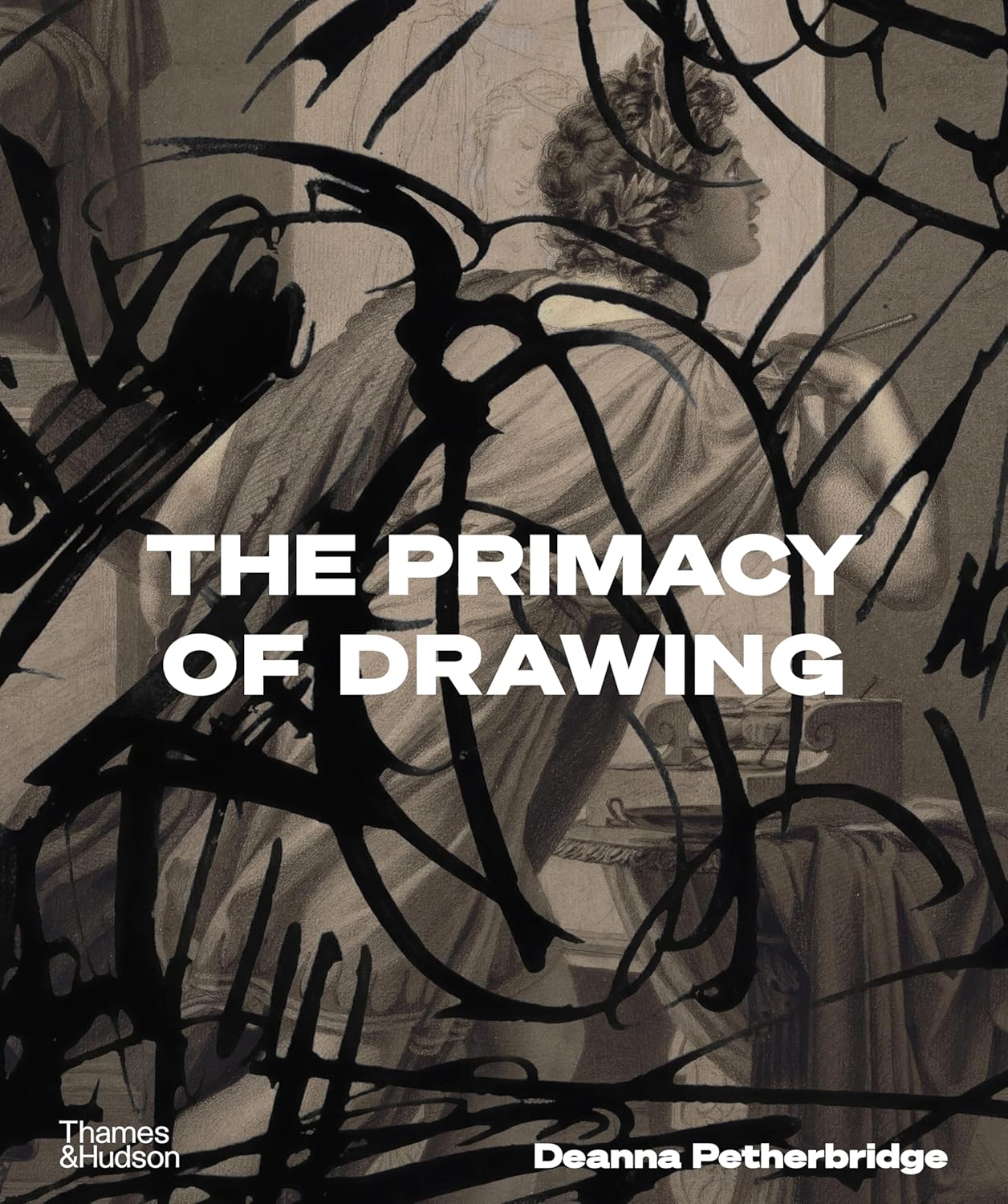
The Primacy of Drawing by Deanna Petherbridge is a comprehensive and deeply researched study of drawing as a way of thinking, observing and making. The 2026 revised edition reconsiders drawing’s role in contemporary art at a moment when digital tools, performance, installation and new technologies have expanded what artistic practice can be.

The book argues that drawing is not only a preparatory stage before “finished” work. It can be a record of touch, movement, memory, construction and decision-making. Through historical and contemporary examples, Petherbridge shows how lines, diagrams, sketches and material traces help artists understand bodies, spaces, emotions, power and the world around them.

For emerging artists, sculptors, architects and designers, this is an important book because drawing remains one of the most direct ways to test ideas. It can clarify a structure, reveal a rhythm, explore scale or capture something too fragile to explain in words. The book encourages young creatives to treat drawing not as a narrow technical skill, but as a flexible language for research and imagination.

At BE OPEN Academy, The Primacy of Drawing would work well as a deeper review rather than a quick recommendation. It invites students to slow down, look carefully and recognise drawing as a practice that connects hand, eye, thought and material.

Find out more about The Primacy of Drawing by Deanna Petherbridge →

Design Justice: Community-Led Practices to Build the Worlds We Need by Sasha Costanza-Chock

Design Justice: Community-Led Practices to Build the Worlds We Need

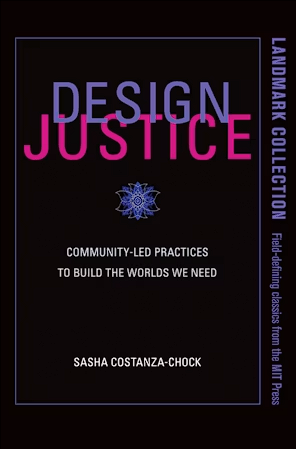
In Design Justice: Community-Led Practices to Build the Worlds We Need, Sasha Costanza-Chock challenges one of the most common assumptions in design: that good design can be universal if it is simply well intentioned.

The book argues that design processes often reproduce existing inequalities when they fail to include the people most affected by the systems, tools and environments being created. Instead of treating users as passive recipients, Costanza-Chock focuses on community-led practices and asks how design can support collective liberation, accessibility, ecological sustainability and social transformation.

For emerging designers, this is a particularly relevant book. It moves beyond the language of “design for good” and asks deeper questions: Who is involved in defining the problem? Who has decision-making power? Whose knowledge is treated as expertise? And who benefits from the final outcome?

Design Justice is valuable for students working across design, technology, architecture, social innovation and public-interest projects. It encourages young creatives to see design not only as a method for making things, but as a way of redistributing power, listening more carefully and building more responsible futures.

Find out more about Design Justice: Community-Led Practices to Build the Worlds We Need by Sasha Costanza-Chock →

Traditional Palestinian Costume: Origins and Evolution by Hanan Karaman Munayyer

Traditional Palestinian Costume: Origins and Evolution by Hanan Karaman Munayyer

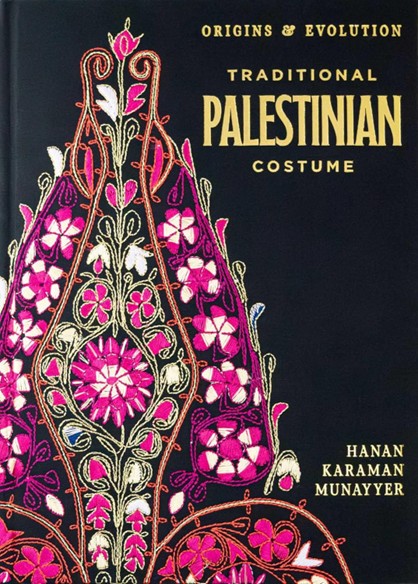
The historical and cultural richness of Palestine is reflected visually in its costume and embroidery. Distinguished by boldness of color, richness of pattern, and diversity of style, and combined with great needlework skill, these textiles have long played an important role in Palestinian culture and identity and manifested themselves in every aspect of Palestinian life.

Based on over twenty-five years of extensive field research, this lavishly illustrated book presents the most exhaustive and up-to-date study of the origins of Palestinian embroidery and costume—from antiquity through medieval Arab textile arts to the present.

With sumptuous photography and well-informed text, it documents region by region the evolution of costume and the textile arts in Palestine in the nineteenth and early twentieth centuries and displays this unique art in all its splendor.

Find out more about Traditional Palestinian Costume: Origins and Evolution by Hanan Karaman Munayyer →

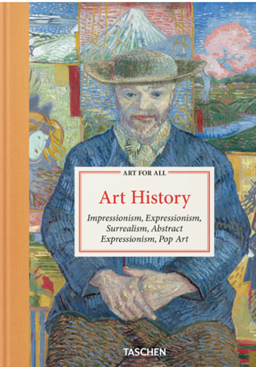
Art for All. Art History

Art for All. Art History

A comprehensive volume covering five seminal genres that shaped art, from the late 19th century and well into the 20th: Impressionism, Expressionism, Surrealism, Abstract Expressionism and Pop Art. Each approach was distinct in aesthetic and philosophy, but all had immediate impact and enduring influence. Many great names were indelibly associated with one, some explored several during their careers.

Impressionism, led by Monet and Renoir, focused on light and color, capturing fleeting moments and challenging academic art’s rigidity. Expressionism was driven by artists like Edvard Munch and Wassily Kandinsky to convey raw emotion, distorting reality to reflect the angst of human experience. Surrealists, like Salvador Dalí and René Magritte, explored the subconscious, dreams, and the irrational, blending reality with fantasy across art, literature, and film. With Jackson Pollock and Mark Rothko leading the charge, Abstract Expressionism emphasized spontaneity and emotion through bold, gestural brushstrokes, and established New York as the post-war art world’s new Mecca. Finally, artists like Roy Lichtenstein and Andy Warhol gained fame and dominated the zeitgeist by synthesizing advertising, pop culture, and high art into Pop Art.

Find out more about Art for All. Art History →

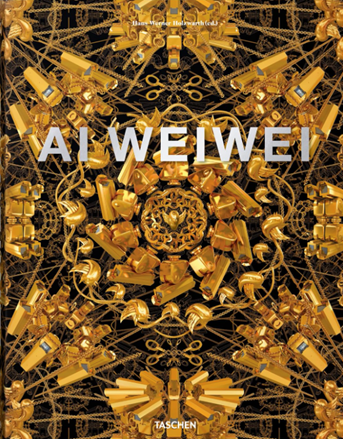
Ai Weiwei. Updated Edition

Ai Weiwei. Updated Edition

Ai Weiwei is famous for much more than his art. As a champion for the right to free expression and against arbitrary state power, his actions reach far beyond the art world. His work is infused with a deep social and political commitment: when he brings 1,001 Chinese citizens from all classes and regions to Documenta 12, when he strews over 100 million hand-made porcelain sunflower seeds across the Turbine Hall at the Tate Modern, when he creates a frieze of school bags commemorating the many children who fell victim to the tragedy of the Sichuan earthquake, or when he visits the refugee camps of the world to engage with often-ignored individual fates in his film Human Flow. In 2011, Ai was detained for 81 days by the Chinese police for his relentless questioning of authorities, and his passport was taken away. Despite international protests he received it back only in 2015. Finally traveling outside of China again, setting up base in Berlin and lately in Portugal, he has now become a truly global artist, whose work is always informed by his activism and vice versa.

Focusing on the recent decade of art and activism by one of the most outspoken artists of our time, this edition provides TASCHEN’s previous Ai Weiwei monograph with a comprehensive update. Now exploring 40 years of work, the book ranges from the artist’s exile in ’80s New York, through sculptures based in Chinese traditions and craftsmanship after his return to China, to his latest works conceived in Europe: toy-brick mosaics, films, and installations championing human rights. This book is itself a historical document: initially produced as the first in-depth monograph in close collaboration with the artist during a time when he still couldn’t travel abroad, now the same team has reconvened to continue the story. Countless images from Ai’s archives show the studio day-to-day, the artwork production, the political actions. They are accompanied by artist’s statements made especially for this book, and by three far-ranging essays: independent curator Roger M. Buergel and art historian Alfred Weidinger, who both worked with the artist on major exhibitions, discuss the work and its development in thematic detail, while long-time friend, the entrepreneur and collector Uli Sigg, delivers a personal portrait of the artist from two points in time.

Find out more about Ai Weiwei. Updated Edition →

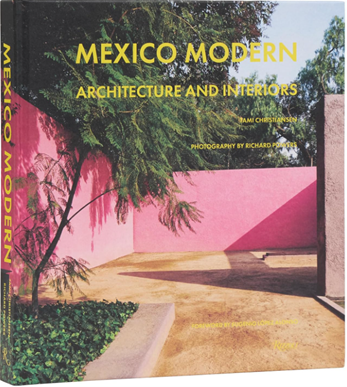
Mexico Modern: Architecture and Interiors

Mexico Modern: Architecture and Interiors

by Tami Christiansen (Author), Richard Powers (Photographer), Eugenio López Alonso (Foreword)

A captivating exploration of Mexican architecture, from iconic homes by legendary masters to new groundbreaking work shaping the future of design.

Mexico has long been a wellspring of inspiration for designers, with its rich architectural heritage shaping both national and international discourse. Visionary architects featured in this book such as Agustín Hernández Navarro, Luis Barragán, Ricardo Legorreta, and Javier Senosiain have left an indelible mark on modern architecture, as can be seen in the groundbreaking recent works that are also showcased in these pages.

In this lavishly illustrated volume, Christiansen explores Mexico’s architectural diversity, presenting homes that embody a profound sense of place through exceptional design. From organic dwellings that merge seamlessly with rural landscapes to bold urban structures that challenge conventions of form and space, to sculptural seaside sanctuaries that rise like temples from the sand, each project offers a unique perspective on the country’s evolving design language.

Profiling both established masters and emerging talents, this book highlights the fearless innovation and artistry that define Mexican architecture. These visionaries have pushed the boundaries of convention, transforming spaces into works of art that transcend mere functionality. Through their bold experimentation and creative mastery, they shape the future of design while paying homage to Mexico’s rich traditions, skilled artisans, and cultural heritage. An essential resource for design aficionados, this volume is an inspiring testament to Mexico’s enduring influence on the world of architecture.

Find out more about Mexico Modern: Architecture and Interiors →

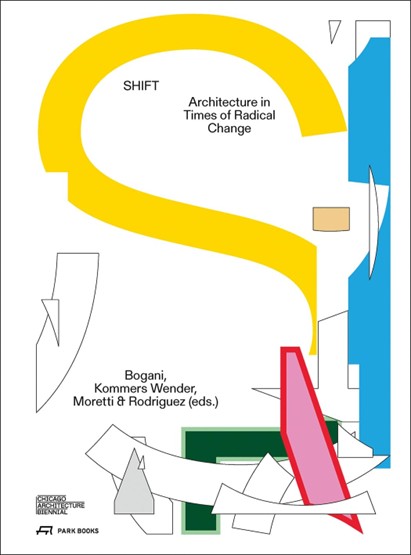
SHIFT: Architecture in Times of Radical Change by Florencia Rodriguez

SHIFT: Architecture in Times of Radical Change by Florencia Rodriguez

SHIFT: Architecture in Times of Radical Change is published in conjunction with the sixth Chicago Architecture Biennial (CAB 2025) under the artistic direction of Florencia Rodriguez. In a world defined by crisis and uncertainty, where architects are researching, relearning, and reimagining, the volume marks not only a change in direction but also presents provocative inquiries about a redefinition in the substance and fundamentals of the field. It is an invitation to think with others, to project with intention, and to set new grounds for the interpretation and design of our built environments. In the same spirit, the book unfolds the many faces of SHIFT through collective, multilayered, and multidimensional conversations, visual essays, and manifestos.

CAB 2025 participants’ voices are brought to print through a transcript of a five-hour conversation marathon that tackled topics such as new realism, the magic in the ordinary, pleasures in the urban, and the need to critically shift architecture’s language, as well as a repository of manifestos exploring other possible worlds. Beyond the exhibition, SHIFT: Architecture in Times of Radical Change also calls upon practitioners from different fields to discuss the current state of education in architecture schools, the challenges of material culture, the future of housing, and exhibitions as devices for change.

Find out more about SHIFT: Architecture in Times of Radical Change by Florencia Rodriguez →

Paolo Roversi by Sylvie Lécallier, Paolo Roversi

Paolo Roversi by Sylvie Lécallier, Paolo Roversi

This definitive monograph surveys the last fifty years of fashion photographer Paolo Roversi’s distinctive output, and has been developed and designed in close collaboration with the artist.

Arriving in Paris from Ravenna in 1973, Paolo Roversi produced his first series of photographs in 1977, which were immediately picked up by the fashion press. From then on, he devoted himself to fashion photography, working for the greatest designers and for the most prestigious magazines, simultaneously occupying a position both at the heart of the fashion world and far from its ephemeral trends.

Ultimately in search of pure beauty, Roversi creates timeless and mysterious work, which is shaped by his choice of studio and use of large format and Polaroid cameras. At the heart of his photography are his close relationships with fashion designers and models, most famously with Yohji Yamamoto, as well as Romeo Gigli, Rei Kawakubo, and Dior. These fruitful collaborations have allowed Roversi to continuously challenge and renew his practice.

Find out more about Paolo Roversi by Sylvie Lécallier, Paolo Roversi →

Banksy. The Prints by Roberto Campolucci-Bordi, Paul Coldwell

Banksy. The Prints By Roberto Campolucci-Bordi, Paul Coldwell

The artist known as Banksy has been creating works for over three decades and is one of the best-known artists of our age. Banksy has always believed the best place for his work is on a wall, where it’s free and accessible to everyone. That said, since 2002, he’s also created around fifty-one print editions, producing an estimated 30,000 artworks. His Pictures on Walls (POW) project played a huge role in shaping his career and the street-art scene at large. This unauthorized guide to Banksy’s print editions meticulously documents 174 unique prints, presenting an unparalleled visual catalog of these hugely collectible works.

In addition to making his art accessible to a larger audience, these prints often expand on themes seen in his wider body of work, making them essential in understanding his artistic development over the last two decades. Banksy initially offered his prints, both signed and unsigned, for modest prices.

Organized by release year, with insightful commentary, essential details about each edition, and faithful and high-­quality reproductions, Banksy: The Prints is the ultimate resource for exploring Banksy’s printed works.

Find out more about Banksy. The Prints by Roberto Campolucci-Bordi, Paul Coldwell →

Blueprints: How Mathematics Shapes Creativity by Marcus du Sautoy

Blueprints: How Mathematics Shapes Creativity by Marcus du Sautoy

When Shakespeare has the Three Witches cast Macbeth’s lot, he uses something very weird to do it: not simply “eye of newt and toe of frog,” but the number seven. And when Hamlet claims, “To be or not to be, that is the question,” Shakespeare reaches for eleven. For Shakespeare, prime numbers were magical. And he is not alone.

As Marcus du Sautoy showcases in Blueprints, creativity is inseparable from mathematics. The designs of Le Corbusier and Leonardo; the music of Glass, Bach, and Debussy; the wild visions of Dali, the choreography of Laban, the animation of Pixar—all are shot through with mathematics, from primes and fractals to the weirder worlds of Hamiltonian cycles and hyperbolic geometry. And Du Sautoy argues that the relationship runs both ways. Just as mathematics inspires new art, the artistic mindset is a necessity for discovering new mathematics.

Find out more about Blueprints: How Mathematics Shapes Creativity by Marcus du Sautoy →