




PART 2. Giving Ecological Relationships Form
The first part argued that ecological responsibility can change what we learn to value in a work. The practical challenge is to give those relationships a perceptible form. An environmental account may justify investigating a material, but the creative work must still decide how an audience will encounter it. The following cases offer four different answers. Their value lies partly in the tensions they make available for judgement.
Granby Workshop and the Composition of Difference
The Factory Floor, an installation by Assemble and Granby Workshop at the 2018 Venice Architecture Biennale, used 8,000 individually patterned ceramic tiles. Its photographs show blue, green and white marbling spread across a regular grid. The liquid-looking marks are cut by the boundaries of the squares, producing two simultaneous kinds of order: the repeated unit and the changing movement within it.
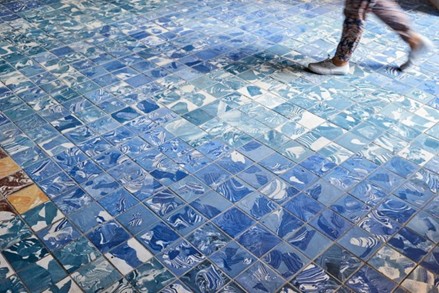
Figure 1. Assemble and Granby Workshop, The Factory Floor, Venice Architecture Biennale, 2018. Image source: Granby Workshop. Project source
From a distance, the repeated dimensions give the floor coherence. Closer attention reveals differences that prevent the surface from being exhausted in one glance. The eye can follow a streak across neighbouring tiles, lose it at a boundary and pick up another visual rhythm. Individual variation contributes to the larger composition through the consistency of its setting.
The tiles are made by combining differently coloured clays and pressing them, so that pattern forms part of the body. Granby Workshop’s later Encaustic Tiles range incorporates recycled material, as documented in its profile for the Future Materials Library at Material Source Studio. The distinction matters: the 2018 installation demonstrates a formal approach to variation, while the later product documentation establishes a material choice. The earlier photograph cannot establish the recycled content of those original tiles.
The two developments invite a distinction between displaying variation and building a production method that can accommodate it. A composition can give that difference value. The designer’s control is exercised through the unit, colour relationships and arrangement, leaving room for what happens during making. This is a deliberate distribution of authorship between a design system and its material process.
Pattern variation must still be distinguished from defects that compromise installation or use. The aesthetic achievement here is the organisation of difference. Evaluating the material choice also requires evidence about production, including firing; visual appeal alone cannot supply it.
Source:
La Biennale di Venezia — Assemble and Granby Workshop, The Factory Floor (2018)
Future Materials Library — Granby Workshop and its Encaustic Tiles range
Rewilding Textiles and a Palette Beyond Earth Tones
Rewilding Textiles, developed by Maison/0 at Central Saint Martins under Carole Collet’s creative direction for the 2022 Future Fabrics Expo, combined colouring processes using bacteria, algae and food waste. Its published collection includes pinks and yellows set against dark linear patterns. The project’s account connects the print and knit designs to sound mapping and biodiversity observations, including listening at Camley Street Natural Park in London.
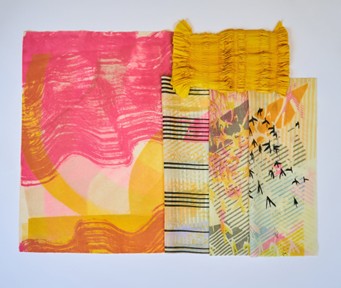
Figure 2. Maison/0, Rewilding Textiles, 2022. Creative direction: Carole Collet. Image source: CQ Studio project documentation. Project source
The visual result resists an easy assumption that ecological textiles should announce themselves through subdued colour. In the collection reproduced in BioColours, irregular fields of pink and yellow intersect with dark bands. The changes in density and direction create movement across the fabric. Its expressiveness comes from relationships between colour, mark and textile structure. The material research has supplied possibilities that the designers have actively composed.
The use of sound mapping adds a second relationship. The designers translate an experience of an environment into visual decisions, rather than simply placing a recognisable leaf or flower on the surface. That translation is selective and interpretive. A viewer need not be able to reconstruct a recording from the pattern for the work to succeed. The question is whether the resulting rhythm makes attention to that environment more imaginable and worth sustaining.
Collet’s 2023 chapter distinguishes biological approaches whose colouring capacities and constraints differ. Rewilding Textiles investigates what becomes possible when several approaches are combined. This makes the palette a product of collaboration and process development, rather than a ready-made signature of nature. The formal achievement depends on creative choices within that research, including which colours are placed together and how the fabric carries them.
A research collection can establish possibilities before demonstrating industrial performance. Its collaboration with a luxury group also raises a question for education: how can knowledge developed in a well-resourced setting become useful beyond it? The strength of the prototype gives us a reason to pursue that question.
Source:
CQ Studio — Rewilding Textiles: project and design team
Maison/0 — Rewilding Textiles, pp. 18–19 (download via Future Fabrics Expo Resources)
Formafantasma and the Time Hidden in a Familiar Object
In Cambio, commissioned by Serpentine Galleries in 2020, Formafantasma investigated the timber industry through research, objects and moving images. One installation remade the same IKEA step stool in seven European wood species. Keeping the design constant allowed the project to connect different woods with growth and proposed service times. A recognisable product became a device for considering the temporal demands of its material.
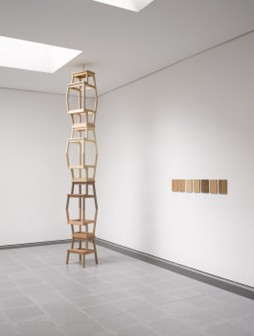
Figure 3. Formafantasma, Cambio, Bekvam installation, Serpentine Galleries, 2020. Photograph: George Darrell. Project source
The repetition is central to the aesthetic argument. It reduces the distraction of different product forms and directs attention towards what changes between apparently equivalent objects. The familiar outline allows the viewer to recognise a type, then question the equivalence that recognition suggests. Similar usefulness and similar geometry do not imply an identical relationship to the living resources from which each object was made.
Elsewhere, the exhibition brought historic wood samples into relation with contemporary research and display furniture made from a tree felled by a storm in 2018. These choices connect several timescales within one encounter: the moment of looking, a history of collecting and trade, and the slower formation of a material. The furniture used to present the inquiry also participates in it. Its origin gives the exhibition’s own material decisions a place in the argument.
This shows how information can become part of an aesthetic experience without requiring every fact to be visible in a surface. Repetition, juxtaposition and the organisation of an exhibition can make an ordinary object available for a different kind of attention. A label contributes to that encounter, but the arrangement of things determines how the knowledge can be experienced. An effective exhibition gives the visitor reasons to look again after reading.
A useful test for research-led creative practice is whether the objects, spatial arrangement and supporting information together create an encounter that an accompanying essay alone could not provide. In Cambio, comparison gives the familiar object a different significance: its form remains recognisable while its material context expands. The exhibition’s achievement lies in how it enables that reconsideration.
Source:
Formafantasma — Cambio and the Bekvam installation (2020)
Pollinator Pathmaker and the Question of Whose Pleasure Counts
Alexandra Daisy Ginsberg’s Pollinator Pathmaker shifts the imagined beneficiary of an artwork. Originally commissioned by the Eden Project, it uses an algorithmic tool and regional plant palettes developed with specialist input to propose planting arrangements for different pollinators. Flower forms, flowering periods and patterns of foraging help determine the design. The project has physical garden editions and an online tool through which people can generate their own planting plans.
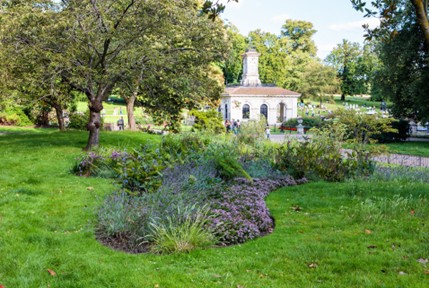
Figure 4. Alexandra Daisy Ginsberg, Pollinator Pathmaker, Serpentine Edition, August 2023. Photograph: Royston Hunt. © Alexandra Daisy Ginsberg. Project source
The resulting composition follows priorities that a human viewer may not immediately recognise. Heights, colour relationships and density can seem surprising when the arrangement is organised around other species’ needs. Over a season, the visual balance changes again. A single view cannot exhaust the work, because the conditions through which it is encountered continue to develop.
The aesthetic proposition is more difficult than making a garden look wild. The design asks a human audience to recognise that its pleasure is one consideration within a wider set of relationships. Someone can enjoy a colour clash or an unexpected grouping while also learning why conventional visual balance was not the governing criterion. This expands the possible meaning of a satisfying composition without asking viewers to pretend they possess an insect’s experience.
Describing the work as made for pollinators does not establish that insects experience human categories of art or beauty. Nor does an algorithm remove human judgement: people choose the data, regional palettes and rules. This leaves an important question for critique: how are other species’ needs represented, and where do human assumptions enter that representation?
Maintenance further changes the work’s authorship. The planting has to be established and cared for as conditions change. A pleasing image of an initial plan is therefore a limited account of the artwork. The ongoing relationship between the site, its carers and the organisms that use it belongs within its aesthetic life. Pollinator Pathmaker makes particularly clear why ecological aesthetics concerns a developing encounter, rather than one authoritative image of completion.
Source:
Alexandra Daisy Ginsberg — Pollinator Pathmaker: project and design approach
Different Formal Decisions Different Responsibilities
These cases offer no common surface to imitate. Granby’s repeated unit gives difference a structure. Rewilding Textiles connects colour research with an interpretation of environmental sound. Cambio uses comparison to reveal time within a familiar object. Pollinator Pathmaker alters the priorities through which a living composition is made and encountered.
In each case, aesthetic form does intellectual work. It selects relationships and gives an audience a way to attend to them. Assessing that selection means asking what the work makes available for experience, what it leaves outside the encounter and how the viewer might discover more.
Bring One Difficult Decision into the Studio
A useful studio task would ask students to develop one aesthetic decision through an environmental question. They might investigate exact colour matching, a requirement for uniform components or the treatment of an existing surface. The task should begin with a clear intended use and available material information, so that the inquiry can influence the work while choices remain open.
Students could produce two considered alternatives and explain what each enables an audience or user to experience. The comparison should identify what changed in the process, which consequences are known and which remain uncertain. A peer critique can then examine whether the artistic result depends on the relationship the student claims to have explored.
The aim is to make a decision answerable to both experience and evidence. A visually coherent proposal with unsupported environmental claims needs research; a well-documented material choice with an unconvincing aesthetic result needs creative development. Identifying the particular weakness gives students a practical next step.
Beauty Worth Returning To
The November books support this inquiry from different directions. Kagan challenges the narrowness of what we perceive and connects aesthetic experience to complexity. BioColours gives the discussion a material and technical ground. Broken asks what age, attachment and care can contribute to the value of existing things. Read together, they make responsibility an active part of creative judgement.
The most persuasive work gives an audience a reason to return to what it has encountered. On that return, more can become perceptible: a relationship between differences, the time within a material, a dependency or a form of care. Ecological responsibility becomes aesthetically significant when it helps the work sustain that attention, while remaining answerable for the conditions that make the experience possible.