



Update: BOA added 2 new online courses in Design for Mobile Developers from Google.
Author: Lilia Valieva

BE OPEN: The University of the Future
Across the world, coronavirus has fundamentally changed the student experience. It has also raised a number of questions concerning what universities should offer and to whom. It is obvious that COVID-19 will leave a lasting imprint on the higher education that won’t “go back to normal” as we knew it, pre-pandemic. But the truth is the crisis has just accelerated some disruptive trends of the sector, and even without it, the future of higher education was never going to look like its past. Let us imagine what higher education will be like in 2025-2030.
The first trend that comes to mind when one thinks of the university of the future is of course digitalization of learning environment. The reality showcases that to succeed today, universities have to embrace innovation in education and have strategies to best respond to the latest digital trends with potential roles in teaching, such as augmented reality and artificial intelligence (AI). As the COVID-19 crisis struck, online learning became increasingly mainstream, with nearly every institution moving their programs online, after decades of slow and steady adoption.
Today, we already see the ‘digital divide’ existing among universities. Top private universities have better IT infrastructure and higher IT support staff ratio for each faculty compared to budget-starved public universities. In addition, online courses require educational support on the ground: instructional designers, trainers, and coaches to ensure student learning and course completion. There is every reason to believe that this divide will be more apparent in the future, as institutions that do not try to maximize their tech-related are not likely to survive.
All experts in education agree that digitalized learning environments becoming the norm implies that higher education of the future will be based on blended learning. Ben Nelson and Diana El-Azar from the Minerva Project, a leading educational innovator, describe the future of higher education as “a mixture of in-person, location-based programmes, experiential teaching, and the flexibility of both synchronous and asynchronous virtual learning.” The model they propose suggests students living together on campus, but still taking part in virtual classrooms.
Hybrid teaching models support student-centricity, provide for a personalized and adaptive learning experience and enhance the cost-effectiveness of large programs. Such models imply that courses and lectures that require little personalization or human interaction can be recorded as multi-media presentations, to be watched by students at their own pace and place, or even delivered to very large audiences at low cost by a non-university instructor or technology platform (e.g. an online education provider like Coursera). Such courses can be commoditized without sacrificing social interaction as one of the important benefits of the face-to-face classroom, which would free resources to commit to research-based teaching, personalized problem solving, and mentorship. For students, that would mean having online classes at their own pace and at much cheaper cost. They would use precious time they spend on campus for all types of activities that require face-to-face engagements. Some years ago, experts predicted that massive open online courses (MOOCs), such as Coursera, Udacity, and edX, would kill traditional education (“just as digital technologies killed off the jobs of telephone operators and travel agents”). However, the history proves that certain campus-based activities, such as social networking, group assignments, field-based projects, and global learning expeditions, can enhance the student’s learning experience.
The third disruptive trend is the transition from a degree-based talent pipeline to a skills-based talent pipeline. The nature of jobs is changing, and students need to be able to update their skills throughout their careers. Recent surveys show that students prioritize employability when selecting universities, however, the idea that a college degree singularly prepares students for decades of work has long been outdated. Since many future jobs are not yet defined, universities must equip their students to be lifelong learners who can acquire new skills and give them broad, cross-disciplinary problem-solving skills and entrepreneurial mindsets. Overall demand for continuous education and corporate training is growing. Scott Pulsipher, the president of Western Governors University, a nonprofit, online, competency-based university, points it out that COVID-19 has created sudden demand for mid-career reskilling and upskilling at unprecedented scale. “In the future, degrees will continue to hold value, not because of the degree credential, but because a degree is composed of many skills and competencies that are valued by employers”, he says.
Connected to that is another major trend – digital credentialing, described as “a rapid shift from static educational records and transcripts, previously an extremely analog process that centered around degrees, to online, digital credentials focused on certificates and certifications that summarize achievement, skills or competency”. In a digital economy where continuous upskilling is needed to keep pace with technological advances and skills outdate in no time at all, universities will move beyond bachelor’s degrees as their primary product, toward more nimble, lower-priced, digital “credentialized packages”. This process is central to achieving the goal of greater education/workforce alignment, which hinges on integrating college and employer HR systems.
However, Nelson and El-Azar emphasize that in the university of the future investment in student-centric learning outcomes will be more important than technological innovation. No technology can improve poor teaching – on the contrary, it can only be made worse by “distractions from the digital world.” Instead, institutions must improve student learning outcomes by updating their curricula and pedagogy, and technological solutions can help in this process. For example, digital learning platforms can measure talk time per student, allowing a professor to evaluate participation objectively.
Change is hard. But with the ongoing crisis accelerating the processes that would otherwise have taken decades to be fully established in institutions of higher education, the university of the future will hopefully be more student-centered, flexible and resilient.
Update: BOA added 12 new offline courses in Architecture taught in the universities of Central Asia
Update: BOA added 12 new offline courses in Architecture taught in the universities of Central Asia.
BE OPEN Academy Poll. Best Fine Arts Restoration Course
According to the visitors of the BE OPEN Academy platform, the best Fine Arts Restoration course in a USA university is offered by Stroganov Moscow State Academy of Arts and Industry, Russia.
The other entries in the poll were:
· Kharkiv State Academy of Design and Arts (KSADA), Ukraine
· St. Petersburg State Academic Institute of Painting, Sculpture and Architecture named after I.E. Repin at the Russian Academy of Arts, Russia
· Tbilisi State Academy of Arts, Georgia
· The Royal Danish Academy of Fine Arts (KADK), Denmark
BE OPEN: Teaching Performing Arts Online
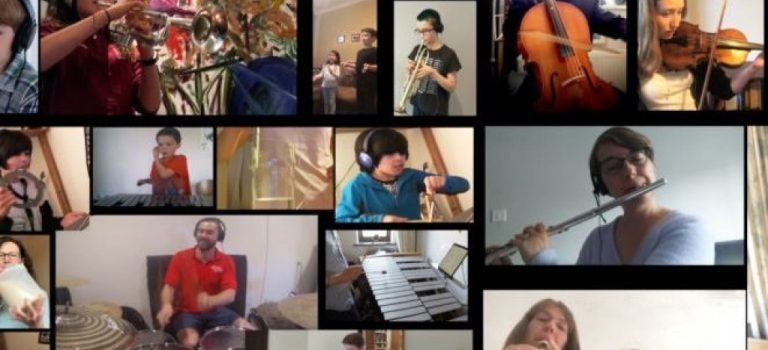
As universities everywhere partially open up their doors this autumn, they have to cope with many issues of the coming academic year, trying to reinvent the education process in response to the coronavirus pandemic and the consequent restrictions. Many creative hands-on courses are struggling to come up with safe ways to prepare their students, but departments and institutions teaching music, theatre and dances are probably hit the hardest.
In the era of social distancing, the performing arts industry itself is not going to function as before, given the health risks of live performances in indoor spaces with live audiences. Many venues are threatened with closure and the public may remain wary of attending live arts events even when restrictions are lifted. With coronavirus posing a threat to the future careers of today’s performing art students, drama schools, university arts programs and conservatoires are perceived as training people for jobs that are disappearing. This might be unnerving for university arts programmes and conservatoires, for a recent survey shows that as many as 40 percent of incoming freshmen are considering a possibility of passing on attending colleges this year, while 28 percent of returning students haven’t decided yet if they come back to the campus.
It is true that future performances and professional communities or performing arts rely on the talent pool coming out of higher education but the fact that supply is enormous cannot be ignored. “If there’s possibly no freshman class this year, that’s not going to impact, down the line, the number of dancers available to audition,” says Susan McGreevy-Nichols, executive director of the National Dance Education Organization. The same goes for music, according to Jesse Rosen, president of the League of American Orchestras.
Therefore, with this uncertain future pending, many of the age-old methods of training musicians, actors and dancers need to be drastically reshaped.
Like other arts institutions that offer dance, drama and music degrees, administrators of New York City’s Juilliard School, have spent the summer devising new classes and techniques and setting up safety protocols for rehearsal studios and theaters. For the first weeks of the fall term, the school is offering online classes, followed by a gradual progression of on-campus classes. Trying to pursue “the making-lemonade idea” President Damian Woetzel hopes to invite some big-name artists for guest lectures via video, which would be impossible under different circumstances, because normally all the stars would be touring the world.
Similarly, the Berklee College of Music in Boston, USA, which will be completely remote this autumn, is including virtual master classes with prominent artists who are stuck at home like most everyone else due to the coronavirus restrictions causing the closure of the venues. The college will be completely remote this autumn.
What makes distance learning especially challenging for performing-arts schools is a need for technology and tools that aren’t available outside of specialized classrooms. Training students to perform might be tricky as each art has technical demands, such as safe flooring, adequate unobstructed space, and the precise timing of music and sound — impossible over laptops with different bandwidths. For example, it is impossible to leap into a partner’s arms in online dance classes. However, instead, they can focus on nuances and overlooked details, such as how to use faces or how to position hands.
Australia’s National Institute of Dramatic Art (NIDA), whose alumni include Mel Gibson and Cate Blanchett, adapted their public performance schedule to take place in the digital space across a variety of platforms and are currently gradually reintroducing the students to the campus after developing a series of protocols that enable much of our training to continue.
In addition to ‘new normal’ practices like temperature checks at entrances, the wearing of masks in public areas and air-conditioning systems switched to ‘extraction’ mode, coronavirus-safety protocols in institutions training musicians and actors includes for example, banning on-stage kissing or teaching in small “bubbles” of players, which could slowly be integrated with other groups as restrictions on social distancing ease.
Apart from day-to-day operations, schools of the performing arts also to develop solutions to immediate practical problems around recruitment and assessment.
At the Royal Central School of Speech and Drama, University of London, some applicants had not yet attended an interview or audition for autumn 2020 entry at the time of lockdown. To get around this, the institution created video instructions to for the applicants to record themselves performing their monologues and song choices. The interviews were held online and course-specific questions were answered by the staff during virtual open days.
Although the Royal Birmingham Conservatoire (RBC), UK, hopes to deliver the majority of the curriculum face to face by the second semester, it is possible for incoming students to do their first semester online. The administrators hope to “give them an in-person experience online”, holding over until later any elements of the course that required face-to-face interaction.
Assessment poses similar challenges. At RBC they decided on accepting all kinds of online offerings, instead of keeping final-year students in limbo until they were able to hold live examinations in a hall. According to the principal, Julian Lloyd Webber, some of the students had only an iPhone and no recording equipment but that didn’t stop them from creating things of “incredible standard and imagination”. “The internet is so much a part of musicians’ future that it was very helpful for them to have to do this,” Lloyd Webber believes.
This is echoed by Jesse Rosen who is sure that digital proficiency that students will be gaining now will help them in their future careers. He claims that musicians that can create visual works for live-streaming or sharing online could be a major boon for orchestras and music ensembles that desperately want to increase their reach and audiences.
There is every reason to believe that performing arts will adapt to the current context and thrive again, and it will be today’s students, flexible and adaptive, capable of working across all platforms, with a blend of traditional skills and new techniques and understanding, that shape the future.
Update: BOA added 2 new online courses in Design for Mobile Developers from Google
Update: BOA added 2 new online courses in Design for Mobile Developers from Google.
BE OPEN Academy Poll. Best Animation Course taught in a UK University
According to the visitors of the BE OPEN Academy platform, the best Animation course taught in a UK university is offered by University of the Arts London.
The other contestants in the poll were:
· Teesside University, Middlesbrough, Darlington
· University of the West of England, Bristol
· University of Gloucestershire, Cheltenham, Gloucester
· London Metropolitan University, London
Update: BOA added 25 new offline courses in 2D and 3D Animation taught in the universities of USA
Update: BOA added 25 new offline courses in 2D and 3D Animation taught in the universities of USA.
BE OPEN Academy Poll. Best Architecture Tutorial by 30X40 Design Workshop
In his course ‘Sketch like an Architect (Techniques + Tips from a Real Project)’ the award-winning architect Eric W. Reinholdt discusses the key style points and techniques you can use to develop your own architectural sketching style. The course has gained a majority of votes in our online poll about the best Architecture tutorial by 30X40 Design Workshop. Other entries were:
· Design Strategies: Reducing Construction Waste
· Material Marriages (An Architect’s Favorite Pairings)
· Improve Your CAD Drawings
· How to Make an Architectural Portfolio (for Architects, Interns and Students)
Update: BOA added 5 new online courses in Game Design and Design Thinking from the Massachusetts Institute of Technology (MIT)
Update: BOA added 5 new online courses in Game Design and Design Thinking from the Massachusetts Institute of Technology (MIT).