


Update: BOA added 4 ‘An Architect’s Guide’ video tutorials on Web Design by 30X40 Design Workshop
Author: Lilia Valieva
BE OPEN Academy Poll. Best Video Tutorial in Drawing for Beginners
Drawing with the Pen tool, Pencil tool & Brush tool video offered by Gareth David Studio has won in our online pole about the best tutorial in Drawing for beginners. This video covers the drawing tools and demonstrates some techniques in Adobe Illustrator.
The other contestants in the pole were:
- How to draw a portrait by Skillshare
- Drawing Process of Maggie Enterrios by The Futur Academy
- 10 Beginner Drawing Tips by FZDSCHOOL
- Design Colouring a vector drawing in Adobe Illustrator by Gareth David Studio
Update: BOA added 4 free video tutorials on Photoshop by Photoshop Training Channel
Update: BOA added 4 free video tutorials on Photoshop by Photoshop Training Channel
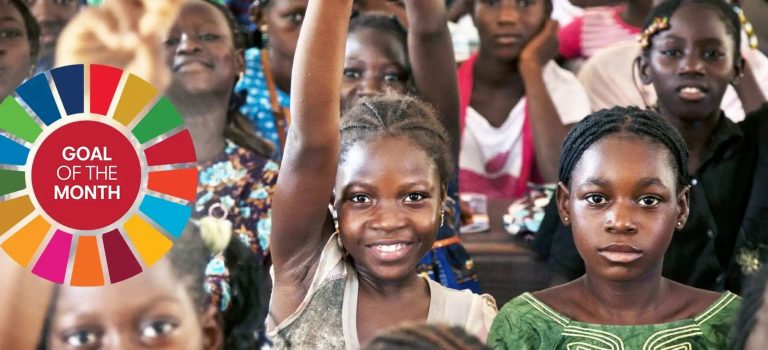
BE OPEN: the Future of Education as seen by UNESCO’s Special Commission and nine ideas for post-COVID action
The global health pandemic has shined a harsh light on the vulnerabilities and challenges humanity faces. It has provided a clear picture of existing inequalities—and a clearer picture of what steps forward we need to take, chief among them addressing the education of more than 1.5 billion students whose learning has been hampered due to school closures.
The UNESCO International Commission on the Futures of Education presented nine key ideas for navigating through the COVID-19 crisis and its aftermath, contending that we cannot forget core principles and known strengths as we face unprecedented disruption to economies, societies and—our particular focus here— education systems.
It is evident that we cannot return to the world as it was before. One of the strongest messages in the report is that our common humanity necessitates global solidarity. We cannot accept the levels of inequality that have been permitted to emerge on our shared planet. It is particularly important that the world supports developing countries with investment in 21st century education infrastructures; this will require the mobilization of resources and support from developed countries, in particular with debt cancellation, restructuring, and new financing.
The magnitude of this challenge is clearly evident with regard to the digital divide in Africa. For example, only 11% of learners in sub-Saharan Africa have a household computer and only 18% have household internet, as compared to the 50% of learners globally who have computers in the home and the 57% who have access to internet. Already we see that the disruptions brought on by the pandemic are exacerbating inequalities both within and across countries. We urgently need investment and structural change so that short-term setbacks do not grow into larger, long-lasting problems.
There is a serious risk that COVID-19 will wipe out several decades of progress—most notably the progress that has been made in addressing poverty and gender equality. While the pandemic demonstrates that we belong to one interconnected humanity, social and economic arrangements mean that the impacts of the virus are disparate and unjust. Gender discrimination means that girls’ educational attainments are likely to suffer greatly, with a risk of many not returning to school post-COVID-19. This is not something we should accept; we must do everything in our power to prevent it. COVID-19 has the potential to radically reshape our world, but we must not passively sit back and observe what plays out. Now is the time for public deliberation and democratic accountability. Now is the time for intelligent collective action.
Decisions made today in the context of COVID-19 will have long-term consequences for the futures of education. Policy-makers, educators and communities must make highstakes choices today—these decisions should be guided by shared principles and visions of desirable collective futures. COVID-19 has revealed vulnerabilities; it has also surfaced extraordinary human resourcefulness and potential. This is a time for pragmatism and quick action, but it is also a moment when more than ever we cannot abandon scientific evidence. Nor can we operate without principles. Choices must be based on a humanistic vision of education and development and human rights frameworks.
The 2030 Agenda for Sustainable Development provides many of the necessary signposts and guidelines. The International Commission on the Futures of Education—established by UNESCO in 2019 and composed of thought leaders from the worlds of academia, science, government, business and education—presents nine ideas for concrete actions today that will advance education tomorrow.
- Commit to strengthen education as a common good. Education is a bulwark against inequalities. In education as in health, we are safe when everybody is safe; we flourish when everybody flourishes.
- Expand the definition of the right to education so that it addresses the importance of connectivity and access to knowledge and information. The Commission calls for a global public discussion—that includes, among others, learners of all ages—on ways the right to education needs to be expanded.
- Value the teaching profession and teacher collaboration. There has been remarkable innovation in the responses of educators to the COVID-19 crisis, with those systems most engaged with families and communities showing the most resilience. We must encourage conditions that give frontline educators autonomy and flexibility to act collaboratively.
- Promote student, youth and children’s participation and rights. Intergenerational justice and democratic principles should compel us to prioritize the participation of students and young people broadly in the co-construction of desirable change.
- Protect the social spaces provided by schools as we transform education. The school as a physical space is indispensable. Traditional classroom organization must give way to a variety of ways of ‘doing school’ but the school as a separate space-time of collective living, specific and different from other spaces of learning must be preserved.
- Make free and open source technologies available to teachers and students. Open educational resources and open access digital tools must be supported. Education cannot thrive with ready-made content built outside of the pedagogical space and outside of human relationships between teachers and students. Nor can education be dependent on digital platforms controlled by private companies.
- Ensure scientific literacy within the curriculum. This is the right time for deep reflection on curriculum, particularly as we struggle against the denial of scientific knowledge and actively fight misinformation.
- Protect domestic and international financing of public education. The pandemic has the power to undermine several decades of advances. National governments, international organizations, and all education and development partners must recognize the need to strengthen public health and social services but simultaneously mobilize around the protection of public education and its financing. 9. Advance global solidarity to end current levels of inequality.
COVID-19 has shown us the extent to which our societies exploit power imbalances and our global system exploits inequalities. The Commission calls for renewed commitments to international cooperation and multilateralism, together with a revitalized global solidarity that has empathy and an appreciation of our common humanity at its core. COVID-19 presents us with a real challenge and a real responsibility. These ideas invite debate, engagement and action by governments, international organizations, civil society, educational professionals, as well as learners and stakeholders at all levels.
Update: BOA added 18 new video tutorials on Photoshop by Howard Pinsky
Update: BOA added 18 new video tutorials on Photoshop by Howard Pinsky
BE OPEN Academy Poll. Best Online Course in UX Design
According to the visitors of the BE OPEN Academy platform, UX / UI: Fundamentals for interface design available from the University of São Paulo is the best online course in UX design. This introductory course consists of theoretical classes with examples practical application of each subject covered. It has gained more votes than other online courses in UX Design:
- UX Design: From Concept to Prototype by University of Michigan
- UX Design by Course Cloud
- Creative Design Essentials – UI/UX Design by e-courses4you
- User Experience (UX) Fundamentals by Janets
Update: BOA added 4 new video tutorials by Netflix, Skillshare and more.
Update: BOA added 4 new video tutorials by Netflix, Skillshare and more.
Update: BOA added 5 new offline courses offered by Academie Minerva, Netherlands
Update: BOA added 5 new offline courses offered by Academie Minerva, Netherlands
BE OPEN Academy Poll. Best PhD in Architecture and Design offered in a European University
BE OPEN Academy Poll. Best PhD in Architecture and Design offered in a European University
MPhil/Phd Architecture programme offered by The Royal College of Art, UK, has won in our online pole about the best offline PhD programme in Architecture and Design offered in a European University. The Architecture research programme focuses on practice-led and interdisciplinary research with tangible public and social impact.
The other entries in the pole were:
- Art – PhD/MPhil offered by The University of Edinburgh, UK
- Art and design PhD offered by Estonian Academy of Arts, Estonia
- Doctorate in Architecture (PhD) offered by University of Lisbon, Portugal
- PhD through Practice in Design offered by National College of Art and Design, Ireland
Update: BOA added 9 new offline courses offered in Film, Television and Scenography by Aalto University
Update: BOA added 9 new offline courses offered in Film, Television and Scenography by Aalto University