




GLOBAL FUTURES OF CLIMATE

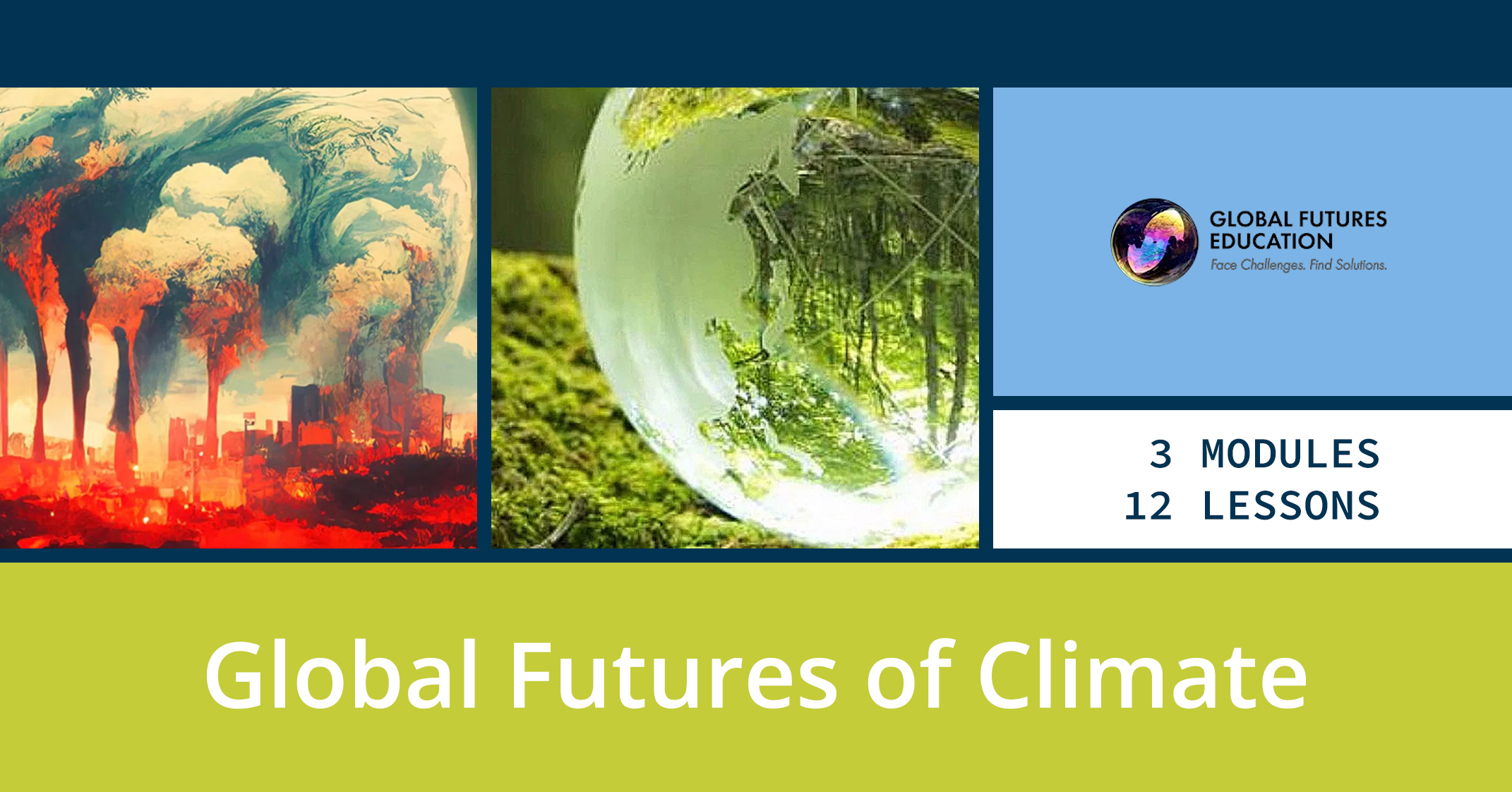
GLOBAL FUTURES OF CLIMATE

“Global Futures of Climate” is the first Course in the series on Global Systems designed for individuals and organisations committed to facing global challenges and finding solutions.

Course Content includes 12 Lessons across 3 Modules:

  1. Climate Change
  2. Energy Systems
  3. Ecosystem

There are two lessons in each, examining the challenges, and addressing the alternatives. This self-paced, web-based Course is incredibly well researched to give you a deep understanding of our emerging world and provides a solid basis for you to build your personal, professional, and family futures.

Why you should take this course:

  • Learn from Professor Jennifer Gidley’s valuable expertise gained from 30 years’ experience as an international futures consultant at the highest levels of global thinking into the complexity and wide impacts of Climate Crisis, Energy Systems and Ecosystem collapse
  • Join an international cohort of futures-ready citizens informed about the real challenges of climate change and how to find solutions
  • Be empowered to appreciate and implement the wide range of solutions available to mitigate and adapt to climate crisis; reduce emissions through new energy systems; and rebuild ecosystems through regenerative agriculture and ocean practices
  • Boost your career opportunities at a time when most corporations are beginning to realise they need to be climate literate
  • Learn how solutions offered align with the UN Sustainable Development Goals (SDGs)
  • Receive a Certificate of Completion (Global Futures of Climate)
  • Continuing Professional Development (CPD) – 30 Points

To enroll, please contact info@beopenfuture.com

GLOBAL SOCIO-CULTURAL FUTURES

GLOBAL SOCIO-CULTURAL FUTURES

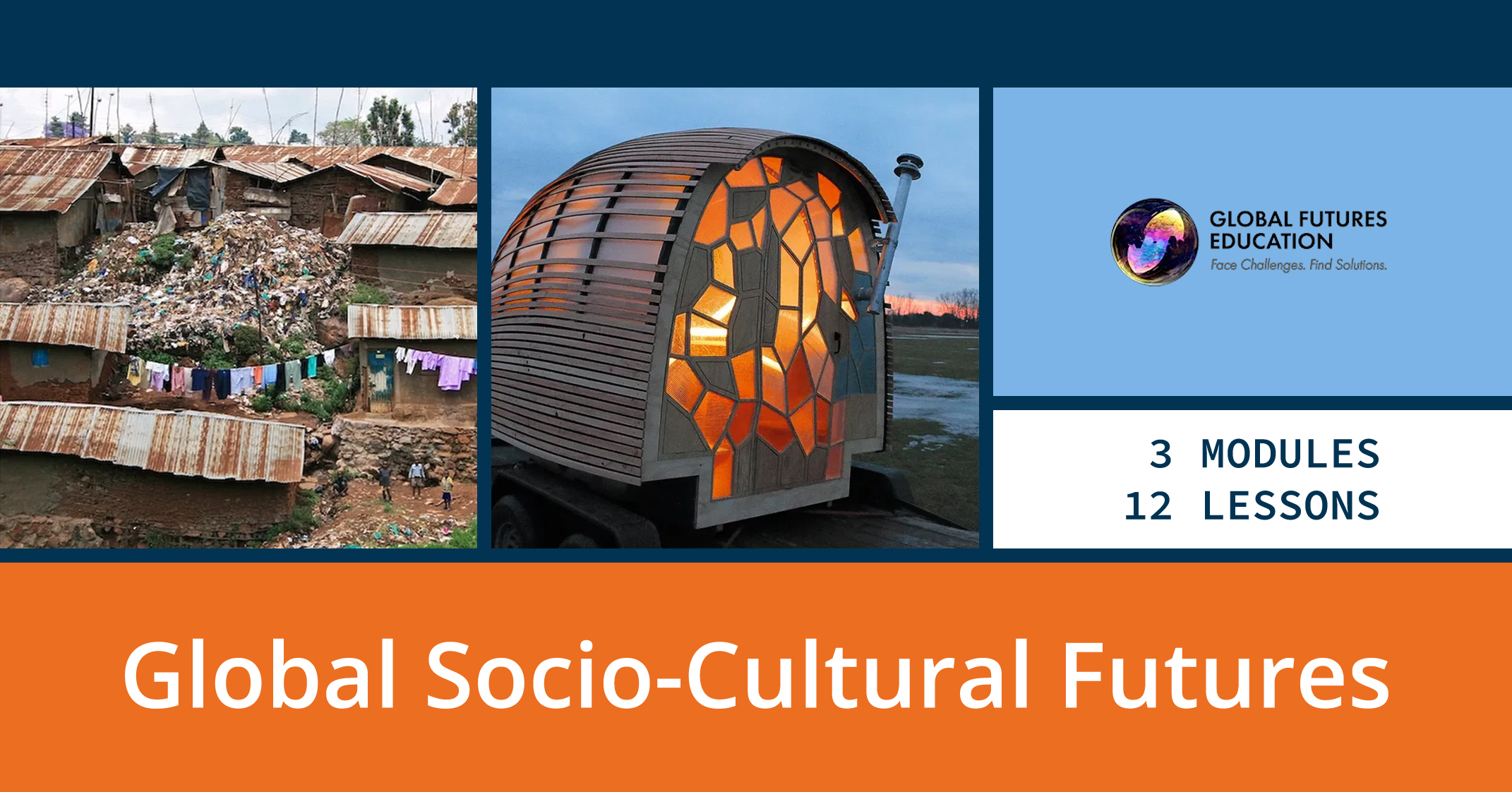
“Global Socio-Cultural Futures” is the second Course in the series on Global Systems designed for individuals and organisations committed to facing global challenges and finding solutions.

Course Content includes 12 Lessons across 3 Modules:

  1. City Futures
  2. Human Futures
  3. Educational Futures

There are two lessons in each, examining the challenges, and addressing the alternatives. This self-paced, web-based Course is incredibly well researched to give you a deep understanding of our emerging world and provides a solid basis for you to build your personal, professional, and family futures.

Why you should take this course:

  • Learn from Professor Jennifer Gidley’s valuable expertise gained from 30 years’ experience as an international futures consultant at the highest levels of global thinking into the complexity and wide impacts of Climate Crisis, Energy Systems and Ecosystem collapse
  • You will learn about rapid urbanisation and its social, cultural and environmental stresses; entrenched socio-cultural issues such as racism, gender inequality, and loss of meaning; and why the factory model of schooling is obsolete
  • Be empowered to imagine, design and create social and cultural innovations such as ecological and smart cities; social and cultural practices that are empowering, equitable, inclusive, and meaningful; and educational approaches that are creative, evolutionary, integral, and transformative
  • Learn how solutions offered align with the UN Sustainable Development Goals (SDGs)
  • Receive a Certificate of Completion (Global Socio-Cultural Futures)
  • Continuing Professional Development (CPD) – 30 Points

To enroll, please contact info@beopenfuture.com

GLOBAL GEO-POLITICAL FUTURES

GLOBAL GEO-POLITICAL FUTURES

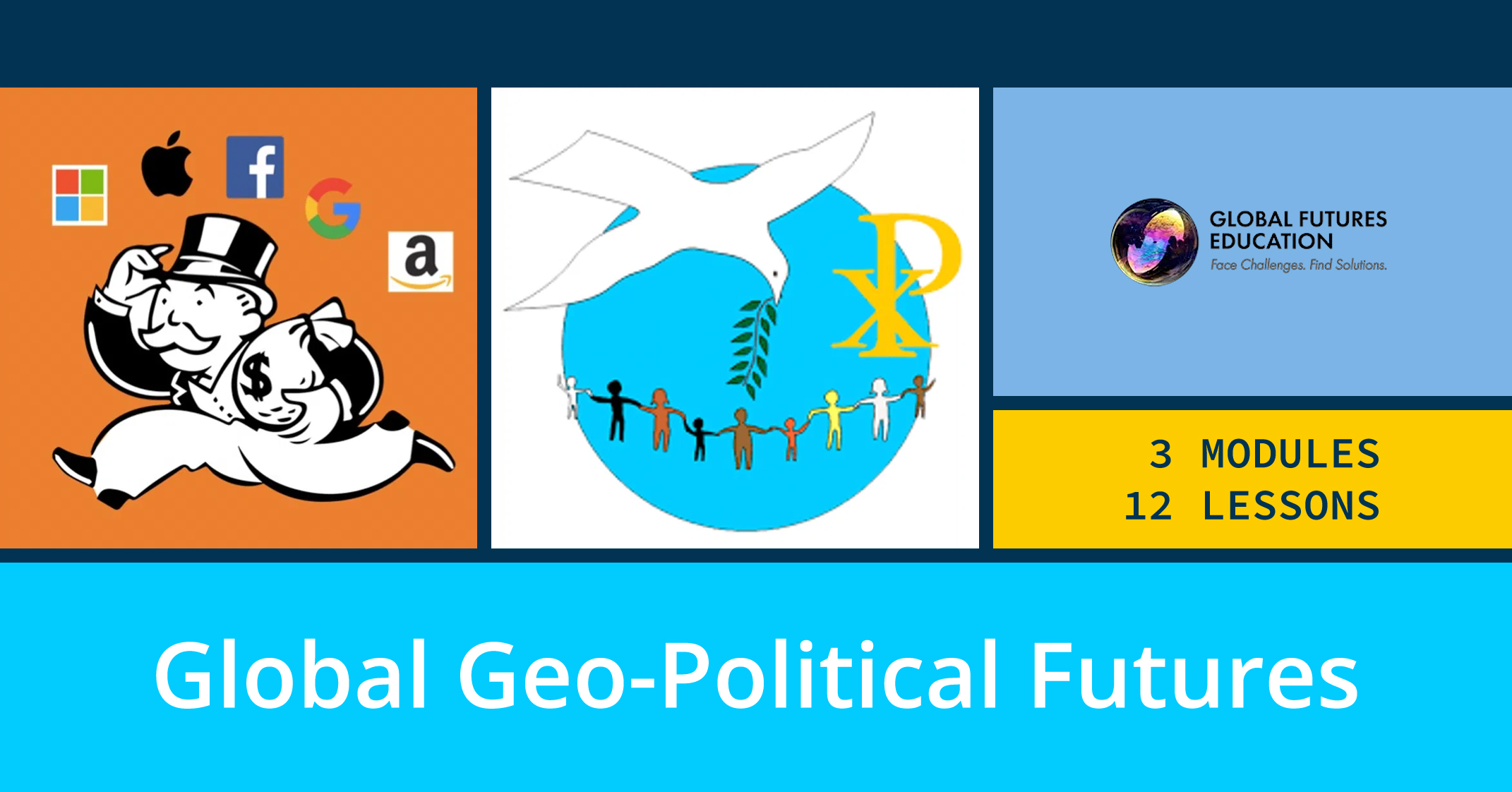
“Global Geo-Political Futures” is the third Course in the series on Global Systems designed for individuals and organisations committed to facing global challenges and finding solutions.

Course Content includes 12 Lessons across 3 Modules:

  1. Transforming Economics
  2. War and Peace
  3. Technology Futures

There are two lessons in each, examining the challenges, and addressing the alternatives. This self-paced, web-based Course is incredibly well researched to give you a deep understanding of our emerging world and provides a solid basis for you to build your personal, professional, and family futures.

Why you should take this course:

  • Learn from Professor Jennifer Gidley’s valuable expertise gained from 30 years’ experience as an international futures consultant at the highest levels of global thinking into the complexity and wide impacts of Climate Crisis, Energy Systems and Ecosystem collapse
  • Learn about the growing global challenge of economic disparity, which exacerbates the increase in wars, conflicts and terrorism, and the links between these challenges and exponential technology development
  • Be empowered to appreciate and implement geo-political solutions such as the circular and sharing economy; collaboration, diplomacy and education as pathways to active peace; and to contribute to the human-centred, ethical turn in technology
  • Learn how solutions offered align with the UN Sustainable Development Goals (SDGs)
  • Receive a Certificate of Completion (Global Geo-Political Futures)
  • Continuing Professional Development (CPD) – 30 Points

To enroll, please contact info@beopenfuture.com

Circular Economy Masterclass: Build a Sustainable Future

Circular Economy Masterclass: Build a Sustainable Future

The way we design, produce, and dispose of products is no longer sustainable. The linear economy — take, make, waste — is fueling climate change, resource depletion, and pollution at an accelerating rate. But there is a better way forward.

Welcome to the Circular Economy Mastery Course — your complete guide to building sustainable systems, future-proofing your business, and creating value without waste.

Whether you’re a sustainability professional, entrepreneur, designer, policymaker, or simply curious about building a greener future, this course will give you the knowledge, tools, and confidence to lead change. No prior experience is required — just a willingness to think differently.

In this course, you’ll learn how to:

  • Understand the core principles of the Circular Economy and how it differs from recycling and traditional sustainability models
  • Explore foundational frameworks like the Butterfly Diagram, Cradle-to-Cradle, and systems thinking
  • Identify and apply circular business models such as product-as-a-service, closed-loop systems, and reverse logistics
  • Analyze real-world case studies from industries like fashion, food, electronics, and construction
  • Use practical tools to design waste out of systems, implement life cycle thinking, and measure circular impact
  • Build a personalized circular action plan for your business, organization, or sector

This isn’t just a theory course. It’s action-oriented, insight-packed, and designed to help you create real-world change. You’ll get access to templates, strategy guides, and exercises that help turn knowledge into results.

Who is this course for?

  • Business leaders, entrepreneurs, and innovators seeking sustainable advantage
  • Designers, engineers, and developers looking to create circular products and services
  • Students and educators in sustainability, environmental science, or business
  • NGO workers and policymakers building circular strategies
  • Anyone passionate about redesigning our economy for a better future

ENROLLMENT IS OVER


Sustainable Regional Principles, Planning and Transportation

Sustainable Regional Principles, Planning and Transportation

This course is part of the Sustainable Cities Specialization

Language of instruction: English
8 languages available
Some materials may not be translated

William RoperTeachers: William Roper
Financial assistance available
3,615 already registered


Skills gained

  • Environmental Protection
  • Zoning Strategies
  • Regional Park Planning
  • Efficient Transportation Systems
  • Regional Planning

There are 4 modules in this course

  • Sustainable Regional Fundamentals
  • Regional Planning Including Developmental Priorities
  • Regional Transportation System and the Land – Use Connection
  • Case Study of the Fairfax County, Virginia Comprehensive Transportation Plan

This course will provide students with an introduction to sustainable regional principles, regional planning concepts and evaluate regional transportation system issues. This will be achieved through dynamic video lectures, practical case studies and the evaluation of practices for success. These will include discussions of the importance of the regional plan, how to engage community involvement, the importance of understanding a development transect and others. Strategies for growth priorities, along with consideration of available housing and food security will also be addressed. The concepts of providing a rural preserve and a rural reserve will be evaluated and mapping of key aspects of the region, such as neighborhoods and districts will be explained. Evaluation of regional transportation systems will be addressed including multi-mobile balance and building choices into the transportation system modes. The considerations for including a regional railway system along with accommodating user mobility and accessibility will be explored.

ENROLLMENT IS OVER

Street Experiments for Sustainable and Resilient cities

Street Experiments for Sustainable and Resilient cities

Language of instruction: English
8 languages available
Some materials may not be translated

Ana RivasBenjamin Büttner Teachers: Benjamin Büttner and Ana Rivas
Technische Universität München (TUM)
Financial assistance available

What will you learn

You’ll learn how cities implement and evaluate different types of street experiments to improve the livability of neighborhoods

Skills gained

  • Experimental Design
  • Placemaking
  • Urban Mobility
  • Urbanism
  • Critical Thinking

There are 4 modules in this course

  • Streets as Placemaking and Movement (Raising Awareness)
  • Getting to Know Street Experiments
  • Implementing Street Experiments
  • Evaluating Street Experiments

Our streetscape, despite its feeling of permanence in our environment, is an ideal venue for experimentation. We have come to accept traffic movement as the default function for the street. Therefore, we need to rethink its design and space distribution, go back to its original and basic function and see them as public spaces – Transform them into places for social activities, where conversations can take place and places where kids can play. This course shows you examples of remarkable changes and gives you a toolbox for implementing and evaluating street experiments yourself. We invite you on this journey to reimagine what is possible if we dare to use our public space differently.

ENROLLMENT IS OVER

The Sustainable Development Goals – A global, transdisciplinary vision for the future

The Sustainable Development Goals – A global, transdisciplinary vision for the future

Language of instruction: English
8 languages available
Some materials may not be translated

Katherine Richardson Teachers: Katherine Richardson
Financial assistance available
87,399 already registered


This course has 3 modules

  • Sustainable Development as a Global Goal
  • Managing human impacts on the natural world
  • Social sustainability and the way forward

In 2015, the UN launched the 17 Sustainable Development Goals (SDGs). Adopted by 193 member states, the goals represent an important international step in setting humanity on a trajectory towards sustainable development. Within this course, you will get a historical overview of how sustainability has been understood, as well as a thorough introduction to the SDGs – what they are, how progress can be measured, and how the SDGs are relevant for the management of the global systems supporting humanity. The course will examine how various societal actors are responding to and implementing the SDGs.

While all of the SDGs are essential to sustainable development, SDG 13, Climate Action, is usually perceived as the most urgent in terms of the need for a swift implementation on a global scale. Therefore, particular focus is given to this SDG. Through the course, you will gain up-to-date knowledge of the current understanding of human impacts on the Earth at the planetary level. Progress towards establishing global management of human interactions with the climate system within the United Nations Framework Convention on Climate Change (UNFCCC) is also discussed. The course is designed and taught by Professor Katherine Richardson, who is a member of the 15-person panel appointed by the UN General Secretary in 2016 to write the 2019 Global Sustainable Development Report. In each lecture, Katherine interviews experts who provide insights relevant to the topic at hand.

ENROLLMENT IS OVER

Collaborative Foresight: How to Game the Future

Collaborative Foresight: How to Game the Future

This course is part of the Futures Thinking Specialization

Language of instruction: English
8 languages available
Some materials may not be translated

Jane McGonigal

Teachers: Jane McGonigal
Financial assistance available
11,123 already registered


What will you learn

  • Design and run a multiplayer forecasting game
  • Game out hard-to-predict consequences in any future scenario
  • Anticipate long-term harms of new technologies and how to prevent them
  • Create diverse, inclusive futures thinking communities

Skills gained

  • Creativity
  • Strategic Planning
  • Future Forecasting
  • Gaming
  • Collaboration

ENROLLMENT IS OVER