



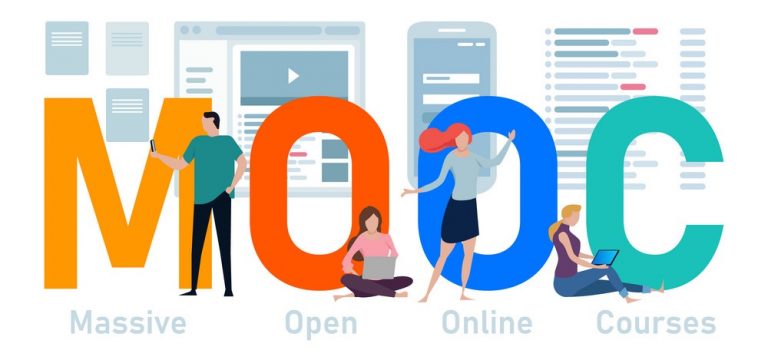
One of the interesting facts about higher education during the pandemic: last year, when we saw traditional enrollments in higher education decline, enrollments in non-traditional providers – such as Coursera, EdX and other massive open online courses (MOOCs) – boomed. Does that mean the learning paradigm will be changed forever? Or can traditional colleges and universities compete with companies like Coursera?
When two Stanford University professors, Andrew Ng and Daphne Koller, started Coursera in 2012, leading universities had little interest in teaching their own students via the online format. Back then, the project’s focus was on building free online courses to bring teaching from elite colleges out to the world. The target market was people who couldn’t get to a traditional campus, so the project did not have a revenue model or offer degrees.
Today, it is a major online education platform that serves students in North America, Europe, Asia, Latin America, the Middle East, and Africa. It provides students around the world with thousands of free and low-cost courses, from more than 300 universities and companies. The courses from various domains, ranging from computer science to cooking are offered by the best educators from the well-known schools, such as Columbia University, Carnegie Mellon University, and Duke University. Industry partners, such as Cisco, Intel, and IBM, offer working professionals certificates and specializations. Employees can also upskill with training opportunities offered through corporate partners such as Airbus, L’Oréal, and PayPal. HR experts admit that a certificate, specialization, or degree from Coursera adds value to the student’s CV, thus offering an affordable and convenient way to advance their career.
The current Coursera business model now generates revenues from subscriptions, verified certificates, and degrees. In March 2021, the company went public. What preceded that is the fact that in the spring of 2020, as colleges across the country shut down, enrollments at Coursera were four to five times higher than usual. According to the company, more than 3,000 universities across the world, resource-constrained institutions among them, had expressed interest in putting their own courses online, aiming to re-bundle their offerings in a less expensive way.
One of the key trends behind these changes is the digital revolution putting more power in the hands of learners, while control the colleges had over the market gradually slips. According to Arthur Levine, a distinguished scholar at New York University and president emeritus of Columbia University’s Teachers College, measuring learning by time in seats will gradually transition to outcome-based education. Degrees won’t necessarily be the dominant form of credential anymore as students turn to “just-in-time education” that quickly provides them with the skills for microcredentials they need for the labor market. In his book “The Great Upheaval,” co-written with Scott Van Pelt, the associate director of the communications program at the Wharton School at the University of Pennsylvania, he explains that present-day students prioritize personalized education and low prices. Accustomed to getting what they need 24/7 in other spheres of life, they are not willing to acquire a whole expensive degree programme, when what they actually need is an opportunity to take things that are going to be most important to their futures, rather than a whole series of unrelated courses.
Although MOOC platforms do not create educational materials, but partner with numerous university partners and companies to offer quite an impressive catalogue of courses and degrees. “Platforms are very, very good at creating more diversity, not less,” argues Jeff Maggioncalda, Coursera CEO. “They do really good at niches, because even if there are only 1,000 people in the world who want a course on ‘the structural issues of glued plywood,’ or whatever, no one would ever want to make a course for that because it’s not big enough. But if you get to the global audience, it would be.”
Moreover, Coursera has courses from the top education content providers from around the world, including universities and companies that are reputable in the given area of knowledge – such as Google in IT. Such courses take much less time to complete than a traditional degree programme offered by a regional university or a community college that a student can alternatively afford to increase their odds of finding a decent job. What is even more important, this degree will not probably add anything to their resume. “So what would a Google certification be worth to me as a person who earned it versus a credential, a degree from my local regional university?” asks Levine. And he goes on, “Everybody’s heard of Google,” while a local communityt college might be regarded as an institution for mediocre people.