The novel coronavirus is already upending higher education as we know it, with many universities and other higher education institutions all over the globe being forced into online teaching. This has led many evangelists of online learning to make ambitious statements that the new golden era of online education has finally come, not only for the time of the crisis but with a potential to replace the face-to-face teaching altogether in the future. It is impossible to overlook online learning’s positive aspects; however, the way it is presented as a simple and practical solution might be misleading.
Kyungmee Lee, Lecturer in Technology Enhanced Learning, Lancaster University, points out that the current rapid global adoption of online education is astonishing. To promote social distancing during the pandemic, most universities all over the globe have placed their courses and are delivering their teaching online. Many South Korean universities have moved their teaching online, providing students with the required number of classes without face-to-face contact with educators. In the UAE, the ministry of education announced that university teaching in the country would move online. In Italy, all universities closed, switching to online learning. In the USA, colleges were among the first institutions to take drastic action in response to the virus, cancelling in-person classes and moving most or all coursework online. This global shift to online learning follows the example set by universities in China, where the outbreak first began.
Peter Mayo, Professor at the University of Malta and author of Higher Education in a Globalising World: Community engagement and lifelong learning, believes that the good thing about the current situation is that “ it makes those who are resistant to modern digitally mediated technology take the plunge, whether adequately trained for this purpose or not. Many academics from Greece, Italy, Cyprus and the UK revealed that online learning is a new experience foisted on unprepared academics. It might enable them to transcend archaic ways.”
According to Bloomberg, many elite colleges, including small liberal arts schools, have resisted online teaching by trumpeting their small classes, mentoring from professors, and extracurricular activities, mostly in order to justify their tuition cost, which can top $70,000 a year. Still, even they are forced by the pandemic to switch to distance learning for at least the rest of the school year.
The history of education is full of episodes whereby necessity led to ingenuity. Mayo recalls the “flying university” in Poland that appeared under Nazi occupation, when Polish universities went underground and operated as distance learning institutions, with material “flying” from one place to another. It was innovative and attested to the resilience of the Polish academic community, both students and professors, involved. However, the present crisis, Mayo goes on, resembles, in certain cases, the situation during the immediate post revolution literacy campaigns in Latin America and elsewhere when young literacy workers were rushed to the field without adequate preparation.
Today we see educators throughout the world urged, if not compelled, to carry out their teaching online, irrespective of their training for this purpose. Lee warns that although undoubtedly, “online learning can make university education more accessible, affordable, interactive and student-centred”, when carefully implemented, it is important to “set realistic understandings and expectations of how it can support students affected by coronavirus measures.” This is especially the case for universities that disregarded online education before the coronavirus outbreak. The Bloomberg cites Michael Horn, co-founder of the Clayton Christensen Institute for Disruptive Innovation and a higher education consultant, who shares this concern: “Schools that haven’t historically embraced online education are now being forced into it. Rather than becoming a crowning moment for online education, this crisis could provoke a backlash.”
Basically, both academics and students may lack the training needed for quality online learning. It is true that some higher education institutions have had adequate preparation for moving to online teaching, as a good percentage of their students are distance learning students. But it also should be mentioned that adequate training for teachers in this case implies that of a year’s duration. Describing the process of developing online course, Lee stresses that normally it involves a team of experts including academics, instructional designers, programmers and illustrators, who collectively follow systematic design processes. Still, Bloomberg refers to education technology researcher Bay View Analytics, saying that 70% of 1.5 million America’s faculty members have never taught a virtual course before.
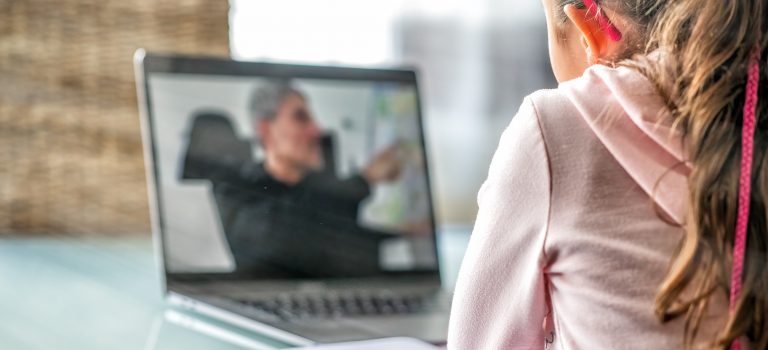
This would mean that academics who have never taught online would be offering courses that have not been adequately developed. Many unprepared academics forced to suddenly adopt virtual learning choose to read their lectures using a webcam and the same slides they used for face-to-face teaching as well as teach using Skype or software for videoconferencing to deliver the same lectures for the same 45 minutes. Phil Regier, the ASU dean, predicts that would be challenging to hold students’ attention in this case. “Here’s the first lesson,” he says. “There’s nothing more boring than a 45-minute video. They’re horrible; nobody can get through those.”
Lee also points out another problem connected with this simple ‘onlinification’: there are significant differences between presenting slides on projection screens in lecture theatres and on a smartphone screen. “The font size and page ratio of the slides needs to be carefully checked and revised to improve their readability,” she writes. “If course materials such as key texts are not properly digitised, students’ learning can be completely disrupted.”
This brings up another topic – student engagement. Retaining student interest in online learning can be even harder that in face-to-face classes – a fact proved by higher drop-out rates in online courses when compared to in-class teaching. Online learning can address mass students anywhere and at any time throughout the world, yet this form of delivery requires at least adequate access to high-speed internet from where they are self-isolated. This could be a problem for low-income students who do not have basic technological tools or for those in rural areas often lacking reliable internet access and videoconferencing capabilities. Some institutions in the US have responded to such concerns by expanding wireless internet hotspots into parking lots, allowing students without Wi-Fi at home to complete coursework and log in to online classes from their cars, but this looks more like a band-aid solution.
Researchers working on the use of online learning in higher education point out that dissatisfied students who find online learning inferior to face-to-face lectures may take action against universities. Thus, Lee provides an example of Korean students who, frustrated by the switch to online learning because of coronavirus measures, requested a refund of their tuition payment.
Another thing to be taken into consideration by academic staff is how to use modern technology in what Mayo calls “appropriate ways.” By appropriate ways he means avoiding the use of this technology as another surveillance mechanism: “Recorded sessions, ostensibly for the benefit of those who could not tune into the live session, can inhibit student participation in the discussions.” But as there are two parties participating in the remote learning process, Emma Pettit explores this topic at a different perspective in her article A Side Effect of Remote Teaching During Covid-19? Videos That Can Be Weaponized, after the head of the conservative political-action group Turning Point USA told college students whose professors had switched to online classes to share with Turning Point videos of “blatant indoctrination.”
During the ongoing crises, development of a plausible system of assessment and evaluation of student learning outcomes opens a new set of challenges. According to the Chronicle of Higher Education, many academics are trying to “keep their instruction simple, and to communicate to their students that they care.” For that purpose, institutions have relaxed their grading policies, requiring the courses be graded pass/fail. Such a measure can only be accepted as a temporary one, while the spread of the virus implies the situation in higher education will not change in a couple of weeks. Alternative assessment methods are necessary, for after the crisis is over, the degree programme must be recognised and therefore all learning outcomes must still be achieved and demonstrated despite contingency measures that were in place.
All above said proves that going online has to be carefully planned, and faculty members at the front line of this movement need clear communication and a whole university approach. To May Lim, an associate professor at the Singapore Institute of Technology, shares their experience of educating in the time of coronavirus. She writes, “While some faculty members already had competencies in online or remote teaching in four areas – live streaming, pre-recorded teaching sessions, facilitating discussions in a digital platform and providing assessment and receiving feedback – much background preparation still had to be done to get academic staff, students and infrastructure ready for lessons to transition seamlessly into online learning.»
A lot of training in all shapes and sizes was carried out for lecturers, including face-to-face workshops, walk-in consultations, online training and self-help guides. The topics covered how to create narrated slides, how to run effective live streaming classes, how to design alternative assessments, and the use of online proctoring tools for assessments. Students were also provided with guides how to use the tools and much was said about self-management and managing procrastination in order to work with students’ motivation and engagement. What also helped is pulse checking done on a regular basis two weeks after the online replacement of the classes, which enabled further tweaks to improve the experience. At the same time, online meetings conducted with teaching staff to share experiences helped rectify common mistakes that were made.
All said, distant learning has a huge potential to grow into the dominant form of teaching in higher education despite all the challenges. However rapid implementation of online education as the expense of quality may result in online education being discarded after the coronavirus outbreak ends. Universities should consider online learning not solely as a way for them to survive this moment but also an opportunity to thrive in the future.