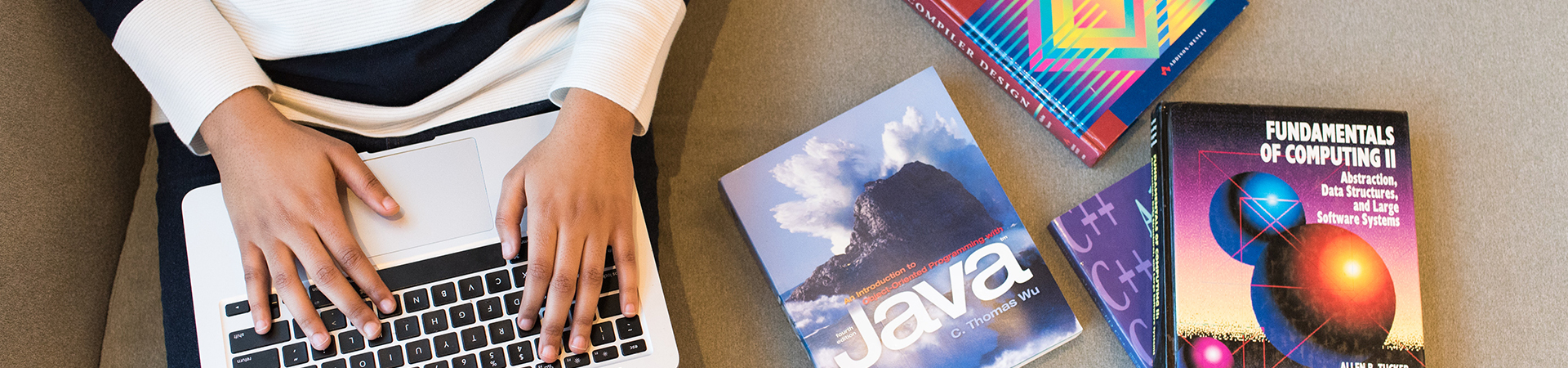
The crisis brought about by the COVID-19 has forced education – just like many other aspects of social and economic life – to shift online. This makes educators wonder if a practical subject like art can be taught online at all. Though particular challenges posed by the shift vary widely across disciplines and institutions, the question provides much food for reflection on the fundamentals of how art is taught.
Unlike, text-based subjects, teaching practical art courses online has always been a challenge for both teacher and student. In her recent article Teaching Art Online Under COVID-19 artist and educator Kaitlin Pomerantz has even compared teaching art online to teaching people in a land-locked town to swim without a swimming pool. She points it out that during the period of art school closings caused by the pandemic, educators faced the challenge of trying to “figure out how they could switch their materials, tools, and techniques-dependent, in-person, community-reliant, hands-on teaching of studio-based art to virtual platforms.”
The problems outlined by Pomerantz are echoed by many educators across art institutions. One of the challenges that first come to mind in relation with teaching art by distance learning is unavailability of physical resources—studios, kilns, editing software, darkrooms, woodshops, and peers— which in the online realm are replaced with on-screen communication. While certain screen-based mediums only need the technology to work perfectly, which is not always the case in remote rural areas, there is a fundamental problem concerning spatial mediums like sculpture that need comprehensive video instructions as well as a well-equipped studio, also not so often found in every home. For these mediums, a question arises of what remains of art-making when the institutional resources are not accessible. Is that possible to keep the studio practice standards high?
The same can be said about teaching materials and instructions. The ones previously used in the classroom appear not to be so simple to adapt for online teaching. Delivering practical activities online requires a radical rethinking of lesson content.
Another obvious disadvantage to working online is the lack of face-to-face contact between tutors and students, and further, the loss of the interaction between peers that forms a vital part of any classroom-based experience. Design critiques that generally provide art education with a structured means for intensifying the learning process may have certain detriments too, when performed online. According to Brad Hokanson, professor in Graphic Design at the University of Minnesota and author of papers on design critiques, online crits provide less opportunity for the informal, spur-of-the moment critique. The difficulty with text-mediated online critique, he explains, is that while written comments are recorded for later use, they take significantly more time to review and process by the critic, while online time and involvement is all defined, conscious, metered, and, hence, limited.
However, there are still media, such as synchronous video conference software or shared desktops that quite closely replicate the direct connection of the in-person design crit. As explained by Hokanson, the key thing in this case is to replicate the fluidity of conversation inherent to face-to-face art education, as it adds much to a critique, even if done through sharing screens and talking synchronously. Speaking of hands-on media, he gives an example of online music lessons connecting a violin player in Japan with an instructor in Finland. Asynchronous critique may be less effective as it cannot ensure the same interaction as an in-class conversation, but it can still provide direction and formative assessment through mark-up and annotation.
Authenticity issue is yet another common criticism of any form of distance learning. On top of that, there are numerous pain points connected with validity of online assessments and cheat prevention in art education.
All these issues that remain to be resolved make many higher education professionals believe that art and design education with its visually or interactionally intensive pedagogical models such as the studio model is impossible to do effectively online. However, there are some successful examples that demonstrate how art education can effectively exist in the online realm.
Many potential disadvantages are outweighed by the advantages. Accessibility is certainly one of these. From the very beginning, distance learning’s target student groups include those in rural communities, those with irregular patterns of employment, single and working parents, and adult returnees to education and careers. Often, these students are frustrated by the lack of viable alternatives to attendance-based courses and feel isolated and excluded by their circumstances.
In his article Can You Teach Art Online? Kyle Dancewicz, Director of Exhibitions and Programs at SculptureCenter, New York, describes the strategy used by Constantina Zavitsanos, who teaches art at the New School. Her approach underscores the common paradigm of equating physically showing up in the classroom with learning. According to Dancewicz, Zavitsanos has always allowed students to attend class using Zoom, an option often necessary for those who cannot attend in person because they are disabled or sick, or because the work they create is best presented outside of traditional classroom critique. In addition, Zavitsanos sometimes offers instruction via Zoom or accepts students’ prerecorded performances for group critique. This access-driven approach elevates distance learning from its perceived status of a disruption to the norm, while also opening deeper questions about the presumed defaults of art-making as a whole: When a student has a reason not to use the physical classroom to display their work, it reveals the physical and conceptual limits the classroom imposes.
Modern students often seek the same degree of flexibility they are accustomed to in other spheres of life. “Like it or not, we live in an age where consumers want what they want, when they want it; that’s why we have the 24-hour supermarket and the all-night garage,” says Michael Stewart, founder director at Interactive Design Institute, UK.
With their Studio Art School that is the only institution in the UK approved to offer the Level 3 Diploma in Art and Design by distance learning, everything is online. Each student is given access to their personal online studio where they can download learning materials and communicate with their tutors at any time, by simply logging on. Lessons are presented as a series of step-by-step demonstrations that do not require specialized software or bandwidth.
Stewart recalls that the criticism he and his colleagues faced when they first suggested delivering practical art and design courses online came from two distinct fronts: the “technically, it can’t be done” crowd, and the “aesthetically, it shouldn’t be done” crowd. “Each side seemed determined to believe I was claiming e-learning to be superior to classroom learning; I never have and never will,” he explains.
Recognizing the limitations of teaching art online, Stewart provides a number of arguments for the model. While lacking the amount of peer-to-peer communication that class-based education has to offer, the online studio can give students as much time as is necessary letting them proceed at a pace which is best suited to each of them. The advantages also include the fact that online art students do not have to compete against their peers for tutor attention, or endure the distractions that can sometimes be part of the group experience.
All conversations with tutors, including advice, guidance, and comments on works-in-progress, are recorded and stored for future reference within the student’s personal studio area, providing both student and tutor with a complete history of their interaction. Similarly, with the use of the stored images, specific points in the creation of the student work can be referred to at each stage. Unlike traditional forms of learning in the visual arts, where once completed, the piece of work only exists in its final manifestation, within the online studio, the piece exists as an ongoing process, recorded at every stage of its development. At the same time, this method provides little opportunity for cheating. Not only dozens of images for each piece are stored in the system documenting all stages of the process, but also sketchbook notes and other supportive materials can be requested at any time.
As Studio Art School team is aware that many students may not have access to dedicated studio facilities, specialized equipment or unlimited budget for materials, all demonstrations are conducted and photographed on a standard kitchen table.
Some institutions attempt at re-creating the studio-based model in online design education courses. One of them is Minneapolis College of Art and Design, USA, with its Distance Learning Initiative, intended to appeal to a diverse audience – degree seeking students, high school students interested in attending art school, arts professionals, arts educators, and other life-long learners. The program maintains the role of the instructor in the studio model using well-formed, guided, direct questions and instructions and features online sketchbooks and portfolios providing a complete documentation of students’ work throughout a course, as well as visual examples of past student work that are used to set standards for work level expectations. The online format also allows bringing in guest artists from remote locations to some of its online courses whom students otherwise could not access. The team admits that the program is still small and evolving – e.g. online design critique still remains a “special challenge”.
The existing examples prove that in certain circumstances e-learning could be as effective as classroom-based teaching. It would be irrational to deny that there is quite a number of challenges related to delivering practical art and design courses online – rewriting syllabi, redesigning courses and teaching materials, reinventing assessment and critique approaches, and learning new technologies, just to name a few. Still, the COVID-19 crisis has demonstrated that shift in this direction from traditional classroom-based education should not be perceived as a departure from normal, but quite on the contrary, as a way to expand the kinds of places where art school happens and where art is made.