This spring universities all over the world were forced to close their campus doors because of coronavirus outbreak. Life has changed considerably since, and the coming academic year brings with it a new set of obstacles for educators to surmount. The universities and colleges are working hard mapping out their plans of actions that would ensure that students stay safe in the coming academic year, but also gain the maximum experience from their time at university.
The pandemic has changed the way that universities function, replacing on-campus lectures with online ones, introducing social distancing measures in classroom-based seminars and going virtual with students social activities. Although the measures will vary across universities and countries, notable changes expect students when classes start again in September.
Some students acknowledge they find it hard to figure out what classes will be like in the coming academic year. According to a recent survey, more than one in five students applying for undergraduate places are even considering deferring for a year if their university will not be operating as it usually would.
New realities of campus life
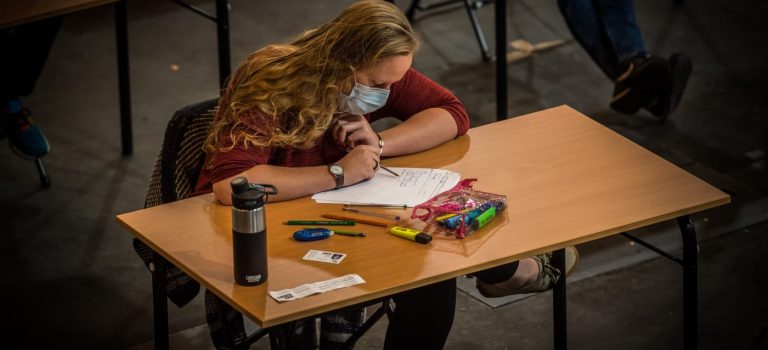
As universities work to adapt to the ‘new normality’, the changes will touch all aspects of life on college campuses. With slight variations, default measures will include enhanced hygiene and cleaning protocols, reduced density of classrooms, consistent signage across campus, and various “physical aids”, like perspex screens, to ensure distancing. Students will need to wear face masks when on campus, and those of them who travel outside the local area will be asked to self-isolate upon their return.
Notwithstanding the fact that teaching will be mostly carried out remotely, many campuses are still planning to offer housing to students. In California, according to the guidance released by the state, housing should be limited to one student per room whenever possible. University of California, Berkeley, plans to house about 3,200 students, especially those who have disabilities or are low-income, although the university is planning to start the year with no in-person classes. Accommodation in Loughborough University, UK will be open and if for any reason lockdown measures are reintroduced, students will not be charged for any weeks that they have to return home while the lockdown is in place.
Limitations on gatherings would change the approach to students social activities, as social interaction will be mostly carried out through a wide range of virtual events.
All university are working hard to support their students both financially and psychologically. For example, Simon Fraser University in Canada are planning to have an additional mental health care manager to support students who are struggling during this time. They have also created a website aiming to help students find work and learn about financial aid available to them.
Blended learning in the new norm
According to Times Higher Education, who has prepared a breakdown of how some universities will be implementing social distancing this year, blended learning will be the norm in most of them, which means some content will be delivered online, while other lessons will be taught in person.
University of Surrey, UK, will use a hybrid teaching model, which involves face-to-face teaching with reduced venue capacities to ensure the maintenance of social distancing protocols for most seminars, workshops and practical sessions, supported by online lectures and assessments. Aiming to maximize learning from all available learning modes, teaching in Loughborough University, UK, will be delivered in person where it can be done safely, while additional learning will be provided online through a combination of real-time interactive sessions and materials for students to study in their own time. University of Toronto, Canada, is also planning to prioritise in-person classes where possible, mixing smaller, on-campus seminars, labs and experiential learning with larger online and remote lectures.
Though most of the undergraduate teaching in Stanford University, USA, will be carried out online, the university is looking at ways to better replicate features of in-person teaching, such as small group interactions, academic support and peer-to-peer learning. It is expected that all classes larger than 50 students will be taught online (the limits could be even smaller depending on local health conditions), and, since some classes can only be held in person, they may need to be offered multiple times as different populations return to campus throughout the year.
UC Berkley will offer classes virtually except for limited hands-on courses that will require physical distancing and other protocols to limit contact between students. Some institutions, however, will transition to a virtual campus completely cancelling all their on-campus classes – for at least the first term of the academic year. University of Melbourne is one such example. Any physical attendance requirements for seminars will be waived, and classes will be delivered remotely. There will be specific arrangements for specialist and practical classes, performances and design studios.
The Royal College of Art, UK, ranked as the best art and design school in the world, will forgo all classroom-based teaching either. According to Ashley Hall, professor of design innovation at the RCA, one of the reasons for this is the institution’s distinctly international cohort, which means some students may have to go into quarantine if they come back to the UK. “Students in these circumstances would lose quite a significant block of time out of the academic year,” he explains.
Recreating studio model online
However, as far as art and design education is concerned, the challenges of blended learning go beyond providing rigorous hygiene measures and learning new technologies. One of the issues is reduced access to institutional resources, as not every design student has access to the latest programmes, 3D printers and tools at home.
“As a creative institution, having access to our facilities and workshops, as well as the expertise of academic and technical staff, is very important,” assistant vice-chancellor of University for the Creative Arts, UK, Terry Perk tells Design Week. UCA are attempting to address the problem by providing students with free licenses to software like the Adobe Creative Suite. Additionally, improvements are being made to the university’s online infrastructure.
What is even of more importance is ensuring ‘studio culture’ and environment of ‘practical collaborative work among students and staff’ remain intact. “I think now the project has really become more of a social and cultural mission – how can we maintain the ethos and feel of belonging to a group, especially when that group are dispersed globally?” says Ashley Hall.
Aiming to “reproduce the kind of physical interactions, as simple as knocking on a professor’s door, that we all miss”, the Royal College of Art has introduced an ‘open office’ approach that creates a kind of virtual studio space, beyond just online teaching. The approach involves teachers leaving open their Zoom channels for a specific time period, so that students are able to “drop in” to ask questions, or simply talk to their peers.
Although 2020/21 university experience won’t be what you normally expect it to be, Graham Baldwin, Vice-Chancellor at the University of Central Lancashire, UK, stresses that “a degree that has been achieved through online or blended learning will have the same value in the job market as one that has been achieved through face-to-face learning alone.”