



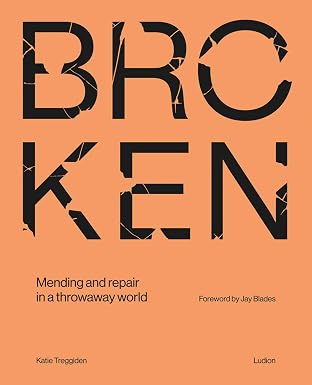
In Broken, craft and design writer Katie Treggiden asks whose judgement determines whether something is worth saving. Through profiles and essays, she examines repair as a practice that preserves function, carries stories and creates opportunities for social change. The question extends beyond the object’s condition to the values that make replacement seem obvious and continued care seem exceptional.
The differences between the practices give the book its interest. Celia Pym’s attention to damage opens a way of reading the life already lived through a garment. Wear supplies information about a person’s movements and attachments, so a repair responds to a particular history. The object’s value cannot be understood solely through how closely it resembles its original, undamaged state.
Bridget Harvey’s repaired jumper, carried as a placard at the 2015 Global Climate March, makes a different argument. Its stitched message encourages people to mend and consume less, while the reused garment enacts that position. The material supports the statement. Seen alongside quieter forms of repair, it shows how the same act can restore usefulness, preserve memory or become a public intervention, depending on its context.
Treggiden’s introduction draws on the idea of broken world thinking, which places maintenance and repair at the centre of how societies continue to function. Her discussion moves from the repair of possessions towards the repair of relationships and damaged systems. This enlarges the scope of creative responsibility: work begins with attending to an existing situation and deciding what should be preserved, altered or allowed to end.
The book is most persuasive as an argument about value and attention. Readers should keep questions of labour, affordability and access beside its examples: the appeal of a skilled repair does not make that repair equally available to everyone. For emerging designers, its practical contribution is to change the starting point of a brief. An existing thing brings constraints, knowledge and attachments that a new object has yet to acquire. Working with those conditions can make repair a demanding form of authorship.
Free download exhausted