
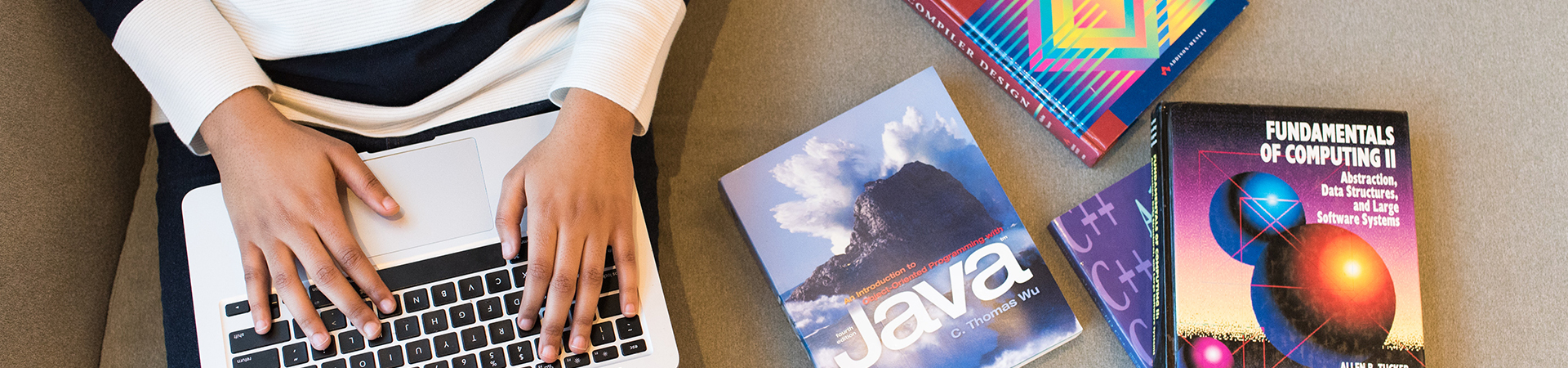





Educators would like to believe that their classroom is a place for students to put away their usual routines and mundane thoughts and settle into the joy of learning. The sad-but-true reality, however, is students being carried away from the educational content with distractions of all kinds. With modern life bringing new opportunities to get distracted by every day, is that possible to fight distraction?
Today, higher education instructors are teaching in an atmosphere that could be described as the “age of distraction”, or a “culture of distraction”. A typical classroom in a university or college is literally fraught with opportunities for distractions that challenge learners’ attention and focus and influence their abilities to process course information, more often than not in a negative way.
Our cognitive processing capacity is limited, which is especially noticeable when difficult content is presented through poor instruction or when peers distract us from the learning process. Larger part of the discussion surrounding distracted students these days tends to focus on the “technology in the classroom” debate. Those who are opposed to the use of laptops and phones in the classroom often argue that today’s students get more distracted than their predecessors from the times when devices were not present in the education process. However, according to James M. Lang, Professor of English at Assumption University in Worcester, MA, and the author of the book Distracted: Why Students Can’t Focus and What You Can Do About It, the history is not so straightforward in this regard. In his book, he not only gives an overview of philosophers and writers complaining about the distractibility of their minds going back as far as Aristotle but also considers the work of biologists and psychologists who explain why we have our distractible minds.
To cut it short, “our devices did not create our distractible brains; our brains have always been distractible”. What is indeed changed is that our devices have become especially effective at drawing our attention away from learning of whatever else cognitive activity. The explanation lies in the fact that our brains are very attentive to novelty, and our phones offer us “an endless buffet of novelty,” from the weather and directions to social media accounts and email.
Still, technology is just one of the many classroom distractions that might hamper students’ engagement. A recent study reveals that certain instructor and peer behaviors were equally distracting and had similar negative influences on students’ cognitive load. The participants of the research claimed that they were often distracted because of incompetence, offensiveness or poor class management of the instructor. The examples include instances where teachers said or did something that had irritated or demotivated them, when Power Point slides were flicked through in too fast a pace or when an instructor played music in the background during a group project. They also found distracting their peers misbehaviours – such as asking questions that seemed completely unrelated to the class material presented in class that day, fellow-students coming in after the class has begun or even talking too loudly during the lecture. What is even more interesting, students were easily able to recall specific days, events, and people who they found distracting. The ease with which they could recall these instances speaks to the level of distraction that occurred – it was memorable for students even when students could not recall important course content.
This finding, together with the idea of the human brain as an eminently distractible organ, suggests that a battle with possible distractions that interfere with learning would be imminently a losing one. Instead, Lang advises, educators should focus on cultivating and sustaining attention in the classroom. “Attention is an achievement, not something we should take for granted,” he writes. “Since learning depends upon attention, it should have a prominent place in the way in which we think about our courses and classrooms.”
The study Peers and Instructors as Sources of Distraction from a Cognitive Load Perspective echoes this opinion revealing that students are more easily distracted by technology when overwhelmed by information (or when the information is presented by the instructor in a confusing way), the class is too easy, or the instructor is not involved or relating to students. It makes it hard to escape a conclusion that inadequate teaching and lecture skills, ineffective presentations, as well as going off topic, irrelevant self-disclosing or using humor, seem to be the pressing topic that should be addressed by those wishing to cultivate attention in the class.
One of the strategies for sustaining attention that some teachers intuitively employ is putting structure to any classroom session, as playwrights do in the form of acts and scenes and intermissions. Such “pattern teaching”, a term introduced by Dr. Christine Tulley, Professor of English at The University of Findlay to describe a modular classroom experience in which the instructor deliberately shifts between different modes of engagement (active and passive; individual and group; speaking, writing, and thinking), might really help hold the attention of students over an extended period of time.
The global switch to remote learning as a response to coronavirus pandemic has brought a new dimension to the task of staying focused doing cognitive work, with more instruction delivered virtually or in a hybrid format. When learning comes mediated through screens, fighting distraction can be more challenging, especially when the course content is difficult to process. The core challenge remains the same: our readily distracted brain is tempted to escape from the learning session, and during a Zoom session in a home environment switching for another task could be done with a single click.
Even if the educator is mixing teaching strategies, the generic suite of teaching activities remains more or less the same. Eventually, they become routine enough, so that students check in to class – in person or online – physically, but their minds are somewhere else. To avoid routine and familiarity deadening the attention, educators deploy what Lang calls “signature attention activities” to break the monotony and “wake students from their educational sleepwalking”.
The very word ‘distraction’ has Latin roots: dis stands for apart, while trahere means to drag. There are numerous things in the world – from devices close at hand to concerns and fears about the global economic and political upheavals – that can pull our mind in many different directions. In this diverse environment, the classroom could be a perfect opportunity to push worries an anxieties aside in order to focus on something fascinating. Mastery of knowledge or search for solutions could offer us a welcome rest from the kaleidoscope of the modern world’s distractions.