




The coronavirus pandemic brought unexpected and significant disruption to the many spheres of our lives. The last year and a half have seen empty campuses and a precipitant shift towards e-learning among other efforts of the higher educational sector to survive in these turbulent times. While some experts predict a mass extinction of colleges and universities as we know them following the crisis, it is not all that doom and gloom. Sure enough, it would be naïve to expect higher education to return to pre-pandemic normal, but certain positive changes are here to stay.
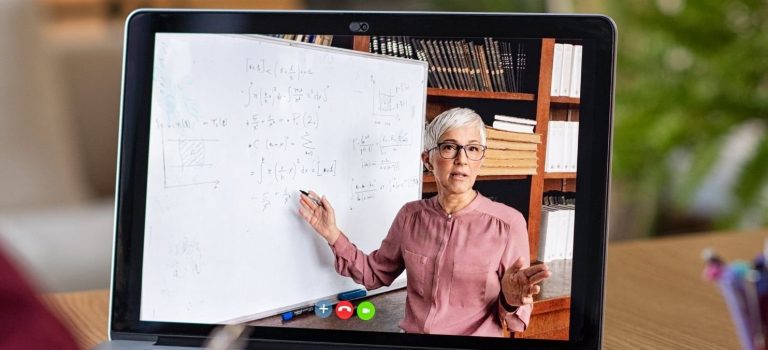
The main positive shift is likely to be around online teaching. Although some universities struggled to deliver quality online classes, this new approach to learning will most probably be a permanent solution. Recent surveys show that although most students desire a return to in-person learning, the majority also want to continue having the option to take classes online. Driven by student demand, most higher educational institutions are planning to offer various options for fully online and hybrid learning that will combine the flexibility of online lectures with more interactive activities in-person, such as labs, seminars, workshops and Q&A sessions.
The colleges are aware of the skepticism expressed by some of the students who are concerned about whether online teaching means they are getting worse value for money. Addressing the issue, Prof Allison Littlejohn, an academic at UCL specialising in learning technology, explains that “the time needed to prepare and produce online teaching materials is much higher than for on-campus lectures.”
Instead, most universities are shifting lectures online and even go that far as talking about ending face-to-face lectures altogether. What it actually means is not foregoing any in-person classes for the students but rather replacing large lectures of 200 students upwards with online sessions that proved to be far more effective during the pandemic.
One of the main positive lessons that can be drawn from the crisis has to do with prioritizing building the virtual infrastructure over long-standing emphasis on building the physical infrastructure of college campuses. According to The World Economic Forum,“before the pandemic, the online learning environment existed predominantly as a virtual filing cabinet… The pandemic has illuminated what can be done with this online space: it can be engaging, enriching and accessible”.
44% of student respondents to a recent QS survey reveal they are open to the idea of attaining their degree via online means, which is a larger number than ever before. This brings most universities to think about including more online degree and non-degree programs into their offer as well as develop related virtual student services.
For example, it will most likely become a norm to keep lectures video recorded and available online at any time for the students to review, even for in-person classes. This is what 79% of college students wished to see continue, when asked what new services and approaches they would like to maintain once the pandemic is over.
So, what else can help universities to reimagine their offerings and move to a new higher education paradigm that can equip students with skills required for the 21st century employment market? The authors of the research article, Forever Changed! Innovation and the Future Post-Covid Higher Education Landscape, Professor Jerry Yoram Wind and CEO of QS, Nunzio Quacquarelli, suggest a major transformation of current pedagogical approaches. According to them, embracing technology as part of the teaching process will allow for much sought-after personalization and flexibility, as well as bring in numerous innovative ways to enhance learning, such as augmented or virtual reality for experiential learning and gamification to serve the new generation of Zoomers.
Ever-growing use of e-learning has another positive impact on higher education. If in the past, universities and colleges paid more lip services to diversity, equity and inclusion (DEI) metrics, today online learning has made education accessible to those who are not able to attend traditional learning programs. For example, there is strong evidence that non-white students greatly prefer online education models as well as virtual internships and jobs over white students. Higher educational institutions will need to make real commitments to DEI because many constituents will begin holding them accountable to their progress.
According to Forbes, the formal education system will experience fundamental change. To serve a growing market of value-oriented prospective students, traditional schools will be forced to launch lower-cost online degrees, which will result in a new kind of price war in higher education.
Relatedly, experts believe that elite colleges and universities, which are often unwilling to grow enrollments, admit more unprivileged applicants and minorities, and are slow to introduce innovative and non-traditional teaching methods in an attempt to keep their authenticity, will no longer be role models in the higher education sector. Instead, the field will see the rise of “public flagships and up-and-comer privates that innovate on many dimensions, find ways to freeze or lower costs, and dedicate themselves to being student- and employer-centric.”
Speaking of employers, they too are expected to offer an alternative to residential 4-year degrees, thus weakening the market of traditional higher education. On the one hand, following the example of Google who started treating their tech certificates as equivalent to degrees in the hiring process, many companies now offer their own non-degree education and non-traditional degrees. On the other hand, employers will continue to invest in education-as-a-benefit programs where they provide financial support to employees seeking degrees.
The future will tell what of the predictions will prove to be true.