


The thing is that today when we speak about a degree as a means to build a career, we speak about university rankings and well-known university brands rather than about actual level of skills development. For example, it is often the case that graduating from Harvard does not really say anything about the student’s practical skills or ability to contribute to a real world organization. Instead, it signals the world of potential employers that they were accepted to such a reputable institution as Harvard. In short, the current paradigm puts too little emphasis on mechanisms for measuring knowledge, skills and expertise (such as work portfolios) and way too much emphasis on the brand value of higher educational institution.
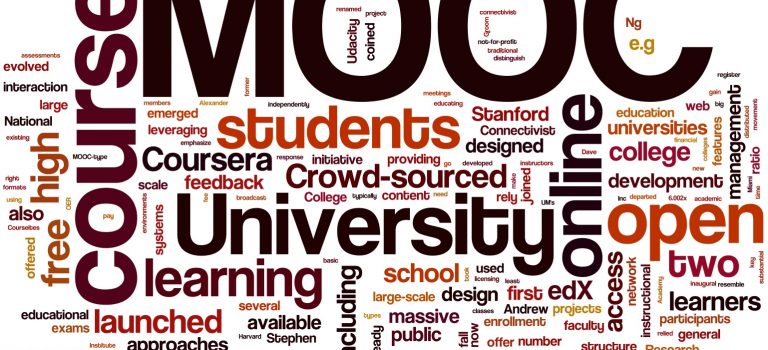
This certainly counts well in favour of Coursera, EdX and the like. An increasing number of public universities started offering dramatically lower cost Master’s Degrees on MOOC platforms over the past year, which is a big step in the right direction. As thousands of universities and established companies turn to the online education platforms to offer their courses, this will continue to enhance the credibility of online learning and shift the assessment of education from an emphasis on brand name to more direct evaluations of knowledge.
All this sounds good in theory but the reality is so far not as rosy as it may seem. Although MOOC platforms show a great potential to increase diversity of courses, the reality is that they have moved away from niche courses in the liberal arts to focus on courses that get the biggest audiences, such as ones on clearly marketable skills like computer programming.
The question of low costs is also nuanced. While entry-level courses that take 4-12 hours cost close to nothing, degrees that take 2-4 years to complete cost money, starting off at 9,000 USD. Although this is less than is charged by universities for campus-based courses, it still strains the wallet and does not fully solve the problem of student debt burdens.
Last but not least, although the credibility for the certificates and degrees offered by the MOOC platforms is growing, they are still generally perceived as valuable additions to your resume, rather than a full-fledged equivalent to a college degree.
According to Levine, this poses a threat of splitting the world of higher education in “two kinds of education.” One is more likely to be full time and end in degrees – it will be likely to be more expensive and will therefore be selected by wealthy students, while the other, online model will be available much more cheaply to populations that can’t afford the first kind of education. In other words, this system will promote inequality rather than provide all students with equal opportunities.
Some experts disagree with this grim view on the new world brought in by Coursera and the like. Debora Spar, senior associate dean of Harvard Business School Online, believes that “our physical campuses, like cathedrals of an earlier age, could become historical relics — cherished, yes, and still used, but no longer central to the educational mission.” She believes that although small groups will still select – and pay for – the bundled undergraduate experience (four years, on campus, with education plus everything else), the majority will switch to “an a la carte model” offered by the MOOC platforms.
“Most critically, our job is to acknowledge the inequities that mark our existing structures of higher education, and then harness the power of digital technologies to imagine something better,” Spar concludes. “Something that breaks the strangleholds of physical capacity and high fixed costs to deliver education that is affordable, accessible, and intellectually exciting.”