





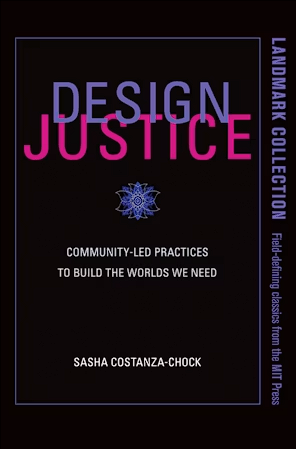
In Design Justice: Community-Led Practices to Build the Worlds We Need, Sasha Costanza-Chock challenges one of the most common assumptions in design: that good design can be universal if it is simply well intentioned.
The book argues that design processes often reproduce existing inequalities when they fail to include the people most affected by the systems, tools and environments being created. Instead of treating users as passive recipients, Costanza-Chock focuses on community-led practices and asks how design can support collective liberation, accessibility, ecological sustainability and social transformation.
For emerging designers, this is a particularly relevant book. It moves beyond the language of “design for good” and asks deeper questions: Who is involved in defining the problem? Who has decision-making power? Whose knowledge is treated as expertise? And who benefits from the final outcome?
Design Justice is valuable for students working across design, technology, architecture, social innovation and public-interest projects. It encourages young creatives to see design not only as a method for making things, but as a way of redistributing power, listening more carefully and building more responsible futures.