




BE OPEN: Back to School

BE OPEN: Back to School

This spring universities all over the world were forced to close their campus doors because of coronavirus outbreak.  Life has changed considerably since, and the coming academic year brings with it a new set of obstacles for educators to surmount. The universities and colleges are working hard mapping out their plans of actions that would ensure that students stay safe in the coming academic year, but also gain the maximum experience from their time at university.

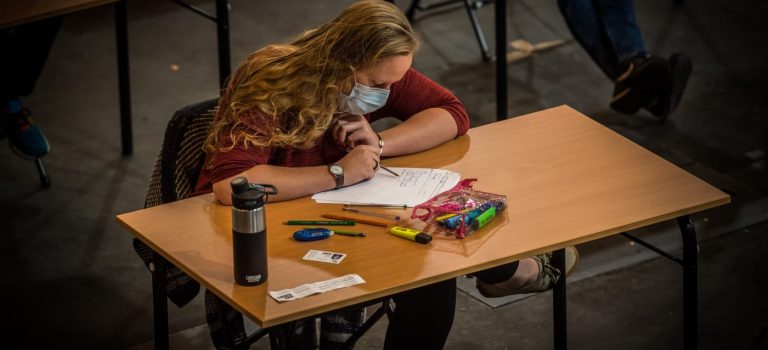
The pandemic has changed the way that universities function, replacing on-campus lectures with online ones, introducing social distancing measures in classroom-based seminars and going virtual with students social activities. Although the measures will vary across universities and countries, notable changes expect students when classes start again in September.

Some students acknowledge they find it hard to figure out what classes will be like in the coming academic year. According to a recent survey, more than one in five students applying for undergraduate places are even considering deferring for a year if their university will not be operating as it usually would.

New realities of campus life

As universities work to adapt to the ‘new normality’, the changes will touch all aspects of life on college campuses. With slight variations, default measures will include enhanced hygiene and cleaning protocols, reduced density of classrooms, consistent signage across campus, and various “physical aids”, like perspex screens, to ensure distancing. Students will need to wear face masks when on campus, and those of them who travel outside the local area will be asked to self-isolate upon their return.

Notwithstanding the fact that teaching will be mostly carried out remotely, many campuses are still planning to offer housing to students. In California, according to the guidance released by the state, housing should be limited to one student per room whenever possible. University of California, Berkeley, plans to house about 3,200 students, especially those who have disabilities or are low-income, although the university is planning to start the year with no in-person classes. Accommodation in Loughborough University, UK will be open and if for any reason lockdown measures are reintroduced, students will not be charged for any weeks that they have to return home while the lockdown is in place.

Limitations on gatherings would change the approach to students social activities, as social interaction will be mostly carried out through a wide range of virtual events.

All university are working hard to support their students both financially and psychologically. For example, Simon Fraser University in Canada are planning to have an additional mental health care manager to support students who are struggling during this time. They have also created a website aiming to help students find work and learn about financial aid available to them.

Blended learning in the new norm

According to Times Higher Education, who has prepared a breakdown of how some universities will be implementing social distancing this year, blended learning will be the norm in most of them, which means some content will be delivered online, while other lessons will be taught in person.

University of Surrey, UK, will use a hybrid teaching model, which involves face-to-face teaching with reduced venue capacities to ensure the maintenance of social distancing protocols for most seminars, workshops and practical sessions, supported by online lectures and assessments. Aiming to maximize learning from all available learning modes, teaching in Loughborough University, UK, will be delivered in person where it can be done safely, while additional learning will be provided online through a combination of real-time interactive sessions and materials for students to study in their own time. University of Toronto, Canada, is also planning to prioritise in-person classes where possible, mixing smaller, on-campus seminars, labs and experiential learning with larger online and remote lectures.

Though most of the undergraduate teaching in Stanford University, USA, will be carried out online, the university is looking at ways to better replicate features of in-person teaching, such as small group interactions, academic support and peer-to-peer learning. It is expected that all classes larger than 50 students will be taught online (the limits could be even smaller depending on local health conditions), and, since some classes can only be held in person, they may need to be offered multiple times as different populations return to campus throughout the year.

UC Berkley will offer classes virtually except for limited hands-on courses that will require physical distancing and other protocols to limit contact between students. Some institutions, however, will transition to a virtual campus completely cancelling all their on-campus classes – for at least the first term of the academic year. University of Melbourne is one such example. Any physical attendance requirements for seminars will be waived, and classes will be delivered remotely. There will be specific arrangements for specialist and practical classes, performances and design studios.

The Royal College of Art, UK, ranked as the best art and design school in the world, will forgo all classroom-based teaching either. According to Ashley Hall, professor of design innovation at the RCA, one of the reasons for this is the institution’s distinctly international cohort, which means some students may have to go into quarantine if they come back to the UK. “Students in these circumstances would lose quite a significant block of time out of the academic year,” he explains.

Recreating studio model online

However, as far as art and design education is concerned, the challenges of blended learning go beyond providing rigorous hygiene measures and learning new technologies. One of the issues is reduced access to institutional resources, as not every design student has access to the latest programmes, 3D printers and tools at home.

“As a creative institution, having access to our facilities and workshops, as well as the expertise of academic and technical staff, is very important,” assistant vice-chancellor of University for the Creative Arts, UK, Terry Perk tells Design Week. UCA are attempting to address the problem by providing students with free licenses to software like the Adobe Creative Suite. Additionally, improvements are being made to the university’s online infrastructure.

What is even of more importance is ensuring ‘studio culture’ and environment of ‘practical collaborative work among students and staff’ remain intact. “I think now the project has really become more of a social and cultural mission – how can we maintain the ethos and feel of belonging to a group, especially when that group are dispersed globally?” says Ashley Hall.

Aiming to “reproduce the kind of physical interactions, as simple as knocking on a professor’s door, that we all miss”, the Royal College of Art has introduced an ‘open office’ approach that creates a kind of virtual studio space, beyond just online teaching. The approach involves teachers leaving open their Zoom channels for a specific time period, so that students are able to “drop in” to ask questions, or simply talk to their peers.

Although 2020/21 university experience won’t be what you normally expect it to be, Graham Baldwin, Vice-Chancellor at the University of Central Lancashire, UK, stresses that “a degree that has been achieved through online or blended learning will have the same value in the job market as one that has been achieved through face-to-face learning alone.”


BE OPEN Academy Poll. Best offline course in Urban Planning in European University

Urban Planning programme available from Technical University of Valencia, Spain has won in our online poll about the best offline course in Urban Planning in European University.

The other entries in the poll were:

  • Urban Planning by HafenCity University Hamburg, Germany
  • Urban Planning by Loughborough University, UK
  • Urban Planning by Stuttgart Technology University of Applied Sciences, Germany
BE OPEN: How Online Education Truly Helps

BE OPEN: How Online Education Truly Helps

As we move into the 21st century, we see a growing interest in the role of eLearning and online education in the world of education. This is not a new phenomenon, as we have seen this idea come and go several times throughout history.

However, it is not just an idea that is gaining traction, but one that is gaining strength in popularity. For this reason, many institutions are finding ways to embrace the idea of eLearning and online education to their benefit.

However, while there are many institutions that are using this approach to their advantage, there might be others that still believe that this concept should be left in the past where it belongs. With all of these different opinions on eLearning and online education, it is important to take a closer look at the issue at hand so that we can better understand what makes eLearning so appealing to students today.

It is also important for us to take a closer look at how online education truly helps individuals by exploring its benefits and drawbacks.

What Makes Online Education So Popular? Online education has become very popular due to several reasons, including:

  1. An increased level of accessibility
  2. Better learning environments
  3. Greater convenience
  4. More efficient processes
  5. Less expensive education
  6. Greater focus on personal development
  7. More personalized learning
  8. More flexibility in choosing classes
  9. Faster course completion time
  10. Less stress

These are just a few of the benefits that online education offers. However, it is important to note that online education can offer these same benefits, but also has its drawbacks as well:

  1. Less personal interaction
  2. Limited support services
  3. Difficult to track progress
  4. Difficult to collaborate with others
  5. Lack of control over course content

With all of these different benefits and drawbacks, it is important to understand how online education truly helps individuals by exploring its benefits and drawbacks.

Usually, a student can learn at their own pace as opposed to being forced to complete a certain amount of work within a specific timeframe. In addition, this type of education also allows students to choose the topics that they would like to learn about. This type of education also allows students to easily create their own learning schedule without having to be limited by other people’s schedules.

This means that a student can focus on the things that they want rather than being forced into doing work that they do not want or care about. With this type of freedom, many students are able to concentrate on what they enjoy most, which allows them to improve their skills at a faster rate.

This is not to say that online education is perfect. However, it is important to understand that many students are able to succeed in this type of education because they are able to find the best online education course that suits their needs.

How eLearning Affects The Education System And Society? One of the most interesting aspects of eLearning is that it can benefit both the education system and society as a whole. One of the main reasons why we see this happening is because eLearning makes it possible for students to access courses and programs from anywhere they want. This means that students can choose to access these programs from their homes, workplaces, or anywhere else they would like. The main benefit of this approach is that it provides students with the opportunity to learn at their own pace and whenever they want to.

When a student uses online education in this way, they are able to take advantage of a number of different benefits that come with this approach. For example, there are many people who have been able to use online education to increase their job skills as well as improve their performance at work. In addition, many people have been able to utilize online education for other purposes as well, such as improving their personal life or raising a family.

Using eLearning can help students become more independent and more responsible members of society as well. It should be noted that students are no longer dependent on the teachers in their schools or on their institutions for access to courses and programs. They can now use these programs to improve their skills and become more responsible members of society if all resources are used properly.

What The Shift To Virtual Learning Could Mean For The Future Of Higher Ed? While many people see the shift to online education as a positive change, there are others who believe that this change could negatively affect the future of higher education. In particular, there might be those who believe that online education will eventually replace traditional education as we know it. This means that students will no longer be interested in attending school and college, as they would rather spend their time learning from home.

It is important to note that the use of online education is not going to completely replace traditional education as we know it. Instead, it will become a more popular alternative for students who want to learn at their own pace and on their own terms. In addition, this can be seen as a positive change because it allows students to have more control over their educational experience, which allows them to focus on what they want instead of having someone else dictate what they should learn.

BE OPEN Academy Poll. Best online course in Character Animation

Learn Basic Character Animator course available from Simpliv LLC has won in our online poll about the best online course in Character Animation. By the end of this course you’ll gain complete proficiency in Basic Character Animator even if you’re currently a beginner.

It has gained more votes than other online courses in Character Animation:

  • Character Animation by Reed.co.uk
  • Character Setup and Animation by Unity Technologies
  • Ultimate Guide to Drawing Animated Characters by Udemy
BE OPEN: Animation as a powerful tool in eLearning

BE OPEN: Animation as a powerful tool in eLearning

The strength of animation holds up when brought to the test of corporate training. It helps break down complex concepts into digestible content pieces and keeps learners engaged while making sure that the information is absorbed fully. Compared to videos with a “talking head,” which looks like a sci-fi villain, or plain slides with black text on a white background, animation can do wonders. And last but not least, don’t think animation is unfitting for a professional environment because it will certainly boost your audience’s learning and productivity.

Before going into more detail on animation’s benefits, we should clarify the conditions of a successful training session. The end goal is for employees to learn to train themselves and get actively involved in something new and more challenging. That leads to two key elements that a corporate training session needs: knowledge and motivation.

Animations Can Help Boost Engagement and Motivation:

Creates A New Learning Atmosphere

One big strength of animation is that it makes way for storytelling, a powerful tool for triggering emotions. Storytelling can make the content much more relatable and interesting to learn than a PowerPoint slideshow with dull bullet points. It’s simply a “dressing” to make the information more digestible, but you have to be careful. Understand your audience first and utilize what makes them tick. Success in this aspect will make employees much more willing to learn just because they’re interested in your training session.

Shortens Learning Time

Employees are busy and stressed enough without training sessions, so they probably don’t have much mental strength to spare for them. Animations succeed in doing them a favor by saving their time by making the content compact and easy to memorize. Shorter learning time conveniently fits our shorter attention span, meaning more engagement, and employees don’t have to constantly ask themselves, “How long is this going to take?”

Not only employees benefit from animation-based training, but the company does as well. Less time spent on training means less money spent, and companies can use this money on more practical matters.

Choosing The Right Animation Type in Corporate Training

Animations are super diverse, but don’t worry, making choices won’t be too difficult. In essence, animation comes down to 3 types that are most commonly used: whiteboard animation, 2D/motion graphics, and 3D animation.

Whiteboard Animation

Whiteboard animation is the combination of hand-drawn elements on a white background and a timely voiceover. Some videos feature a hand quickly drawing on the whiteboard to add a sense of live action.

This style of animation is particularly popular, and you can easily find examples of it after a few minutes of browsing YouTube. Audiences love to watch whiteboard videos because they are clean and academic looking, making it suitable for multiple purposes. It’s also the most digestible of all as it contains no distractions. Here is a typical example of a whiteboard MOA (Mechanism of Action) animation.

An MOA animation is one that typically explains the working of a drug or processes in your body that take place on a microscopic level. It perfectly wraps up the information into a bite-sized lesson, while also being budget-friendly and visually pleasing.

2D Animation/Motion Graphics

This is essentially a glow-up version of whiteboard animation. For this style, animators add in 2D characters or motion graphics to spice things up. It’s more colorful than whiteboard animation and usually presented as a story. Here is a typical demonstration of a 2D animation.

The animation is from a Permaculture Design online course that specializes in knowledge and practical solutions to develop sustainable ecosystems. If you watch it, you will notice a lot of motions and movements bringing the images to life, and this is a strong suit for 2D animation, something whiteboard animation cannot do.

3D Animation

This is a very popular choice in the medical field, but not favored by corporations because they are costly and unnecessary. 3D animation is usually used to depict extremely difficult concepts that are invisible to our naked eyes, thus the common use in medicine. 3D animation is extremely good for depicting real processes and phenomena, as well as storytelling. This will bring new life to corporate training, provided that you have resources to spare. That said, here’s a perfect example of 3D animation.

And that is all about animation-based corporate training. Considering the benefits it brings, there’s no reason why you shouldn’t deploy this magnificent piece of technology. And if you’re interested, start by choosing the right animation for your company. There is no particular rule identifying what types of animation you should use in corporate training. We hope our introduction to animation types can give you an overall look at the advantages each type brings and how to apply these benefits. Moreover, you can definitely combine several styles at the same time to make the most out of them.

BE OPEN Academy Poll. Best offline course in Art and Design in Canada

Media Arts taught by Alberta College of Art & Design has won in our online poll about the best offline course in Art and Design in Canada.

Media Arts students learn how to use sensors, circuits, mechanical devices as well as video, film, sound, performance art, and multimedia to express themselves.

The other entries in the poll were:

  • Contemporary Art, Design and New Media Art Histories from Ontario College of Art and Design
  • Art and Design from University of Alberta
  • Arts and Contemporary Studies from Ryerson University
BE OPEN: Teaching Art Online: Challenges and Opportunities

BE OPEN: Teaching Art Online: Challenges and Opportunities

The crisis brought about by the COVID-19 has forced education – just like many other aspects of social and economic life  – to shift online. This makes educators wonder if a practical subject like art can be taught online at all. Though particular challenges posed by the shift vary widely across disciplines and institutions, the question provides much food for reflection on the fundamentals of how art is taught.

Unlike, text-based subjects, teaching practical art courses online has always been a challenge for both teacher and student. In her recent article Teaching Art Online Under COVID-19 artist and educator Kaitlin Pomerantz has even compared teaching art online to teaching people in a land-locked town to swim without a swimming pool. She points it out that during the period of art school closings caused by the pandemic, educators faced the challenge of trying to “figure out how they could switch their materials, tools, and techniques-dependent, in-person, community-reliant, hands-on teaching of studio-based art to virtual platforms.”

The problems outlined by Pomerantz are echoed by many educators across art institutions. One of the challenges that first come to mind in relation with teaching art by distance learning is unavailability of physical resources—studios, kilns, editing software, darkrooms, woodshops, and peers— which in the online realm are replaced with on-screen communication. While certain screen-based mediums only need the technology to work perfectly, which is not always the case in remote rural areas, there is a fundamental problem concerning spatial mediums like sculpture that need comprehensive video instructions as well as a well-equipped studio, also not so often found in every home. For these mediums, a question arises of what remains of art-making when the institutional resources are not accessible. Is that possible to keep the studio practice standards high?

The same can be said about teaching materials and instructions. The ones previously used in the classroom appear not to be so simple to adapt for online teaching. Delivering practical activities online requires a radical rethinking of lesson content.

Another obvious disadvantage to working online is the lack of face-to-face contact between tutors and students, and further, the loss of the interaction between peers that forms a vital part of any classroom-based experience. Design critiques that generally provide art education with a structured means for intensifying the learning process may have certain detriments too, when performed online. According to Brad Hokanson, professor in Graphic Design at the University of Minnesota and author of papers on design critiques, online crits provide less opportunity for the informal, spur-of-the moment critique. The difficulty with text-mediated online critique, he explains, is that while written comments are recorded for later use, they take significantly more time to review and process by the critic, while online time and involvement is all defined, conscious, metered, and, hence, limited.

However, there are still media, such as synchronous video conference software or shared desktops that quite closely replicate the direct connection of the in-person design crit.  As explained by Hokanson, the key thing in this case is to replicate the fluidity of conversation inherent to face-to-face art education, as it adds much to a critique, even if done through sharing screens and talking synchronously. Speaking of hands-on media, he gives an example of online music lessons connecting a violin player in Japan with an instructor in Finland. Asynchronous critique may be less effective as it cannot ensure the same interaction as an in-class conversation, but it can still provide direction and formative assessment through mark-up and annotation.

Authenticity issue is yet another common criticism of any form of distance learning. On top of that, there are numerous pain points connected with validity of online assessments and cheat prevention in art education.

All these issues that remain to be resolved make many higher education professionals believe that art and design education with its visually or interactionally intensive pedagogical models such as the studio model is impossible to do effectively online. However, there are some successful examples that demonstrate how art education can effectively exist in the online realm.

Many potential disadvantages are outweighed by the advantages. Accessibility is certainly one of these. From the very beginning, distance learning’s target student groups include those in rural communities, those with irregular patterns of employment, single and working parents, and adult returnees to education and careers. Often, these students are frustrated by the lack of viable alternatives to attendance-based courses and feel isolated and excluded by their circumstances.

In his article Can You Teach Art Online? Kyle Dancewicz, Director of Exhibitions and Programs at SculptureCenter, New York, describes the strategy used by Constantina Zavitsanos, who teaches art at the New School. Her approach underscores the common paradigm of equating physically showing up in the classroom with learning.  According to Dancewicz, Zavitsanos has always allowed students to attend class using Zoom, an option often necessary for those who cannot attend in person because they are disabled or sick, or because the work they create is best presented outside of traditional classroom critique. In addition, Zavitsanos sometimes offers instruction via Zoom or accepts students’ prerecorded performances for group critique. This access-driven approach elevates distance learning from its perceived status of a disruption to the norm, while also opening deeper questions about the presumed defaults of art-making as a whole: When a student has a reason not to use the physical classroom to display their work, it reveals the physical and conceptual limits the classroom imposes.

Modern students often seek the same degree of flexibility they are accustomed to in other spheres of life. “Like it or not, we live in an age where consumers want what they want, when they want it; that’s why we have the 24-hour supermarket and the all-night garage,” says Michael Stewart, founder director at Interactive Design Institute, UK.

With their Studio Art School that is the only institution in the UK approved to offer the Level 3 Diploma in Art and Design by distance learning, everything is online. Each student is given access to their personal online studio where they can download learning materials and communicate with their tutors at any time, by simply logging on. Lessons are presented as a series of step-by-step demonstrations that  do not require specialized software or bandwidth.

Stewart recalls that the criticism he and his colleagues faced when they first suggested delivering practical art and design courses online came from two distinct fronts: the “technically, it can’t be done” crowd, and the “aesthetically, it shouldn’t be done” crowd. “Each side seemed determined to believe I was claiming e-learning to be superior to classroom learning; I never have and never will,” he explains.

Recognizing the limitations of teaching art online, Stewart provides a number of arguments for the model. While lacking the amount of peer-to-peer communication that class-based education has to offer, the online studio can give students as much time as is necessary letting them proceed at a pace which is best suited to each of them. The advantages also include the fact that online art students do not have to compete against their peers for tutor attention, or endure the distractions that can sometimes be part of the group experience.

All conversations with tutors, including advice, guidance, and comments on works-in-progress, are recorded and stored for future reference within the student’s personal studio area, providing both student and tutor with a complete history of their interaction. Similarly, with the use of the stored images, specific points in the creation of the student work can be referred to at each stage. Unlike traditional forms of learning in the visual arts, where once completed, the piece of work only exists in its final manifestation, within the online studio, the piece exists as an ongoing process, recorded at every stage of its development. At the same time, this method provides little opportunity for cheating. Not only dozens of images for each piece are stored in the system documenting all stages of the process, but also sketchbook notes and other supportive materials can be requested at any time.

As Studio Art School team is aware that many students may not have access to dedicated studio facilities, specialized equipment or unlimited budget for materials, all demonstrations are conducted and photographed on a standard kitchen table.

Some institutions attempt at re-creating the studio-based model in online design education courses. One of them is Minneapolis College of Art and Design, USA, with its Distance Learning Initiative, intended to appeal to a diverse audience – degree seeking students, high school students interested in attending art school, arts professionals, arts educators, and other life-long learners. The program maintains the role of the instructor in the studio model using well-formed, guided, direct questions and instructions and features online sketchbooks and portfolios providing a complete documentation of students’ work throughout a course, as well as visual examples of past student work that are used to set standards for work level expectations. The online format also allows bringing in guest artists from remote locations to some of its online courses whom students otherwise could not access. The team admits that the program is still small and evolving – e.g. online design critique still remains a “special challenge”.

The existing examples prove that in certain circumstances e-learning could be as effective as classroom-based teaching. It would be irrational to deny that  there is quite a number of challenges related to delivering practical art and design courses online – rewriting syllabi, redesigning courses and teaching materials, reinventing assessment and critique approaches, and learning new technologies, just to name a few. Still, the COVID-19 crisis has demonstrated that shift in this direction from traditional classroom-based education should not be perceived as a departure from normal, but quite on the contrary, as a way to expand the kinds of places where art school happens and where art is made.