




Update: BOA added 6 new video tutorials by Photoshop Training Channel
Month: March 2026

AI as a Creative Partner: What Design Students Need to Learn in the Age of Generative AI (Pt.2)
PART 2. From Judgment to Responsibility
Critical Thinking Becomes Essential
As AI-generated content becomes more sophisticated, critical thinking becomes essential. AI can produce convincing solutions that appear innovative while containing hidden flaws, biases, inaccuracies or unintended consequences.
Designers must learn to ask: Does this solve the real problem? Who benefits? Who might be excluded? What assumptions are embedded in the output? What should remain under human control?
Rather than accepting AI-generated ideas at face value, designers must become skilled evaluators and editors.
Systems Thinking for Complex Challenges
The major challenges of the twenty-first century, from climate change and urbanisation to public health and waste management, are interconnected.
That is why systems thinking is becoming central to design education. AI can help analyse information and identify patterns, but understanding complex systems still requires human judgment, interdisciplinary thinking and sensitivity to context.
Case Study: Kia, Autodesk and AI-Assisted Concepts
A research collaboration between Kia and Autodesk focused on generative AI tools for wheel concept design. Rather than automating the designer’s role, the system helped teams move faster from inspiration to concept generation. Designers still defined the creative direction, selected promising outcomes and refined final proposals.
For students, the lesson is clear: future value may lie not in producing the first idea, but in identifying the most meaningful one among many alternatives.
Ethics Is No Longer Optional
The integration of AI into design raises ethical questions. Who owns AI-generated content? How should designers address bias in training data? How can transparency and accountability be maintained?
Future designers will need a strong understanding of ethics, not only in relation to AI but also regarding sustainability, accessibility, privacy, inclusion and social responsibility.
UNESCO’s guidance on generative AI in education and research emphasises human-centred, safe, equitable and meaningful use. For design schools, this affects assignments, studio critique, assessment, authorship, data use and the way students explain their creative process.
Source:
https://www.unesco.org/en/articles/guidance-generative-ai-education-and-research
Human Skills Remain Irreplaceable
Ironically, the growth of artificial intelligence is making distinctly human abilities more valuable. Empathy, communication, storytelling and creativity remain essential for understanding people, collaborating across disciplines and imagining futures that do not yet exist.
Case Study: The Elbo Chair and Human Judgment
One well-known example of generative design is Autodesk’s experimental Elbo Chair project. Designers established objectives and constraints related to structure, materials and performance; the software generated hundreds of possible solutions.
Yet the final design did not emerge automatically from the algorithm. Human designers still needed to evaluate results, balance aesthetics with functionality, and select the most promising outcome.
Sources:
https://www.wired.com/2016/10/elbo-chair-autodesk-algorithm/
https://research.autodesk.com/projects/dreamcatcher/
https://www.autodesk.com/customer-stories/elbo-chair
How Design Education Is Evolving
Around the world, design schools are adapting their programmes. Students are increasingly encouraged to work across disciplines, combining design with technology, sustainability, entrepreneurship, social sciences and policy.
AI tools are being introduced not as replacements for design education but as instruments within the creative toolkit. The emphasis is shifting from mastering specific software towards adaptable thinking, problem-solving and lifelong learning.
Recent educator resources highlight the need to integrate AI into the full design cycle: research, ideation, experimentation, iteration and communication.
Sources:
https://www.qaa.ac.uk/membership/communities/art-design-and-art-history/using-ai-in-learning-and-teaching-in-art-and-design
https://altc.alt.ac.uk/blog/2026/03/values-led-generative-ai-in-design-education-a-toolkit-for-confident-critical-practice/
What This Means for Student Portfolios
If AI can produce polished images quickly, the student portfolio will need to show more than final outputs. It will need to show process: research, brief definition, prompt strategy, rejected directions, material experiments, feedback and the reasoning behind final decisions.
In an AI-assisted environment, the strongest portfolio is the one that reveals how the designer thinks, learns, edits, tests and takes responsibility for creative choices.
In an Adobe and Parsons School of Design collaboration, students used generative tools in early creative stages such as ideation, concepting and visual exploration, while remaining deliberate about where they wanted to preserve creative control and authorship.
Source:
https://adobe.design/ideas/creativity-in-the-age-of-ai
Designing the Future Together
Artificial intelligence is transforming the creative landscape, but it is not eliminating the need for designers.
The designers of the future will be strategists, facilitators, researchers, storytellers and systems thinkers. They will use AI to accelerate exploration while contributing uniquely human insight, responsibility and imagination.
For design students, the challenge is not simply learning how to use AI tools. It is learning how to work alongside them.
Key Takeaways for Design Students
- Learn AI tools, but do not rely on them exclusively.
· Develop AI literacy, not only prompt-writing skills.
· Strengthen critical thinking and systems thinking.
· Build communication, collaboration and storytelling abilities.
· Understand the ethical implications of emerging technologies.
· Focus on solving meaningful problems rather than simply producing outputs.
· Document how and why AI was used.
· Treat AI as a collaborator, not as a replacement for human creativity.
· Remember that empathy, imagination and judgment remain at the heart of great design.
Looking Ahead
The future of design will not be defined by technology alone. It will be shaped by the choices people make about how technology is used, whom it serves and what values guide innovation.
Artificial intelligence may change the way designers work. But the ability to ask meaningful questions, understand human needs and envision better futures remains uniquely human.
Ai Weiwei. Updated Edition
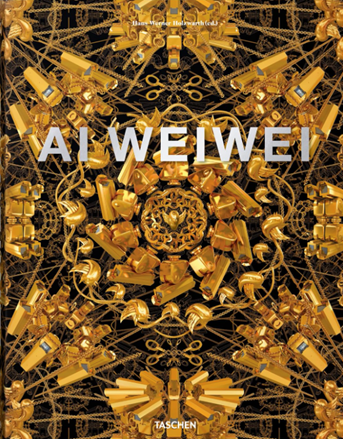
Ai Weiwei is famous for much more than his art. As a champion for the right to free expression and against arbitrary state power, his actions reach far beyond the art world. His work is infused with a deep social and political commitment: when he brings 1,001 Chinese citizens from all classes and regions to Documenta 12, when he strews over 100 million hand-made porcelain sunflower seeds across the Turbine Hall at the Tate Modern, when he creates a frieze of school bags commemorating the many children who fell victim to the tragedy of the Sichuan earthquake, or when he visits the refugee camps of the world to engage with often-ignored individual fates in his film Human Flow. In 2011, Ai was detained for 81 days by the Chinese police for his relentless questioning of authorities, and his passport was taken away. Despite international protests he received it back only in 2015. Finally traveling outside of China again, setting up base in Berlin and lately in Portugal, he has now become a truly global artist, whose work is always informed by his activism and vice versa.
Focusing on the recent decade of art and activism by one of the most outspoken artists of our time, this edition provides TASCHEN’s previous Ai Weiwei monograph with a comprehensive update. Now exploring 40 years of work, the book ranges from the artist’s exile in ’80s New York, through sculptures based in Chinese traditions and craftsmanship after his return to China, to his latest works conceived in Europe: toy-brick mosaics, films, and installations championing human rights. This book is itself a historical document: initially produced as the first in-depth monograph in close collaboration with the artist during a time when he still couldn’t travel abroad, now the same team has reconvened to continue the story. Countless images from Ai’s archives show the studio day-to-day, the artwork production, the political actions. They are accompanied by artist’s statements made especially for this book, and by three far-ranging essays: independent curator Roger M. Buergel and art historian Alfred Weidinger, who both worked with the artist on major exhibitions, discuss the work and its development in thematic detail, while long-time friend, the entrepreneur and collector Uli Sigg, delivers a personal portrait of the artist from two points in time.
Update: BOA added Ai Weiwei. Updated Edition
BE OPEN Academy has added Ai Weiwei. Updated Edition to its Bookshelf. The book follows the work and activism of one of today’s most influential contemporary artists, showing how art, political expression, materials and public action can come together in a powerful creative practice.
Update: BOA added 5 new online courses in UX/UI Design offered by Global Edulink
Update: BOA added 5 new online courses in UX/UI Design offered by Global Edulink
Louis Vuitton: The Birth of Modern Luxury by Louis Vuitton
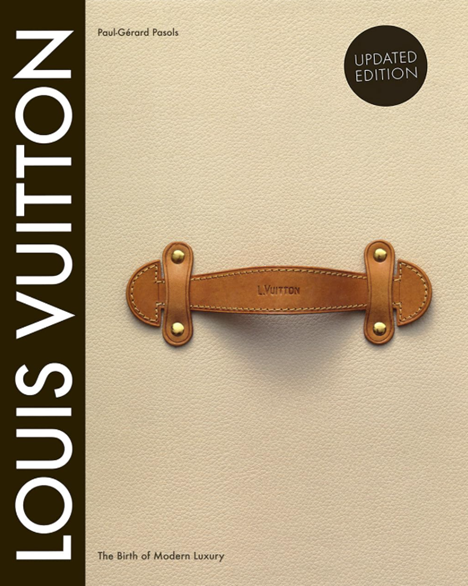
This exceptional book, based on an exhaustive review of the company’s records, highlights Louis Vuitton’s lasting commitment to exquisite design. It features an impressive array of historical artworks, product sketches, and groundbreaking advertising campaigns.
The narrative delves into the lives and legacies of Louis Vuitton’s first three leaders: the founder, Louis, who invented the modern trunk; his son, Georges; and his grandson, Gaston.
The updated edition includes new perspectives on a diverse range of designs, encompassing ready-to-wear clothing, footwear, jewelry, and even automobiles. With 20 additional pages and revised content throughout, it offers a comprehensive view of the brand’s contemporary history through fresh text and photographs.
Find out more about Louis Vuitton: The Birth of Modern Luxury by Louis Vuitton →
Update: BOA added Louis Vuitton: The Birth of Modern Luxury
BE OPEN Academy has added Louis Vuitton: The Birth of Modern Luxury to its Bookshelf. The book traces the story of one of the world’s most influential luxury houses, exploring its evolution from travel goods and craftsmanship to a global visual language of fashion, design and modern luxury

AI as a Creative Partner: What Design Students Need to Learn in the Age of Generative AI (Pt.1)
PART 1. From Execution to AI Literacy
As artificial intelligence becomes part of everyday creative practice, the most valuable skills for designers are changing. From critical thinking and systems design to ethics, AI literacy and human-centred innovation, the future belongs to those who can collaborate with AI rather than compete with it.
Design education has traditionally focused on creative process, visual communication, technical skills and user-centred thinking. Today, AI-powered research, prototyping, modelling and image generation are reshaping both the profession and the classroom. Many design students are asking: will AI replace designers?
A more useful question is: what kind of designer will thrive when AI can generate hundreds of ideas in seconds?
The answer points towards a future in which AI is not a competitor but a creative partner. Understanding how to collaborate with intelligent systems may soon become as important as learning typography, sketching, prototyping or visual storytelling. But collaboration does not mean dependence. It means knowing when to use AI, how to question it, and how to turn machine-generated possibilities into meaningful human-centred design.
The End of the “Designer as Executor”
Historically, much of a designer’s work involved executing ideas: creating visual assets, refining layouts, preparing presentations or turning a brief into a polished object. Many of these tasks can now be completed partially, and sometimes almost entirely, by AI-powered tools.
This does not mean designers are becoming obsolete. It means the value of design is shifting. As routine production becomes easier, the most valuable contribution is deciding what should be created, why it matters, who it serves, and how it fits into a broader social, environmental, cultural or business context.
Designers are increasingly moving from execution to direction. The ability to frame problems, ask meaningful questions, identify opportunities and evaluate solutions is becoming more important than the ability to produce a polished image alone.
BE OPEN Insight
The question is no longer whether AI can generate ideas. It can. The question is who will define which ideas matter.
As artificial intelligence takes over more routine creative tasks, the designer’s role is shifting from making outputs to shaping intentions, evaluating possibilities and creating meaning. In this new landscape, human judgment becomes more valuable, not less.
Why Creativity Is Becoming More Valuable
One common misconception is that AI can fully automate creativity. Generative systems can produce impressive outputs, but they do not possess human curiosity, lived experience, cultural awareness, emotional understanding or ethical judgment. They generate responses based on patterns found in existing data.
Innovation often comes from challenging existing patterns rather than repeating them. Designers are therefore becoming more focused on defining original directions, combining disciplines, identifying emerging needs and imagining alternative futures.
AI can generate thousands of visual variations. It cannot determine which of them contributes to a more sustainable city, a more inclusive product or a healthier society. That remains a human responsibility.
Case Study: MIT Media Lab
In Physical Design with Generative AI, MIT Media Lab researchers explore how AI can support designers and artists working with physical objects rather than digital images alone. The project focuses on expanding designers’ expressive possibilities while preserving artistic control. Its outcomes include biomimetic tableware and additively manufactured ceramic objects developed through human-AI collaboration.
The lesson is important: AI works best when it helps people explore more possibilities, not when it makes decisions for them.
Source:
https://www.media.mit.edu/projects/physical-design-with-generative-ai/overview/
From Prompting to Judgment
Many discussions about AI in creative industries focus on prompting: the ability to write instructions that generate useful results. Prompting is important, but reducing future design education to prompt writing would be a mistake.
The most successful designers will not necessarily be those who generate the most images. They will be those who understand when and why to use AI, how to evaluate its outputs critically, and how to integrate those outputs into meaningful design processes.
For design students, the key skill is AI literacy: understanding what a system can and cannot do, where outputs may come from, how bias may enter the process, when automation weakens learning, and how to document the role of AI in creative work.
AI literacy is becoming part of design literacy. It connects technical fluency with critical thinking, authorship, ethics and the ability to explain creative decisions. The strongest students will not be those who hide the use of AI, but those who can show how they used it thoughtfully, transparently and responsibly.