




Update: BOA added 6 new online courses in Web Design, Graphic Design and Software Design offered by EduCBA, eTrain and LinkedIn Learning
Author: JD
Update: BOA added 8 free video tutorials on Adobe XD offered by Howard Pinsky
Update: BOA added 8 free video tutorials on Adobe XD offered by Howard Pinsky

BE OPEN: The Future of e-Learning: 10 Trends to Watch Out For in 2024. Pt.3
Focus on personalized and adaptive learning
Personalized and adaptive learning is a key focus in the future of e-learning. With advancements in technology like artificial intelligence, e-learning platforms can now tailor the learning experience to meet the individual needs of each learner.
This means that learners can receive content that is relevant to their specific interests, strengths, and weaknesses. Additionally, adaptive learning algorithms analyze learner data to adjust the pace and difficulty level of the course accordingly.
By personalizing and adapting the learning experience, learners can maximize their knowledge retention and engagement with the material. Moreover, this approach ensures that learners receive targeted support where they need it most.
Blending traditional and online learning methods
Blending traditional and online learning methods is a key trend in the future of e-learning. As technology continues to advance, educators are finding innovative ways to combine the best aspects of traditional classroom instruction with the flexibility and accessibility of online learning.
This approach allows for personalized learning experiences and caters to different learning styles. It also enables learners to access educational content anytime, anywhere, while still incorporating collaborative activities and face-to-face interactions when necessary.
By blending these two methods, students can benefit from a well-rounded education that combines the advantages of both traditional and online learning approaches.
Impact of the skills gap in the workforce
The skills gap in the workforce is having a significant impact on businesses and their ability to find qualified employees. As technology continues to advance, there is a growing demand for workers with specialized skills such as AI, data analytics, and augmented reality.
However, many workers do not possess these skills, resulting in a shortage of qualified candidates for available positions. This skills gap can lead to decreased productivity and competitiveness for companies.
To address this issue, organizations need to invest in training programs and partnerships with educational institutions to provide workers with the necessary skills for future success.
Benefits of e-learning in corporate training
E-learning offers several benefits for corporate training. Firstly, it provides flexibility and convenience as employees can access training materials anytime and anywhere, allowing them to learn at their own pace.
Secondly, e-learning reduces costs associated with traditional classroom-based training, such as travel expenses and hiring instructors. Thirdly, data analytics in e-learning helps track employee progress and identify areas where additional support is needed.
Lastly, e-learning allows for personalized learning experiences tailored to individual needs and preferences, enhancing engagement and knowledge retention.
Conclusion: Preparing for the future of e-learning in 2024.
In conclusion, the future of e-learning in 2024 holds exciting opportunities for both learners and educators. With the advancements in technology, such as artificial intelligence (AI) and virtual and augmented reality (VR/AR), e-learning experiences will become more engaging and immersive.
Personalized learning, adaptive learning, and microlearning will be key trends to watch out for, ensuring that learners receive tailored content in bite-sized chunks. Gamification will continue to grow in popularity, making learning fun and interactive.
Mobile learning will also play a significant role as mobile devices become even more prevalent. And with data analytics providing insights and personalized learning experiences, e-learning will become even more effective and impactful than ever before.
The important facts mentioned above further highlight the growth potential of e-learning in the coming years. The market is expected to expand exponentially, indicating a promising future for online education.
The incorporation of AI into eLearning will revolutionize the way content is delivered by providing personalized recommendations based on individual learner needs. Additionally, the use of VR/AR technologies will enhance engagement through interactive simulations and immersive experiences.
With these emerging trends shaping the future landscape of e-learning in 2024, it is crucial for individuals and organizations to prepare themselves accordingly. Being adaptable to new technologies and embracing collaboration among learners can ensure successful implementation of innovative teaching methodologies.
Educators should explore videobased learning methods as an effective means of delivering content while leveraging AI-driven personalization tools to cater to diverse learner needs.
Furthermore, instructional design should take into account gamified elements that make learning enjoyable while fostering active participation from learners across different age groups or industries.
Sustainable Regional Principles, Planning and Transportation
This course is part of the Sustainable Cities Specialization
Language of instruction: English
8 languages available
Some materials may not be translated
 Teachers: William Roper
Financial assistance available
3,615 already registered
Skills gained
- Environmental Protection
- Zoning Strategies
- Regional Park Planning
- Efficient Transportation Systems
- Regional Planning
There are 4 modules in this course
- Sustainable Regional Fundamentals
- Regional Planning Including Developmental Priorities
- Regional Transportation System and the Land – Use Connection
- Case Study of the Fairfax County, Virginia Comprehensive Transportation Plan
This course will provide students with an introduction to sustainable regional principles, regional planning concepts and evaluate regional transportation system issues. This will be achieved through dynamic video lectures, practical case studies and the evaluation of practices for success. These will include discussions of the importance of the regional plan, how to engage community involvement, the importance of understanding a development transect and others. Strategies for growth priorities, along with consideration of available housing and food security will also be addressed. The concepts of providing a rural preserve and a rural reserve will be evaluated and mapping of key aspects of the region, such as neighborhoods and districts will be explained. Evaluation of regional transportation systems will be addressed including multi-mobile balance and building choices into the transportation system modes. The considerations for including a regional railway system along with accommodating user mobility and accessibility will be explored.
ENROLLMENT IS OVER
Street Experiments for Sustainable and Resilient cities
Language of instruction: English
8 languages available
Some materials may not be translated

 Teachers: Benjamin Büttner and Ana Rivas
Technische Universität München (TUM)
Financial assistance available
What will you learn
You’ll learn how cities implement and evaluate different types of street experiments to improve the livability of neighborhoods
Skills gained
- Experimental Design
- Placemaking
- Urban Mobility
- Urbanism
- Critical Thinking
There are 4 modules in this course
- Streets as Placemaking and Movement (Raising Awareness)
- Getting to Know Street Experiments
- Implementing Street Experiments
- Evaluating Street Experiments
Our streetscape, despite its feeling of permanence in our environment, is an ideal venue for experimentation. We have come to accept traffic movement as the default function for the street. Therefore, we need to rethink its design and space distribution, go back to its original and basic function and see them as public spaces – Transform them into places for social activities, where conversations can take place and places where kids can play. This course shows you examples of remarkable changes and gives you a toolbox for implementing and evaluating street experiments yourself. We invite you on this journey to reimagine what is possible if we dare to use our public space differently.
ENROLLMENT IS OVER
The Sustainable Development Goals – A global, transdisciplinary vision for the future
Language of instruction: English
8 languages available
Some materials may not be translated
 Teachers: Katherine Richardson
Financial assistance available
87,399 already registered
This course has 3 modules
- Sustainable Development as a Global Goal
- Managing human impacts on the natural world
- Social sustainability and the way forward
In 2015, the UN launched the 17 Sustainable Development Goals (SDGs). Adopted by 193 member states, the goals represent an important international step in setting humanity on a trajectory towards sustainable development. Within this course, you will get a historical overview of how sustainability has been understood, as well as a thorough introduction to the SDGs – what they are, how progress can be measured, and how the SDGs are relevant for the management of the global systems supporting humanity. The course will examine how various societal actors are responding to and implementing the SDGs.
While all of the SDGs are essential to sustainable development, SDG 13, Climate Action, is usually perceived as the most urgent in terms of the need for a swift implementation on a global scale. Therefore, particular focus is given to this SDG. Through the course, you will gain up-to-date knowledge of the current understanding of human impacts on the Earth at the planetary level. Progress towards establishing global management of human interactions with the climate system within the United Nations Framework Convention on Climate Change (UNFCCC) is also discussed. The course is designed and taught by Professor Katherine Richardson, who is a member of the 15-person panel appointed by the UN General Secretary in 2016 to write the 2019 Global Sustainable Development Report. In each lecture, Katherine interviews experts who provide insights relevant to the topic at hand.
ENROLLMENT IS OVER
Collaborative Foresight: How to Game the Future

This course is part of the Futures Thinking Specialization
Language of instruction: English
8 languages available
Some materials may not be translated

Teachers: Jane McGonigal
Financial assistance available
11,123 already registered
What will you learn
- Design and run a multiplayer forecasting game
- Game out hard-to-predict consequences in any future scenario
- Anticipate long-term harms of new technologies and how to prevent them
- Create diverse, inclusive futures thinking communities
Skills gained
- Creativity
- Strategic Planning
- Future Forecasting
- Gaming
- Collaboration
ENROLLMENT IS OVER
100 Things Every Designer Needs to Know About People by Susan Weinschenk
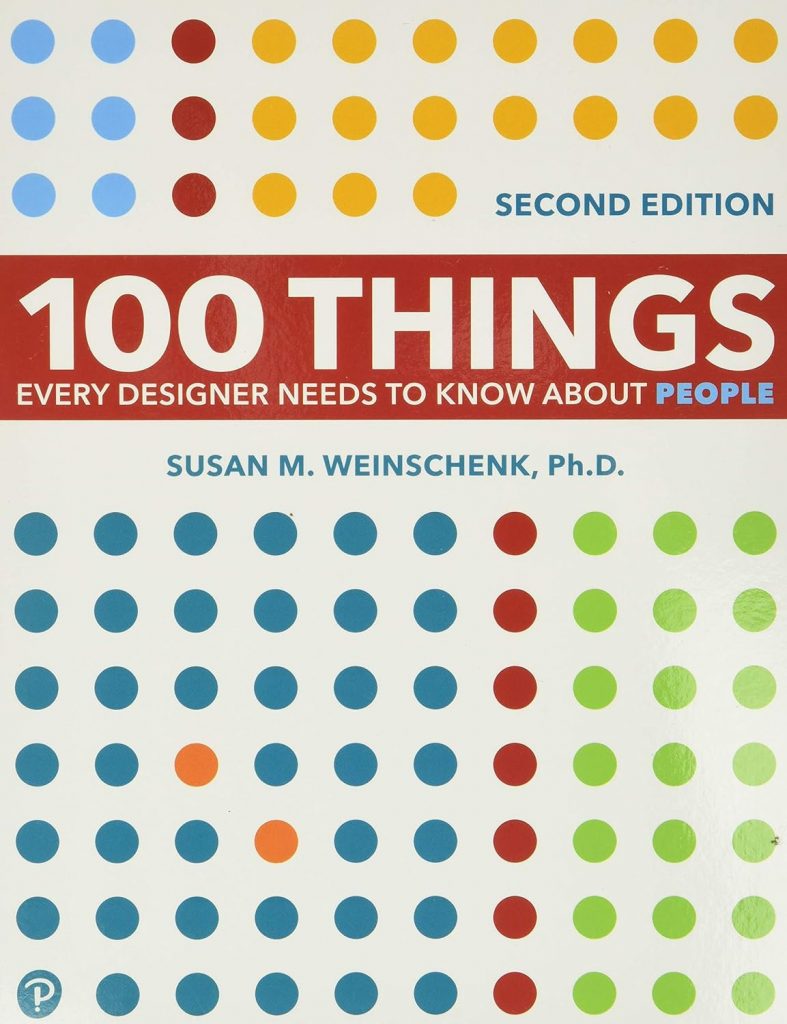
Behavioral science leader and CEO at The Team W, Inc., Susan M. Weinschenk, provides a guide that every designer needs, combining real science and research with practical examples on everything from font size to online interactions. With this book you’ll design more intuitive and engaging apps, software, websites and products that match the way people think, decide and behave.
Here are some of the questions this book will answer:
- What grabs and holds attention?
- What makes memories stick?
- What motivates people?
- How does listening to music make people feel?
- How do you engineer a decision?
- What line length for text is best?
- Are some fonts better than others?
We design to elicit responses from people. We want them to buy something, read more, or take action of some kind. Designing without understanding what makes people act the way they do is like exploring a new city without a map: results will be haphazard, confusing, and inefficient. Increase the effectiveness of your designs by using science-backed examples on human behavior.
Find out more about 100 Things Every Designer Needs to Know About People →

BE OPEN: The Future of e-Learning: 10 Trends to Watch Out For in 2024. Pt.2
Importance of well-being training
Well-being training is becoming increasingly important in the future of e-learning. As people face new challenges and stressors, it’s crucial to prioritize their mental and emotional well-being. Companies now recognize that employees who are mentally healthy and emotionally balanced are more productive and engaged. Therefore, incorporating well-being training into e-learning programs can help individuals develop resilience, manage stress effectively, and improve their overall well-being.
By focusing on topics such as mindfulness, self-care practices, work-life balance, and stress management techniques, learners can enhance their mental health while acquiring valuable skills for personal and professional success.
Continued growth of mobile learning
Mobile learning is expected to continue its growth in the future of e-learning. With the increasing use of mobile devices, such as smartphones and tablets, people are turning to these devices for learning on the go.
This trend aligns with the predicted rise in mobile device usage globally. Mobile learning allows learners to access educational content anytime and anywhere, making it convenient and flexible.
Additionally, as stated in important fact #8, the prevalence of mobile devices will contribute to the continued growth of this mode of learning.
Increased outsourcing of e-learning content development
E-learning content development is on the rise, and with it comes an increased tendency for organizations to outsource this process. Many companies are realizing that developing e-learning content in-house can be time-consuming and expensive.
By outsourcing to specialized firms or freelancers, businesses can save both time and money while ensuring high-quality content. This trend is expected to continue growing in 2024 as more companies recognize the benefits of outsourcing their e-learning needs.
Additionally, outsourcing allows organizations to tap into the expertise of professionals who have a deep understanding of instructional design and technology. It also provides access to diverse perspectives and fresh ideas, resulting in engaging and effective e-learning experiences for learners.
Learning Experience Platforms (LXP)
Learning Experience Platforms (LXP) are a key trend to watch out for in the future of e-learning. LXPs are online platforms that provide a personalized and engaging learning experience for users.
With features like AI-driven personalization, gamification, and data analytics, these platforms offer interactive and tailored learning content. LXPs also prioritize collaboration and adaptability, allowing learners to connect with peers, share resources, and progress at their own pace.
As mobile learning continues to grow, LXPs offer flexibility by providing access to educational materials on various devices. By leveraging immersive technologies like augmented reality (AR) and virtual reality (VR), LXPs create dynamic and interactive learning environments.
Mobile-first learning
Mobile-first learning is a significant trend in the future of e-learning. As the use of mobile devices continues to rise, more and more learners are accessing educational content on their smartphones and tablets.
This shift towards mobile learning allows for greater flexibility and convenience, as learners can access materials anytime, anywhere. Mobile-first learning also opens up opportunities for interactive and engaging experiences through features like video-based learning and gamification.
Additionally, data analytics play a crucial role in tracking learners’ progress and providing personalized learning experiences. With the increasing prevalence of mobile devices, it is expected that mobile-first learning will continue to grow in popularity in 2024.
The Future of e-Learning in 2024
Advancements in technology, such as AI and AR/VR, will shape the future of e-learning. Personalized and adaptive learning, blended with traditional methods, will cater to diverse learners.
The skills gap in the workforce and the benefits of e-learning in corporate training further highlight the importance of embracing these trends. Discover more about the exciting future of e-learning in 2024!
Advancements in technology (AI, AR/VR, etc.)
Advancements in technology, such as Artificial Intelligence (AI), Augmented Reality (AR), and Virtual Reality (VR), are set to revolutionize the future of e-learning. AI will play a significant role by providing personalized learning experiences and adaptive content delivery.
AR and VR technologies will enhance learner engagement through immersive experiences, allowing students to explore virtual environments and interact with digital objects. These advancements will not only make learning more interactive and engaging but also provide valuable insights through data analytics, enabling educators to tailor their teaching approaches based on individual needs.
With these technological advancements, the future of e-learning holds tremendous potential for creating dynamic and effective online educational experiences.
Importance of soft skills and diversity, equity, and inclusion
In the future of e-learning, the importance of soft skills and diversity, equity, and inclusion (DEI) training will be emphasized. Soft skills such as communication, collaboration, adaptability, and empathy are crucial for success in the workplace.
DEI training promotes equality and fosters a diverse and inclusive work environment. By providing these trainings online, organizations can reach a wider audience and create a more inclusive learning experience.
Research shows that companies with diverse teams perform better financially and are more innovative. Therefore, it is vital for e-learning platforms to incorporate soft skills and DEI training to prepare learners for the evolving demands of the workforce in 2024.
Interiors in the Era of Covid-19. Interior Design between the Public and Private Realms

Penny Sparke (Anthology Editor), Ersi Ioannidou (Anthology Editor), Pat Kirkham (Anthology Editor), Stephen Knott (Anthology Editor), Jana Scholze (Anthology Editor)
The Covid-19 lockdowns caused people worldwide to be confined to their homes for longer and on a greater scale than ever before. This forced many unprecedented changes to the way we treat domestic space – as relationships shifted between the public and the private worlds, and homes were rapidly adapted to accommodate the additional roles of schools, offices, gyms, restaurants, making-spaces and more. Above all, our understanding of the home as a site to support and enhance the well-being of its inhabitants changed in a variety of novel ways.
Interiors in the Era of Covid is a collection of essays which explore the complex ways in which our inside spaces (contemporary and historical) have responded to Covid-19 and other human crises. With case studies ranging from US and Europe to Japan, China, Colombia, and Bangladesh, this is a truly global work which examines wide-ranging subjects from home-working and home technologies to the impact of lockdown on people’s identities, gender roles in the home, and the realities of domestic living with Covid in refugee camps.
Exploring the roles played by designers (both amateur and professional) in accommodating changing requirements and anticipating future ones – whether Covid or beyond – this book is a must-read for students and researchers in interior design, architecture, architectural and design history, and anyone interested in the home and the relationships between health and design.