



Update: BOA added 5 free video tutorials offered by FZDSCHOOL
Month: July 2024
BOA has enriched its “Reading List” section with “Street Art”
BOA has enriched its “Reading List” section with “Street Art” by Simon Armstrong. This book offers a thorough exploration and interpretation of the vibrant world of street art.
Street Art by Simon Armstrong
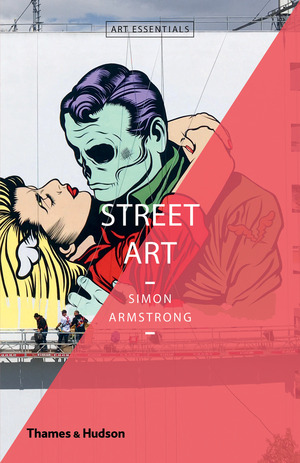
A comprehensive history and interpretation of the street art movement, featuring all of the key practitioners in a colorful combination of sharp images and insightful commentary.
Street art is a phenomenon and subculture movement that reaches from the darkest urban backstreets to the most glamorous international art fairs. Despite having earned a place in the canon of twentieth-century art history, its qualifications are often disputed by both the art establishment and practitioners themselves, all concerned with notions of authenticity.
This book examines how street art evolved from its origins in the 1970s New York graffiti scene to embrace many new materials, styles, and techniques. The once marginal art form has graduated into art galleries and the art market, while also heavily influencing design, fashion, advertising, and visual culture. Simon Armstrong walks readers through its controversial history, taking in the movement’s significant artists, artworks, and methods, and showcasing the works that have come to define it. He also discusses its close relationship to pop art and digital art, and explores possible futures for street art.
Packed with detail and written in an engaging, accessible style, this latest installment in the Art Essentials series is a must-read for lovers of street art and anyone interested in the way art movements gradually join the mainstream.
BOA posted a review of the book “Julian Schnabel”
BOA posted a review of the book “Julian Schnabel”. Julian Schnabel makes art out of life, finding his materials in the fabric of the everyday.
Julian Schnabel
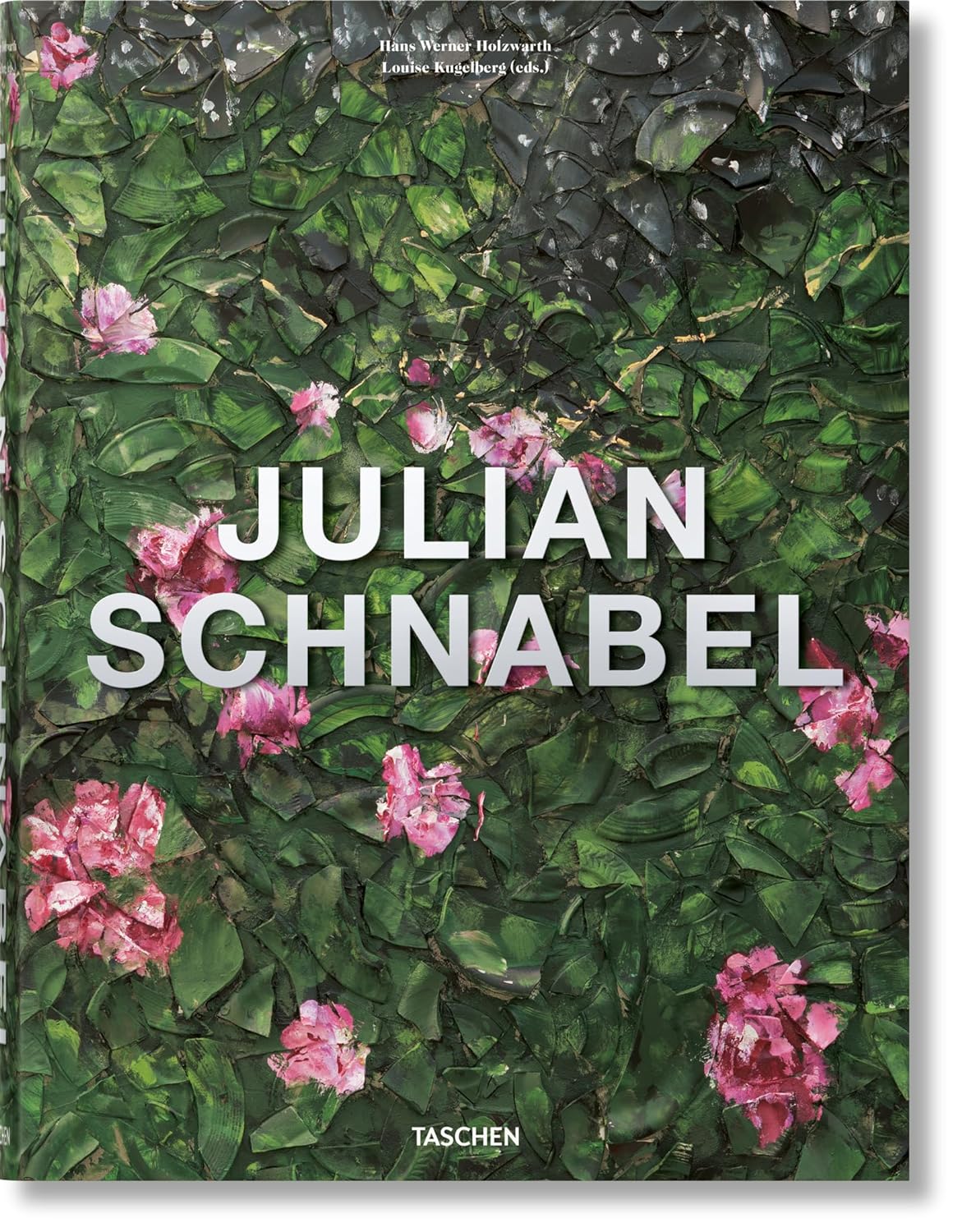
Julian Schnabel (Contributor), Hans Werner Holzwarth (Editor), Louise Kugelberg (Editor), Laurie Anderson (Author), Eric De Chassey (Author)
Julian Schnabel makes art out of life, finding his materials in the fabric of the everyday. He uses broken plates as an improbable picture ground; he paints on velvet, market stall covers, army tarps, kabuki theater backdrops, and boxing ring floors, found surfaces that lend their own rich history to the artist’s exploration. A figurehead for the return of painting after his overnight success with a first New York solo show in 1979, he has since worked in a wide variety of media: making sculptures that transpose his pictorial forms into space as raw, seemingly time-worn artifacts; directing award-winning movies that paint portraits of artists and other subtly heroic figures; and even building his own dream of a Venetian palace in New York. “I want my life to be in my work, crushed into my painting like a pressed car. If it’s not, my work is just some stuff,” Schnabel has said, and this urgency permeates his oeuvre no matter what means or media the artist chooses.
Now available in a popular edition, the complete range of Schnabel’s work is portrayed in unprecedented depth in this TASCHEN monograph, made in dialog with the artist. The texts were contributed by friends and collaborators: Laurie Anderson draws an intimate portrait of Schnabel; in three essays by curators and art historians, Éric de Chassey discusses the paintings, Bonnie Clearwater the sculpture, and Max Hollein the site-specific work; Donatien Grau writes on the Palazzo Chupi, the artist’s extravagant home in New York’s West Village; while the novelist Daniel Kehlmann explores his cinematic oeuvre. This edition allows you to study the surfaces and artistic gestures and actions, offering the most generous opportunity to experience Schnabel’s art outside of meeting it in person.
Arts Education Imperatives: Connecting the Globe (Pt.3)
Considering the Four Imperatives
Inclusion, Agency, and Wellbeing
Inclusion, agency, and wellbeing in arts education are three distinct but interconnected dimensions of human experience. Reporting on inclusion as part of the global Education Monitoring Report (UNESCO, 2017), Antoninis et al. (2020, p.105) claim that “progress on education access is stagnating,” and that access is a pre-requisite before inclusion can be affected. Meaningful engagement in the arts promotes access and inclusion for all individuals regardless of race, class, gender, sexuality, ethnicity, and ability (UNESCO, 2010) and agency ensures that individuals have the power to act in a sociological sense (Willis, 1978). The connections between arts education and wellbeing are well established (Cameron, 2021; Fancourt & Finn, 2019; Sills, 2021) and have been highlighted as particularly important in the current COVID19 climate (Selkrig, Coleman & MacDonald, 2020). Seligman (2011) identifies five core elements of psychological wellbeing which have been influential in research connecting the arts and wellbeing (e.g., Clift, 2012). These elements are positive emotions, engagement, relationships, meaning, and accomplishment (PERMA). As highlighted in the phases described above, arts learning in communities is a common thread throughout the research. The pedagogies that underpin this learning have potential to support cultural diversity, inclusion, agency, and wellbeing in out-of-school informal and non-formal contexts, and in school contexts (Lum, 2021, Kukkonen, 2021; Luo & Lau, 2021; Wilson, 2021; Yu & Buck, 2021, Selkrig, 2011).
Engendering a sense of collaboration and community is particularly pertinent to inclusion in, and through, the arts. Arts educators have a unique opportunity to promote empathy, understanding and exposure to diverse cultures through the arts which can assist in breaking down ethno-, generational-, and socially-based barriers. These types of arts learning can facilitate both deep personal understandings and communal responses to notions of inclusiveness, equity and cross-cultural appreciation. The following examples are indicative of the creative responses across varied arts fields. According to Joseph and Trinick (2018) “music participation ‘in community’ and ‘as community’” provides an opportunity for people to cultivate a sense of belonging and connection” (p. 2513), while Lum (2021) maintains that engaging musical improvisation within a multi-cultural performing arts company could “make sense of the intercultural amongst the musicians’ personal and geographical contexts” (p. 101). Wilson (2021) has also explored how adopting community-based music approaches which are “student-driven and collaborative, emphasising immersive, creative music experiences that are thought to promote inclusion and engagement” (p. 212) can support increased classroom engagement in school contexts that are culturally and socially diverse.
Decolonisation
Decolonisation in arts education is commonly understood as the ongoing process to address the balance of, and Indigenising of, arts cultures that exist within national, geographical, or social contexts (Cameron, 2021; Cheng & Lee, 2021; Luo & Lau, 2021). For example, where Western aesthetics-based arts cultures have been dominant due to colonisation, these arts cultures have held pre-eminence over the promotion and inclusion of Indigenous, local, or immigrant cultural traditions; or where the arts cultures associated with an elite or colonisers dominate a particular group, context, or society (Martin et al., 2021). The notion of decolonisation is a central concern for many arts educators wrestling with Euro-centric arts traditions in their own backgrounds and dominance over arts traditions of local Indigenous cultures in colonised countries and regions. Martin et al. (2021) highlight that, “Many of the approaches, processes and thoughts in arts education are entrenched in colonial histories and structures that perpetuate exclusive, privileging, and Eurocentric agendas” (p. 1). The fields of arts and culture provide fertile ground for addressing ingrained Eurocentric perspectives and all the artforms can be reframed to generate a narrative with more inclusive and respectful approaches to Indigenous arts cultures.
We aimed to include global perspectives that represent diverse perspectives, viewpoints, and experiences beyond a Eurocentric view of arts education. Honouring the voices (which first emerged in Phase 1) of researchers and participants was a key idea which emphasises that arts educators and learners come from varied and multiple cultural backgrounds, and these are often different from dominating Eurocentric traditions. Researchers such as Leung (2021) focus on the Indigenisation of society and music education curriculum policy and practice in Hong Kong through the promotion of traditional Cantonese opera following the return of Hong Kong to China in 1997. While Luo and Lau (2021) reported that despite the intentions of The Action Plan for Arts Immersion (APAI, China) “to promote indigenous cultural inheritance and transmission through community-based arts teaching and learning” (p.118), challenges identified, such as the reality of the power and cultural differences between urban/rural, and between the Han majority and Yao minority, provided significant barriers to cultural equity and preservation (p. 128). The methodologies and practices that researchers adopt in their work are also significant in the ongoing work of decolonisation in arts education. For example, artographic approaches (Sajadi, 2021), narrative participatory inquiry (Sills, 2021) and the arts pedagogies that foreground student and artist voices from diverse cultural and social backgrounds (Lum, 2021; Wilson, 2021) are found in the work of researchers connected with the AERCDSD network.
Cultural Resilience
Resilience and sustainability are often cited as panaceas for the 21st century to combat the significant impacts of a range of critical world events such as climate change, increased populations, and cultural loss or destruction due to political agendas or poorly managed societal changes. Not the least of these is the impact of a global pandemic over the last two few years. Resilience is commonly understood as adapting well and bouncing back from difficult experiences and has been applied extensively in a variety of fields at an individual, societal and systems level (Anderson, 2015; Brown, 2014). Recognizing that cultural sustainability is connected to, but not interchangeable with, cultural resilience, culture and the arts have been recognised as important dimensions of sustainability along with the social, economic, and environmental (Hawkes, 2001). The role of culture and the arts to build resilience for individuals and societal groups to address global issues is a growing field (Newsinger & Serafini, 2021).
As noted earlier, Jörissen at the 2021 UNITWIN Symposium discussed cultural resilience and sustainability and how these concepts can be adapted and linked with arts education. Jörissen suggests that cultural resilience is helpful to think of as a translation of cultural sustainability for use in educational settings and as a powerful and complex concept for arts educators to engage with as,
Resilience aims to retain identity through change by activating resources in culturally meaningful ways so that meaningful responses to disruptive events are created on multiple interwoven social levels (Jorrisen, 2021b, 04:58).
This quote emphasises that artistic responses are social as well as individual and that there is a connection between identity, social learning, and collective achievement. This perspective aligns with Kim (2015), writing from a Korean context, who found that community-based visual art education in cultural facilities supported resilience in young people through interactive teaching and collaboration. The young people in this study improved their selfesteem, self-identity, and could make plans for the future.
A strength of arts education is its capacity to help learners build and experience these connections. An arts pedagogy of cultural resilience works towards connecting identity, social learning, and collective achievement by activating cultural resources within a transformative framework (Jorissen, 2021). For example, Selkrig (2011) argues that both artists and participants are transformed through community-based arts projects and Hillman (2018) illustrates how musicians adapt and develop through multiple and shifting identities throughout their careers. x’s conception of cultural resilience also resonates with Sajadi’s (2021) story of finding identity and voice through art making and the role of agency in supporting cultural resilience.
Authors: Emily Wilson University of Melbourne, Neryl Jeanneret University of Melbourne, Mark Selkrig University of Melbourne, Jenni Hillman University of Melbourne, Benjamin Bolden Queens University (Canada)
Citation: Wilson, E., Jeanneret, N., Selkrig, M., Hillman, J., & Bolden, B. (2023). Arts education imperatives: Connecting the globe. International Journal of Education & the Arts, 24(4). http://doi.org/10.26209/ijea24n4
Update: BOA added 7 new online courses in Web Design from 1Training
Update: BOA added 7 new online courses in Web Design from 1Training
Making Videogames: The Art of Creating Digital Worlds by Duncan Harris, Alex Wiltshire
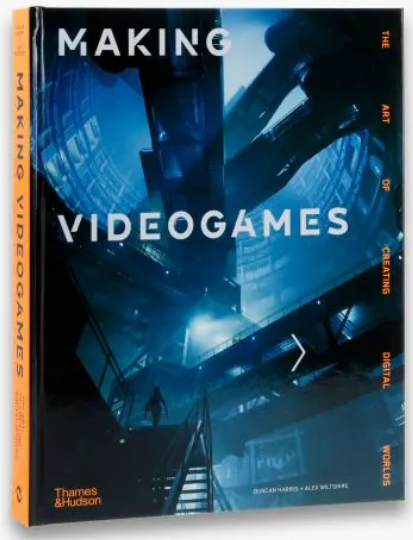
Making Videogames is an unprecedented snapshot of modern interactive entertainment, with insight from true pioneers about the most important games in the world. Illustrated with some of the most arresting in-game images ever seen in print, the book explores the unique alchemy of technical and artistic endeavour that constitutes the magic of videogames, striking a captivating balance between insight and accessibility. A book not only for die-hard videogame fanatics, but also for designer-creatives and the visually curious, Making Videogames is a thrilling showcase of the boundless creativity of this amazing industry.
Free download exhausted