


Update: BOA added 6 free video tutorials offered by Sinix Design
Month: November 2024
Creative Education in the Digital Era: Dangers and Opportunities (Pt.2)
Challenges
Experts worry that our growing reliance on artificial intelligence might stifle our critical thinking skills over time. While digital tools offer many advantages for creative education, they also present some significant concerns. We have seen numerous arguments about how today’s digital tools fall short of human creativity and cannot fully replace teachers and facilitators in the creative process. However, they can create a cycle of repetitive idea generation and content production that hinders genuine creative progress.
1. Limiting Human Creativity
AI-powered tools that generate prompts, ideas, storyboards, and illustrations may inadvertently stifle creativity. While these tools are helpful for overcoming creative blocks or producing more work, they can lead to excessive dependence on AI, diminishing one’s own creative abilities. Algorithm-driven apps may produce redundant or repetitive ideas that might not be immediately noticeable but can hinder the ability to think creatively or come up with innovative concepts. It is crucial to equip students with the knowledge and skills to use AI as a supplement or assistant rather than a primary guide.
Modern curricula in creative education are becoming more complex, focusing on the synergy between traditional and digital approaches. This blend aims to enhance efficiency without compromising creativity.
2. Over-Reliance on AI and Digital Tools
Excessive dependence on generative AI can lead students to rely too heavily on it. While AI is an integral part of many creative professions, it has limitations. Current algorithms cannot fully replicate the intricate and nuanced creative processes and outcomes of the human mind. Over-reliance on AI can degrade the quality of work and undermine the core purpose of creative education.
A balanced approach combining traditional hands-on methods with digital tools ensures accessibility while fostering independent thinking and problem-solving. For instance, in design-related fields, understanding textures, luster, fall, and weight is crucial. While 3D illustrations and material libraries are valuable for saving time and being sustainable, complete reliance on them can lead to flawed designs. In art, practical knowledge of materials—like the consistency of sculpting materials or the intricacies of brush strokes—is what makes a final piece truly stand out. Digital mediums lack the tactile elements that are fundamental to art and design, which is a significant component of these disciplines.
3. The Quantity vs. Quality Dilemma
Technology often emphasizes speed, productivity, and the generation of more ideas and content. However, excessive dependence on AI and digital tools can prioritize quantity over quality. The abundance of AI-generated ideas, prompts, and art may seem appealing, as it increases output and saves time. However, human creativity is rich with emotion and sensory experience, which can be lacking in AI-generated works. Focusing on quantity over quality can diminish an individual’s creative potential and hinder their creative growth.
Creative education—in art, creative writing, music, and other fields—aims to produce works that resonate with their audience. Human creativity evokes emotions, helping consumers connect with the art. AI-generated art, lacking the human touch, often fails to forge that emotional connection.
The Future of Creative Education: A Vision
Crafting courses for creative fields presents a significant challenge: how to stay relevant in the rapidly evolving digital age while introducing young minds to the creative process. An ideal approach lies in finding a delicate balance between tradition and technology, where creativity and innovation harmoniously coexist.
By learning to harness creativity alongside technological advancements, we can foster a new wave of innovations that reshape the landscape of creative education. This synergy will not only enhance the educational experience but also pave the way for a more interconnected and dynamic world of art and design.
The future curriculum will adapt to this collaborative reality, blending the best of both worlds to create a more inclusive, innovative, and vibrant educational environment.
Art and Climate Change by Maja Fowkes, Reuben Fowkes
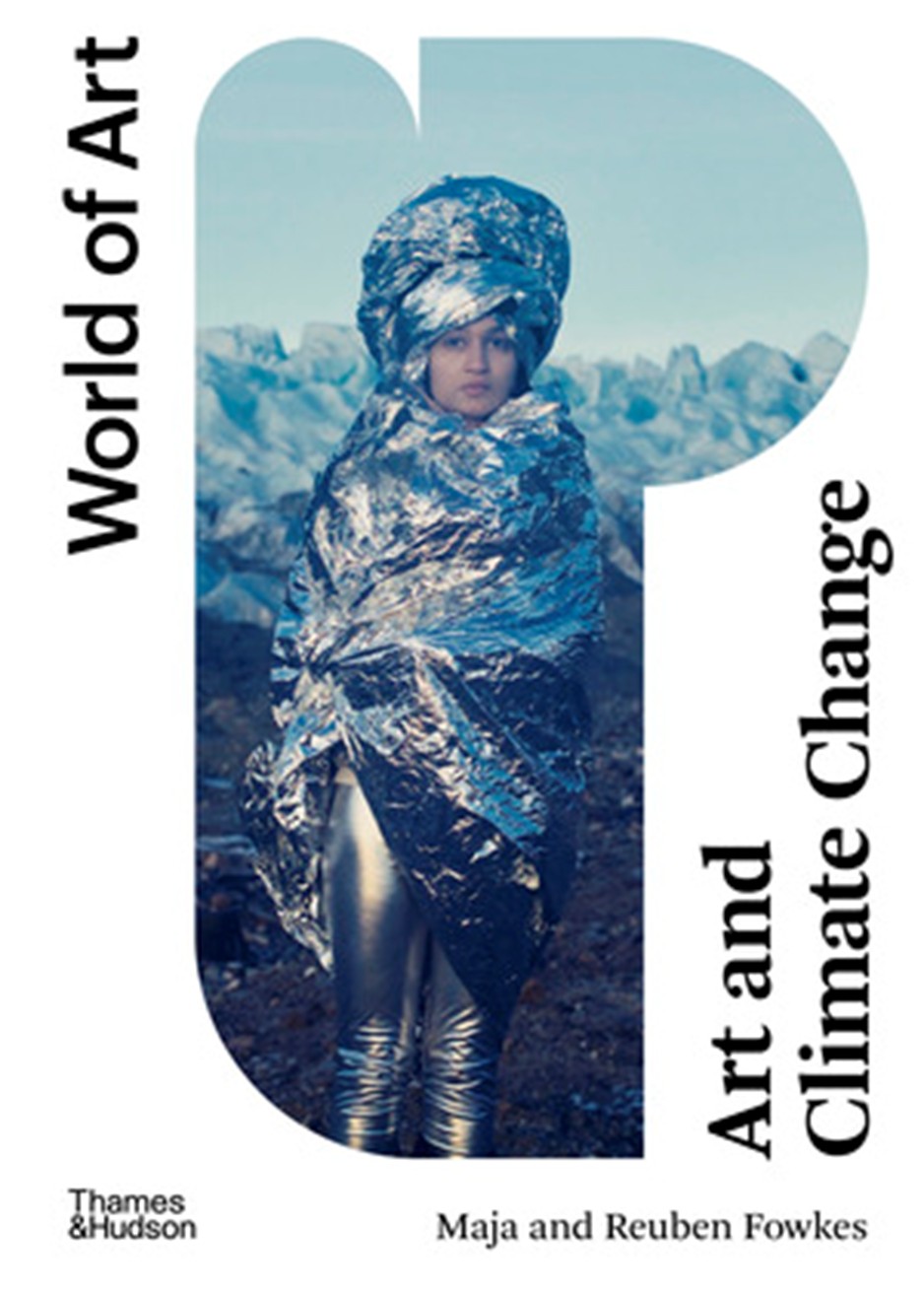
Art and Climate Change explores artistic responses to the ecological crisis. Artists create works that call for collective action to address threats to biological survival. By blending decolonial reparation and ecological restoration, they rewrite history using contemporary art forms and scientific theories.
In five chapters, Maja and Reuben Fowkes analyze artworks responding to the Anthropocene’s impact. They examine devastated landscapes, environmental injustice, and art from affected communities. The book covers painting, photography, conceptual art, installations, and performances, highlighting eco-conscious practices and a new artistic community.
Authors emphasize caring for marginalized and indigenous voices while addressing climate uncertainty, deforestation, toxicity, and species extinction. By proposing sustainable futures, artists reshape our planet’s history, documented in this illustrated book.
Free download exhausted
Creative Education in the Digital Era: Dangers and Opportunities (Pt.1)
Creative education is based on critical thinking, hands-on or practical approaches, rather than theoretical knowledge. It teaches students to be adaptable and think outside the box. Creative disciplines such as arts, creative writing, design, etc. often have curriculums that promote diversity and innovation in thinking, empowering students to approach problem-solving with an open mind and come up with unique solutions.
The rapid and ongoing evolution of the digital landscape and its impact on creative fields is a topic of great interest. The shift from traditional to more technology-oriented approaches, and the constant need to adapt and keep up with the dynamic digital innovations, including artificial intelligence, have significantly influenced creative education — both positively and negatively.
As art and design become increasingly reliant on technology — the latest software, artificial intelligence, augmented reality, virtual reality, and more — institutions and their curriculums will need to adopt a broader and more technology-driven syllabus. This means striking a balance between traditional and evolving approaches to these disciplines and developing a practical framework for applying the fundamentals of art, design, or creative writing in a digital context.
We live in a world where technology is an integral part of our daily lives. The key is to equip students with the skills and knowledge to use technology as a supportive tool, even an assistant, in their creative processes. Technology can be immensely helpful in overcoming creative blocks, reducing the time required for research and related tasks, and even facilitating the communication of ideas and thought processes. However, there is a fine line between leveraging digital innovations and becoming overly dependent on them. In this article, we will explore the «what» and «how» of digitizing creative education and using digital tools in the most effective way possible.
The multidisciplinary approach must be aimed at preparing students to embrace the dynamic nature of the rapidly evolving digital landscape and to motivate them to continuously enhance their skills and stay up to date with ever-changing industry standards and requirements. This broadens the horizons for artists and designers, allowing them to understand diverse perspectives, which in turn fosters innovation.
In today’s world, learners are required to study the fundamentals of related fields in addition to their own, such as marketing and social media management, computer programming and data science, or writing alongside arts and design. This approach ensures that they gain a comprehensive understanding and enhances their employability in the long run.
Recognizing diverse minds and a variety of unique viewpoints is crucial in modern curriculum development. Diversity in perspectives is essential in any creative education. Courses that teach students to approach problem-solving from different angles prepare them for the complexities they may encounter as creative professionals.
Digital tools are excellent for sharing real-life insights and case studies that are relatable, rather than relying solely on text materials, particularly in fields like art and design that do not fit into traditional syllabuses.
Exploring emerging tools, such as an online mood board that can be accessed simultaneously by everyone, or conducting keyword research alongside brainstorming, are some ways in which creative education can evolve in the digital age.
Opportunities
The ever-changing digital era has a profound impact on the field of creativity. Artists are embracing digital art, designers are becoming familiar with 3D illustration software, musicians are utilizing advanced models for music production, and the list goes on. These emerging tools and software open up a multitude of possibilities for young creative minds, providing them with numerous ways to excel.
1. Enhanced Productivity
Technology streamlines processes, resulting in increased efficiency. Generating ideas, seeking inspiration, and analyzing social and ethical aspects are now more accessible than ever before. For instance, writers can use software to proofread, spellcheck, and detect plagiarism in their work, saving time and effort. Designers can explore inspirations, analyze brands on their websites, and create 2D and 3D designs. This not only cuts the time required in half but also reduces paper usage and waste.
2. Inclusivity
People have diverse needs, and technology recognizes this, creating a more inclusive environment. Features like alt text and voice search are just a few examples of how the digital age fosters inclusivity. Remote access to digital archives, speech-to-text and text-to-speech options, audio-visual options, fonts designed for individuals with dyslexia, and more enable people with varying needs to participate equally in creative professions.
3. Simplicity of Creation
While software like Adobe Illustrator and Photoshop have been around for a while, incorporating AI-powered features into them has made the process of creating content more straightforward. These platforms provide a space for artists to explore without limitations. When it comes to digital art, mistakes are not irreversible, and experimenting with different strokes and textures is effortless. Moreover, this process is portable, allowing artists to create from anywhere. On the other hand, designers can visualize the final product in real time without the need for physical prototypes. 3D software enables them to ideate, experiment, and preview their designs before production, saving time and resources.
4. Overcoming Creative Stagnation
One of the most significant challenges that creative professionals face is creative stagnation. This occurs when individuals in creative fields struggle to generate new ideas and find it difficult to continue their creative work. Utilizing AI to generate ideas or gain fresh perspectives and inspiration can help overcome creative stagnation. For example, writers may generate illustrations based on prompts and use them as references for their writing, while artists may generate descriptions and use them as inspiration for their illustrations. Therefore, using interactive AI models to brainstorm ideas is a quick and effective way to get back on track.
Update: BOA added 6 new online courses in Web Design and 3D Design offered by EduCBA and EdNext
Update: BOA added 6 new online courses in Web Design and 3D Design offered by EduCBA and EdNext
BOA reviewed the book “The Package Design Book 7”
BOA reviewed the book “The Package Design Book 7” showcasing the winning packaging designs from the 2021 and 2022 Pentawards.
The Package Design Book 7

Author: Pentawards
The winning packaging designs from the 2021 and 2022 Pentawards.
In our seventh edition of The Package Design Book, we explore the world’s leading packaging design innovations from the 2021 and 2022 Pentawards competition. Now for the first time, it showcases entries into its new Sustainable Design category, highlighting designs from established industry professionals and young talent striving to reduce the impact of packaging on the planet.
This edition strongly focuses on innovative packaging design that honors sustainability, diversity and has an inclusive approach to design at its core. Submissions from over 60 countries have pushed the boundaries of visuals to create meaningful designs that are both a pure expression of their brands’ values and a delight for the consumers who buy them. This book epitomizes beautiful design concepts that were developed with integrity.
Alongside the thousands of submissions for the competition, the Pentawards Jury has also grown to an eclectic mix of 50 members representing 25 brands and 25 design agencies, including Amazon, Mars Food, Vault49, Estée Lauder, Superunion, Coty, WWF, and Stranger & Stranger. This volume comprises state-of-the-art packaging design that is not only witty, noble, and contemporary but illustrates the impact of this design discipline.
BOA has expanded its “Reading List”, adding the book, “Understanding the World: An Atlas of Infographic”
BOA has expanded its “Reading List”, adding the book, “Understanding the World: An Atlas of Infographic” by Sandra Rengen and Julius Wiedmann. It is a visual atlas that uses information graphics to explain our vast, fragile world.
Understanding the World: The Atlas of Infographics by Sandra Rendgen, Julius Wiedemann
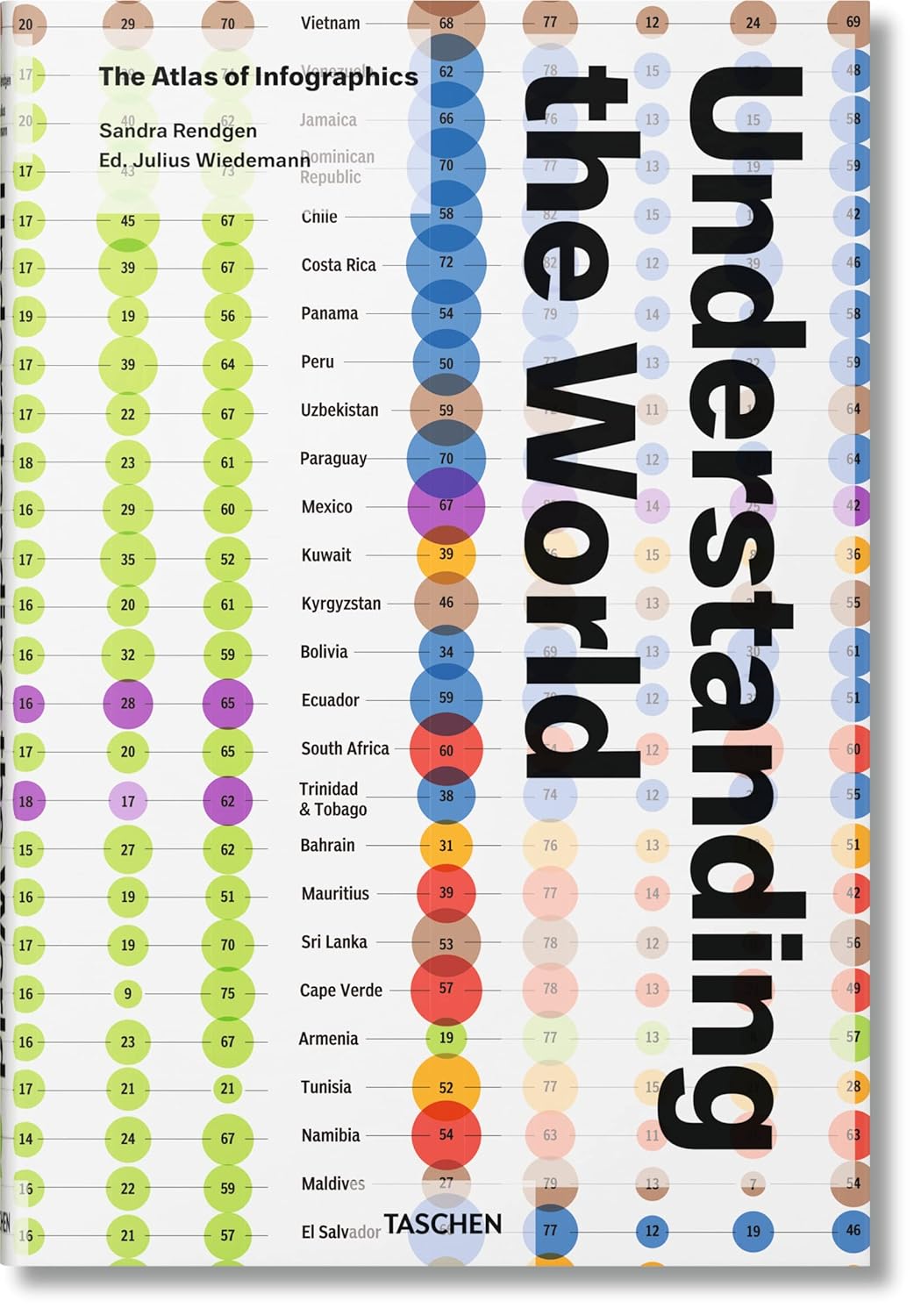
A visual atlas with information graphics that explain our vast and fragile world
Dazzling in scale, diversity and detail, the world never ceases to open our eyes and captivate our curiosity. Ever since the earliest cave paintings, humans have looked at this Earth that is our home and endeavored to understand it.
This expansive visual atlas presents the most exciting, creative and inspiring ways of explaining the world in information graphics. Divided into five chapters, the book covers the environment, technology, economics, society, and culture to reveal some of the Earth’s greatest intricacies in accessible visual form. Featuring more than 280 graphics, reproduced in large scale including seven fold-out spreads, the collection focuses on the 21st century, but also includes historical masterpieces to put our current situation into perspective.
Nigel Holmes introduces the book with an exclusive infographic of his own, while Sandra Rendgen provides an illustrated historical essay to explore how we have studied and interpreted our world over the centuries. With graphics drawn from such sources as Fortune, National Geographic, and The Guardian, this is not only a showcase of outstanding data design, but also a fascinating digest of where and how we live.