





Education Forecast 2030: The Fall of the Institutional Monopoly in Design Disciplines (Pt.2)

Education Forecast 2030: The Fall of the Institutional Monopoly in Design Disciplines (Pt.2)

The Evolution of the Fluid, Portfolio-First Hiring Playbook

The collapse of the institutional monopoly is forcing a complete overhaul of corporate human resource practices across all design industries. The legacy practice of filtering resumes based on university prestige is an obsolete method that fails to measure actual problem-solving speed or cross-disciplinary adaptability. In the 2030 creative landscape, corporate recruitment is governed by an automated, portfolio-first playbook. Hiring managers use specialized machine learning tools to continuously monitor public design platforms, open-source repositories, and digital fabrication networks to spot emerging talent based on active output rather than credential listings.

When an enterprise design team seeks to fill a vacancy, an AI screening tool parses thousands of public design repositories, analyzing the structural efficiency of architectural blueprints, the usability metrics of user interfaces, or the material optimization scores of industrial prototypes. Candidates who demonstrate high technical competence are automatically invited to participate in a timed, 48-hour remote design sprint. This live evaluation forces candidates to solve real commercial challenges under pressure, collaborating with distributed teams inside cloud-native workspaces. The candidate’s performance during this sprint—evaluated by both human directors and behavioral data analytics—serves as the primary metric for the hiring decision.

This portfolio-first approach ensures that employment offers are extended to individuals who possess verified technical skills and exceptional collaboration speed, regardless of their geographic location or academic background. It also ensures that professional portfolios function as living records that are continuously updated throughout a designer’s career. A portfolio in 2030 is not a collection of polished, final renderings; it is an active documentation log that showcases a designer’s complete process, including code iterations, early structural failures, material changes, and automated compliance reports. This transparency allows employers to evaluate the designer’s cognitive problem-solving path, making a static university degree completely irrelevant during the hiring process.

Distributed Studio Sprints and Global Micro-Internships

The decentralization of design education enables the rise of highly distributed, cross-border student networks that operate outside traditional campus boundaries. In the legacy academic model, international creative exchanges required expensive student travel, making global perspectives an exclusive privilege reserved for wealthy individuals. Cloud-native collaborative ecosystems dismantle these geographic barriers by enabling synchronous design sprints where student teams operate seamlessly across multiple time zones. These borderless networks allow students from diverse socio-economic backgrounds to form independent creative syndicates, offering their services directly to global clients through micro-internship platforms.

These micro-internships are short-term, high-impact projects where remote student teams solve specific localized infrastructure, product design, or communication challenges for international corporations. For example, a distributed team consisting of an architectural student in Nairobi, an industrial design student in Tokyo, and a data analyst in São Paulo can unite to develop a sustainable public park layout for a European municipality. The team collaborates inside web-based design environments, utilizing real-time modeling tools and automated climate engines to optimize the layout without ever meeting in physical space.

This immersive model replaces the traditional academic thesis project with a series of real-world commercial outcomes. Students are graded not by an academic committee reading a theoretical paper, but by the tangible impact of their delivered solutions and the feedback from their commercial clients. This high-stakes environment prepares future designers for the realities of the modern distributed workforce far better than any legacy classroom could. By the time these designers complete their alternative educational pathway, they possess a verified record of international commercial work, completely bypassing the entry-level bottleneck that traditional university graduates face.

TheWhole-Career Subscription Model and Continuous Retraining

The rapid velocity of technological innovation means that any technical skill set acquired at the start of a career faces an increasingly short shelf life. In the 2030 design landscape, the concept of a “completed education” is an obsolete relic of the industrial age. Design professionals can no longer rely on a front-loaded package of knowledge to carry them through a forty-year career. To survive in this volatile market, designers are transitioning to a whole-career subscription model, where continuous retraining is woven directly into the fabric of their daily work routines.

Elite digital learning platforms operate as subscription-based utilities that designers pay for monthly or annually to secure perpetual access to updated technical tracks, advanced tooling tutorials, and peer mentorship networks. These platforms deploy machine learning algorithms to continuously analyze a subscriber’s professional output and highlight emerging skill gaps. For instance, if an architect’s digital portfolio indicates a lack of experience with new generative energy modeling tools, the platform automatically suggests a targeted, 10-hour micro-credential module to bridge that specific gap.

This continuous retraining loop ensures that design professionals remain ahead of market transformations, mastering new software systems and compliance standards as soon as they emerge. It also changes the role of the educator from a static lecturer into an active mentor who guides students through complex problem definitions and ethical considerations. The classroom is no longer a physical room inside a university; it is a global, persistent digital network that supports the designer through every stage of their professional life. This continuous educational model renders the traditional, discrete four-year degree completely obsolete, ensuring that a designer’s credibility is measured by their current capacity to innovate rather than a historic university credential.

Conclusion: The Strategic Democratization of Creative Problem Solving

The fall of the institutional monopoly in design disciplines represents a necessary step forward for the global creative economy. By dismantling the centralized gatekeeping systems of traditional academia, the industry is transitioning into a democratic, merit-based ecosystem where talent is celebrated regardless of wealth or geography. The rise of alternative credentials, industry-led corporate academies, portfolio-first hiring playbooks, and continuous retraining subscriptions allows anyone with an internet connection to access world-class design knowledge. This shift changes the role of the designer from a visual decorator into a critical systems strategist who is uniquely equipped to tackle complex global challenges.

For global corporate enterprises, municipal planning boards, and technology organizations, the fall of the university monopoly provides an unprecedented opportunity to tap into a highly diverse pool of global talent. True innovation is no longer confined to the design studios of elite Western institutions; it is happening inside distributed cloud networks, decentralized peer-to-peer academies, and open-source project repositories worldwide. Investing in these alternative learning frameworks ensures that our future infrastructure, digital platforms, and consumer products are designed by professionals who possess verified technical skills and exceptional real-world agility. Ultimately, the forecast for 2030 promises a world where creative problem solving is fully democratized, ensuring that the power to shape our environment belongs to anyone with the drive, execution speed, and systemic vision to build a better future.

Education Forecast 2030: The Fall of the Institutional Monopoly in Design Disciplines (Pt.1)

Education Forecast 2030: The Fall of the Institutional Monopoly in Design Disciplines (Pt.1)

Introduction: The Impending Structural Collapse of Academic Prestige

The institutional monopoly on creative validation is nearing its historic conclusion. For more than a century, traditional universities, elite art academies, and formal design institutions served as the absolute gatekeepers of professional credibility. Securing a corporate position within industrial design, architecture, or communication strategy required a candidate to present a costly, front-loaded institutional degree. This legacy framework operated on a predictable, linear path: an individual spent four years absorbing static design theories, graduated with an institutional stamp of approval, and relied on that single educational event to fuel a multi-decade career. However, as the rapid evolution of technology continues to outpace traditional academic update cycles, this centralized structure is showing signs of terminal stress.

By the year 2030, the institutional degree will no longer serve as the primary currency of professional design credibility. The global creative market is shifting toward a decentralized, industry-vetted paradigm where academic pedigree is secondary to proven output, real-time market agility, and continuous skill acquisition. Higher education is failing to match the exponential speed of commercial market transformations, forcing a total restructuring of how talent is educated, verified, and integrated into modern corporate ecosystems. This forecast aligns with international educational assessments by UNESCO, which indicate that the digitization of specialized knowledge requires a shift toward agile, decentralized learning models. The traditional university degree is being replaced by flexible, stackable credentials that prove an individual’s immediate capability rather than their past institutional attendance.

This structural collapse is driven by a deep economic mismatch between the financial cost of traditional schooling and the fluid demands of the modern creative economy. Students are increasingly unwilling to take on immense financial debt for a fixed four-year curriculum that is frequently obsolete by the time they graduate. Tomorrow’s creative leadership belongs to professionals who view education not as a single, front-loaded lifecycle event, but as a continuous process of skill adaptation. As global tech conglomerates and creative agencies establish automated portfolio vetting pipelines, the formal university diploma is losing its gatekeeping power. This transition marks the democratization of global design literacy, shifting the focus of the industry away from institutional privilege and toward raw, verifiable problem-solving execution.

The Economic Drivers and Global Demands for Educational Decentralization

The primary catalyst accelerating the fall of the academic monopoly is the exponential expansion of the global digital education market. International market research indicates that the global digital education sector is projected to grow dramatically by 2030, driven by an explosive compound annual growth rate. This rapid expansion is not merely a consequence of increased internet access; it represents a deliberate shift in how multinational corporations approach talent acquisition. Global enterprises are systematically removing formal higher-education degree requirements from their standard recruitment parameters. They are replacing these traditional filters with automated technical screenings, live portfolio assessments, and cloud-native collaborative design sprints.

Traditional higher education moves on a sluggish cycle, often requiring years to push a single curriculum update through complex administrative and regulatory review boards. In contrast, the software systems, production pipelines, and artificial intelligence tools deployed by design agencies change on a monthly basis. A student entering a traditional design program in 2026 will likely find that the software frameworks they master in their first year are entirely obsolete by the time they enter the market in 2030. This structural lag makes the traditional four-year university model financially unviable and operationally inefficient for modern corporate entities that require day-one production readines.

Consequently, design professionals are bypassing traditional institutions entirely, routing their time and capital toward specialized micro-learning channels and agile training networks. This educational shift allows learners to choose specific technical skill blocks—such as parametric script optimization, computational energy modeling, or spatial interface design—directly from industry experts. This pay-as-you-go methodology reduces financial risk for the student while matching the immediate tactical requirements of the market. Education is transitioning from an expensive upfront investment into an operational subscription service that designers access throughout their careers to keep their skills sharp.

The Rise of Industry-Led Corporate Academies and Alternative Credentials

As traditional universities fail to deliver workforce-ready talent, global technology conglomerates and elite design agencies are launching their own educational ecosystems. These corporate initiatives focus entirely on high-utility capabilities optimized for immediate integration into active production pipelines. A landmark example of this operational shift is the Google UX Design Professional Certificate hosted on Coursera. Seeking to source skilled user-experience design talent at scale without relying on slow higher-education pipelines, Google built an asynchronous, industry-vetted learning track that focuses entirely on modern production tools like Figma.

The program bypasses abstract academic theory to prioritize the creation of verifiable portfolio artifacts that directly match the needs of active design teams. The outcome of this program has completely disrupted traditional recruitment patterns: over one million students enrolled globally, and a massive hiring consortium of over 150 top employers—including Deloitte, Target, Ford, and SAP—now uses this certification to source and hire junior talent. This program sets a powerful precedent for the year 2030, proving that corporate entities are fully prepared to build, fund, and maintain their own educational pipelines to bypass the academic establishment.

By 2030, this corporate training model will expand into all design disciplines, including architecture and industrial design. Elite design studios are creating short, intensive micro-academies that function as hyper-focused vetting pipelines for top talent. These alternative programs issue cryptographic, blockchain-verified credentials and digital badges that link directly to the student’s live portfolio files. When a candidate applies for a design role, the corporate recruiter does not review a paper transcript from a university registrar; they inspect verified digital credentials that display the exact design files, code repositories, and user testing logs generated during the program. This high-fidelity verification makes the traditional university diploma completely unnecessary, leveling the playing field for self-taught and non-traditional designers globally.

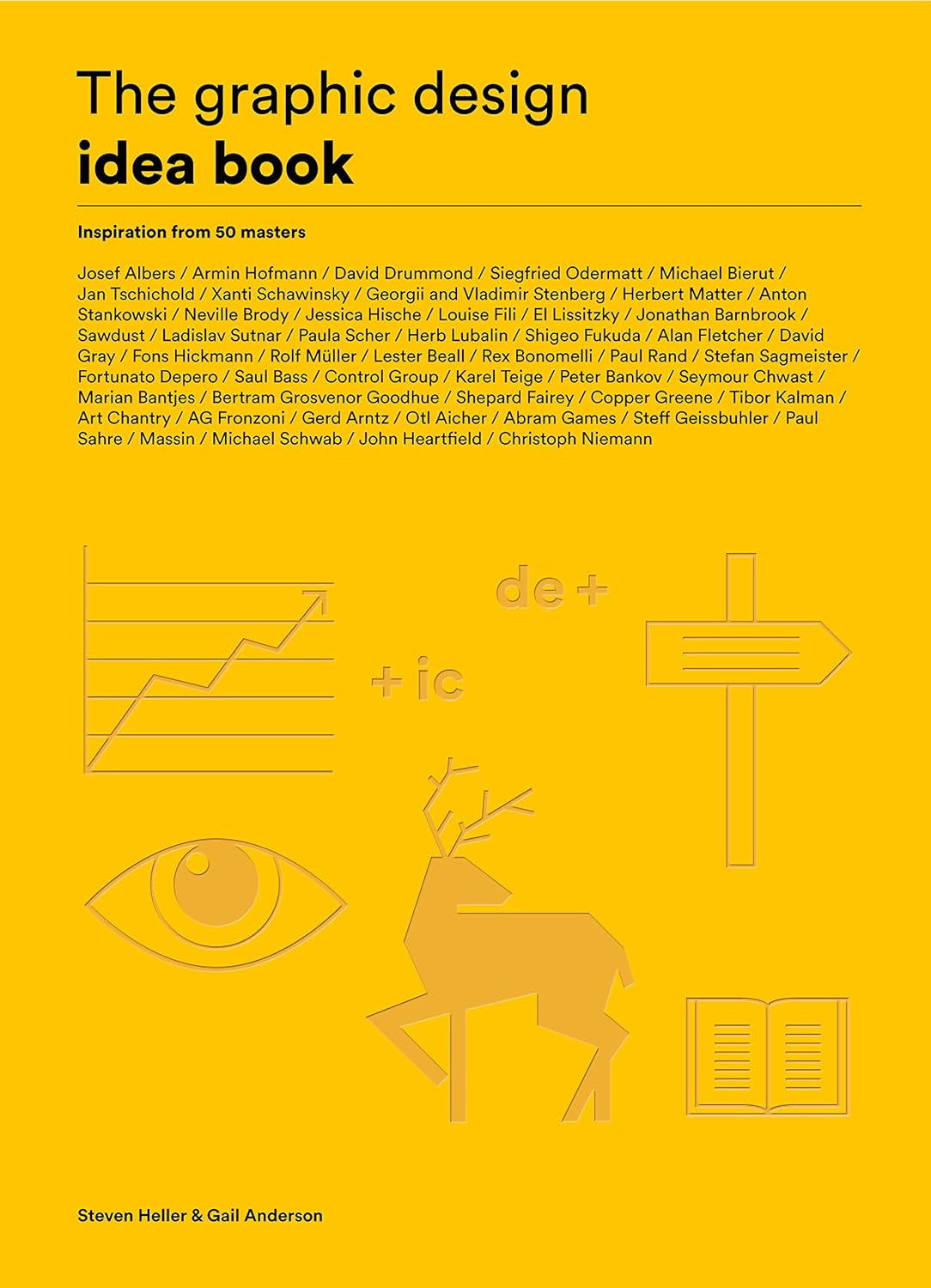
The Graphic Design Idea Book: Inspiration from 50 Masters

The Graphic Design Idea Book: Inspiration from 50 Masters

Broken into sections covering the fundamental elements of design, key works by acclaimed designers serve to illustrate technical points and encourage readers to try out new ideas. Themes covered include form, narrative, color, type and image, ornament, simplicity, and wit and humour.

The result is an instantly accessible and easy to understand guide to graphic design using professional techniques.

Free download exhausted

The Domestic Stage – When Fashion Image Comes Home by Adam Murray, Charlotte Cotton

The Domestic Stage - When Fashion Image Comes Home By Adam Murray, Charlotte Cotton

Since the 1990s, fashion imagery has evolved from the aspirational and glamorous into an experimental genre created by interdisciplinary artists, art directors, and photographers. The domestic space or where we live has acquired a key role as an intimate setting for this kind of playful exploration, in which personal stories are told, and fashion shots gain authenticity. Illustrated interviews with or editorials on twenty-two established and newer image-makers offer exceptional insights into this phenomenon. Featured photographers include Corinne Day, Tierney Gearon, Clifford Prince King, and Tina Barney, to name a few.

For three decades, the fashion image has shifted its focus from high-end shoots to the idiosyncratic, Instagram-style practice of pictures taken at home. That home may be a house, apartment, or room—often, though not always, the antithesis of glamour and gloss. The Domestic Stage captures this fascination with the home as an “uncurated” setting for presenting an individual’s private life and relationships, and for professional commissions with edge. How this space merged with the fashion image is revealed through the words and work of twenty-two such image-makers. They include the pioneering Nigel Shafran; International Magic, who created virtual fashion shows with Martine Rose during the pandemic; and Carrie Mae Weems, whose 2024 Bottega Veneta campaign truly came “home”—to show A$AP Rocky enjoying time with his children. Each contributor’s commentary is candid and revealing, their images even more so. The result is a provocative new take on fashion photography and its transformation in recent years.

Find out more about The Domestic Stage – When Fashion Image Comes Home by Adam Murray, Charlotte Cotton →

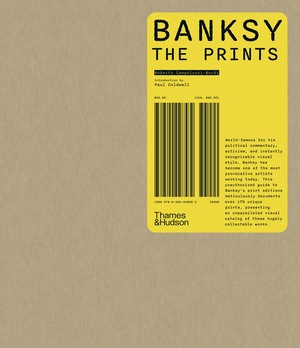
Banksy. The Prints by Roberto Campolucci-Bordi, Paul Coldwell

Banksy. The Prints By Roberto Campolucci-Bordi, Paul Coldwell

The artist known as Banksy has been creating works for over three decades and is one of the best-known artists of our age. Banksy has always believed the best place for his work is on a wall, where it’s free and accessible to everyone. That said, since 2002, he’s also created around fifty-one print editions, producing an estimated 30,000 artworks. His Pictures on Walls (POW) project played a huge role in shaping his career and the street-art scene at large. This unauthorized guide to Banksy’s print editions meticulously documents 174 unique prints, presenting an unparalleled visual catalog of these hugely collectible works.

In addition to making his art accessible to a larger audience, these prints often expand on themes seen in his wider body of work, making them essential in understanding his artistic development over the last two decades. Banksy initially offered his prints, both signed and unsigned, for modest prices.

Organized by release year, with insightful commentary, essential details about each edition, and faithful and high-­quality reproductions, Banksy: The Prints is the ultimate resource for exploring Banksy’s printed works.

Find out more about Banksy. The Prints by Roberto Campolucci-Bordi, Paul Coldwell →