





How Sustainable Design Education is Shaping Tomorrow’s Professionals (Pt.2)

How Sustainable Design Education is Shaping Tomorrow’s Professionals (Pt.2)

Product Design and Systemic Operational Frameworks

Industrial and product design programs are shifting their educational objectives away from the styling of superficial consumer casings toward the orchestration of complex product-service systems. Global design departments are widely deploying the Product-as-a-Service (PaaS) framework as a core design requirement. Within this model, students are trained to design physical assets not for discrete point-of-sale consumer transactions, but for long-term lease, rental, and operational ownership by the manufacturing corporation itself. This operational transition flips the designer’s primary motivation: the object must be optimized for longevity, rapid modular repair, component updating, and factory remanufacturing over a multi-decade timeline.

Students study industrial design rules focused on modularity and high-speed repairability in direct compliance with international Right to Repair mandates. In practical studio workshops, students systematically deconstruct market consumer electronics, identifying design errors such as integrated, non-removable batteries, proprietary fasteners, and fragile structural adhesives. For their thesis projects, industrial design cohorts prototype modular smartphones, easily repairable home appliances, and flat-pack furniture components assembled entirely without toxic chemical bonding agents. Every sub-assembly within these student projects can be easily swapped out by an end-user utilizing a single, standard mechanical tool.

Moreover, modern industrial design education incorporates rigorous supply chain mapping and circular macro-economic modeling. Future designers must calculate the precise carbon and financial costs associated with reverse logistics, ensuring that a product can be efficiently recalled to a factory node and refurbished with minimal energy inputs. This analytical education produces industrial design graduates who possess the quantitative vocabulary required to prove the fiscal returns of a sustainable workflow to corporate stakeholders. They enter the enterprise demonstrating that eliminating virgin material extraction and deploying standardized, reusable container loops protects corporate balance sheets from extreme global commodity price shocks.

Computational Ecology and the Role of AI in Online Classrooms

Modern sustainable design education relies heavily on the integration of advanced computational tools and artificial intelligence architectures. AI has transitioned from a superficial visualization assistant into an analytical engine capable of processing immense, multi-variable climate and material data fields that previously required months of manual engineering calculations. These online, cloud-native analytics platforms allow remote design students to evaluate the long-term environmental metrics of their projects with high scientific accuracy during the early concept phase.

During design sprints, students deploy generative machine learning algorithms to optimize structural massing and material distribution. An AI engine can compute thousands of geometry variations for an architectural truss or a product chassis, automatically removing structural material from areas without load concentration to reduce plastic or metal consumption by up to 40% while maintaining absolute structural integrity. In urban planning modules, artificial intelligence processes 50-year meteorological histories to run predictive climate stress tests, simulating how heat islands, rising sea levels, and extreme storm flows will interact with a digital city model so students can strategically adjust green spaces and bio-swale networks.

Simultaneously, high-bandwidth online learning networks are completely democratizing access to this high-tier environmental education. Students from developing industrial regions can connect directly to cloud-hosted sustainable laboratories managed by top-tier western research institutes, running carbon calculations and earning accredited micro-credentials without geographic or financial exclusion. Virtual and Augmented Reality (VR/AR) tools enable distributed international teams to gather inside immersive digital twins of architectural assets, collaboratively testing the mechanical disassembly of product nodes or walking through spatial layouts in real time. Digital transformation and AI do not merely accelerate production speed; they democratize critical ecological data, unifying a global community of designers to solve shared planetary challenges.

Conclusion: The Strategic Responsibility of the Modern Creative Class

Sustainable design education is not a passing aesthetic trend, a temporary compliance framework, or a public relations tool; it represents the structural evolution of the creative profession. The contemporary designer carries a direct responsibility for balancing human manufacturing outputs with biosphere safety boundaries. Shifting from a legacy linear perspective to a systemic, circular framework demands rigorous intellectual agility and a commitment to continuous lifetime learning from both students and academic institutions. However, this rigorous path provides the primary blueprint for an industrial economy that actively coexists with the planet rather than depleting its raw capital.

Graduates of advanced sustainable design tracks enter global enterprises and municipal regulatory offices as core agents of systemic change. They deliver an integrated skill set that combines sharp aesthetic values with deep technical literacy in material sciences, cloud data analytics, and global environmental tax compliance. Investing in comprehensive, data-driven sustainable design education directly dictates the resilience of our future infrastructure, consumer products, and regional ecosystems. Ultimately, sustainable design education teaches a universal lesson: we must engineer our world so that future generations retain the absolute right to a safe, stable, and prosperous environment.


Paolo Roversi by Sylvie Lécallier, Paolo Roversi

Paolo Roversi by Sylvie Lécallier, Paolo Roversi

This definitive monograph surveys the last fifty years of fashion photographer Paolo Roversi’s distinctive output, and has been developed and designed in close collaboration with the artist.

Arriving in Paris from Ravenna in 1973, Paolo Roversi produced his first series of photographs in 1977, which were immediately picked up by the fashion press. From then on, he devoted himself to fashion photography, working for the greatest designers and for the most prestigious magazines, simultaneously occupying a position both at the heart of the fashion world and far from its ephemeral trends.

Ultimately in search of pure beauty, Roversi creates timeless and mysterious work, which is shaped by his choice of studio and use of large format and Polaroid cameras. At the heart of his photography are his close relationships with fashion designers and models, most famously with Yohji Yamamoto, as well as Romeo Gigli, Rei Kawakubo, and Dior. These fruitful collaborations have allowed Roversi to continuously challenge and renew his practice.

Find out more about Paolo Roversi by Sylvie Lécallier, Paolo Roversi →

A History of Art for Beginners and Students: Painting, Sculpture, Architecture by Clara Erskine Clement

A History of Art for Beginners and Students: Painting, Sculpture, Architecture by Clara Erskine Clement

“A History of Art for Beginners and Students: Painting, Sculpture, Architecture,” published in the late 19th century, offers a foundational exploration of art history. This introductory text covers painting, sculpture, and architecture from ancient to medieval times, aiming to educate beginners and students on the development and significance of art across cultures. The book begins by distinguishing between fine arts and mechanical arts, stressing the cultural and educational importance of artistic pursuits. Painting is introduced as a vital element of the fine arts, emphasizing its role in education and imagination.

Free download exhausted

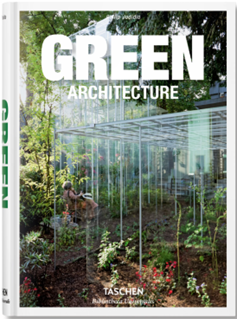
Green Architecture by Philip Jodidio

Green Architecture by Philip Jodidio

The most exciting new buildings today are almost all environmentally aware, sustainable, and conceived to consume less energy than ever before. Discover the best examples of green projects from the Architecture Now! series in this handy Bibliotheca Universalis edition.

Celebrated architects like Frank Gehry and Norman Foster are presented alongside young up-and-coming creators from all over the world. Filled with plans, renderings of proposed projects, and stunning architectural photography, this is nothing short of an encyclopedia of eco-design.

From a water treatment facility to an art museum, luxurious holiday homes to commercial structures, these buildings all make a bold environmental statement. Being “green” means being aware of the responsibility in the construction and use of modern buildings; some solutions are as old as the history of architecture, while others are born of cutting-edge technologies. Explore these approaches and many more in this groundbreaking collection showcasing 100 of the world’s most innovative eco-friendly buildings.

Find out more about Green Architecture by Philip Jodidio →

How Sustainable Design Education is Shaping Tomorrow’s Professionals (Pt.1)

How Sustainable Design Education is Shaping Tomorrow’s Professionals (Pt.1)

Introduction: Shifting from Pure Aesthetics to System Survival

The modern world faces an unprecedented ecological crisis that requires a complete overhaul of how physical objects, built environments, and digital systems are manufactured. Historically, design execution was evaluated primarily through the narrow lenses of visual aesthetics, ergonomic comfort, and immediate commercial viability. However, this legacy approach—driven by uninterrupted, linear consumer demand—has reached its planetary limits. Engineering products and infrastructure without evaluating long-term environmental consequences is now recognized as a systemic risk to biosphere stability. In response to these pressing global challenges, Sustainable Design Education is transforming from a peripheral elective into the foundational core of the global creative sector.

Global academic institutions and leading technological universities are actively restructuring their structural degree tracks, discarding isolated sustainability seminars in favor of fully integrated cross-disciplinary matrices. Contemporary sustainable engineering relies on the absolute minimization of carbon footprints, the proactive conservation of regional biodiversity, circular material dynamics, and strict social equity. The core objective of modern design faculties is not to teach students how to utilize recycled cardboards or print green branding labels onto standard, linear products. The true destination of sustainable pedagogy is to build advanced systems thinking capable of predicting the long-term compounding impacts of a design choice decades into the future. Professionals graduating from modern ecosystems must operate comfortably at the fluid intersection of hard engineering sciences, advanced material logistics, socio-economic dynamics, and strict corporate viability metrics.

The Built Environment and Regenerative Architecture Pipelines

The architecture and construction sectors represent one of the most resource-intensive segments of the global economy, generating nearly 40% of global energy-related carbon dioxide emissions. Because of this massive ecological footprint, spatial and architectural education within the sustainable domain is undergoing a radical technical transformation. Students are no longer trained to design permanent, monolithic concrete monuments that cannot be dismantled without generating tons of non-recyclable demolition waste. Instead, modern studio priorities are anchored heavily around the framework of regenerative design, where the ultimate objective moves past “reducing harm” toward actively restoring local ecosystem patterns.

In elite architectural institutions—such as The Bartlett School of Architecture or Delft University of Technology (TU Delft)—the core learning pipeline is built directly around algorithmic simulation and rigorous Life Cycle Assessments (LCA). First-year students utilize advanced BIM (Building Information Modeling) extensions to accurately compute the “embodied carbon” of structural assemblies before generating visual renders. Curriculums emphasize micro-climate analysis, wind tunnel simulation, and solar orientation to engineer highly optimized, passive heating and ventilation layouts. Future spatial designers build structures that operate as dynamic, living systems: harvesting local stormwater runs, filtering greywater through integrated phyto-purification cells, and generating a net-positive energy output back to regional municipal grids.

Furthermore, educational tracks mandate the study of innovative, non-toxic bio-composites engineered to entirely replace traditional structural concrete and carbon-heavy structural steel. Classrooms function as active materials labs where students prototype utilizing cross-laminated timber (CLT), structural bamboo frameworks, mycelium-grown insulation blocks, and carbon-negative hempcrete panels. Students master the principles of Reversible Architecture, engineering dry mechanical joints and modular component connections instead of permanent chemical adhesives. This methodology ensures that when a building reaches its functional end-of-life, it acts as an organized, searchable “material bank,” allowing components to be cleanly dismantled, cataloged, and routed to new construction projects, completely eliminating landfill waste.

Textile Engineering and Circular Closed Loops in Fashion Education

Identical structural shifts are transforming the apparel and textile design education sectors, driven by the global requirement to mitigate the catastrophic waste crises caused by fast fashion. Traditional design pathways focused on hyper-rapid trend reproduction and low-cost disposable garments are being systematically replaced by high-accountability Circular Design frameworks. Renowned creative institutions like Central Saint Martins have completely overhauled their active production studios, enforcing the “Cradle-to-Cradle” ideology which mandates that every garment be engineered with a transparent plan for eventual material reclamation.

The initial phase of this updated fashion pedagogy requires a deep dive into biochemical material sciences and textile toxicity metrics. Students analyze the structural composition of fabrics, learning why synthetic-natural blends (such as poly-cotton) are nearly impossible to mechanically separate and recycle at scale. Consequently, they are trained to design utilizing strict mono-material compositions and pure organic fibers that can be seamlessly processed through existing mechanical or chemical recycling loops. In university wet labs, apparel students actively experiment with bio-fabricated textiles grown from agricultural waste streams, marine algae matrices, and bacterial cellulose colonies, producing garments that safely compost back into agricultural soil without releasing toxic chemicals.

The secondary phase focuses on overhauling the geometric mechanics of garment construction. Curriculums embed compulsory modules in Zero-Waste Pattern Cutting, a technical process where garment components fit together on a fabric roll like an exact puzzle, eliminating textile scraps entirely during the manufacturing stage. Students also design modular garments capable of adaptation, adjustment, and repair, which extends the functional lifespan of the consumer asset. Beyond the physical product, modern fashion education integrates digital asset tracking software, requiring students to embed cryptographic “digital product passports” via scannable QR codes and RFID threads into their prototypes. These digital keys allow consumers and processing facilities to instantly scan the garment to view its exact fiber composition, repair guides, and precise chemical recycling instructions.