




BOA added 8 video tutorials for Techniques in After Effects by SonduckFilm
Month: July 2026
Impact Literacy: Why Creative Students Need to Learn How to Measure Change (Pt.2)
PART 2. From Outcomes to Learning
If impact literacy begins with evidence, it matures through learning. A responsible creative project does not only ask whether it succeeded. It asks what should be changed next time.
This is especially important for students, because educational projects are often experiments. A prototype may fail. A workshop may reach the wrong audience. A campaign may be misunderstood. A material may perform badly. A community partner may challenge the original brief. These are not necessarily failures if the student learns from them and adapts the project.
In this sense, impact measurement should not be treated as a final report written after the creative work is finished. It should be part of the design process itself: defining the problem, listening to people, testing assumptions, collecting feedback, observing use, reflecting on consequences and improving the next version.
Evidence Should Be Proportionate
One mistake students often make is thinking that impact evidence must be perfect or scientific in order to be useful. This can lead to two unhelpful reactions: either they overclaim impact without evidence, or they avoid discussing impact altogether because they cannot prove long-term change.
A better approach is to make evidence proportionate to the stage of the project. An early idea does not need the same level of proof as a funded programme delivered over several years. A student prototype may only need evidence that the problem is real, the audience has been consulted, and the concept produced a meaningful response in testing.
As the project matures, the evidence can become stronger: repeated feedback, comparison with earlier work, follow-up interviews, behavioural observation, partner validation, external recognition or data showing sustained use.
Case Study: Nesta Standards of Evidence
Nesta’s Standards of Evidence offer a useful model because they recognise that evidence should be appropriate to the stage of innovation. Early-stage projects may need to show a clear logic and early indications of change, while more advanced interventions require stronger evidence and, eventually, more robust proof that the intervention itself is causing positive impact.
For creative students, this staged approach is practical. A first-year project might only be able to explain its theory of change and collect early user feedback. A graduation project might include pre- and post-workshop surveys, prototype testing, documentation of participant responses and follow-up with collaborators. A long-term social design initiative might later require independent evaluation.
The principle is important: students do not need to claim more than they can prove. They need to show that they understand what kind of evidence is appropriate for the maturity of their work.
Source:
https://www.nesta.org.uk/feature/innovation-methods/standards-evidence/
Listening as Evidence
Impact literacy is not only about metrics. It is also about listening. In human-centred design, the people affected by a project are not abstract users or passive beneficiaries. They are sources of knowledge.
Interviews, group discussions, photo diaries, observations, co-creation sessions and prototype testing can all help students understand whether a project responds to real needs. These methods do not simply collect opinions. They reveal context, constraints, values, language and everyday realities that may be invisible from the studio.
The challenge is to listen ethically. Students should be clear about why they are collecting feedback, how it will be used, and whether participants have the opportunity to influence the project. Extracting stories from people without changing the design is not meaningful participation.
A good impact question might therefore be: what changed in the project because people were listened to?
Source:
https://www.designkit.org/methods.html
Case Study: Impact & Insight Toolkit
The Impact & Insight Toolkit, created by Counting What Counts in partnership with Arts Council England, provides evaluation tools for arts and cultural organisations. Its approach is based on helping organisations understand their own ambitions and progress, collect feedback from different groups of people and use that feedback to inform future creative planning.
This is a useful lesson for students because it treats evaluation as a learning process, not only a reporting obligation. Feedback is not gathered simply to prove that a project was good. It is gathered so that artists, designers and institutions can understand how people experienced the work and what might be improved.
For emerging creatives, this kind of thinking can be adapted at a smaller scale. A student exhibition, community workshop or digital project can include a simple feedback mechanism, short reflection questions and a plan for what will be done with what is learned.
Source:
https://impactandinsight.co.uk/
Designing Evaluation Into the Process
Evaluation should not be added at the end as an afterthought. If students wait until a project is complete, they may discover too late that they did not collect the information needed to understand its effect.
A more useful habit is to design evaluation into the process from the beginning. Before launching a project, students can define the intended change, identify who might experience it, choose a few indicators, decide how feedback will be collected, and plan when follow-up will happen.
The indicators should be simple and meaningful. For a sustainability project, they might include material avoided, reused or repaired. For an educational project, they might include skills gained, confidence increased or portfolio development. For a public art project, they might include participation, interpretation, dialogue or sense of belonging. For a collaborative project, they might include whether stakeholders felt represented and whether their input changed the outcome.
The goal is not to measure everything. The goal is to measure what matters for the claim being made.
The Role of Systems Thinking
Many creative projects operate inside complex systems. A design for reuse depends on supply chains, behaviour, maintenance and waste infrastructure. A public space project depends on governance, safety, climate, access and community trust. An educational platform depends on motivation, time, language, digital access and follow-up opportunities.
This means impact cannot always be attributed simply to one object or one intervention. Students need to understand contribution as well as causation. A project may contribute to awareness, confidence or experimentation without being the only reason change happened.
Design Council’s Systemic Design Framework is useful here because it asks designers to acknowledge complexity and interconnectedness, and to consider the structures and beliefs that underpin a challenge. It also expands the design process to include orientation, relationships, leadership, storytelling and continuing the journey.
For impact literacy, the phrase continuing the journey is especially important. A project’s effect often begins after the final presentation: when someone uses it, adapts it, shares it, rejects it, repairs it, learns from it or carries it into another context.
Source:
https://www.designcouncil.org.uk/resources/systemic-design-framework/
Impact in the Student Portfolio
If portfolios are becoming more process-led, impact evidence can become part of portfolio storytelling. A project page might include not only final images, but also the intended change, the audience, the feedback method, the evidence collected and the student’s reflection on what changed.
This does not mean every portfolio should become a research report. The evidence can be concise: a short theory of change, two feedback quotes, one before-and-after observation, a material flow diagram, a follow-up note, or a reflection on unintended consequences.
In an AI-assisted world, where polished visuals can be generated quickly, impact evidence helps reveal the depth of a student’s thinking. It shows that the designer did not only make an image or object. They considered what the work did in the world.
Ethics of Measurement
Impact measurement also has ethical risks. Data can be collected without consent, simplified too much, used to support exaggerated claims, or focused on what funders want rather than what communities need. Some forms of change are intimate, slow or difficult to quantify.
Students should therefore treat measurement with care. They should avoid turning people into evidence points. They should explain limitations, protect privacy, avoid overclaiming and remain open to negative or mixed results.
OECD’s evaluation criteria are useful reminders that impact is only one lens. A responsible evaluation may also ask whether a project was relevant, coherent, effective, efficient and sustainable. These questions encourage students to think beyond visibility and consider whether the work was needed, well aligned, well delivered and likely to last.
What Students Can Measure
Creative impact does not have to be measured through one universal framework. Different projects require different evidence. A useful starting point is to choose a small number of indicators that reflect the project’s purpose.
- Learning: new knowledge, skills, confidence, vocabulary or critical understanding.
- Practice: changes in material choices, design methods, collaboration habits or portfolio development.
- Access: who was able to participate, who was excluded, and what barriers were reduced.
- Engagement: quality of participation, depth of dialogue, return visits or sustained involvement.
- Environmental responsibility: materials reused, waste avoided, repair enabled or lifecycle extended.
- Professional progression: exhibitions, commissions, grants, publications, collaborations or further study following participation.
- Community value: whether participants felt represented, listened to, respected or able to influence the outcome.
- Learning from failure: what did not work, what was changed and what should be tested next.
Key Takeaways for Design Students
- Do not confuse visibility with impact.
- Distinguish outputs from outcomes.
- Define the change you hope to create before choosing what to measure.
- Use a simple theory of change to make your project logic visible.
- Collect evidence that is proportionate to the stage of your work.
- Combine numbers with stories, feedback and observation.
- Listen to the people affected by your project, and show how their input changed the work.
- Be honest about uncertainty, limitations and unintended consequences.
- Include impact evidence in your portfolio when it strengthens the story of the project.
- Remember that measurement is not only for proving success. It is for learning how to do better.
Looking Ahead
The future of creative education will not be defined only by technical skill, visual originality or the ability to work with new tools. It will also be defined by responsibility: the ability to understand how creative work affects people, materials, systems and futures.
Impact literacy gives students a language for that responsibility. It helps them move from broad claims to thoughtful evidence, from good intentions to learning, and from isolated outputs to longer journeys of change.
This does not mean that art and design must become instrumental, predictable or easily measured. The most powerful creative work often opens questions rather than closes them. But even open-ended work can be reflected on carefully. It can ask who encountered it, what it made visible, what relationships it created, what possibilities it opened and what should happen next.
For young creatives, learning to measure change is not a departure from imagination. It is a way of protecting imagination from empty claims. It allows them to show not only that their work is beautiful, inventive or urgent, but that it has entered the world with attention, humility and consequence.
The next generation of artists, designers and architects will need to create. They will also need to listen, follow up, learn and prove where proof is possible. In a world facing complex social and environmental challenges, impact literacy may become one of the most important creative skills of all.
Impact Literacy: Why Creative Students Need to Learn How to Measure Change (Pt.1)
PART 1. From Good Intentions to Evidence
As more young creatives work with sustainability, inclusion, climate awareness, circular materials and community change, a new skill is becoming essential: the ability to understand, describe and measure impact.
For designers, artists, architects and creative practitioners, impact does not mean reducing creativity to numbers. It means learning how to ask what changed because a project existed, who experienced that change, what evidence supports it and what still remains uncertain.
Design education has increasingly encouraged students to work on meaningful problems. Studio briefs often refer to the Sustainable Development Goals, social innovation, accessibility, environmental responsibility, public space, wellbeing or community engagement. These themes are important, but good intentions are not the same as impact.
A project may be beautiful, thoughtful and aligned with urgent global challenges. It may attract attention, receive submissions, gather audiences or produce strong images. Yet the question remains: did it change knowledge, behaviour, access, confidence, practice, opportunity, material use or relationships in any meaningful way?
Impact literacy is the ability to answer that question honestly.
Why Impact Is Becoming a Creative Skill
For many students, measurement can feel like something outside creative practice. It may sound bureaucratic, technical or restrictive. But the opposite can be true. When used well, impact thinking helps a creative project become clearer, more responsible and more convincing.
It asks students to define the change they hope to make. Are they trying to raise awareness, support learning, shift behaviour, reduce waste, increase access, strengthen identity, create professional opportunities, improve participation or challenge a harmful system? Each goal requires different evidence.
A campaign about plastic pollution might measure whether people understood the issue differently after engaging with it. A community design project might track whether residents felt heard, whether feedback changed the outcome, or whether the final proposal remained useful after the workshop ended. A material experiment might ask whether reused materials were actually kept in circulation or simply used as a symbolic gesture.
Impact literacy therefore does not make creative work less imaginative. It makes creative claims more precise.
Outputs Are Not Outcomes
One of the most important lessons for young creatives is the difference between outputs and outcomes.
Outputs are what a project produces: an exhibition, poster, prototype, workshop, publication, open call, installation, website, performance, toolkit or number of participants. Outputs matter because they show that something happened.
Outcomes are the changes that happen because of those outputs: new skills, stronger confidence, improved access, deeper understanding, changed habits, better collaboration, new professional opportunities or a more informed public conversation.
Impact is usually broader and longer-term. It may include sustained changes in systems, practices, culture, policy, environmental behaviour or community capacity. In many student projects, long-term impact will be difficult to prove. But students can still learn to track early outcomes and explain how these may contribute to larger change.
This distinction matters because creative projects often report what is easiest to count: visitors, likes, submissions, downloads, posts, workshops or media mentions. These indicators can be useful, but they do not automatically show learning, transformation or responsibility.
| BE OPEN Insight A creative project does not become impactful because it refers to a good cause. It becomes impactful when it creates a change that can be described, evidenced and learned from.For students, the question is not only what they made, but what their work made possible: what people understood, tried, changed, continued or questioned after encountering it. |
The Problem with Vague Impact Claims
Many creative projects use language such as raising awareness, empowering communities, inspiring change or supporting sustainability. These phrases can be meaningful, but they are often too broad to evaluate.
Did awareness increase? Among whom? How was it observed? Did empowerment mean new skills, new confidence, new decision-making power or simply participation? Did sustainability mean a lower material footprint, a longer product life, safer chemistry, a circular process or a symbolic theme?
Vague claims weaken even strong projects because they make it difficult for others to understand what success looks like. They can also hide important questions. Who was included? Who was absent? What assumptions guided the project? What negative effects might have occurred? What did the project learn from feedback?
For creative students, impact literacy begins with clearer language. Instead of saying a project changed behaviour, they can say what behaviour they expected to influence, how they observed it and what evidence would suggest movement in the right direction.
Case Study: Theory of Change
A theory of change is one of the most useful tools for impact literacy. It explains how activities are expected to lead to a series of results and, ultimately, to intended impact.
For a creative student, a theory of change does not need to be complicated. It can begin as a simple chain: if we do this activity, with these people, in this context, then we expect these short-term changes to happen, because of these assumptions.
For example, a workshop on circular materials might assume that hands-on experimentation will help students understand waste differently. The activity is the workshop. The output is the number of participants and prototypes. The early outcomes might include new knowledge, changed attitudes towards reused materials, or new material decisions in later projects. The longer-term impact might be a shift towards more responsible creative practice.
The value of a theory of change is not that it proves everything in advance. Its value is that it makes the logic visible, including the assumptions and uncertainties.
Source:
https://www.betterevaluation.org/tools-resources/theory-change-0
Case Study: UNESCO Culture|2030 Indicators
UNESCO’s Culture|2030 Indicators show why cultural impact needs both narrative and evidence. The framework was designed to measure and monitor the contribution of culture to the 2030 Agenda for Sustainable Development through thematic indicators.
The framework matters for creative education because it recognises that culture contributes to sustainable development in multiple ways: social, economic, environmental and civic. But it also makes clear that culture needs data systems, qualitative evidence and quantitative indicators if its contribution is to become visible in policy and decision-making.
For students, the lesson is not that every creative project must become a formal policy indicator. The lesson is that culture becomes more powerful when its effects can be described with care. Artistic value may remain complex, but that does not mean creative work should avoid evidence altogether.
Source:
https://whc.unesco.org/en/culture2030indicators/
Counting What Counts
Impact literacy also requires knowing what not to count. A project with a large audience may have little depth. A small workshop may create profound change for a few participants. A public artwork may produce emotional, civic or educational value that is hard to capture through numbers alone.
This is why creative impact needs mixed evidence. Numbers can show reach, frequency, participation, completion, reuse, access or change over time. Stories can show meaning, confidence, barriers, personal progression, community relationships or unexpected consequences.
The strongest impact evidence often combines both. A student might report that 35 participants joined a workshop, 28 completed a feedback form, 80 percent said they better understood material reuse, and three participants later changed the materials in their own projects. Alongside this, a participant quote can show why the change mattered.
Measurement is not only about proving success. It is also about learning where a project did not work as expected
Update: BOA added 8 new online courses from Study365
BOA added 8 new online courses from Study365
Jeong: The Spirit of Korean Craft and Design by Hyo Jung Lee
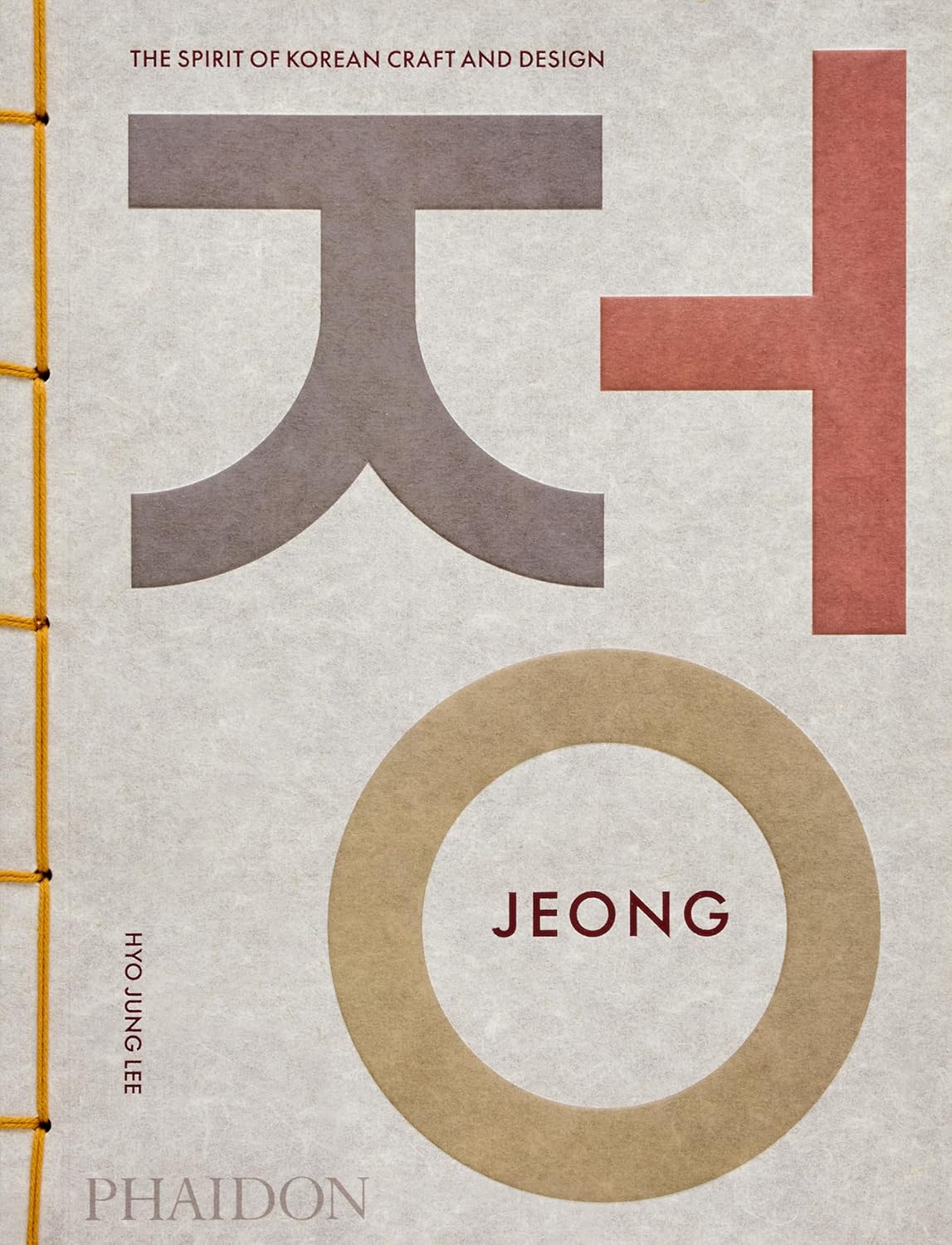
Jeong: The Spirit of Korean Craft and Design by Hyo Jung Lee is a visually rich introduction to Korean craft and design, bringing together traditional objects and contemporary creations through the cultural idea of jeong — a sense of attachment, care and emotional connection that grows over time.
The book presents Korean design not as a single aesthetic, but as a living dialogue between heritage and innovation. Ceramics, textiles, furniture, embroidery, lacquerware and everyday objects appear alongside contemporary works, showing how material knowledge can travel across generations and adapt to new contexts.
For young artists and designers, Jeong is valuable because it links form, material and feeling. It asks readers to notice how objects carry relationships: between maker and material, user and object, memory and function, tradition and experiment. This is especially relevant for students interested in craft, interiors, product design, sculpture, visual culture and sustainable approaches to making.
This BE OPEN Pick adds a broader cultural perspective to the Bookshelf. It reminds emerging creatives that innovation does not always mean breaking with the past; sometimes it begins with looking again at inherited techniques, tactile intelligence and the emotional life of objects.
Free download exhausted
Update: BOA added The Primacy of Drawing
BE OPEN Academy has added The Primacy of Drawing by Deanna Petherbridge to its Bookshelf. The book explores drawing as a way of thinking, observing and making, showing how lines, sketches and visual traces help artists, architects and designers test ideas and understand space, movement and material.
The Primacy of Drawing by Deanna Petherbridge
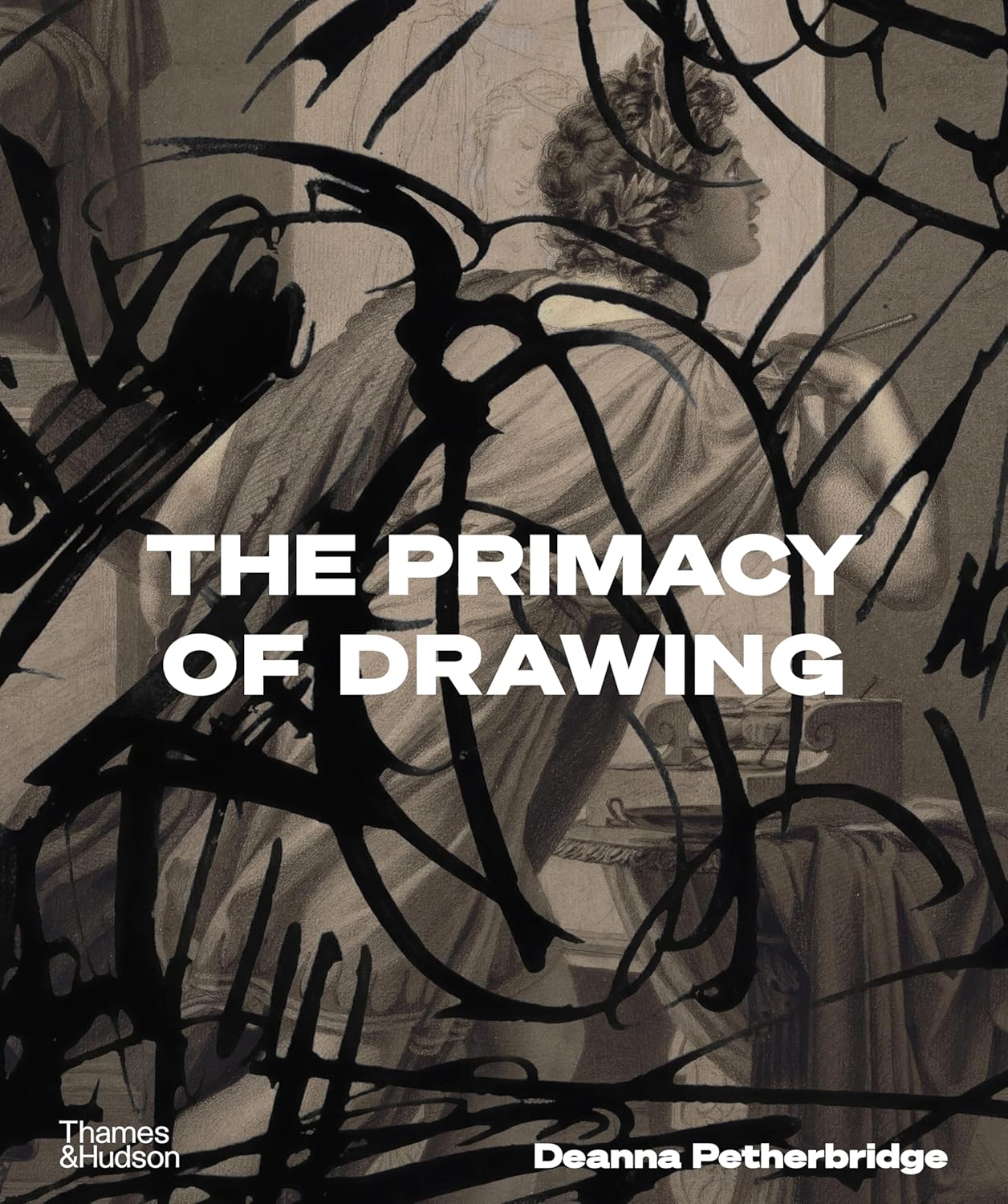
The Primacy of Drawing by Deanna Petherbridge is a comprehensive and deeply researched study of drawing as a way of thinking, observing and making. The 2026 revised edition reconsiders drawing’s role in contemporary art at a moment when digital tools, performance, installation and new technologies have expanded what artistic practice can be.
The book argues that drawing is not only a preparatory stage before “finished” work. It can be a record of touch, movement, memory, construction and decision-making. Through historical and contemporary examples, Petherbridge shows how lines, diagrams, sketches and material traces help artists understand bodies, spaces, emotions, power and the world around them.
For emerging artists, sculptors, architects and designers, this is an important book because drawing remains one of the most direct ways to test ideas. It can clarify a structure, reveal a rhythm, explore scale or capture something too fragile to explain in words. The book encourages young creatives to treat drawing not as a narrow technical skill, but as a flexible language for research and imagination.
At BE OPEN Academy, The Primacy of Drawing would work well as a deeper review rather than a quick recommendation. It invites students to slow down, look carefully and recognise drawing as a practice that connects hand, eye, thought and material.
Find out more about The Primacy of Drawing by Deanna Petherbridge →
Update: BOA added Circular Materials: Innovation and Reuse in Design and Architecture
BE OPEN Academy has added Circular Materials: Innovation and Reuse in Design and Architecture by Joe Gibbs to its Bookshelf. The book brings together examples from fashion, design, interiors and architecture to show how recycled, upcycled and reused materials can become a source of creative invention and sustainable practice.
Circular Materials: Innovation and Reuse in Design and Architecture by Joe Gibbs
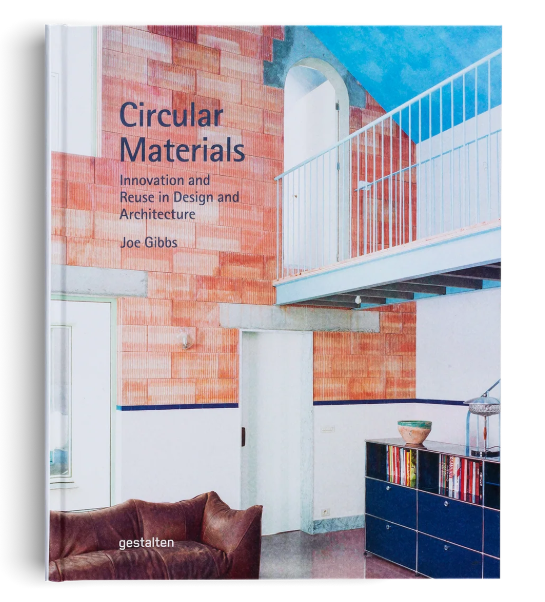
Circular Materials: Innovation and Reuse in Design and Architecture by Joe Gibbs is a timely visual guide to one of the most important shifts in contemporary creative practice: the move from linear production to circular thinking.
The book brings together projects in fashion, design, interiors and architecture that work with production waste, recycled and upcycled materials, and other forms of resource reuse. Rather than treating sustainability as a limitation, the examples show how material constraints can become a source of invention, texture, form and new aesthetic language.
For young designers, architects, artists and makers, Circular Materials is useful because it connects environmental responsibility with practical visual inspiration. It encourages readers to ask where materials come from, what histories they carry and how discarded or overlooked resources can be transformed into objects, spaces and systems with new value.