

Futures Literacy: Why Creative Students Need to Learn How to Imagine Alternatives (Pt.2)

Futures Literacy: Why Creative Students Need to Learn How to Imagine Alternatives (Pt.2)

PART 2. From Possibility to Responsibility

Imagination Is Never Neutral

Futures work can appear open and playful, but every imagined future is shaped by a point of view. Who is assumed to have access to technology? Whose labour remains invisible? Which bodies, languages, family structures and cultural practices are treated as normal? Which places are shown as centres of innovation, and which appear only as sources of raw materials, risk or crisis?

Popular images of the future often repeat a narrow visual vocabulary: frictionless interfaces, autonomous vehicles, gleaming towers, empty public spaces and technologies without maintenance, politics or waste. These images may look advanced while preserving existing inequalities and removing the people who repair, clean, care, teach, organise and adapt systems in everyday life.

Futures literacy therefore includes critical attention to representation. Students need to ask not only whether a scenario is imaginative, but whether it expands agency. A future can be technically innovative and socially regressive. It can be environmentally efficient while politically authoritarian. It can solve one problem by transferring costs to people or ecosystems that remain outside the frame.

Who Gets to Imagine the Future?

If the future is treated only as the territory of specialists, technology companies or professional forecasters, many forms of knowledge are excluded. Communities understand risks, resources and relationships that may be invisible to external designers. Children, older people, disabled people, migrants, makers, care workers and local organisations may notice different signals and imagine different priorities.

Participatory futures practice brings these perspectives into the process before the concept is fixed. This does not mean that every participant must agree on one shared vision. The purpose may be to reveal disagreement, compare experiences and understand why some futures create hope for one group and fear for another.

For design students, the principle is similar to co-design but with a longer time horizon. Instead of asking only what people need now, students can ask what they hope to preserve, what they fear losing, what changes they consider desirable and what futures have been repeatedly denied to them.

Case Study: Futures Literacy in Museums and Municipalities

A 2026 UNESCO contribution on futures literacy describes work with museums and municipalities to make futures practice more accessible and participatory. Museum staff were supported in creating experiences that encourage visitors to question assumptions and contribute their own stories rather than receive a single institutional vision of the future.

The work also included municipalities, residents, policymakers, young people and entrepreneurs exploring climate adaptation and community futures together. The examples show that futures thinking can become a public learning process connected to decision-making, not only an academic exercise.

For creative education, this suggests that exhibitions and student projects can operate as spaces of collective imagination. Instead of displaying a finished future, a project can invite visitors to compare possibilities, add perspectives and identify what should be protected, changed or refused.

Source:
https://www.unesco.org/en/articles/opening-futures-literacy-and-foresight-learnings-museums-and-municipalities

Prototypes from Possible Worlds

One strength of artists and designers is the ability to make ideas encounterable. A future scenario can be translated into a poster, interface, object, policy form, map, film, performance, service journey or fragment of an imagined everyday life. These artefacts are sometimes called prototypes from possible worlds.

The prototype should contain enough detail to create consequences. A future food system is more meaningful when students consider packaging, labour, access, cultural preference and waste. A future mobility service becomes more credible when they show pricing, maintenance, rural access, emergency use and what happens when the system fails.

Detail creates friction. It prevents a scenario from remaining an attractive moodboard and allows people to ask practical and ethical questions. Who owns it? Who repairs it? What data does it collect? What material flows support it? What behaviour does it reward? What happens to people who refuse to participate?

Case Study: RCA Grand Challenge – Ocean & Cities

The Royal College of Art’s 2023/24 Grand Challenge brought together 140 student teams to explore relationships between London and the ocean. Students worked with communities across the city, ocean science and co-design methods on topics including flood mitigation, marine ecosystems, sustainable fishing, packaging and sewage systems.

The shortlisted projects were described as creative speculative design proposals grounded in real locations and stakeholder relationships. This combination is important. The projects looked beyond present systems, but their speculation was connected to place, evidence and community participation.

For students, the lesson is that futures thinking does not need to choose between imagination and reality. Strong future proposals can be ambitious while remaining accountable to ecological conditions, local knowledge and the people who may live with their consequences.

Source:
https://www.rca.ac.uk/research-innovation/projects/grand-challenge-2023-24-ocean-cities/

AI Can Multiply Futures – and Narrow Them

Generative AI can help students visualise scenarios quickly, create variations, generate fictional documents or explore how an environment might change under different conditions. This can make futures work more accessible: an idea can move from text to image, interface or story in minutes.

But generative systems are trained on existing material. They are especially good at producing images that look recognisable and statistically plausible. This creates a paradox. A tool that appears to expand imagination may repeatedly return familiar futures: established visual clichés, dominant cultural references and technologies already overrepresented in its training data.

Students therefore need to use AI as a provocation rather than an authority. They can compare outputs, identify repeated assumptions, deliberately alter who has power in the scenario, introduce local histories or non-dominant perspectives, and combine generated material with interviews, field research, drawing, making and lived experience.

An AI-generated image should not be treated as evidence that a future is likely, desirable or inclusive. It is one visual hypothesis. The creative work begins when the student asks why this future appeared so easily, what it leaves out and how it might be rewritten.

From Futures Theatre to Responsible Practice

Futures projects can become a form of theatre: dramatic images, provocative language and immersive installations that create attention but do not influence decisions or learning. The work may look visionary while leaving its assumptions, methods and consequences unexplained.

Responsible futures practice makes the logic visible. Students should explain which signals or trends informed the scenario, what uncertainties were selected, whose perspectives were involved, what values shaped the preferred direction and what limitations remain. They should distinguish evidence from invention and make clear where the project is intentionally speculative.

The purpose is not to remove ambiguity. Futures work is valuable precisely because it can hold uncertainty and contradiction. But ambiguity should open inquiry, not hide weak reasoning. A responsible speculative project gives audiences enough context to question it intelligently.

How Design Students Can Practise Futures Literacy

Futures literacy can be integrated into ordinary studio work without turning every project into a formal foresight exercise. Students can begin by identifying the future assumptions already present in a brief. What is expected to remain stable? What is assumed to grow, disappear, become cheaper or become normal?

They can then collect signals of change: emerging behaviours, experimental technologies, new regulations, local adaptations, changing language, material innovations or cultural tensions. Signals are not predictions. Their value is that they suggest multiple directions and help students notice developments outside the most visible trend.

A simple studio exercise might create three contrasting scenarios for the same brief: continuation, transformation and breakdown. Students can design one artefact or service for each, compare who benefits and identify which choices remain useful across several futures. They can also work backwards from a preferred future to ask what decisions, capabilities and relationships would be needed today.

Another method is to create a future stakeholder story. Rather than describing a system from above, students follow one person, household, organisation or ecosystem through an ordinary day. This reveals practical consequences and helps prevent the future from becoming an abstract technological landscape without lived experience.

Futures Thinking in the Portfolio

A futures-oriented portfolio should show more than a final speculative image. It can document the question, present-day evidence, key uncertainties, alternative scenarios, stakeholders, artefacts, feedback and reflection. The student should explain what the scenario made visible and how it changed the direction of the project.

This process is valuable to employers and educators because it demonstrates a transferable form of design intelligence. The student can work with incomplete information, challenge assumptions, compare options and make decisions without pretending to know the future.

The Royal College of Art’s Futures Through Design programme reflects the growing professional relevance of these capabilities. Its methods include scenario planning, STEEPV analysis and design fiction, with the aim of turning strategic uncertainty into opportunities for action. For students, learning these approaches can connect speculative creativity with strategy, innovation and organisational change.

Source:
https://www.rca.ac.uk/study/programme-finder/futures-through-design/

What Design Schools Can Teach

Design schools can support futures literacy by creating briefs that reward multiple possibilities rather than one polished prediction. Students can be asked to produce contrasting scenarios, identify assumptions, include affected stakeholders and explain which values guide their preferred direction.

Critique can also change. Instead of asking only whether a future concept is original or visually convincing, tutors can ask: What conditions would make this scenario possible? What evidence supports it? Who gains or loses power? Which parts are desirable? What unintended consequences might emerge? What would have to change now?

Most importantly, futures education should protect imagination from both technological determinism and empty optimism. Students need permission to question dominant narratives, but they also need methods for connecting imagination to evidence, participation and responsibility.

Key Takeaways for Creative Students

  • Do not confuse the strongest current trend with the only possible future.
  • Treat futures as plural: probable, plausible, possible and preferable.
  • Use scenarios to reveal assumptions, not to claim certainty.
  • Make future ideas tangible through objects, services, stories and environments.
  • Ask whose knowledge, labour and experience are included or excluded.
  • Use AI to widen exploration, but question the futures it produces most easily.
  • Connect speculation to evidence, place, material conditions and stakeholder perspectives.
  • Explain the difference between research, assumption and invention.
  • Show future-thinking methods and decisions in your portfolio.
  • Remember that imagining alternatives is valuable only when it expands responsible choice in the present.

Looking Ahead

Creative education has always involved imagination. What is changing is the urgency with which students must learn to use imagination deliberately. Climate disruption, artificial intelligence, demographic change, new material systems and social fragmentation make the future more uncertain, but they also make inherited assumptions easier to question.

Futures literacy gives young creatives a way to work with this uncertainty without pretending to predict it. It helps them move from one inevitable story to a field of alternatives; from visualising technology to examining relationships; from producing future aesthetics to understanding future consequences.

The most valuable future project may not be the one that looks most advanced. It may be the one that reveals a hidden assumption, gives form to a neglected possibility, allows different people to recognise themselves in the conversation and changes what can be considered in the present.

For the next generation of artists, designers and architects, imagining the future is not an escape from today’s challenges. It is a method for seeing them differently – and for recognising that what comes next is still open to design.
Futures Literacy: Why Creative Students Need to Learn How to Imagine Alternatives (Pt.1)

Futures Literacy: Why Creative Students Need to Learn How to Imagine Alternatives (Pt.1)

PART 1. From Prediction to Possibility

Design students are frequently asked to imagine the future. They develop concepts for future cities, future mobility, future materials, future learning and future ways of living. Yet many of these projects begin with an unexamined assumption: that the future is a destination waiting to be predicted and illustrated.

In reality, the future does not exist as a fixed place. It is shaped by choices, power, culture, technology, environmental limits and events that cannot be known in advance. What people imagine about the future influences what they invest in, what they fear, what they consider realistic and which alternatives they dismiss before they have been explored.

For artists, designers and architects, this makes imagination more than a creative gift. It becomes a form of responsibility. Students need to learn not only how to generate attractive visions, but how to question the assumptions behind them, compare different possibilities and recognise whose interests are represented in a proposed future.

This capability is often described as futures literacy: the ability to understand how images of the future shape decisions in the present, and to use alternative futures as tools for learning, questioning and invention.

The Future Is Not a Trend Line

A common way to design for the future is to extend a visible trend. If artificial intelligence is becoming more powerful, imagine a world in which AI is everywhere. If cities are becoming denser, design taller and more automated buildings. If consumption is becoming digital, assume that physical objects and public spaces will continue to disappear.

Trend awareness is useful, but trends are not destiny. They can accelerate, reverse, interact with other forces or produce resistance. A technology may become technically possible but socially rejected. A sustainable material may succeed in one region and fail in another because local infrastructure cannot process it. A service that appears convenient may create new forms of exclusion, dependency or surveillance.

When students treat the strongest current trend as the only future, they risk producing polished illustrations of the present rather than genuinely exploring change. Futures thinking begins when the brief opens from “What will happen?” to “What could happen, for whom, under which conditions, and what choices would move us towards or away from it?”

BE OPEN Insight
The future is not a destination waiting to be discovered. It is a creative material that shapes what we notice, permit and build in the present.

When students learn to imagine more than one future, they become better at questioning the assumptions hidden inside today’s brief. Futures literacy is not an escape from reality. It is a way of seeing reality with more choice.

Why Futures Literacy Is Becoming a Creative Skill

UNESCO describes futures literacy as a capability that helps people understand the role of the future in what they see and do. The central insight is simple but powerful: because the future does not yet exist, it can only be imagined. People can therefore become more skilled at recognising why they imagine particular futures and how those images affect action.

For creative students, this matters because every project contains an implicit future. A chair imagines how bodies will sit and how objects will be produced, maintained and discarded. A public space imagines who will feel welcome, who will move through it and how climate or technology may change its use. A digital service imagines future behaviour, data relationships, access and trust.

Futures literacy makes these assumptions visible. It encourages students to ask whether they are designing for continuity, transformation, breakdown, repair or an alternative that does not yet have a familiar name. It also helps them become more comfortable with uncertainty. The goal is not to remove uncertainty, but to use it as a space for inquiry rather than treating it only as a threat.

Case Study: UNESCO Futures Literacy Laboratories

Since 2012, UNESCO has supported Futures Literacy Laboratories as structured, learning-by-doing processes. Participants explore a topic they care about, uncover the hopes, fears and assumptions shaping their images of the future, and use collective intelligence to imagine alternatives.

The laboratory model is relevant to design education because it treats the future as something people learn to use, not something experts deliver as a forecast. Students can begin with an expected future, examine why it feels inevitable, and then create a contrasting or reframed future that reveals different possibilities in the present.

A studio could apply this method to the future of housing, food, mobility, work, care or creative education. The important outcome is not a correct scenario. It is a wider field of perception: students notice assumptions that had previously been invisible, identify new questions and become more willing to experiment.

Source:
https://www.unesco.org/en/futures-literacy/about

From One Future to Many Futures

The language of “the future” can be misleading because it suggests that only one outcome is approaching. Futures practice often uses the plural – futures – to remind us that different developments remain possible and that each possibility may be experienced differently by different people.

Students can distinguish between probable futures, which appear likely if current patterns continue; plausible futures, which could reasonably emerge under different conditions; possible futures, which stretch beyond familiar expectations; and preferable futures, which express values and desired directions. None of these categories is a prediction. Together, they help expand and organise imagination.

This plurality is especially important in creative education. A single future concept can hide trade-offs. A fully automated city may appear efficient while weakening privacy, informal work or human contact. A zero-waste product may reduce material use while becoming unaffordable. A digitally accessible museum may reach global audiences while excluding people with limited connectivity or different accessibility needs.

By comparing several futures, students can see that design decisions distribute benefits, risks and agency. The exercise becomes less about selecting the most spectacular image and more about understanding the consequences of different pathways.

Case Study: OECD Scenarios for Education

The OECD’s Trends Shaping Education 2025 uses alternative scenarios to support thinking about how education could develop. It distinguishes continuation, transformation and collapse scenarios and pairs them with fictional stakeholder stories. The scenarios are explicitly not predictions; their value lies in the discussion, critical thinking and reflection they generate.

This is a useful model for creative students. A future learning environment can be tested through the experiences of a student, teacher, parent, administrator or person excluded from the system. The same design may feel liberating to one stakeholder and restrictive to another.

Scenario work also encourages second-order thinking. If an AI tutoring platform becomes widely adopted, what happens to assessment, teacher identity, data ownership, inequality, motivation and informal learning? Looking beyond the immediate benefit helps students identify consequences that conventional problem-solving may miss.

Source:
https://www.oecd.org/en/publications/trends-shaping-education-2025_ee6587fd-en/full-report/global-trends-and-the-future-of-education-in-2025_7358e77a.html

Speculative Design as a Question, Not an Answer

Speculative design gives form to alternative futures through objects, services, images, environments and narratives. A speculative project may look like a product from another world, a museum label from 2040, an instruction manual for an unfamiliar social system or a service designed for needs that do not yet exist.

Its purpose is not necessarily to propose something that should be manufactured. The artefact acts as a question. It makes an abstract issue tangible enough to encounter, discuss and disagree with. A fictional object can reveal values and assumptions that remain hidden in a conventional essay or presentation.

For students, this changes the meaning of prototyping. A prototype can test more than usability or technical feasibility. It can test a social premise. What would it feel like to depend on an algorithm for access to housing? How might a family relate to an object designed to remain in use for four generations? What rituals might emerge in a city where water is more valuable than personal data?

Case Study: Dunne & Raby and the Design Imagination

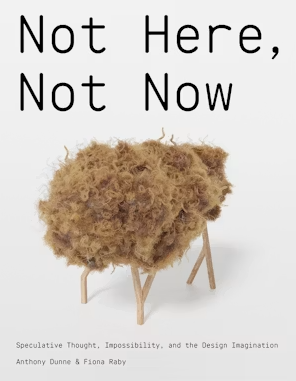
Anthony Dunne and Fiona Raby have been influential in developing speculative and critical approaches to design. Their 2025 book Not Here, Not Now examines speculative thought, impossibility and the design imagination through projects that move between reality and fiction.

The value of the “impossible” object is that it interrupts the limits of the current brief. It can expose how commercial expectations, technological optimism or institutional habits narrow the range of futures designers are permitted to consider. By temporarily suspending the demand for immediate feasibility, students may discover questions that later lead to more grounded innovation.

However, impossibility is not an excuse for empty fantasy. A strong speculative project remains connected to present conditions. It shows which assumptions are being changed, what tension is being explored and why the alternative matters now.

Source:
https://mitpress.mit.edu/9780262049665/not-here-not-now/

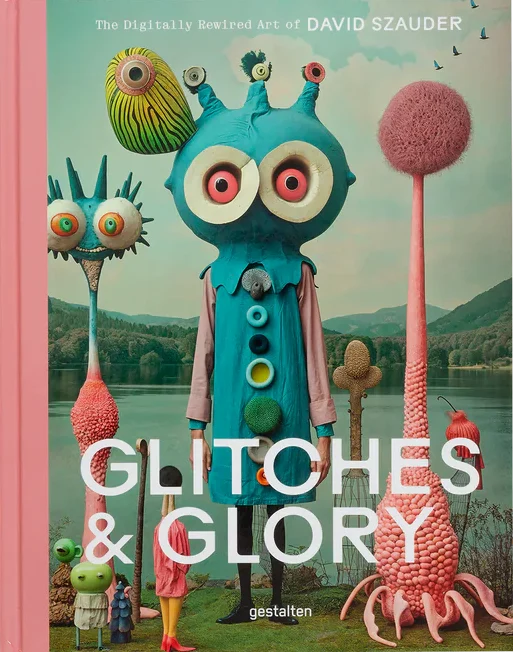
Glitches & Glory: The Digitally Rewired Art of David Szauder by David Szauder

Glitches & Glory: The Digitally Rewired Art

Glitches & Glory: The Digitally Rewired Art of David Szauder is a visually striking exploration of how digital errors, fragmented data and machine processes can become a distinctive artistic language.

David Szauder combines visual programming, generative techniques and image-making to create works that move between memory, identity and technological disruption. In his practice, the glitch is not simply a failure to be corrected. It becomes a creative event: an unexpected break in an image that reveals new structures, textures and ways of seeing.

For students interested in digital art, photography, graphic design, animation and generative media, the book offers both visual inspiration and a useful creative principle. New tools do not have to produce smooth, perfect or predictable results. Distortion, repetition, instability and technical accidents can be treated as material, allowing the artist to explore the relationship between human intention and computational behaviour.

This BE OPEN Pick brings an experimental digital perspective to the Bookshelf. It encourages young creatives to look closely at what happens when technology does something unexpected and to consider whether error can become authorship, whether damaged images can carry memory, and how the imperfections of machines may open space for a more personal visual voice.

Free download exhausted

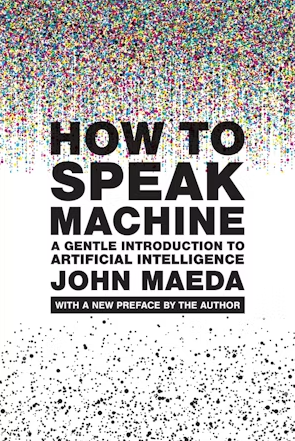
How to Speak Machine: A Gentle Introduction to Artificial Intelligence by John Maeda

How to Speak Machine: A Gentle Introduction to Artificial Intelligence

How to Speak Machine: A Gentle Introduction to Artificial Intelligence by John Maeda is an accessible guide to understanding artificial intelligence from the perspective of design, technology and human decision-making. Reissued in 2025 with a new preface, the book offers a clear framework for thinking about how machine-learning systems operate, what they can do and where their limitations begin.

Rather than treating AI as a mysterious technical force, Maeda explains why designers and other creative professionals need a working language for computation. The book considers the scale, speed and unpredictability of machines, while also asking how people can use these capabilities to create products and systems that are more inclusive, responsible and meaningful.

For students working across graphic design, product design, digital media, communication and creative technology, How to Speak Machine is a useful starting point. It does not require advanced coding knowledge. Instead, it encourages readers to approach AI with curiosity and critical awareness, recognising that the most important creative skill is not simply generating outputs, but understanding the assumptions, choices and consequences built into the tools we use.

Find out more about How to Speak Machine: A Gentle Introduction to Artificial Intelligence by John Maeda →

Update: BOA added How to Speak Machine: A Gentle Introduction to Artificial Intelligence

BE OPEN Academy has added How to Speak Machine: A Gentle Introduction to Artificial Intelligence by John Maeda to its Bookshelf. Reissued in 2025 with a new preface, the book offers an accessible guide to how artificial intelligence and machine-learning systems work, encouraging designers and creative professionals to understand their possibilities, limitations and consequences.

Not Here, Not Now: Speculative Thought, Impossibility, and the Design Imagination by Anthony Dunne and Fiona Raby

Not Here, Not Now

In Not Here, Not Now: Speculative Thought, Impossibility, and the Design Imagination, Anthony Dunne and Fiona Raby ask what design can do when familiar ideas of progress, prediction and problem-solving no longer feel sufficient.

The book moves between design, science, philosophy and literature to explore worlds and objects that are deliberately impossible, uncertain or incomplete. Through essays, images, imagined archives, glossaries and speculative artefacts, Dunne and Raby treat design not only as a way to produce solutions, but as a method for questioning the boundaries of reality and expanding what people are able to imagine.

For emerging designers, architects and artists, this is a challenging but valuable proposition. Creative education often asks students to respond to a brief, identify a problem and develop a plausible outcome. Not Here, Not Now creates space for a different kind of practice: one that uses fiction, ambiguity and impossible propositions to expose assumptions, resist predictable futures and discover questions that conventional methods may overlook.

At BE OPEN Academy, the book works particularly well as a deeper review because it connects speculative design with intellectual and cultural inquiry. It presents imagination not as an escape from reality, but as a critical tool for recognising that the present is only one possible arrangement of the world — and that design can help us perceive alternatives before they become practical or even fully thinkable.

Find out more about Not Here, Not Now: Speculative Thought, Impossibility, and the Design Imagination by Anthony Dunne and Fiona Raby →