





What makes a colour environmentally responsible? The latest addition to BE OPEN Academy’s Bookshelf, BioColours: Sustainable Stories from Nature, Lab and Industry, edited by Kirsi Niinimäki and Julia Lohmann, brings together scientific research, dyeing practices and design experiments. The collection examines how colours connect materials, landscapes and production systems, encouraging readers to question environmental claims through attention to safety, durability and processing requirements.
Month: November 2026
BioColours: Sustainable Stories from Nature, Lab and Industry by Kirsi Niinimäki and Julia Lohmann
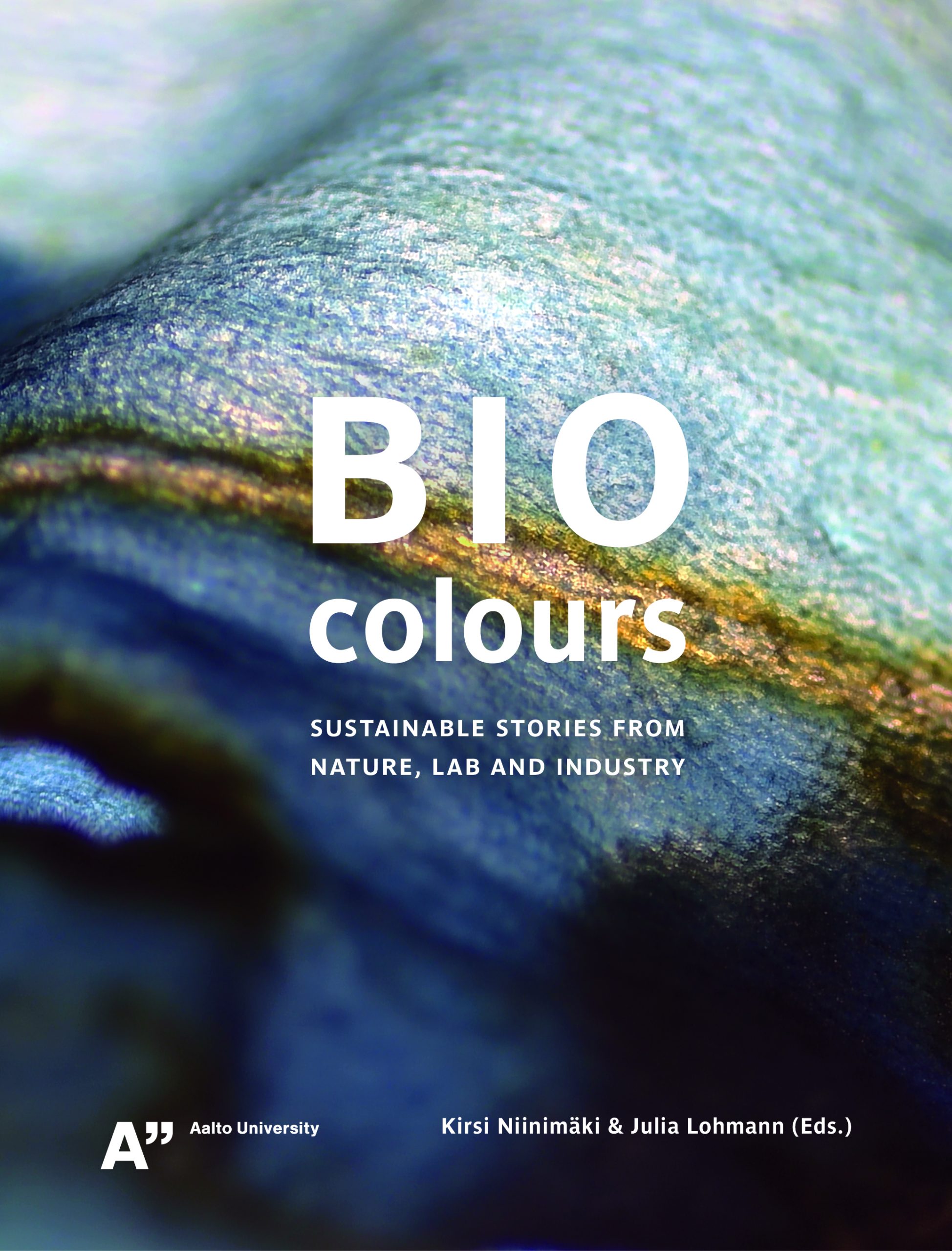
What does a colour tell us about the conditions in which it was made? BioColours, edited by Kirsi Niinimäki and Julia Lohmann, approaches that question through chemistry, cultivation, design research and artistic practice. Its three sections—foundations, narratives, and sustainability and applications—bring different kinds of evidence into conversation. Colour becomes a way of investigating how a material connects to a landscape, a production system and the people who use it.
The range of approaches is one of the book’s strengths. Research on microbial colour production sits alongside accounts of dyeing as a situated craft. In Fieldnotes from the “forbidden garden”, Siren Elise Wilhelmsen explores the dye potential of Japanese knotweed in Norway, connecting material experiments with the history of her grandmother’s garden. The plant’s usefulness and its status as an invasive species remain in tension. That tension makes the case more instructive than a simple celebration of an abundant natural resource.
The chapters on sustainability and colourant performance give this experimentation a necessary technical context. How a colour is extracted, fixed to a fibre and maintained in use matters alongside its origin. A reader is encouraged to examine safety, durability and production requirements before accepting an environmental claim. These are practical questions for a designer deciding whether an attractive sample is appropriate for a particular application.
The volume requires readers to move between scientific explanation, personal narrative and design speculation; it offers no single route from a dye source to a finished product. Its value for students lies in learning to compare those perspectives. Read in that way, BioColours helps turn enthusiasm for a new material into a better research question: what would have to be known, tested and changed for this colour to support a responsible creative practice?
Find out more about BioColours: Sustainable Stories from Nature, Lab and Industry →
Update: BOA added Art and Sustainability
Sociologist of art and culture Sacha Kagan explores the cultural dimensions of sustainability in Art and Sustainability: Connecting Patterns for a Culture of Complexity, now featured in the BE OPEN Academy Bookshelf. Drawing on systems thinking and ecological art, he examines how artistic practice can reshape habits of perception and reveal interdependence. The book invites emerging creatives to consider which relationships their projects make visible and how their work might contribute to cultural change.
Art and Sustainability: Connecting Patterns for a Culture of Complexity by Sacha Kagan
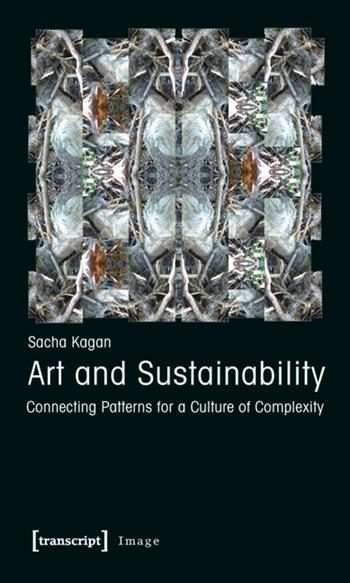
Sacha Kagan is a sociologist of art and culture whose research examines sustainability, systems thinking and complex social change. Art and Sustainability addresses a difficult question: how can societies understand environmental problems yet continue to reproduce the habits that sustain them? Kagan places artistic practice within that cultural problem. The arts help shape what people notice, desire and consider possible, and their contribution deserves critical examination.
The book begins by examining the participation of art in a culture of unsustainability. This gives its later discussion of ecological art a demanding starting point. An environmental theme or sympathetic intention cannot settle the question of what a work does. Kagan asks how practices of knowing, perceiving and organising social life might themselves need to change.
His engagement with Gregory Bateson and Edgar Morin develops an account of aesthetic sensibility that can attend to interdependence without overlooking conflict and uncertainty. Drawing also on John Dewey, he treats aesthetic experience as an interaction between people and their environments. This broadens the significance of form: a work can reorganise attention, helping an audience encounter relationships that habitual ways of seeing have obscured.
The discussion moves between systems thinking, ecological art and the social conventions through which cultural activity operates. That range matters because it connects the encounter with a work to the conditions in which art is made and recognised. Artistic agency becomes a question of how an intervention engages with existing expectations and relationships, rather than a quality that follows from the artist’s intentions alone.
The breadth is also the book’s difficulty. Its movement between philosophy, sociology and art history rewards sustained reading and makes it particularly useful for seminars and research-led projects. First published in 2011, it supplies a conceptual foundation for current debates rather than a survey of today’s material technologies. Its lasting value is to make claims of transformation more demanding: what habits of perception does a creative project disturb, which relationships does it make perceptible, and what does it leave intact?
Find out more about Art and Sustainability: Connecting Patterns for a Culture of Complexity →
Update: BOA added Broken: Mending and Repair in a Throwaway World
Repair can preserve an object’s usefulness, carry personal histories or make a public statement. These possibilities are explored in Broken: Mending and Repair in a Throwaway World by craft and design writer Katie Treggiden, now part of BE OPEN Academy’s Bookshelf. Through profiles and essays, the book encourages emerging designers to begin with existing objects, considering the knowledge, attachments and responsibilities that continued care brings to creative work.
Broken: Mending and Repair in a Throwaway World by Katie Treggiden
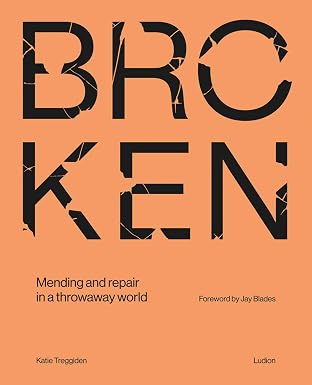
In Broken, craft and design writer Katie Treggiden asks whose judgement determines whether something is worth saving. Through profiles and essays, she examines repair as a practice that preserves function, carries stories and creates opportunities for social change. The question extends beyond the object’s condition to the values that make replacement seem obvious and continued care seem exceptional.
The differences between the practices give the book its interest. Celia Pym’s attention to damage opens a way of reading the life already lived through a garment. Wear supplies information about a person’s movements and attachments, so a repair responds to a particular history. The object’s value cannot be understood solely through how closely it resembles its original, undamaged state.
Bridget Harvey’s repaired jumper, carried as a placard at the 2015 Global Climate March, makes a different argument. Its stitched message encourages people to mend and consume less, while the reused garment enacts that position. The material supports the statement. Seen alongside quieter forms of repair, it shows how the same act can restore usefulness, preserve memory or become a public intervention, depending on its context.
Treggiden’s introduction draws on the idea of broken world thinking, which places maintenance and repair at the centre of how societies continue to function. Her discussion moves from the repair of possessions towards the repair of relationships and damaged systems. This enlarges the scope of creative responsibility: work begins with attending to an existing situation and deciding what should be preserved, altered or allowed to end.
The book is most persuasive as an argument about value and attention. Readers should keep questions of labour, affordability and access beside its examples: the appeal of a skilled repair does not make that repair equally available to everyone. For emerging designers, its practical contribution is to change the starting point of a brief. An existing thing brings constraints, knowledge and attachments that a new object has yet to acquire. Working with those conditions can make repair a demanding form of authorship.
Free download exhausted