




Update: BOA added 4 new online courses in Graphic Design offered by London School of Publishing
Author: JD
Update: BOA added 5 free video tutorials by Photoshop Training Channel
Update: BOA added 5 free video tutorials by Photoshop Training Channel

Design Thinking in Learning Experience Design: Empathy, Iteration and Innovation (Pt.2)
2. Prototype and test
Prototyping and testing can be achieved with the following steps:
- Create a prototype for your users to test. It’s important to note that testing in Design Thinking isn’t about achieving perfect results. The goal is to evaluate the usefulness of the solution and identify areas of improvement.
- Share the prototype with your users, and observe and evaluate their interactions with it. Many issues with user experience are discovered in this stage. Take note of how much time is spent on each tool/feature.
- Collect user feedback to get insights into what parts of the learning experience work well and which ones need refinement. A short list of examples would be user interface, content relevance, engagement strategies, and the effectiveness of the learning tools which are a part of the design.
3. Iterating based on feedback
Embrace feedback and use it to refine your design. Ask the following questions to determine which areas of improvement should be prioritized.
- What parts of the learning experience received positive feedback?
- What elements received negative feedback, or led to confusion or frustration?
- Did the learners achieve the desired learning outcomes effectively and efficiently?
- Was the learning experience engaging and motivating?
- How did the learners interact with the different components of the learning experience?
- Were there elements in the training that were overlooked or ignored?
4. Practicing ideation and innovation
Here are ways to encourage outside-the-box design thinking:
- Brainstorming sessions: Make sure these sessions are judgment-free, which means there are no “bad ideas”. The brain works best when it’s allowed to explore all options, no matter how outlandish they may seem.
- Creative thinking techniques: Two of the most famous ones are mind mapping and SCAMPER (Substitute, Combine, Adapt, Modify, Purpose, Eliminate, Reverse). The main point is to encourage lateral thinking, which helps the brain make connections it normally wouldn’t.
- Reflection time: Always give your team breaks to reflect on what’s been discussed. Time-management methods like the Pomodoro technique are beneficial because it allows our minds time to let ideas marinate.
Major benefits of Design Thinking in learning experience design
Design Thinking guarantees the learning solutions you develop are truly learner-centric. The better you understand your learners, the greater your ability to tailor training material that resonates with them and brings about the best learning outcomes for them.
By creating a culture of iteration, Design Thinking supports a cycle of continuous learning and improvement. The trial-and-error approach uses learner feedback to improve the design progressively, which helps your learning experiences become increasingly relevant and effective with time and consistency. With a collaborative learning strategy, you can also use peer feedback to identify and verify learning needs, to confidently address the most critical skills gaps in your workforce.
Creativity and innovation help people think outside the box, and keep learning strategies novel, which boosts learner engagement.
This fosters active participation, encourages critical thinking, and delivers stronger learning outcomes. These kinds of learning experiences help L&D teams maximize their impact on the wider business, as the skills and knowledge that learners gain enable them to perform their work to their best capability.
The role of Design Thinking in modern organizations
Learners’ needs have become increasingly complex, and the rapid advancements in technology are putting greater pressure on L&D teams. That’s why the empathetic, iterative, and innovative approach of Design Thinking is now more relevant than ever.
As AI-powered technologies proliferate, Design Thinking for human-centered learning design will need to become more nuanced and sophisticated. L&D teams should stay adaptable and closely aware of learner needs and skills gaps to execute effective user research, innovative prototyping tools, and testing and iteration.
Author Nahla Davies, Coder / Tech Writer (https://360learning.com/blog/human-centered-learning-design-thinking/)
Defining Style: The Book of Interior Design
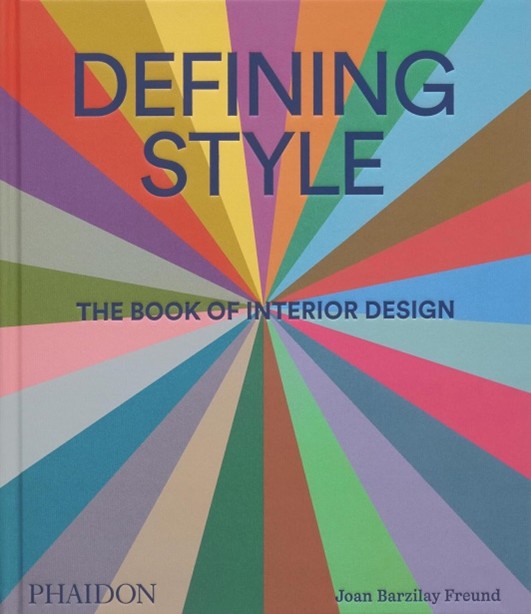
Joan Barzilay Freund (Author), Asad Syrkett (Introduction)
This lookbook sheds light on 25 timeless design styles from the last century, showcasing 150 residential interiors by renowned designers. From coastal to contemporary, maximalist to Mediterranean, tailored to textured — each style is explained with helpful texts and real-world examples by top designers such as Studio Shamshiri, Laura Gonzalez, and Vincenzo De Cotiis.
These carefully curated rooms, whether in a Manhattan skyscraper, on the Italian coast, or in the Balinese tropics, offer a masterclass in modern interior decor.
An insightful introduction by design editor Asad Syrkett delves into the history and meaning of interior styles. Additionally, a visual directory at the back of the book helps readers easily connect different styles.
Find out more about Defining Style: The Book of Interior Design →
Update: BOA added 6 new online courses in Architecture and Interior Design offered by EduCBA, EdNext and Simpliv LLC
Update: BOA added 6 new online courses in Architecture and Interior Design offered by EduCBA, EdNext and Simpliv LLC
Woman Made: Great Women Designers by Jane Hall

This stunning visual celebration of the most incredible and impactful designs ever created by women designers is a game-changer in a field that has historically been dominated by men.
Featuring more than 200 designers from over 50 countries, including icons and trailblazers from the past and present such as Ray Eames, Eileen Gray, Florence Knoll, Ilse Crawford, Faye Toogood, and Nathalie du Pasquier, this collection sheds light on the fascinating and often overlooked history of women in design.
Each designer is represented by a key product and a short text, creating a fascinating A-Z survey that highlights the most extraordinary objects created by women designers. But what’s even more important is that it offers a compelling primer on the best in the field of design, demonstrating that design is not — and never has been — a man’s world.
Find out more about Woman Made: Great Women Designers by Jane Hall →

Design Thinking in Learning Experience Design: Empathy, Iteration and Innovation (Pt.1)
One of the most common struggles in the world of learning and development (L&D) is finding novel approaches that capture the learners’ attention, while boosting engagement and enabling problem-solving and creativity. There is one approach that’s making a lot of headway, known as Design Thinking.
It’s a human-centered learning design strategy that emphasizes empathy, iteration, and innovation–and is highly effective at bringing unique, learner-centric experiences to learners of different backgrounds. This article will help you explore the concepts that come with integrating Design Thinking and will provide some much-needed strategies to help you implement it.
Empathy: the heart of a human-centered learning design
Empathy is at the core of Design Thinking. Without it, the innovative solutions that are built to meet the needs and expectations of the learners fall apart completely. Using an empathetic approach naturally relies on conducting user research. Similar to marketing, effective learning processes rely on getting to know the learners, their preferences and challenges, and motivations.
User research can be conducted in many ways, through surveys, interviews, observation, or persona development, among others. All of these can provide invaluable insights into learners’ minds. If you can identify gaps in your current learning experiences, you can uncover opportunities for creating more impactful learning journeys within your organization.
Tailoring your human-centered learning design process involves addressing your learners’ pain points and aspirations. This way, your solutions will be relevant and meaningful to the learners.
Iteration: a virtuous cycle of learning and improvement
Design Thinking promotes a culture of iteration. This is based on the understanding that the first solution might not be a perfect one. Learning designers are encouraged to repeat this process of iteration to improve overall learning outcomes.
The beginning of this cycle starts with prototyping, which is a tangible representation of the learning solution, followed by a test with the users. One example of this is transforming a basic draft of a learning module into a fully developed e-learning course. It works so well because you have a very fast idea-to-feedback relationship.
That feedback is then used to iterate the design. Thus you’ve created a loop of prototyping, testing, and refining until an effective learning experience is crafted. The biggest benefit comes from the final product being so closely aligned with the learner’s needs.
Innovation: creative human-centered design solutions
Design Thinking and innovation are closely related. By its nature, Design Thinking empowers learning designers to step outside the usual frameworks and think divergently. It involves exploring many different possible solutions before finally deciding on the most effective one.
One of the biggest strengths of Design Thinking is the way it encourages a culture of ideation. An environment where all ideas are welcomed and explored is exactly what is needed to drive innovation. The point is to push boundaries and challenge the status quo. What results is human-centered design learning experiences that are not just efficient, but inspiring.
Key strategies to implement Design Thinking in your organization
While we’ve discussed some of the ingredients for Design Thinking, let’s discuss how you can implement them.
1. Establish empathy through user research
By understanding your learners in a deep, empathetic way, you can create learning experiences that genuinely resonate with them. You’ll want to use methods such as surveys, interviews, or persona development to answer the following questions:
- What are my learners’ main motivations?
- What are some of their biggest challenges?
- What are their preferences in terms of how they best learn?
Using key performance indicators (KPIs) can be extremely helpful here. Examples of KPIs to track in this case include the length of time spent on a section of a learning module, retention rate, or engagement rate of a certain learning feature.
Digital Art by Christiane Paul
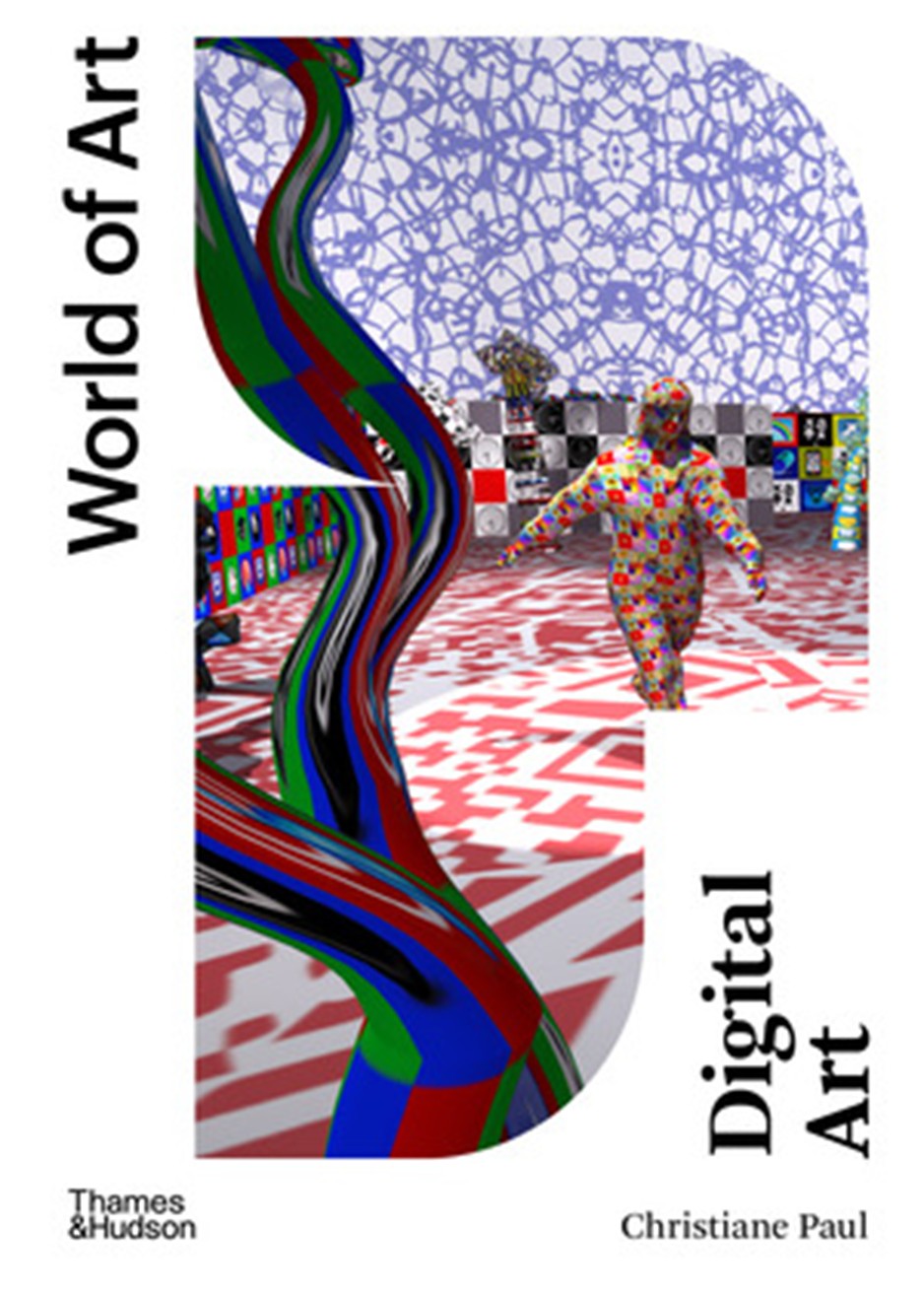
Digital art has come a long way from its early days in the digital revolution to the era of social media and the post-digital world. This expanded edition of Christiane Paul’s book delves into the world of artificial intelligence, augmented and mixed realities, and NFTs. It also explores various themes in digital artworks such as activism, networks, telepresence, ecological art, and the Anthropocene.
The book examines the challenges of collecting, presenting, and preserving digital art, as well as its impact on traditional art forms like printing, painting, photography, and sculpture. It also explores how the internet, software art, digital installations, and virtual reality have become established artistic practices.
Digital Art is an accessible guide that explains how technology creates artworks with new aesthetic, thematic, and interactive qualities. This makes it a must-read for anyone interested in digital art.
Free download exhausted
Update: BOA added 5 free video tutorials offered by FZDSCHOOL
Update: BOA added 5 free video tutorials offered by FZDSCHOOL
The World Atlas of Street Art and Graffiti by Rafael Schacter, Lachlan MacDowall, John Fekner
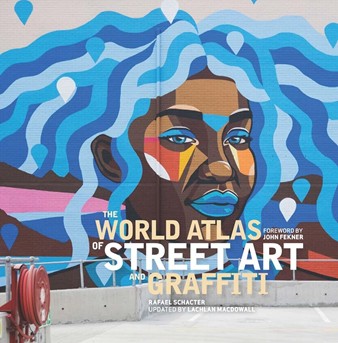
Ten years after its release, “The World Atlas of Street Art and Graffiti” remains the authoritative guide to the most influential artists and styles globally. This updated edition now covers six continents. Featuring over 700 full-color photographs of vibrant and eye-catching art, it’s a visually stunning and essential overview of contemporary urban art.
Organized by country and city, it profiles more than 100 leading street artists, including Espo in New York, Merlot in Seattle, Os Gêmeos in São Paulo, Michael Pederson in Sydney, Essu in Tokyo, Lady K in Paris, Milu Correch in Buenos Aires, and Nardstar in Cape Town. Each profile includes key examples of their work, providing a deep understanding of global street art.
Free download exhausted