



BOA posted a review of the book “Julian Schnabel”. Julian Schnabel makes art out of life, finding his materials in the fabric of the everyday.
Author: JD
Julian Schnabel
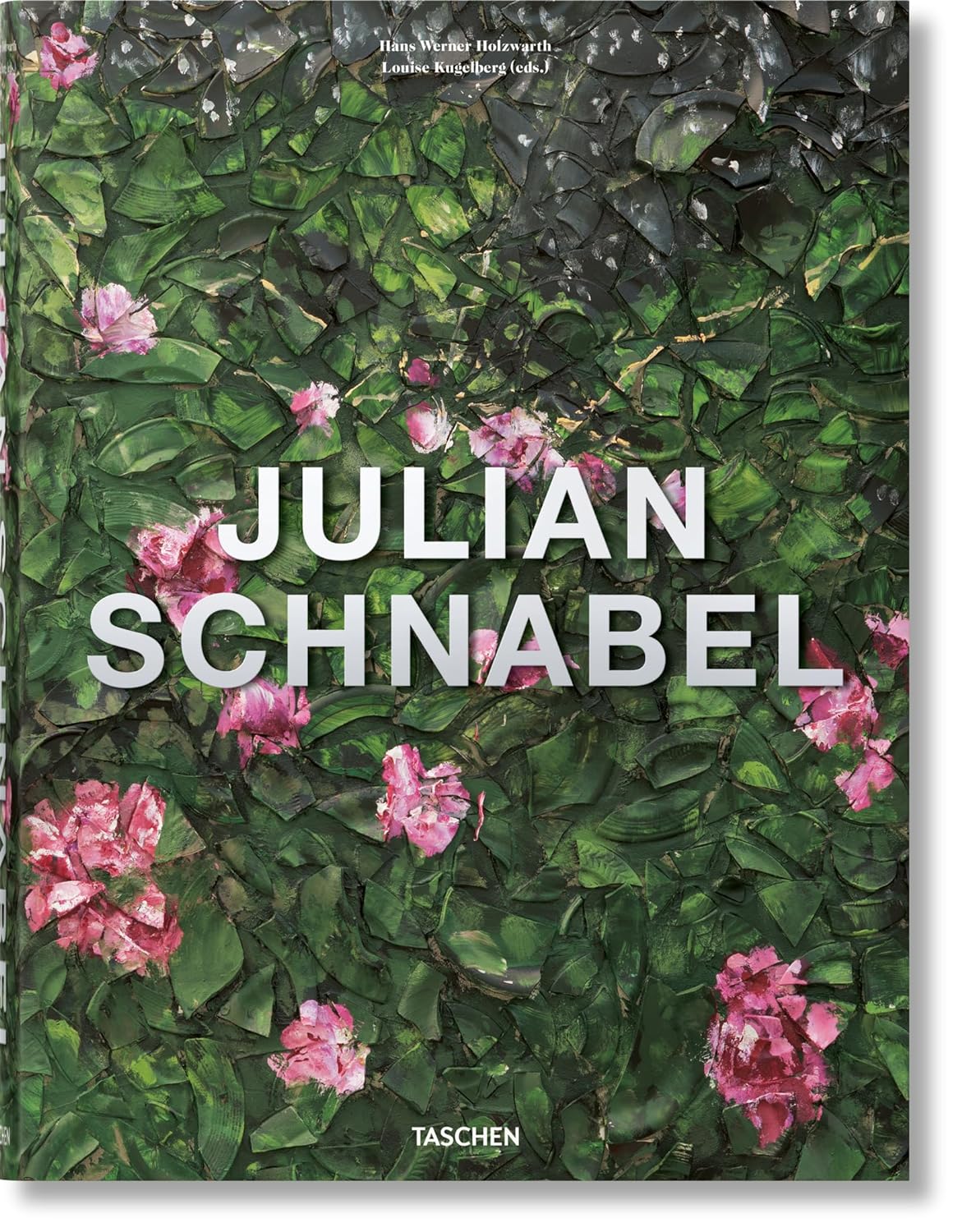
Julian Schnabel (Contributor), Hans Werner Holzwarth (Editor), Louise Kugelberg (Editor), Laurie Anderson (Author), Eric De Chassey (Author)
Julian Schnabel makes art out of life, finding his materials in the fabric of the everyday. He uses broken plates as an improbable picture ground; he paints on velvet, market stall covers, army tarps, kabuki theater backdrops, and boxing ring floors, found surfaces that lend their own rich history to the artist’s exploration. A figurehead for the return of painting after his overnight success with a first New York solo show in 1979, he has since worked in a wide variety of media: making sculptures that transpose his pictorial forms into space as raw, seemingly time-worn artifacts; directing award-winning movies that paint portraits of artists and other subtly heroic figures; and even building his own dream of a Venetian palace in New York. “I want my life to be in my work, crushed into my painting like a pressed car. If it’s not, my work is just some stuff,” Schnabel has said, and this urgency permeates his oeuvre no matter what means or media the artist chooses.
Now available in a popular edition, the complete range of Schnabel’s work is portrayed in unprecedented depth in this TASCHEN monograph, made in dialog with the artist. The texts were contributed by friends and collaborators: Laurie Anderson draws an intimate portrait of Schnabel; in three essays by curators and art historians, Éric de Chassey discusses the paintings, Bonnie Clearwater the sculpture, and Max Hollein the site-specific work; Donatien Grau writes on the Palazzo Chupi, the artist’s extravagant home in New York’s West Village; while the novelist Daniel Kehlmann explores his cinematic oeuvre. This edition allows you to study the surfaces and artistic gestures and actions, offering the most generous opportunity to experience Schnabel’s art outside of meeting it in person.
Arts Education Imperatives: Connecting the Globe (Pt.3)
Considering the Four Imperatives
Inclusion, Agency, and Wellbeing
Inclusion, agency, and wellbeing in arts education are three distinct but interconnected dimensions of human experience. Reporting on inclusion as part of the global Education Monitoring Report (UNESCO, 2017), Antoninis et al. (2020, p.105) claim that “progress on education access is stagnating,” and that access is a pre-requisite before inclusion can be affected. Meaningful engagement in the arts promotes access and inclusion for all individuals regardless of race, class, gender, sexuality, ethnicity, and ability (UNESCO, 2010) and agency ensures that individuals have the power to act in a sociological sense (Willis, 1978). The connections between arts education and wellbeing are well established (Cameron, 2021; Fancourt & Finn, 2019; Sills, 2021) and have been highlighted as particularly important in the current COVID19 climate (Selkrig, Coleman & MacDonald, 2020). Seligman (2011) identifies five core elements of psychological wellbeing which have been influential in research connecting the arts and wellbeing (e.g., Clift, 2012). These elements are positive emotions, engagement, relationships, meaning, and accomplishment (PERMA). As highlighted in the phases described above, arts learning in communities is a common thread throughout the research. The pedagogies that underpin this learning have potential to support cultural diversity, inclusion, agency, and wellbeing in out-of-school informal and non-formal contexts, and in school contexts (Lum, 2021, Kukkonen, 2021; Luo & Lau, 2021; Wilson, 2021; Yu & Buck, 2021, Selkrig, 2011).
Engendering a sense of collaboration and community is particularly pertinent to inclusion in, and through, the arts. Arts educators have a unique opportunity to promote empathy, understanding and exposure to diverse cultures through the arts which can assist in breaking down ethno-, generational-, and socially-based barriers. These types of arts learning can facilitate both deep personal understandings and communal responses to notions of inclusiveness, equity and cross-cultural appreciation. The following examples are indicative of the creative responses across varied arts fields. According to Joseph and Trinick (2018) “music participation ‘in community’ and ‘as community’” provides an opportunity for people to cultivate a sense of belonging and connection” (p. 2513), while Lum (2021) maintains that engaging musical improvisation within a multi-cultural performing arts company could “make sense of the intercultural amongst the musicians’ personal and geographical contexts” (p. 101). Wilson (2021) has also explored how adopting community-based music approaches which are “student-driven and collaborative, emphasising immersive, creative music experiences that are thought to promote inclusion and engagement” (p. 212) can support increased classroom engagement in school contexts that are culturally and socially diverse.
Decolonisation
Decolonisation in arts education is commonly understood as the ongoing process to address the balance of, and Indigenising of, arts cultures that exist within national, geographical, or social contexts (Cameron, 2021; Cheng & Lee, 2021; Luo & Lau, 2021). For example, where Western aesthetics-based arts cultures have been dominant due to colonisation, these arts cultures have held pre-eminence over the promotion and inclusion of Indigenous, local, or immigrant cultural traditions; or where the arts cultures associated with an elite or colonisers dominate a particular group, context, or society (Martin et al., 2021). The notion of decolonisation is a central concern for many arts educators wrestling with Euro-centric arts traditions in their own backgrounds and dominance over arts traditions of local Indigenous cultures in colonised countries and regions. Martin et al. (2021) highlight that, “Many of the approaches, processes and thoughts in arts education are entrenched in colonial histories and structures that perpetuate exclusive, privileging, and Eurocentric agendas” (p. 1). The fields of arts and culture provide fertile ground for addressing ingrained Eurocentric perspectives and all the artforms can be reframed to generate a narrative with more inclusive and respectful approaches to Indigenous arts cultures.
We aimed to include global perspectives that represent diverse perspectives, viewpoints, and experiences beyond a Eurocentric view of arts education. Honouring the voices (which first emerged in Phase 1) of researchers and participants was a key idea which emphasises that arts educators and learners come from varied and multiple cultural backgrounds, and these are often different from dominating Eurocentric traditions. Researchers such as Leung (2021) focus on the Indigenisation of society and music education curriculum policy and practice in Hong Kong through the promotion of traditional Cantonese opera following the return of Hong Kong to China in 1997. While Luo and Lau (2021) reported that despite the intentions of The Action Plan for Arts Immersion (APAI, China) “to promote indigenous cultural inheritance and transmission through community-based arts teaching and learning” (p.118), challenges identified, such as the reality of the power and cultural differences between urban/rural, and between the Han majority and Yao minority, provided significant barriers to cultural equity and preservation (p. 128). The methodologies and practices that researchers adopt in their work are also significant in the ongoing work of decolonisation in arts education. For example, artographic approaches (Sajadi, 2021), narrative participatory inquiry (Sills, 2021) and the arts pedagogies that foreground student and artist voices from diverse cultural and social backgrounds (Lum, 2021; Wilson, 2021) are found in the work of researchers connected with the AERCDSD network.
Cultural Resilience
Resilience and sustainability are often cited as panaceas for the 21st century to combat the significant impacts of a range of critical world events such as climate change, increased populations, and cultural loss or destruction due to political agendas or poorly managed societal changes. Not the least of these is the impact of a global pandemic over the last two few years. Resilience is commonly understood as adapting well and bouncing back from difficult experiences and has been applied extensively in a variety of fields at an individual, societal and systems level (Anderson, 2015; Brown, 2014). Recognizing that cultural sustainability is connected to, but not interchangeable with, cultural resilience, culture and the arts have been recognised as important dimensions of sustainability along with the social, economic, and environmental (Hawkes, 2001). The role of culture and the arts to build resilience for individuals and societal groups to address global issues is a growing field (Newsinger & Serafini, 2021).
As noted earlier, Jörissen at the 2021 UNITWIN Symposium discussed cultural resilience and sustainability and how these concepts can be adapted and linked with arts education. Jörissen suggests that cultural resilience is helpful to think of as a translation of cultural sustainability for use in educational settings and as a powerful and complex concept for arts educators to engage with as,
Resilience aims to retain identity through change by activating resources in culturally meaningful ways so that meaningful responses to disruptive events are created on multiple interwoven social levels (Jorrisen, 2021b, 04:58).
This quote emphasises that artistic responses are social as well as individual and that there is a connection between identity, social learning, and collective achievement. This perspective aligns with Kim (2015), writing from a Korean context, who found that community-based visual art education in cultural facilities supported resilience in young people through interactive teaching and collaboration. The young people in this study improved their selfesteem, self-identity, and could make plans for the future.
A strength of arts education is its capacity to help learners build and experience these connections. An arts pedagogy of cultural resilience works towards connecting identity, social learning, and collective achievement by activating cultural resources within a transformative framework (Jorissen, 2021). For example, Selkrig (2011) argues that both artists and participants are transformed through community-based arts projects and Hillman (2018) illustrates how musicians adapt and develop through multiple and shifting identities throughout their careers. x’s conception of cultural resilience also resonates with Sajadi’s (2021) story of finding identity and voice through art making and the role of agency in supporting cultural resilience.
Authors: Emily Wilson University of Melbourne, Neryl Jeanneret University of Melbourne, Mark Selkrig University of Melbourne, Jenni Hillman University of Melbourne, Benjamin Bolden Queens University (Canada)
Citation: Wilson, E., Jeanneret, N., Selkrig, M., Hillman, J., & Bolden, B. (2023). Arts education imperatives: Connecting the globe. International Journal of Education & the Arts, 24(4). http://doi.org/10.26209/ijea24n4
Update: BOA added 7 new online courses in Web Design from 1Training
Update: BOA added 7 new online courses in Web Design from 1Training
Making Videogames: The Art of Creating Digital Worlds by Duncan Harris, Alex Wiltshire
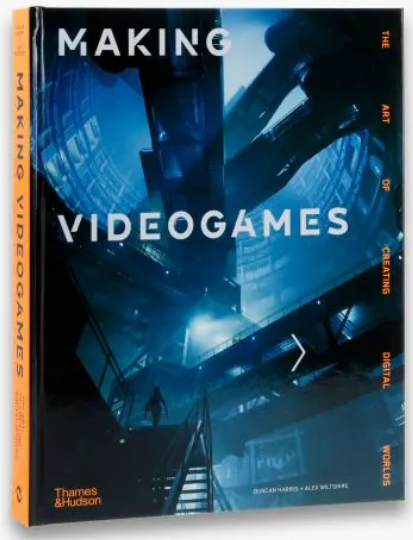
Making Videogames is an unprecedented snapshot of modern interactive entertainment, with insight from true pioneers about the most important games in the world. Illustrated with some of the most arresting in-game images ever seen in print, the book explores the unique alchemy of technical and artistic endeavour that constitutes the magic of videogames, striking a captivating balance between insight and accessibility. A book not only for die-hard videogame fanatics, but also for designer-creatives and the visually curious, Making Videogames is a thrilling showcase of the boundless creativity of this amazing industry.
Free download exhausted
Update: BOA added 6 free video tutorials offered by Howard Pinsky
Update: BOA added 6 free video tutorials offered by Howard Pinsky
Global Art
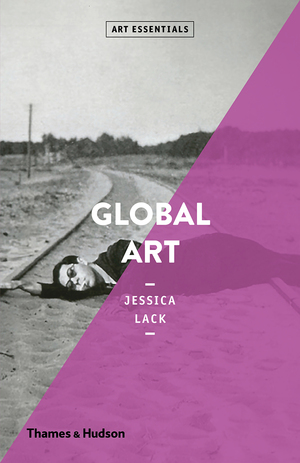
Author: Jessica Lack
An essential guide to the multifaceted and increasingly connected global art community from 1900 to today.
Global Art introduces some of the most significant art movements of the twentieth and early twenty-first centuries that have challenged the status quo. Featuring fifty artistic developments from every continent, this volume covers movements born of decolonization, marginalization, and conflict. Ranging from the Saqqakhaneh artists of Iran to the Stridentists of Mexico, Experimental Workshop of Japan to America’s AfriCOBRA, it chronicles groups that have empowered and given voice to their members.
Packed with bold and illuminating illustrations, the book demonstrates the distinct but connected roles of global movements in creating cross-cultural dialogues in today’s art world. Journalist Jessica Lack provides historical context for each art movement, key cultural events, and interconnections, bringing to life the protagonists in each movement’s evolution.
Mary Cassatt: Painter of Modern Women by Griselda Pollock
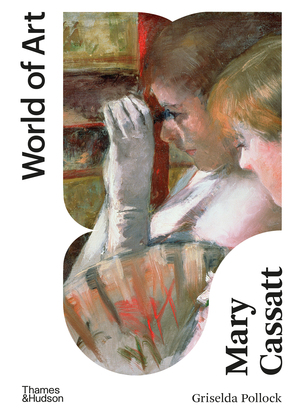
This groundbreaking study redefines the status of the beloved American artist Mary Cassatt, placing her work in the wider context of nineteenth- century feminism and art theory. Mary Cassatt looks at the artist’s work in light of her time as an advocate for women’s intellectual life and political emancipation. Esteemed by her contemporaries for her commitment to what she and her radical colleagues in Paris termed “the new art”—now called impressionism—Cassatt brought her discerning gaze and compositional inventiveness to the study of the subtle, often psychological, social interactions of women in public and private spaces.
Focusing on key moments of engagement and change over the artist’s long career, art historian Griselda Pollock discusses Cassatt’s artistic training across Europe, her profound study of the old masters, and places fresh emphasis on the artist’s interest in Manet and other contemporary French and Spanish painters as well as her influence on American collections of French modernism. Now revised with a new preface, updates to the bibliography, and color illustrations throughout, this book offers a reevaluation of the work of this important artist as seen through the frames of class, gender, space, and difference.
Find out more about Mary Cassatt: Painter of Modern Women by Griselda Pollock →
Update: BOA added 5 new online courses in Game Design offered by One Education
Update: BOA added 5 new online courses in Game Design offered by One Education
Arts Education Imperatives: Connecting the Globe (Pt.2)
Phase 1 focussed on the 2019 UNITWIN symposium in Winnipeg, and subsequent Yearbook, Visions of Sustainability for Arts Education: Value, Challenge and Potential (Bolden & Jeanneret, 2021). Chapters were contributed by UNITWIN members and their colleagues from nine countries in Oceania, North America, Asia, and Africa. Researchers from Australia, Singapore, China, and Germany referred to aspects of cultural sustainability via artistic cultural learning and this theme overlapped with many references to community arts and engagement. Authors also addressed the significant role of digitalisation, both in sustaining culture by allowing and supporting its expression and in shaping culture and cultural products. The theme of honouring voices also featured, often manifested in the research methods that authors employed, while accessibility was highlighted in work from Korea, Canada, Kenya, and China. The editors identified four prominent themes across the contributions – cultural sustainability, community, honouring voices, and accessibility (Bolden, Jeanneret, & Kukkonen, 2021).
Phase 2 followed a COVID-induced break and focussed on the 2021 UNITWIN Symposium hosted online by the Korea Arts and Culture Education Services in May with presenters from 13 countries and 575 delegates from 38 countries. Jörissen’s keynote seemed to capture the essence of what was to come and began with the word “resilience”, “a much sought-after capability in times of crises” that “can be related to individuals, collectives (e.g. communities) and even entire systems (e.g. societies)” and a concept that “is especially important at a time when societies – on an economic, ecological and cultural level – are exposed to a multitude of transformations” (Jörissen, 2021a). The closing ceremony called upon UNITWIN members to comment on presentations and from this synthesis came many insightful observations and recommendations. For example, the impetus for, and value of, sharing globally was noted by Akuno, while Leung remarked on research that demonstrated the arts capacity to reflect real stories, countering official languages and focussing on different ethnicities. Themes emerging from this phase included social and cultural inclusiveness, diversity and cultural representation, cultural and aesthetic resilience, the arts for healing, and sustainability.
Phase 3 occurred in July 2021 with UNITWIN members presenting research with discussions over two Zoom sessions. Spurred on by an increasingly focussed consideration of arts education issues that are global in scope, the group endeavoured to find parallels between their individual research agendas and the emerging themes outlined in previous phases. While contexts differed, similar themes to previous phases emerged, along with a distinct and sharper focus. For example, from contexts as diverse as Colombia and Hong Kong came the notion of balancing access to learning about Indigenous arts with that of imposed Western knowledge systems and ways of preserving and invigorating local musics. Research from both Kenya and Columbia highlighted how limited access to the internet for many has only been exacerbated by increased reliance on it during the pandemic. The nature of engaging with and teaching Indigenous knowledges was also identified as a common area of interest, along with the limitations of engaging with such teaching via digital technology. While the power of the arts to contribute to wellbeing was acknowledged, the notion of the “arts for art’s sake” was seen as diminishing. Several themes emerged from the synthesis of these presentations and discussions: inclusion; the effects of colonisation and balancing Western and Indigenous cultures; cultural identity and resilience; the impact of the pandemic on disadvantage and access to arts education; and the omnipresent digital world.
Phase 4 involved a process of further iterative and reflexive thinking. The challenge was to distill and synthesise these emergent themes into a manageable conceptual form. We developed a conceptually clustered matrix (Miles, Huberman & Saldana, 2014) to group and sort the emergent themes, which enabled us to identify four categories that we have described as “imperatives”. These imperatives characterise a global compendium of research in arts education occurring over the last two years. The representation in Figure 2 shows the imperatives, and attempts to capture how they overlap, connect and are interdependent and interrelated.
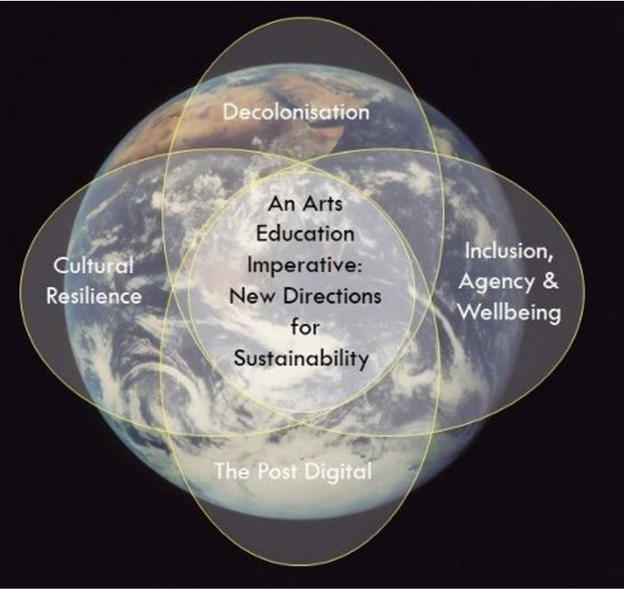
Figure 2. Intersecting Imperatives.
Having identified these four imperatives, we used them as a framework for a successful University of Melbourne Research Development Grant in August 2021 with the Melbourne Graduate School of Education arts education team and partner investigators from UNITWIN members in Canada, Kenya, Singapore, Germany, and Hong Kong: An Arts Education Imperative: New Directions for Sustainability. The Project aimed to develop a foundation for generating international and national research collaborations with one of the main outcomes being to develop an open access digital repository of research to consider the four imperatives, while also interrogating further the ideas and concepts proposed in the framework and what they may mean within and across different arts disciplinary boundaries.
Given our aim was to ensure the digital platform was sustainable and accessible for ongoing collaborations across locations, we identified the open-access reference-management tool, Zotero, as the most appropriate digital repository for this purpose. The approach we adopted to establish and contribute foundational literature about the proposed imperatives to the platform also involved aspects of bricolage such as ‘feedback looping’ while also having an anchor or ‘point of entry text’ (POET), that prompted the initial inquiry that can be continually revisited to identify new lines of inquiry (Kincheloe & Berry, 2004) were employed. We also used the elements of progressive focussing (Hammersley & Atkinson, 2019) we referred to earlier.
Based on the four imperatives, nine sub-terms (decol*1 , culture, resilience, inclusion, agency, wellbeing, post-digital, digital, arts education) were used to undertake a literature scan of databases such as ERIC, EBSCO Education Research Complete, and ProQuest Arts Premium Collection. In tandem, abstracts and reference lists from project partners’ research were used to identify further germane literature. A protocol was developed for identification, screening, and eligibility to establish inclusion and exclusion criteria. When sources were deemed appropriate to be included, they were entered into the Zotero reference-management platform and coded according to its relevance with each of the four imperatives by considering key terms and automatic tags imported through Zotero. To assist in effective searches within the Zotero platform, we also extended the tagging system, and codified various authors’ affiliated institutions, and the geographical sites of research studies into the database to provide data for manipulation in various digital applications to generate geographical maps. Having identified these initial bodies of literature, which we hope will grow in time, as initial POETs, we are also aware that this literature and research over-represents voices and perspectives from the global north, which we also hope can be addressed.
The Zotero library is free and publicly available to others who may way to search for literature or provide additional sources to contribute to the site (MGSAE, 2021). We also see the site as another avenue to connect with colleagues who are working in the field of arts education, thereby providing an opportunity for various types of collaborations and for others to engage with, and contribute to, the project. Having discussed both the methodological aspects of the project and the digital literature repository, in the following section, we outline some initial understandings of these imperatives. We distill key ideas from some literature we have listed in the Zotero repository, and we discuss how these ideas are reflected in the work of researchers associated with the AERCDSD network.
Authors: Emily Wilson University of Melbourne, Neryl Jeanneret University of Melbourne, Mark Selkrig University of Melbourne, Jenni Hillman University of Melbourne, Benjamin Bolden Queens University (Canada)
Citation: Wilson, E., Jeanneret, N., Selkrig, M., Hillman, J., & Bolden, B. (2023). Arts education imperatives: Connecting the globe. International Journal of Education & the Arts, 24(4). http://doi.org/10.26209/ijea24n4