



Update: BOA added 5 new video tutorials offered by FZDSCHOOL
Month: May 2024
GLOBAL GEO-POLITICAL FUTURES
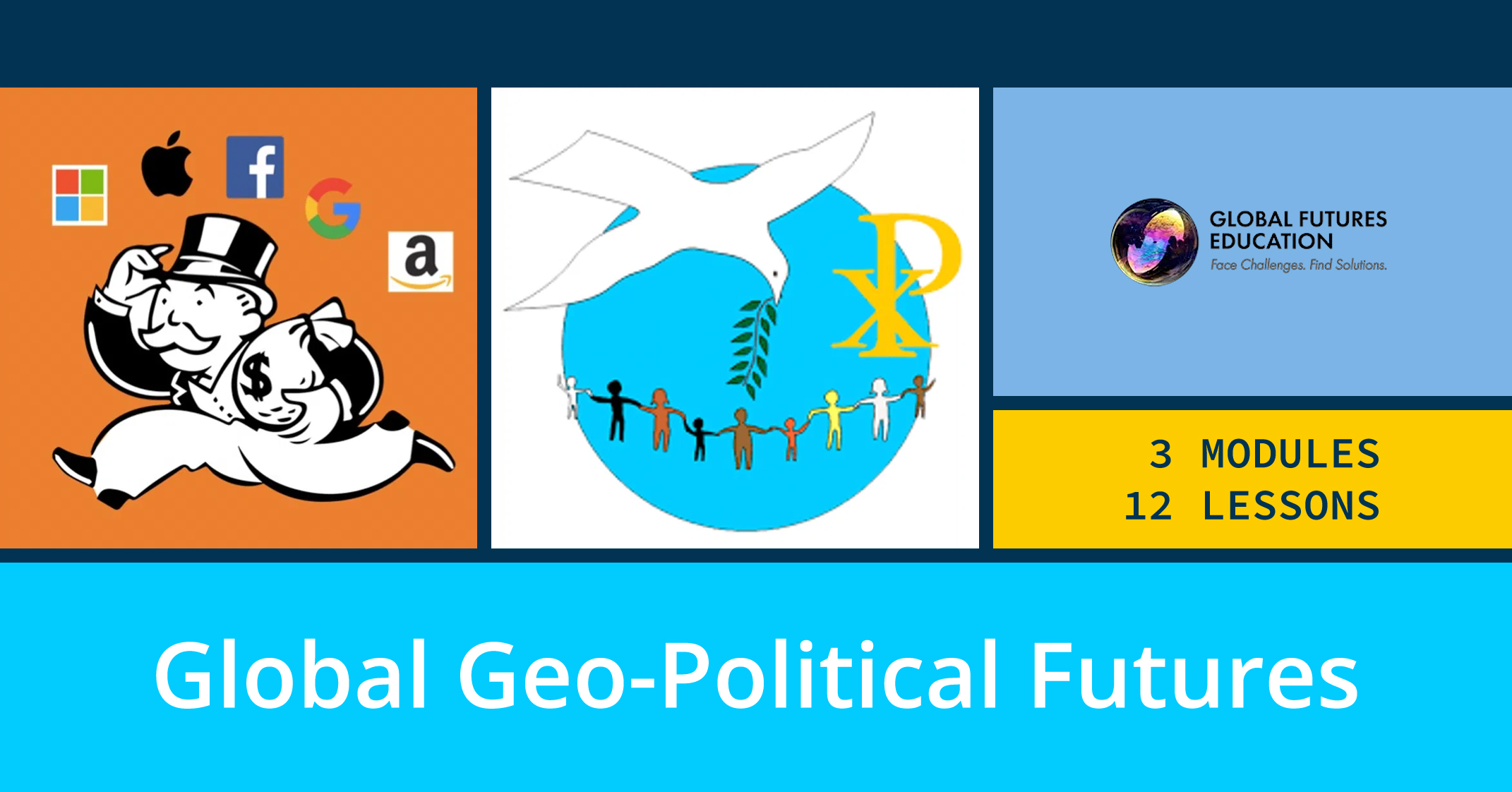
“Global Geo-Political Futures” is the third Course in the series on Global Systems designed for individuals and organisations committed to facing global challenges and finding solutions.
Course Content includes 12 Lessons across 3 Modules:
- Transforming Economics
- War and Peace
- Technology Futures
There are two lessons in each, examining the challenges, and addressing the alternatives. This self-paced, web-based Course is incredibly well researched to give you a deep understanding of our emerging world and provides a solid basis for you to build your personal, professional, and family futures.
Why you should take this course:
- Learn from Professor Jennifer Gidley’s valuable expertise gained from 30 years’ experience as an international futures consultant at the highest levels of global thinking into the complexity and wide impacts of Climate Crisis, Energy Systems and Ecosystem collapse
- Learn about the growing global challenge of economic disparity, which exacerbates the increase in wars, conflicts and terrorism, and the links between these challenges and exponential technology development
- Be empowered to appreciate and implement geo-political solutions such as the circular and sharing economy; collaboration, diplomacy and education as pathways to active peace; and to contribute to the human-centred, ethical turn in technology
- Learn how solutions offered align with the UN Sustainable Development Goals (SDGs)
- Receive a Certificate of Completion (Global Geo-Political Futures)
- Continuing Professional Development (CPD) – 30 Points
To enroll, please contact info@beopenfuture.com
Woven Histories: Textiles and Modern Abstraction Hardcover by Lynne Cooke
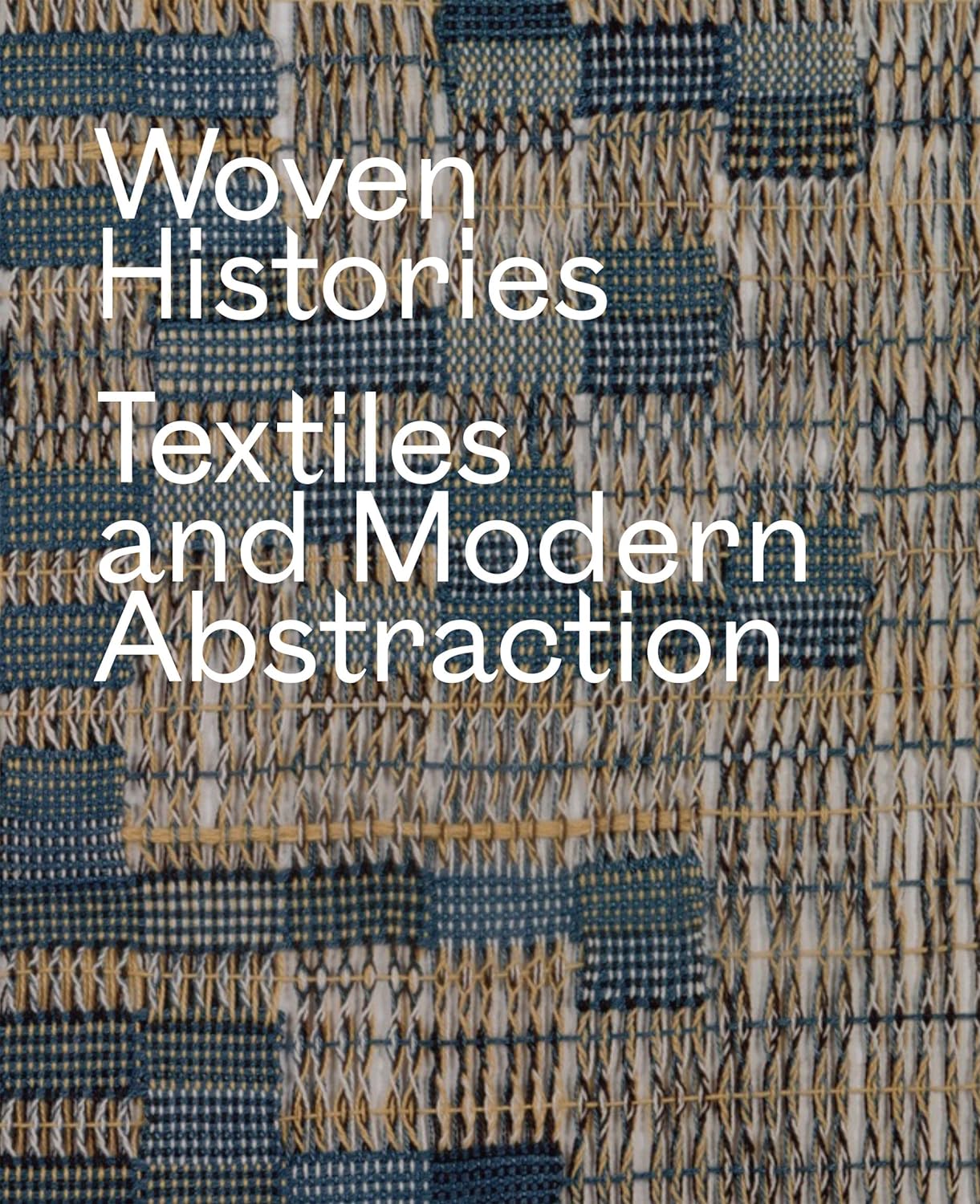
Richly illustrated volume exploring the inseparable histories of modernist abstraction and twentieth-century textiles.
Published on the occasion of an exhibition curated by Lynne Cooke, Woven Histories offers a fresh and authoritative look at textiles—particularly weaving—as a major force in the evolution of abstraction. This richly illustrated volume features more than fifty creators whose work crosses divisions and hierarchies formerly segregating the fine arts from the applied arts and handicrafts.
Woven Histories begins in the early twentieth century, rooting the abstract art of Sophie Taeuber-Arp in the applied arts and handicrafts, then features the interdisciplinary practices of Anni Albers, Sonia Delaunay, Liubov Popova, Varvara Stepanova, and others who sought to effect social change through fabrics for furnishings and apparel. Over the century, the intersection of textiles and abstraction engaged artists from Ed Rossbach, Kay Sekimachi, Ruth Asawa, Lenore Tawney, and Sheila Hicks to Rosemarie Trockel, Ellen Lesperance, Jeffrey Gibson, Igshaan Adams, and Liz Collins, whose textile-based works continue to shape this discourse. Including essays by distinguished art historians as well as reflections from contemporary artists, this ambitious project traces the intertwined histories of textiles and abstraction as vehicles through which artists probe urgent issues of our time.
Find out more about Woven Histories: Textiles and Modern Abstraction Hardcover by Lynne Cooke →

Arts Education Imperatives: Connecting the Globe (Pt.1)
Abstract
At a time of uncertainty Arts Education continues to offer powerful learning possibilities for being in, and with, the world. While it is crucial to research these possibilities in our own communities, clearly, engaging and collaborating with colleagues from various global contexts and cultures offers great potential. These interactions can develop our understandings of common and disparate issues related to arts education from a range of perspectives and allow us greater impact in the work we do. The Arts Education Research for Cultural Diversity and Sustainable Development network is an international think tank and part of the UNESCO UNITWIN program supporting arts education academics to collaborate and engage in interdisciplinary discussions and research initiatives. In this article we outline the distillation of previous and current research from this group and affiliates to identify four key areas of arts education research that have global relevance and significance. We argue that these four “imperatives” — decolonisation; cultural resilience; inclusion, agency, and wellbeing; and the post-digital age — not only represent a snapshot of current research in arts education but provide a focus for future research and collaborations critical in a pandemic and post-pandemic world. We invite arts education scholars to join us in the discussion.
Introduction
Discussions about the role and purpose of arts education have been taking place across cultures for decades. From Eisner’s (1972) perspective, many of these debates were too fixated on art of the past and promoting cultural reproduction of the western canon. Arguments about privileging various art forms and ways of knowing over others have continued (Robinson, 2015). While there has been a shift from categorizing the arts into discreet disciplines (Flood, Heath, & Lapp, 2005), the field has also seen the emergence of diverse ‘new’ art forms and theoretical perspectives that continue to challenge established views and understandings. Biesta (2019) notes prevailing concerns about the disappearance of art from education where it is viewed through the narrow perspective of the instrumental benefits of the arts (McCarthy et al., 2005), or through the expressivist perspective focused on individuals or the self. He argues that the arts in fact offer education the opportunity to consider and engage far more broadly, drawing the learner into dialogue with the world. The sentiment of engaging with the world and developing world-centred approaches to education resonates in recent fora. For example, UNESCO (2021) argues that the world is at a turning point and the numerous disparities across the globe indicate that education is not yet working effectively to shape just, peaceful, and sustainable futures. In providing a rationale and overview of the need for more integration, Hunter et al. (2018) claim that arts and sustainability education are “predicated on like-minded principles and they provide spaces in schooling for big picture thinking alongside the close and personal” (p. 9). Likewise, Cameron (2021) promotes a partnership and alignment of arts education with sustainability education to mitigate some of the most pressing 21st -century issues. From another perspective, CabedoMas et al. (2017) highlight the unfulfilled opportunities encouraged by significant international UNESCO-based fora to include peace and values education through arts education. While Wagner (2021) identifies the environmental, social, cultural, and economic dimensions of the UN Sustainable Development goals as being most relevant for arts education in the context of Education for Sustainable Development. Likewise, Westerlund et al. (2021) call for arts educators and professionals to become active in tackling “systemic inequality and exclusion in and through their specialized expertise” (p. 12). While acting locally remains important, it seems that arts educators and arts education researchers may have a greater impact if they work across communities, cultures, contexts, and national borders, from a world-centred standpoint. Engaging internationally through professional networks is one way this can happen.
Many of the above concerns are directly and indirectly acknowledged in the Seoul Agenda: Goals for the Development of Arts Education (2010) which was a major outcome of UNESCO’s Second World Conference on Arts Education held in Seoul, the Republic of Korea. At the time it embodied the conviction of the International Advisory Committee (IAC) at UNESCO and the experts participating in the Conference that arts education could make “a direct contribution to resolving the social and cultural challenges facing the world today” (UNESCO, 2010, p. 2). It could play an important role in “constructive transformation of educational systems that are struggling to meet the needs of learners in a rapidly changing world characterized by remarkable advances in technology on the one hand, and intractable social and cultural injustices on the other” (UNESCO, 2010, p. 1). The Agenda took three main issues that emerged from the discussions as its organising principles, recognising (1) accessibility; (2) sustainability achieved by quality of conception and delivery in arts education; and (3) a commitment to addressing social and cultural challenges.
The Seoul Agenda provided the guiding principles in the establishment and ratification in 2018 of an international arts education network, the Arts Education Research for Cultural Diversity and Sustainable Development (AERCDSD), as part of the UNESCO UNITWIN program. UNITWIN networks are ‘think tanks’ and bridge builders between the academy, society, communities, and policy makers (UNESCO, 2007). The AERCDSD group has hosted four international symposia, produced three Yearbooks, established an annual international graduate researcher fora and founded a journal, the International Journal for Research in Cultural, Aesthetic and Arts Education, in late 2021. While these initiatives fulfill several of the aims, attempts at international research collaborations have been patchy—an issue raised IJEA Vol. 24 No. 4 – http://www.ijea.org/v24n4/ 4 at the Winnipeg Symposium in late 2019. The group considered how they might capitalise on their existing research projects and combine these in future initiatives rather than developing new ones. Instead of beginning with universal themes such as those identified by UNESCO, we reversed the process and considered the commonalities emerging from the research connected to members of the AERCDSD group, and then identified possible connections with global proposals such as A new contract for education (UNESCO, 2021). By collaborating to synthesise global arts education issues, we hoped to develop a more systematic approach to international collaborations. We also decided our work could be more far reaching and impactful through the UNITWIN AERCDSD website (https://www.unitwin-arts.phil.fau.de/) as opposed to our individual efforts, thus making a much more visible research repository and hub for arts education research.
In this article we outline the process of progressive focussing and reflective practice bricolage we engaged with to identify significant issues shaping the current international arts education landscape. From this interrogation we provide a conceptual framework (the four arts imperatives) we propose could act as a basis to engage in international research collaborations related to arts education. We also present a preliminary synthesis of ideas related to these imperatives to act as discussion starters and a potential framework for future research initiatives.
Methodology
To articulate the logic, systems and approaches we adopted to arrive at the four imperatives for arts education, we adopted a stance of reflective practice bricolage. Bricolage can be understood as “employing multiple methodological processes as they are needed in the unfolding context of the research situation” (Kincheloe et. al., 2011, p. 168). Drawing on the work of Levi-Strauss (1966), Denzin and Lincoln (2005) also describe a bricoleur and the process of engaging in bricolage through the metaphor of a quilt maker who combines a range of potentially disparate images, ideas, or representations and fits these to the specifics of a complex situation. This notion of a complex situation resonated with us given the various research foci of members of the AERCDSD group who also work across various art forms. As part of the reflexive and reflective practices adopted for this project, we found progressive focussing where “the collection of data must be guided by the developing clarification of topics for inquiry” (Hammersley & Atkinson, 2019, p 163) a helpful concept in our exploration of ideas leading to research.
The project evolved over four phases of inquiry and dialogue through a recursive and iterative process using observation and discussion notes, literature reviews, analysis of submitted writings and an ongoing synthesis (Figure 1). Each phase identified particular themes which eventually fed into the final phase. This final analysis aimed to identify global issues in arts Wilson et al.: Arts Education Imperatives 5 education that could drive a more systematic approach to world-wide research collaborations. This eventually led to a funded investigation to interrogate and analyse previous and recent work and synthesise relevant bodies of literature related to the “imperatives”. The remainder of this section discusses the four phases (Figure 1) where researchers congregated and shared ideas that led to the identification of the four imperatives for arts education.
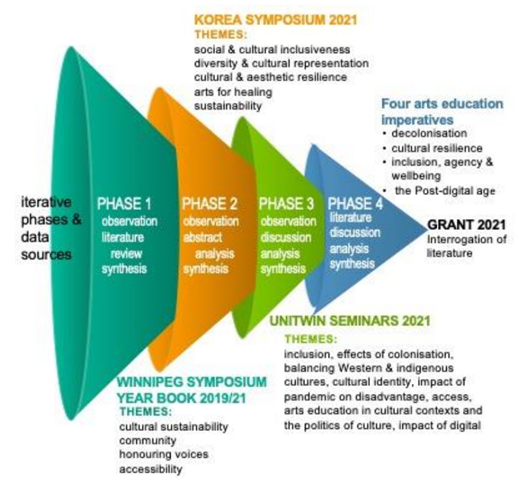
Figure 1. Phases of Analysis that Involved Progressive Focussing, Iterative Thinking, and the Synthesis of Four Global Imperatives.
Authors: Emily Wilson University of Melbourne, Neryl Jeanneret University of Melbourne, Mark Selkrig University of Melbourne, Jenni Hillman University of Melbourne, Benjamin Bolden Queens University (Canada)
Citation: Wilson, E., Jeanneret, N., Selkrig, M., Hillman, J., & Bolden, B. (2023). Arts education imperatives: Connecting the globe. International Journal of Education & the Arts, 24(4). http://doi.org/10.26209/ijea24n4
Graphic Design Rules: 365 Essential Design Dos and Don’ts by Sean Adams, Peter Dawson, John Foster, and Tony Seddon
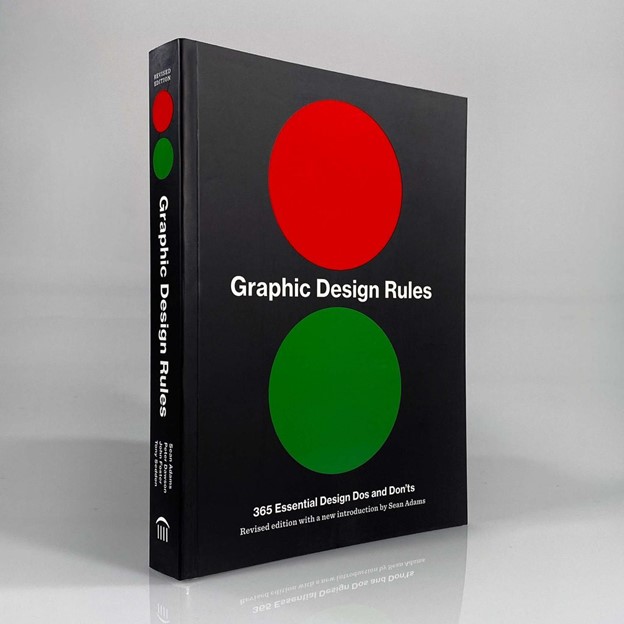
A handy guide for professional graphic designers, students, and laypeople who incorporate graphic design into their job or small business. Packed with practical advice, this spirited collection of design dos and don’ts takes readers through 365 rules like knowing when to use a modular grid — and when to throw the grid out the window. All designers will appreciate tips and lessons from these accomplished authors, who draw on years of experience to help you create good design.
Free download exhausted
Looking at Picasso
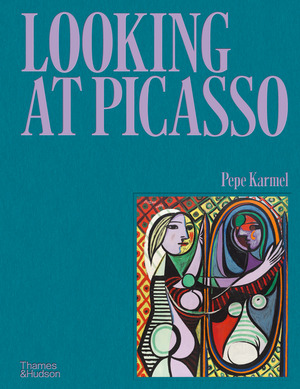
Author: Pepe Karmel
A major new survey that offers fresh insights on artworks by one of the greatest artists of the twentieth century, Pablo Picasso, written by a leading authority on the master.
As one of the greatest artists of the twentieth century, Pablo Picasso’s (1881–1973) artistic achievements are unparalleled. This important new introductory monograph, released to coincide with the fiftieth anniversary of the artist’s death, presents the beauty, power, and multiplicity of Picasso’s work across his paintings, sculptures, drawings, and prints, and offers fresh analysis of the work of this great master for a twenty-first-century audience.
Since the 1980s, most books and exhibitions on Picasso have focused on the artist’s personal relationships, specifically on the representation of his wives and mistresses. Art historian and curator Pepe Karmel shifts the debate by considering Picasso’s works first and foremost as art, explaining how the artist’s style has evolved over the course of seven decades, introducing visual languages and narratives that have transformed modern art.
Arranged chronologically by themes and movements, Looking at Picasso is profusely illustrated with renowned paintings, such as the provocative Les Demoiselles d’Avignon and the monumental war piece Guernica, as well as lesser-known works, including Picasso’s animal sculptures and his animated reinterpretation of Velázquez’s seventeenth-century masterpiece Las Meninas.
Update: BOA added 4 new online courses in Graphic Design offered by London School of Publishing
Update: BOA added 4 new online courses in Graphic Design offered by London School of Publishing