



Update: BOA added 6 free video tutorials offered by Sinix Design
Month: August 2024
GLOBAL SOCIO-CULTURAL FUTURES
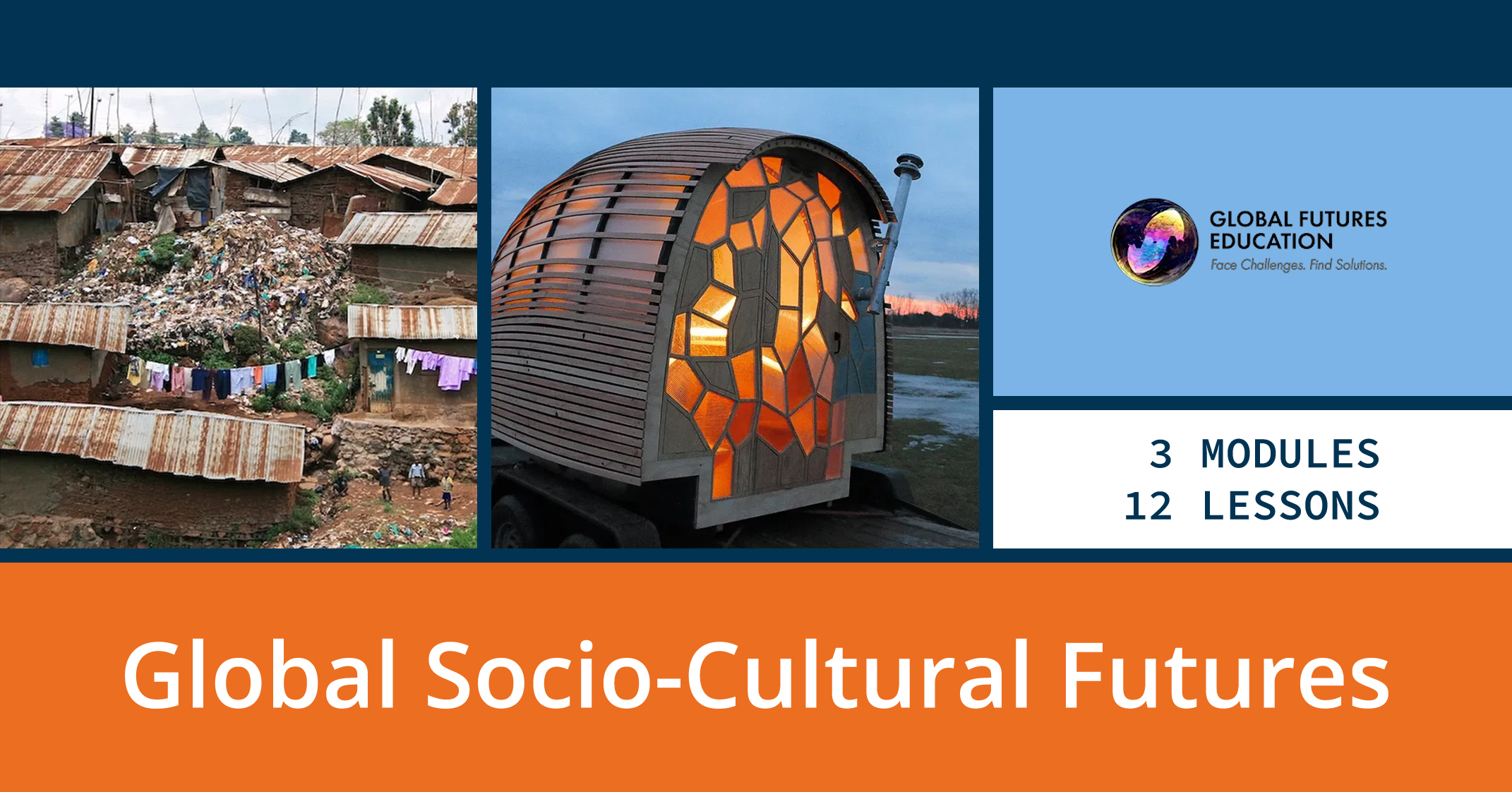
“Global Socio-Cultural Futures” is the second Course in the series on Global Systems designed for individuals and organisations committed to facing global challenges and finding solutions.
Course Content includes 12 Lessons across 3 Modules:
- City Futures
- Human Futures
- Educational Futures
There are two lessons in each, examining the challenges, and addressing the alternatives. This self-paced, web-based Course is incredibly well researched to give you a deep understanding of our emerging world and provides a solid basis for you to build your personal, professional, and family futures.
Why you should take this course:
- Learn from Professor Jennifer Gidley’s valuable expertise gained from 30 years’ experience as an international futures consultant at the highest levels of global thinking into the complexity and wide impacts of Climate Crisis, Energy Systems and Ecosystem collapse
- You will learn about rapid urbanisation and its social, cultural and environmental stresses; entrenched socio-cultural issues such as racism, gender inequality, and loss of meaning; and why the factory model of schooling is obsolete
- Be empowered to imagine, design and create social and cultural innovations such as ecological and smart cities; social and cultural practices that are empowering, equitable, inclusive, and meaningful; and educational approaches that are creative, evolutionary, integral, and transformative
- Learn how solutions offered align with the UN Sustainable Development Goals (SDGs)
- Receive a Certificate of Completion (Global Socio-Cultural Futures)
- Continuing Professional Development (CPD) – 30 Points
To enroll, please contact info@beopenfuture.com
The Youth Statement issued by the UNECE ESD Forum and the MED9 Forum captures the key contributions and perspectives of the young delegates
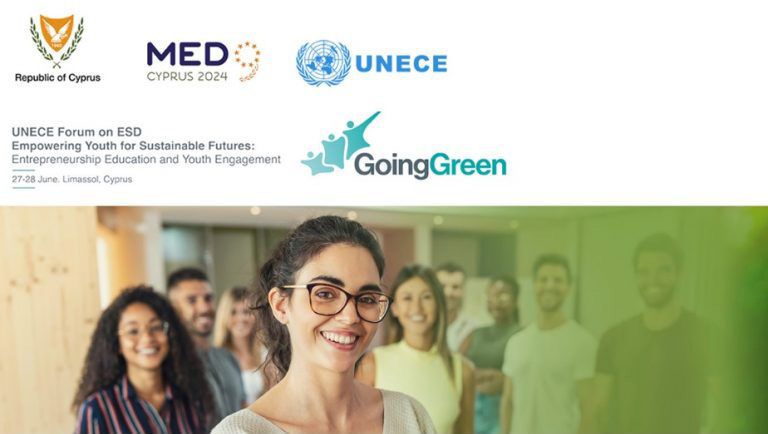
The UNECE ESD Forum and the MED9 Forum issued the Youth Statement, which captures the key contributions and perspectives of the young delegates, whose presence and active engagement were crucial during the special sessions. Their insights and energy provided a unique and vital perspective to the discussions, highlighting the importance of youth involvement in shaping a sustainable future..
The outcomes of these forums will play a significant role in shaping the discussions at the Summit of the Future, ensuring that the voices and ideas shared will have a lasting impact.
BOA has expanded its “Reading List” with “Art Since 1900”
BOA has expanded its “Reading List” with “Art Since 1900”, a collaborative effort by Hal Foster, Rosalind Krauss, Yve-Alain Bois, Benjamin H. D. Buchloh, and David Joselit. These five preeminent art historians have woven together a sweeping narrative of the past century’s artistic evolution.
Art Since 1900 By Hal Foster, Rosalind Krauss, Yve-Alain Bois, Benjamin H. D. Buchloh, David Joselit
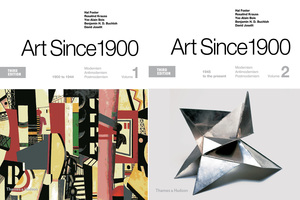
Volume 1: 1900 to 1944;
Volume 2: 1945 to the Present
By Hal Foster, Rosalind Krauss, Yve-Alain Bois, Benjamin H. D. Buchloh, David Joselit
Five of the most influential and provocative art historians of our time have come together to provide a comprehensive history of art in the twentieth and twenty-first centuries.
Art Since 1900 introduces students to the key theoretical approaches to modern and contemporary art. A flexible year-by-year structure and extensive cross-referencing allow teachers and students to pursue a chronological approach and/or to study the currents of art since 1900 by medium, theme, country, or region. This completely updated and expanded third edition contains over 125 essays, each focusing on a crucial event in the history of art from 1900 to the present. Ten new essays cover subjects such as Moscow conceptualism, abstract film, postmodern architecture, and queer art, as well as artists from emerging economies and the impact of the market on current art practice.
Text boxes provide further information on key figures and issues. Five introductions explain the different methods of art history at work in the book. There are two roundtable discussions between the authors, and all reference material has been updated.
Resilient Web Design
Author: Jeremy Keith
The cardinal sin of many web design books is that they give you coding and tools, but no hands-on advice. That’s where the Resilient Web Design ebook is different. It’s not about the elements you use in this art; it’s about how you use them and the many different approaches that you may choose to take.
In short, Keith will take you through each of them one carefully crafted idea at a time. You also get treated to a historical overview of web design and how very rapidly it has changed in recent years. The notion is that you may use this in-depth knowledge to inform your own projects in the future.
BOA reviewed Zainab Bahrani’s “Art of Mesopotamia”
BOA reviewed Zainab Bahrani’s “Art of Mesopotamia”. This expert guide spans over 8,000 years of Mesopotamian art. It is crucial because this ancient cultural heritage faces threats from modern conflicts.
Art of Mesopotamia
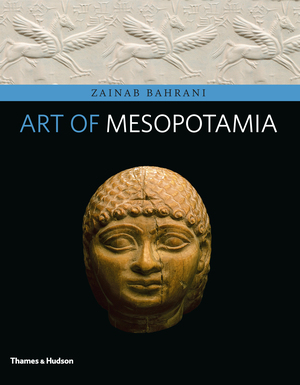
Author: Zainab Bahrani
This expert guide to the art of Mesopotamia, spanning more than 8000 years, is especially important as this ancient cultural legacy is threatened by contemporary conflict.
Mesopotamia is considered the cradle of Western civilization, and the diverse societies that flourished there, nestled around the Tigris and Euphrates rivers, were as culturally rich as this attribution would suggest. Spanning a significant historical period, from 8000 BCE to the arrival of Islam in 636 CE, Art of Mesopotamia explores spectacular structures and objects, as well as the techniques artists used, in order to gain insight into the beliefs and practices of ancient peoples. The volume also introduces the archaeologists who discovered these sites more than a thousand years later.
Richly illustrated with more than 400 full-color photographs, Art of Mesopotamia is an astounding record by award-winning author Zainab Bahrani of artworks from this region, many of which have in recent years been damaged or destroyed by war, and as such is of particular and lasting importance. It includes the most up-to-date scholarship and reflects significant new approaches to Mesopotamian art over the past few decades.
Update: BOA added 6 new online courses in Architecture offered by Skill Success and Lead Academy
Update: BOA added 6 new online courses in Architecture offered by Skill Success and Lead Academy

Arts Education Imperatives: Connecting the Globe (Pt.4)
The Post Digital
In 1998 Negroponte proposed that “Like air and drinking water, being digital will be noticed only in its absence, not by its presence” (para. 2) suggesting that digital technology would become a vast, quiet element forming a seamless backbone of life. More recently, Jörissen (2018) also refers to this seamlessness and how post-digital culture is a condition where digitality is deeply embedded in not only the medial aspects of everyday life, but also in the infrastructural and material layers of culture. Digital technology is a part of social reality but also capable of changing it. This suggests that the prefix “post” is not about discarding the obsolete but moving past what Cascone (2000) calls the “the revolutionary phase of the information age” (p. 12) and recognizing a period of ongoing social and cultural transformations where digitalisation is no longer seen as disruptive, but as normal and hegemonic (Cramer, 2015; Safonov & Mayakovskaya, 2020; Sinclair & Hayes, 2019).
The post-digital serves multi-purposively in arts education: as a facilitator for artistic practice, as an artefact in and of itself, and as a driver for generation of data which becomes enabling. This ever-expanding digitalisation of everything and the consequence of instant and worldwide distribution via the internet has disrupted arts education and created an urgent and continuous need for revision, for the professional development of the creative arts education workforce, and for keeping up with contemporary arts and creative industry practices (Hillman, 2018; Kerby et al., 2021, Kidenda, 2021). The high degree of intersection of realworld arts with digital, internet-based, and virtual experiences has implications for artists, arts organisations, and arts education. Unlike previous centuries, “there is an increasing desire to insert oneself into the narrative” (Australia Council for the Arts, 2021, p. 28). Reporting the ubiquitous ‘selfie’ as “an act of co-creation” expanding on more traditional museum/gallery viewing and responding, The Australian Council for the Arts (2021) claims it is “a type of interpretative response to the art, contributing to a wider conversation by saying ‘this is what it means to me’” (p. 28). While educators need to respond to and incorporate this type of engagement, it will be important to promote critical appraisal and to broaden students’ exposure to the arts in different ways.
Dezuanni (2021) proposes that the pace of change and the changes in emphases and contexts have far-reaching consequences for arts education curricula. He argues that “when young people are producing, curating, circulating or consuming content on digital media platforms, including video, images, audio recordings, or text, they are deeply involved in arts practice” (p. 874). The permeating practices surrounding media in all its forms are a challenge including “the rise of disinformation, the media industries’ shift of power from Hollywood to Silicon Valley and the impact of algorithmic culture on creative participation” (p. 873). A further challenge is how we appraise broader issues such as “regulation, and the media’s social and political impacts” (p. 884).
Tavin et al. (2021) tackle a myriad of implications for arts education in their exploration of educational futures in arts education that stem from the proliferation and adoption of technological change and digitalisation. Klein (2021), for example, wrestles with the notion of digital cultures and aesthetic production in terms of the properties of distribution, hybridity, fluidity and digital imaginaries. While art education can facilitate aesthetic appreciation through digitalization, Klein also argues that art education “can also explore what eludes digitalization and what cannot be transferred into binary codes” (p. 40). Bolden, O’Farrell and Kukkonen (2020) also articulate a cautionary perspective of “Balancing the potential and risks of technologically-mediated arts practice and learning” in “The Winnipeg Vision” (Bolden et al., 2020).
Conclusion
The project we have outlined brings together a range of arts education scholars from various parts of the globe and across a range of arts forms. We have canvassed some common issues across arts education that are global in scope, and highlighted that arts education is well placed to make a difference and contribute to addressing these concerns. Through analysing issues currently being researched in our respective contexts, we have identified some key imperatives for attention within the field of arts learning. While these proposed imperatives remain at an emergent stage, they are currently crafted to articulate preliminary ideas and understandings. We are also aware that there is scope for elaboration and refinement as they can encompass a range of meanings and complexities. Similarly, they are entangled, messy and mediated by context. They have emerged from a global compendium but require further scrutiny to ascertain if they are internationally representative. In returning to some of the arguments about the purpose of arts education, we propose transcending the intrinsic, expressivist, arts for art’s sake, and instrumental rationales for arts education and further align with Biesta’s (2019) argument of an arts education that affords possibilities to be in dialogue with the world.
Our intent is to initiate and provoke discussions about the imperatives from a global perspective to promote future international collaborations. We are also keen to keep our discussions and dialogue open, inviting our arts education colleagues to stay informed about this work, contribute and even collaborate with us as this project evolves. As Arts educators in various parts of the world, we argue the need to consider these ideas and concepts in the work we do.
Authors: Emily Wilson University of Melbourne, Neryl Jeanneret University of Melbourne, Mark Selkrig University of Melbourne, Jenni Hillman University of Melbourne, Benjamin Bolden Queens University (Canada)
Citation: Wilson, E., Jeanneret, N., Selkrig, M., Hillman, J., & Bolden, B. (2023). Arts education imperatives: Connecting the globe. International Journal of Education & the Arts, 24(4). http://doi.org/10.26209/ijea24n4