



BE OPEN Academy has added Making Space: Interior Design by Women by Jane Hall to its Bookshelf. The book presents a global survey of 250 women who have shaped interior design from the twentieth century to the present day, highlighting interiors as spaces where identity, culture, work and everyday life are constantly reimagined.
Author: JD
Update: BOA added 6 new online courses in Art, Design Thinking and Digital Photography from The Open University
Update: BOA added 6 new online courses in Art, Design Thinking and Digital Photography from The Open University.

Material Intelligence: What Design Students Need to Learn About the Future of Materials (Pt.1)
PART 1. From Surface Choice to Material Literacy
For a long time, materials in design education were often approached through appearance, function and technique. Students learned how paper folds, how wood joins, how textiles behave, how plastic can be moulded, how metal carries weight, or how digital renderings can imitate surface and texture. These skills remain essential. But the meaning of materials is changing.
Today, a material is not only a surface, structure or finish. It is a set of relationships: to extraction, labour, chemistry, energy, supply chains, repair, reuse, toxicity, carbon, local culture and future waste.
For design students, this means that material choice is becoming a form of responsibility. The future designer must learn not only how materials look and perform, but where they come from, what they contain, how they age, how they affect people and ecosystems, and what happens when the product is no longer new.
Material intelligence is therefore becoming a core part of design literacy. It connects craft with science, aesthetics with ethics, and making with systems thinking.
Material Is Never Neutral
Every material carries a story. Some stories are visible: colour, texture, weight, smell, touch. Others are hidden: the chemicals used in production, the energy required to process it, the conditions of workers, the distance it travelled, the difficulty of recycling it, or the harm it may cause when burned, buried or broken down.
Design students are trained to make choices. But the basis of those choices must expand. It is no longer enough to ask whether a material is beautiful, affordable or easy to use. Students must also ask whether it is safe, circular, repairable, locally appropriate and transparent.
The point is not to find a perfect material. The point is to learn how to ask better material questions.
BE OPEN Insight
The future of design will not be shaped only by new forms, but by new relationships with matter.
As environmental and health consequences become harder to ignore, students need to understand materials as active participants in design. They are not passive ingredients. They shape how people live, how systems function and how future waste or value is created.
From Selection to Investigation
Traditional material education often begins with selection: choosing from samples, catalogues or supplier lists. Future material education will need to begin earlier, with investigation. What is the material made from? What is mixed into it? Who produces it? How far does it travel? Can it be repaired? Can it be separated from other materials? Can it return safely to biological or technical cycles?
This investigative approach changes the studio. Students may still build models and prototypes, but they may also create material maps, ingredient lists, lifecycle sketches, disassembly tests and end-of-life scenarios. They may compare not only how materials behave in the hand, but how they behave in a system.
Case Study: Materiom and the Rise of Bio-Based Experimentation
Materiom is a platform that supports the development of next-generation bio-based materials through open data and AI. Its work highlights a broader shift in design: material innovation is no longer limited to industrial laboratories. Designers, scientists, makers and producers can experiment with ingredients, recipes and performance data to explore new possibilities.
For students, bio-based experimentation can be especially valuable because it makes material systems visible. A material made from algae, mycelium, agricultural waste or natural binders reveals relationships between biology, chemistry, locality, performance and decay.
This kind of learning encourages students to ask practical questions. How strong is the material? How does it respond to moisture? Is it scalable? Is it compostable only under specific conditions? What additives are needed? Does it truly replace a harmful material, or does it introduce a different problem?
Source:
https://www.materiom.org
Learning Through Making
Material intelligence cannot be learned only from reading. Students need to cut, bend, break, join, stain, repair, test and disassemble. They need to see how materials fail. A material that looks elegant in a rendering may crack, warp, scratch, smell, fade or become impossible to separate from another component.
Material literacy is therefore not nostalgic craft. It is a future skill.
Design Justice: Community-Led Practices to Build the Worlds We Need by Sasha Costanza-Chock
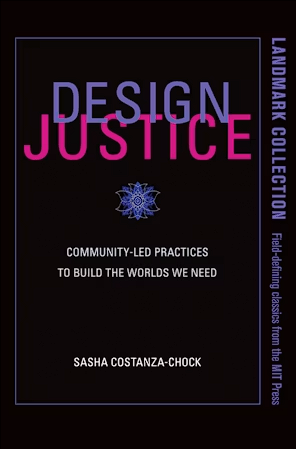
In Design Justice: Community-Led Practices to Build the Worlds We Need, Sasha Costanza-Chock challenges one of the most common assumptions in design: that good design can be universal if it is simply well intentioned.
The book argues that design processes often reproduce existing inequalities when they fail to include the people most affected by the systems, tools and environments being created. Instead of treating users as passive recipients, Costanza-Chock focuses on community-led practices and asks how design can support collective liberation, accessibility, ecological sustainability and social transformation.
For emerging designers, this is a particularly relevant book. It moves beyond the language of “design for good” and asks deeper questions: Who is involved in defining the problem? Who has decision-making power? Whose knowledge is treated as expertise? And who benefits from the final outcome?
Design Justice is valuable for students working across design, technology, architecture, social innovation and public-interest projects. It encourages young creatives to see design not only as a method for making things, but as a way of redistributing power, listening more carefully and building more responsible futures.
Update: BOA added Design Justice: Community-Led Practices to Build the Worlds We Need
BE OPEN Academy has added Design Justice by Sasha Costanza-Chock to its Bookshelf. The book explores how design can move beyond good intentions and become more community-led, inclusive and responsible, asking who defines problems, who has decision-making power and who benefits from design outcomes.
The Shape of Design by Frank Chimero
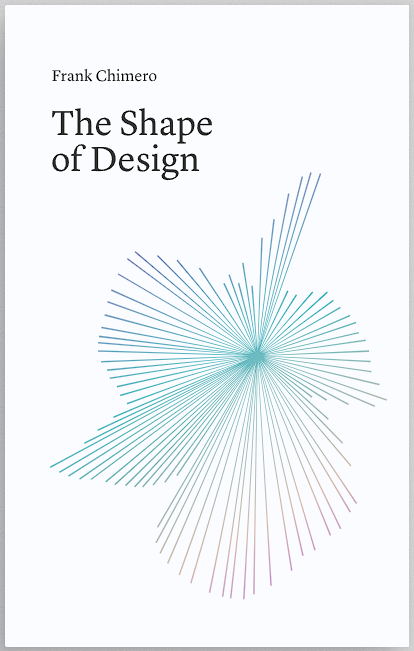
Frank Chimero’s The Shape of Design is a short and thoughtful book about the creative process, storytelling, craft and the human purpose behind making things.
Rather than focusing on technical rules, software skills or visual trends, the book asks broader questions about what design is for. How do ideas take shape? How do designers make decisions? Why do stories matter? What makes creative work meaningful to other people?
Accessible, reflective and beautifully written, The Shape of Design is especially useful for students and young creatives who are still developing their own professional language. It encourages readers to think about design as a way of creating relationships between people, objects, ideas and experiences.
This BE OPEN Pick is a valuable companion for anyone beginning a creative path. It reminds us that design is not only about solving problems or producing attractive outcomes. It is also about attention, generosity, curiosity and the ability to give form to meaning.
Free download exhausted
Update: BOA added The Shape of Design
BE OPEN Academy has added The Shape of Design by Frank Chimero to its Bookshelf. This short and reflective book looks at the creative process, storytelling, craft and the human purpose behind design, making it especially useful for students and young creatives developing their own professional language.

The New Design Studio: Why Collaboration Will Matter More Than Individual Talent (Pt.2)
PART 2. From Collaboration to Shared Responsibility
Designing With, Not Only For
One of the most important shifts in contemporary design is the movement from designing for people to designing with them. Designing for can be generous, but it can also become paternalistic. It assumes that designers can fully understand someone else’s needs from the outside. Designing with begins from a different position: people affected by a design should have a voice in shaping it.
This is especially important when students work on social, cultural or environmental topics. A project about a neighbourhood, school, disability experience, migrant community or climate-affected region cannot be treated as an abstract brief. It requires care, humility and consent. It requires students to ask who is represented, who is missing and who has the power to define success.
Human-centred design methods help students learn from people through interviews, observation, prototyping and feedback. But the goal is not simply to extract insights. The goal is to build respectful relationships and create work that can be tested, questioned and improved by the people it concerns.
Source:
https://www.designkit.org/human-centered-design.html
Case Study: MIT D-Lab and Creative Capacity Building
MIT D-Lab’s Creative Capacity Building methodology promotes community-driven innovation. Its approach is based on the belief that people can be active creators of technology, not only passive recipients of solutions designed elsewhere. Through hands-on learning, communities develop the skills and confidence to design solutions to challenges they face.
The idea is highly relevant for design education. It shows that collaboration is not only about bringing users into a feedback session after a concept is nearly finished. It can mean sharing tools, building capability and recognising local knowledge as a source of innovation.
MIT D-Lab’s Co-Design Summits also bring diverse actors together to understand complex challenges and co-create prototypes. For students, this offers a different model of the studio: one where the designer is not the only expert, and where the value of the project includes the relationships and capacities built along the way.
Sources:
https://d-lab.mit.edu/approach/creative-capacity-building-ccb
https://d-lab.mit.edu/approach/co-design-summits
Feedback as a Design Skill
Collaboration depends on feedback, but students are not always taught how to give and receive it well. Critique can easily become personal, vague or defensive. In the future studio, feedback must become a design skill: specific, generous, honest and connected to the aims of the project.
This matters because collaborative design often involves disagreement. Different stakeholders may value different outcomes. A business partner may prioritise speed. A community group may prioritise trust. A sustainability expert may prioritise long-term impact. A designer must be able to hold these tensions without reducing them too quickly.
AI and the Collaborative Studio
Artificial intelligence adds another layer to collaboration. AI tools can help teams generate options, summarise research, visualise alternatives or compare scenarios. But they can also create confusion if teams do not agree how AI will be used, documented and evaluated.
In the collaborative studio, AI should not replace shared thinking. It should support it. Students may use AI to widen exploration, but they still need to decide which ideas are meaningful, which assumptions are problematic and which choices remain under human control. The more tools enter the process, the more important it becomes to clarify authorship and responsibility.
A future group project might include not only a design outcome, but also a collaboration map: who contributed what, where AI was used, how decisions were made and what ethical questions emerged. This kind of transparency can make collaborative work more credible.
How Portfolios Can Show Collaboration
If collaboration becomes central to design practice, portfolios will need to show it more clearly. Students often struggle to present group work because they fear their individual contribution will be unclear. The solution is not to hide collaboration, but to document it intelligently.
A strong portfolio can explain the team structure, the student’s specific role, the shared process, the moments of conflict or change, and the final contribution. It can show facilitation tools, stakeholder maps, meeting notes, prototypes, feedback sessions and reflections on what was learned from others.
What Design Schools Can Teach
Design schools can prepare students for collaborative practice by creating assignments that require more than group production: work with external partners, rotating leadership, testing with users and reflection on responsibility.
Key Takeaways for Design Students
- Treat collaboration as a design skill, not an administrative requirement.
- Learn to listen before trying to solve.
- Work with communities and stakeholders respectfully.
- Document roles, decisions, feedback and changes in direction.
- Make disagreement productive rather than personal.
- Use AI tools to support shared thinking, not to replace it.
- Show your contribution to team projects clearly in your portfolio.
- Remember that facilitation, communication and trust-building are creative acts.
- Understand that complex problems need many forms of intelligence.
- Move from designing for people to designing with them.
Looking Ahead
The future design studio will not be a room where individual talent competes for attention. It will be a space where different forms of knowledge meet: human experience, technical expertise, cultural memory, environmental awareness, business reality and creative imagination.
For students, this is an opportunity. Collaboration does not make the designer less important. It makes the designer’s role more demanding and more valuable. The designer becomes a facilitator of possibility, a translator between worlds and a guardian of meaning.
In a world of complex challenges, the strongest design work will not always come from the loudest individual voice. It will come from the clearest shared understanding.
Update: BOA added 5 video tutorials for Graphic Design by YanSculpts
BOA added 5 video tutorials for Graphic Design by YanSculpts
Update: BOA added 5 new online courses in Web and Game Development from eTrain
BOA added 5 new online courses in Web and Game Development from eTrain