




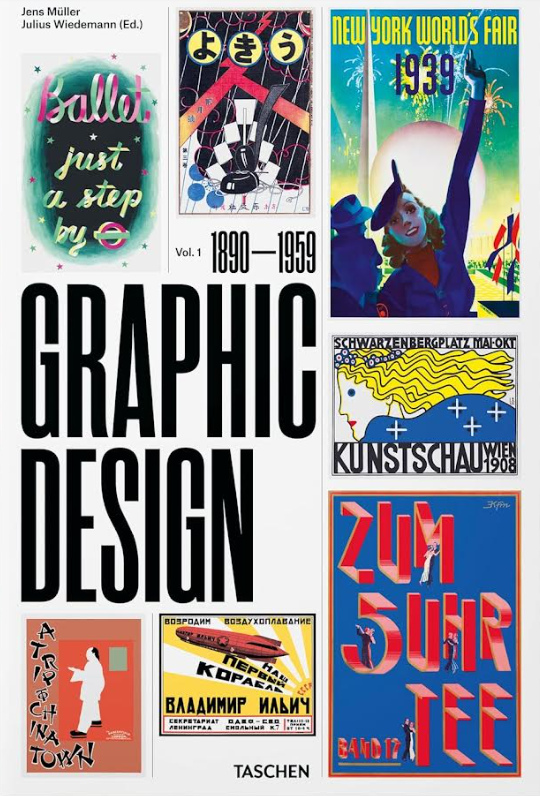
The History of Graphic Design: 1890-1959 by Jens Müller, Julius Wiedemann

The History of Graphic Design 1890-1959

This book is an in-depth history of graphic design from the end of the 19th century to the ’50s. It traces the evolution of this creative field from its beginning as poster design to its further development into advertising, corporate identity, packaging, and editorial design. Organized chronologically, the volume features over 2,500 seminal designs from all over the world, 71 of which are profiled in detail besides 61 leaders in the field, including Alphonse Mucha (chocolate advertisements), Edward Johnston (London Underground logo and typeface), El Lissitzky (constructivist graphics), Herbert Matter (photomontage travel posters from Switzerland), Saul Bass (animated opening titles), and A. M. Cassandre (art deco posters).

Author Jens Müller curates the standout designs for each year alongside a running sequence of design milestones. Meanwhile, in his introductory essay, David Jury situates graphic design from its point of origin in early printing, engraving, and lithography to striking creative developments in the 19th century. Each consecutive decade is then prefaced by a succinct overview as well as a visual timeline, offering a vivid display of the variety of graphic production in each decade as well as the global landscape which it at once described and defined.

As we move on from and reflect upon the 20th century, this first volume examines the foundations of what would influence some of the fastest-changing creative fields. Combined with Volume Two—which spans from the 1960s until today—the tomes offer the most comprehensive exploration of graphic design to date and a long-overdue recognition of its enormous contribution to economics, politics, social causes, the arts, media, and the way we see the world.

Find out more about The History of Graphic Design: 1890-1959 by Jens Müller, Julius Wiedemann →

GLOBAL SOCIO-CULTURAL FUTURES

GLOBAL SOCIO-CULTURAL FUTURES

“Global Socio-Cultural Futures” is the second Course in the series on Global Systems designed for individuals and organisations committed to facing global challenges and finding solutions.

Course Content includes 12 Lessons across 3 Modules:

  1. City Futures
  2. Human Futures
  3. Educational Futures

There are two lessons in each, examining the challenges, and addressing the alternatives. This self-paced, web-based Course is incredibly well researched to give you a deep understanding of our emerging world and provides a solid basis for you to build your personal, professional, and family futures.

Why you should take this course:

  • Learn from Professor Jennifer Gidley’s valuable expertise gained from 30 years’ experience as an international futures consultant at the highest levels of global thinking into the complexity and wide impacts of Climate Crisis, Energy Systems and Ecosystem collapse
  • You will learn about rapid urbanisation and its social, cultural and environmental stresses; entrenched socio-cultural issues such as racism, gender inequality, and loss of meaning; and why the factory model of schooling is obsolete
  • Be empowered to imagine, design and create social and cultural innovations such as ecological and smart cities; social and cultural practices that are empowering, equitable, inclusive, and meaningful; and educational approaches that are creative, evolutionary, integral, and transformative
  • Learn how solutions offered align with the UN Sustainable Development Goals (SDGs)
  • Receive a Certificate of Completion (Global Socio-Cultural Futures)
  • Continuing Professional Development (CPD) – 30 Points

To enroll, please contact info@beopenfuture.com

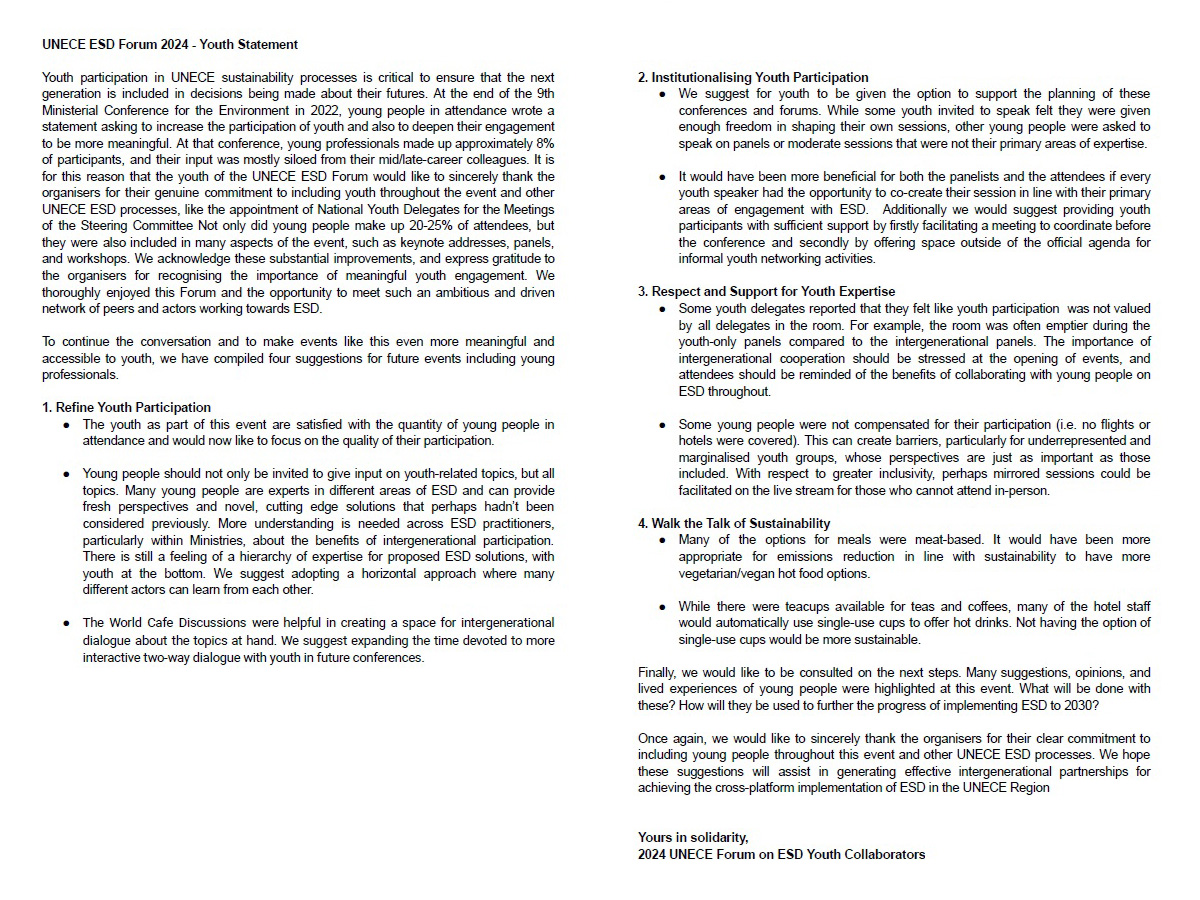
The Youth Statement issued by the UNECE ESD Forum and the MED9 Forum captures the key contributions and perspectives of the young delegates


The UNECE ESD Forum and the MED9 Forum issued the Youth Statement, which captures the key contributions and perspectives of the young delegates, whose presence and active engagement were crucial during the special sessions. Their insights and energy provided a unique and vital perspective to the discussions, highlighting the importance of youth involvement in shaping a sustainable future..

The outcomes of these forums will play a significant role in shaping the discussions at the Summit of the Future, ensuring that the voices and ideas shared will have a lasting impact.

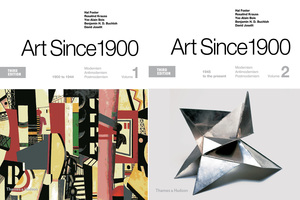
Art Since 1900 By Hal Foster, Rosalind Krauss, Yve-Alain Bois, Benjamin H. D. Buchloh, David Joselit

Art Since 1900

Volume 1: 1900 to 1944;
Volume 2: 1945 to the Present

By Hal Foster, Rosalind Krauss, Yve-Alain Bois, Benjamin H. D. Buchloh, David Joselit

Five of the most influential and provocative art historians of our time have come together to provide a comprehensive history of art in the twentieth and twenty-first centuries.

Art Since 1900 introduces students to the key theoretical approaches to modern and contemporary art. A flexible year-by-year structure and extensive cross-referencing allow teachers and students to pursue a chronological approach and/or to study the currents of art since 1900 by medium, theme, country, or region. This completely updated and expanded third edition contains over 125 essays, each focusing on a crucial event in the history of art from 1900 to the present. Ten new essays cover subjects such as Moscow conceptualism, abstract film, postmodern architecture, and queer art, as well as artists from emerging economies and the impact of the market on current art practice.

Text boxes provide further information on key figures and issues. Five introductions explain the different methods of art history at work in the book. There are two roundtable discussions between the authors, and all reference material has been updated.

Find out more about Art Since 1900 By Hal Foster, Rosalind Krauss, Yve-Alain Bois, Benjamin H. D. Buchloh, David Joselit →

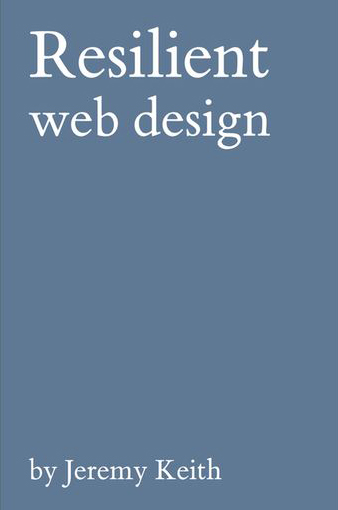
Resilient Web Design

Author: Jeremy Keith

The cardinal sin of many web design books is that they give you coding and tools, but no hands-on advice. That’s where the Resilient Web Design ebook is different. It’s not about the elements you use in this art; it’s about how you use them and the many different approaches that you may choose to take.

In short, Keith will take you through each of them one carefully crafted idea at a time. You also get treated to a historical overview of web design and how very rapidly it has changed in recent years. The notion is that you may use this in-depth knowledge to inform your own projects in the future.

Free download →

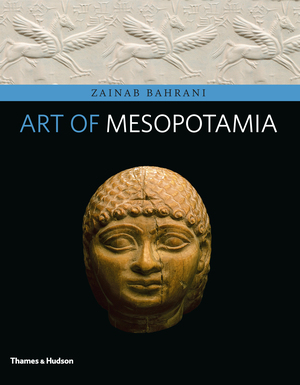
Art of Mesopotamia

Art of Mesopotamia

Author: Zainab Bahrani

This expert guide to the art of Mesopotamia, spanning more than 8000 years, is especially important as this ancient cultural legacy is threatened by contemporary conflict.

Mesopotamia is considered the cradle of Western civilization, and the diverse societies that flourished there, nestled around the Tigris and Euphrates rivers, were as culturally rich as this attribution would suggest. Spanning a significant historical period, from 8000 BCE to the arrival of Islam in 636 CE, Art of Mesopotamia explores spectacular structures and objects, as well as the techniques artists used, in order to gain insight into the beliefs and practices of ancient peoples. The volume also introduces the archaeologists who discovered these sites more than a thousand years later.

Richly illustrated with more than 400 full-color photographs, Art of Mesopotamia is an astounding record by award-winning author Zainab Bahrani of artworks from this region, many of which have in recent years been damaged or destroyed by war, and as such is of particular and lasting importance. It includes the most up-to-date scholarship and reflects significant new approaches to Mesopotamian art over the past few decades.

Find out more about Art of Mesopotamia →