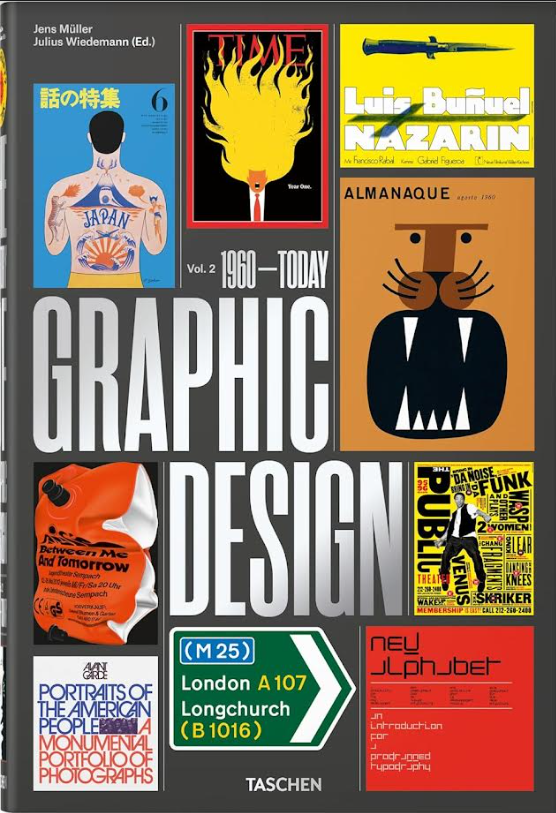
The History of Graphic Design 1960-Today by Jens Müller, Julius Wiedemann

The History of Graphic Design 1960-Today

Through the turbulent passage of time, graphic design with its vivid, neat synthesis of image and idea has distilled the spirit of each age. Surrounding us every minute of every day, from minimalist packaging to colorful adverts, smart environmental graphics to sleek interfaces: graphic design is as much about transmitting information as it is about reflecting society’s cultural aspirations and values.

This second volume rounds off our in-depth exploration of graphic design, spanning from the 1960s until today. About 3,500 seminal designs from across the globe guide us in this visual map through contemporary history, from the establishment of the International Style to the rise of the groundbreaking digital age. Around 80 key pieces go under the microscope in detailed analyses besides 118 biographies of the era’s most important designers, including Massimo Vignelli (New York subway wayfinding system), Otl Aicher (Lufthansa identity), Paula Scher (Citibank brand identity), Neville Brody (The Face magazine), Kashiwa Sato (Uniqlo brand identity), and Stefan Sagmeister (handwriting posters).

This collection of important graphic works represents a long-overdue reflection on the development of a creative field constantly changing and challenging itself. These key pieces act as coordinates through contemporary history, helping us trace the sheer influence of graphic design on our daily lives.

Find out more about The History of Graphic Design 1960-Today by Jens Müller, Julius Wiedemann →

The Benefits of Design Education: Unleashing Creativity and Innovation (Pt.2)

The Benefits of Design Education: Unleashing Creativity and Innovation (Pt.2)

Enhancing Creativity and Critical Thinking

Creativity lies at the heart of design education. It encourages students to think outside the box, explore new possibilities, and challenge conventional norms. By engaging in design projects, students learn to identify problems, analyse them from different perspectives, and generate innovative solutions. This process nurtures their creative thinking abilities and enables them to approach challenges with fresh insights.

Design education also cultivates critical thinking skills. With an A-level tutor, students learn to evaluate design choices, justify their decisions, and consider the implications of their work. They develop a keen eye for detail, honing their ability to spot potential issues and refine their designs accordingly. This critical mindset fosters a sense of quality and excellence, enabling designers to deliver impactful solutions.

Fostering Collaboration and Communication

In our fast-paced and interconnected world, the ability to collaborate and communicate effectively has become more crucial than ever before. And when it comes to design education, these skills take centre stage. Design students are taught the fundamental principles of their craft and encouraged to work in multidisciplinary teams, simulating real-world design scenarios. This collaborative approach not only enhances their learning experience but also prepares them for the dynamic nature of the design industry.

One of the key benefits of collaborative projects is the exposure they provide to diverse perspectives. By working with individuals from different backgrounds and areas of expertise, students gain a deeper understanding and appreciation for other viewpoints. This exposure broadens their horizons and encourages them to think beyond their perspectives, ultimately fostering creativity and innovation in their design process. It’s like brainstorming with people who bring unique ideas and insights.

However, collaboration is not just about working together; it’s also about effective communication. Design students quickly learn that expressing their design ideas clearly and articulately is essential. They must present their work to their peers and instructors, explaining their thought processes and the rationale behind their design choices. This communication aspect of design education is crucial because it helps students develop the necessary skills to convey their ideas and receive valuable feedback.

The iterative feedback process during collaborative projects is invaluable to design students. By receiving feedback from their peers and instructors, they gain fresh perspectives on their work, identify areas for improvement, and refine their designs accordingly. This feedback loop ensures that their final plans meet the needs and expectations of the intended audience. It also encourages them to think critically and analytically about their work, leading to constant growth and development as designers.

Practical communication skills are particularly vital in design professions. Designers often collaborate with clients, stakeholders, and colleagues throughout their careers. The ability to effectively communicate their design concepts, explain design choices, and understand the needs and expectations of different stakeholders is paramount. By honing their communication skills during their design education, students are better prepared to navigate these professional interactions confidently and clearly.

Empowering User-Centric Design

Design education places a strong emphasis on user-centricity. Students are taught to deeply understand the end-user’s needs, desires, and motivations. By conducting user research and usability testing, they gain insights into user behaviours and preferences, enabling them to create products and services that resonate with their target audience.

This user-centric approach leads to the development of products and experiences that are intuitive, delightful, and meaningful to users. It enhances user satisfaction, fosters brand loyalty, and drives business success. Design education equips students with the tools to bridge the gap between technology and human needs, resulting in solutions that truly make a difference in people’s lives.

Driving Innovation and Problem-Solving

Design education plays a crucial role in driving innovation across industries. Encouraging students to explore and experiment ignites their curiosity and helps them discover unique solutions to complex problems. Design thinking, a necessary methodology taught in design education, empowers students to approach challenges systematically and creatively.

Designers are trained to identify opportunities, redefine problems, and ideate potential solutions. They learn to prototype and iterate on their ideas, gathering feedback and continuously refining their designs. This iterative process encourages a culture of innovation, where failure is seen as a stepping stone to success.

Furthermore, design education equips students with the skills to tackle societal challenges. From sustainable design practices to addressing social issues, designers can create positive change. By embedding ethical considerations and sustainability principles into their work, designers contribute to a more equitable and sustainable future.

Written By Stuart Crawford

The Benefits of Design Education: Unleashing Creativity and Innovation (Pt.1)

The Benefits of Design Education: Unleashing Creativity and Innovation (Pt.1)

Welcome to the intriguing world of design education, a field that beautifully blends creativity with practicality and imagination with technology. “The Benefits of Design Education: Unleashing Creativity and Innovation” will enlighten you about the significant role of design education in shaping innovative minds and fuelling modern society’s growth.

Design isn’t just about aesthetics, or as the adage goes, “making things look pretty.” It’s a lot deeper and profoundly impactful than that. It’s a way of thinking, problem-solving, and, quite frankly, a way of living. The bridge connects the abstract world of ideas with the concrete world of products, services, and experiences. And this is where design education plays a pivotal role.

Design education is akin to a magic wand that helps students unleash their creativity and innovation, preparing them for the increasingly complex and demanding world. In 2021, a study published in the Journal of Engineering Design emphasised that students who took design courses exhibited a 28% increase in creative problem-solving skills compared to those who did not. This data speaks volumes about the undeniable connection between design education and innovation.

Moreover, a research study conducted by the Design Management Institute revealed that design-led companies outperformed the S&P Index by an astounding 211% over a decade. These companies, like Apple, IBM, and Nike, realised the potential of design thinking, making it an integral part of their strategy and fostering a culture of innovation.

Our journey in the following chapters will uncover how design education encourages out-of-the-box thinking, nurtures empathy, boosts problem-solving skills, and stimulates technological understanding. Doing so not only enhances individual growth but also shapes how we interact with the world, influencing society.

So, buckle up as we dive into the benefits of design education and its profound impact on fostering creativity and innovation. Whether you are a student, educator, or professional, a wealth of knowledge awaits you in the coming chapters, ready to spark a new perspective on design and its transformative power. Together, let’s explore the wonders of design education!

Introduction

Design education is an exciting realm that covers a wide range of disciplines, from graphic design to industrial design, fashion design, architecture, and much more. It’s not just about mastering the technical aspects of these fields; it’s a journey that encourages critical thinking, sparks creativity, and fosters collaboration.

When you delve into design education, you quickly realise it’s about more than just learning how to use design tools or mastering specific techniques. It’s about developing holistic skills to approach problems from different angles, develop innovative solutions, and create meaningful experiences.

Design students are immersed in hands-on projects that challenge them to think deeply about user needs and preferences. By understanding the people they are designing for, they can create products, services, or experiences that truly resonate. It’s all about empathising with users and gaining insights into their desires, aspirations, and pain points.

In addition to understanding users, design education teaches students about aesthetic principles. It’s not just about making something visually pleasing; it’s about understanding how design elements like colour, shape, typography, and composition can evoke emotions and communicate messages effectively. Aesthetics capture attention, create a memorable experience and influence behaviour.

But design education doesn’t stop there. It also emphasises the iterative design process, where students learn to refine and improve their work through constant feedback and iteration. Designers rarely create a perfect solution immediately; it’s a journey of continuous improvement. This iterative approach encourages students to be open to feedback, learn from failures, and refine their ideas until they reach a satisfactory outcome.

Moreover, collaboration is a cornerstone of design education. Designers rarely work in isolation; they thrive in multidisciplinary teams where diverse perspectives and expertise come together. Collaborative projects allow students to develop essential communication, negotiation, and teamwork skills. Through cooperative efforts, designers learn to leverage each team member’s strengths and create outcomes more remarkable than the sum of their parts.

Written By Stuart Crawford
Context In eLearning: 6 Tips to Help Online Learners Contextualize

Context In eLearning: 6 Tips to Help Online Learners Contextualize

The Importance of Context in eLearning and How to Help Online Learners Contextualize

Building context is essential in eLearning. You can spend hundreds of hours building an eLearning course packed with features, clear navigation, and visual cues. All will be for naught if you haven’t considered the online learner’s perspective. Fail to analyze your audience and you could be pitching the detail too high, or even too low. You risk disengagement if online learners don’t understand why they are expected to absorb this information. If they can’t see how the eLearning course is relevant to their role, they will simply not engage. Building context from the first communication is vital in motivating your online learners.

Putting Learning in Context

Context is what provides the framework for the training. Why is this information important to the online learner? How is it meaningful? How will it help them and what value will it bring? Develop your eLearning course from a perspective that helps your online learners understand how it will help them improve. To develop a context in eLearning, you must connect the learning with an individual’s values, interests, motivations, and attitudes. This is more difficult when you are teaching a complex or technical topic. Searching for the real-life impact of gaining technical knowledge is the key to unlocking the online learner’s motivation. Help your online learner to really care about the subject by giving them a story they can relate to. Provide something to which they can make an emotional connection.

6 Tips to Help Online Learners Contextualize Information

The real key to setting the context in eLearning is storytelling and branching scenarios. Put your online learners in the picture, allow them to feel that the training is central to their role. Let them see how they as individuals fit in with the branching scenario. Then show how it will, in turn, improve their own experiences. While developing your eLearning course, bear in mind how it will engage and motivate online learners. They should see the eLearning course as an essential part of their personal development, a part they are keen to fulfill. Follow these 6 tips to help online learners to understand the context for their learning journey.

1. Analyze Your Audience

Take the time to understand your audience. You need to appreciate their perspective. This could include prior knowledge (or lack thereof), and any experience with eLearning. Make sure you consider demographics like diversity, language, and culture. It’s also wise to factor in their work duties and tasks to create resources that resonate with them on a personal level. Conduct surveys and focus groups to learn as much as you can about their needs and expectations.

2. Collect Online Learner Feedback

Gather as much feedback during the development stage as possible. Involve online learners early and often. They will be able to guide you to assess important aspects of the eLearning course, such as whether learning objectives are being met, if eLearning content is meaningful, etc.

3. Incorporate Self-Guided Study

Allow for gaps in knowledge by providing links to further reading, online resources or Subject Matter Experts. Give online learners access to an appropriate forum for social learning, so that they can learn from their peers. Allow them to ask questions and receive helpful answers. You can also invite them to host their own live events or forums to summarize the key concepts. Thereby, contextualizing the information and improving eLearning content comprehension for others.

4. Clarify Learning Objectives

Set out learning objectives and goals from the outset and link to them throughout. This will help online learners to understand how the eLearning course relates to their everyday role. It will be a powerful motivator to engage with the eLearning course. Add functionality to track individual progress; learning paths, progress bars and badges all help keep online learners interested.

5. Provide Real-World Examples

Real-world examples, case studies, and personal anecdotes evoke emotion and tie the subject matter into real-world situations. For instance, customer service employees can see how certain skills help them on the job. Thus, they’re more likely to actively participate, knowing that it will benefit them in the workplace. The key to creating contextual examples is to use characters online learners can relate to. It’s also crucial to explore the ‘why’ behind their motivations and actions. For instance, the reason why the character performs the task in a certain way.

6. Create Simulations to Put Knowledge into Practice

Simulations are all about immersing online learners in virtual environments that mimic the real world. As a result, they’re able to apply what they’ve learned in a practical context. Ensure that your simulations feature relatable situations, characters, and challenges to enhance the engagement. You should also encourage online learners to reflect on the eLearning activity after the fact to improve understanding. For instance, what might they do differently in real life to fix their simulated mistakes? Which obstacles or problems will they be able to tackle with their newfound knowledge? Reflection allows them to connect the eLearning experience to their personal goals and gaps.

Having context in eLearning can be summarized as creating an environment that is familiar to online learners. It should show them what they, individually, will gain from the eLearning course. It recognizes the online learner’s background and their perspective on the eLearning experience. Providing context in eLearning unlocks the motivation and gives them a reason to connect with the eLearning course. eLearning content with no consideration for context will fail to engage an online learner on an emotional level. Topics which are heavy on technical terms, such as legal or compliance courses, must be especially aware of this risk. Above all else, remember that completion of an eLearning course is rarely the goal. Provide context in eLearning and you will drive engagement, connection, and behavior change.

Evoking positive emotions in online training plays a pivotal role in increasing employee engagement and motivation. Read the article 8 Tips To Foster Emotional Connectivity in Online Training to discover how to make online training personal and foster emotional connectivity in online training.

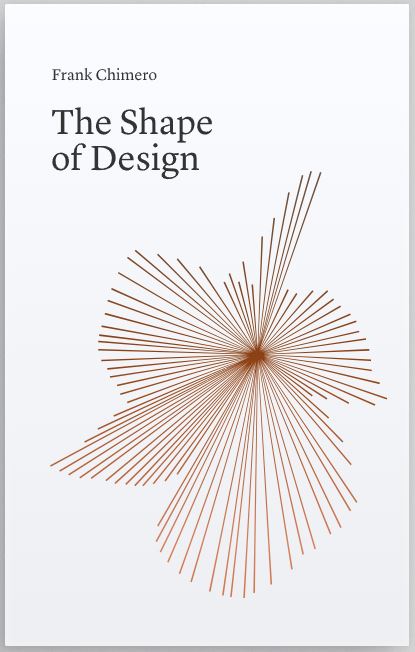
The Shape of Design

Author: Frank Chimero

The Shape of Design is a short, accessible book about the creative process and the intersection of storytelling, craft and improvisation. The Shape of Design is a map of the road where we dance rather than a blueprint of it. It strives to investigate the opportunities of exploring the terrain, and it values stepping back from the everyday concerns of designing. … If you’ve read Frank Chimero’s essays or watched his talks online, you’ll recognise many of the ideas collected here. I’ve spent a year reading, re-reading, highlighting and annotating this book, and I’m sure I’ll keep coming back to it. If you work in design or a related field, and you think about what your work means and where it fits in the world, give this book a read.

The Shape of Design is a short, accessible book about the creative process and the intersection of storytelling, craft and improvisation. It strives to investigate the opportunities of exploring the terrain, and it values stepping back from the everyday concerns of designing. It attempts to impose a meaningful distance in order to patterns in the work and assess the practice as a whole. One can observe, from this distance, two very fundamental things about design that are easy to miss in the midst of all of this movement. First, design is imagining a future and working toward it with intelligence and cleverness. We use design to close the gap between the situation we have and the one we desire. Second, design is a practice built upon making things for other people. These two things dictate our relationship to the world and our bond to one another. They form the foundations of the design practice, so our work should revolve around these truths.

Free download →

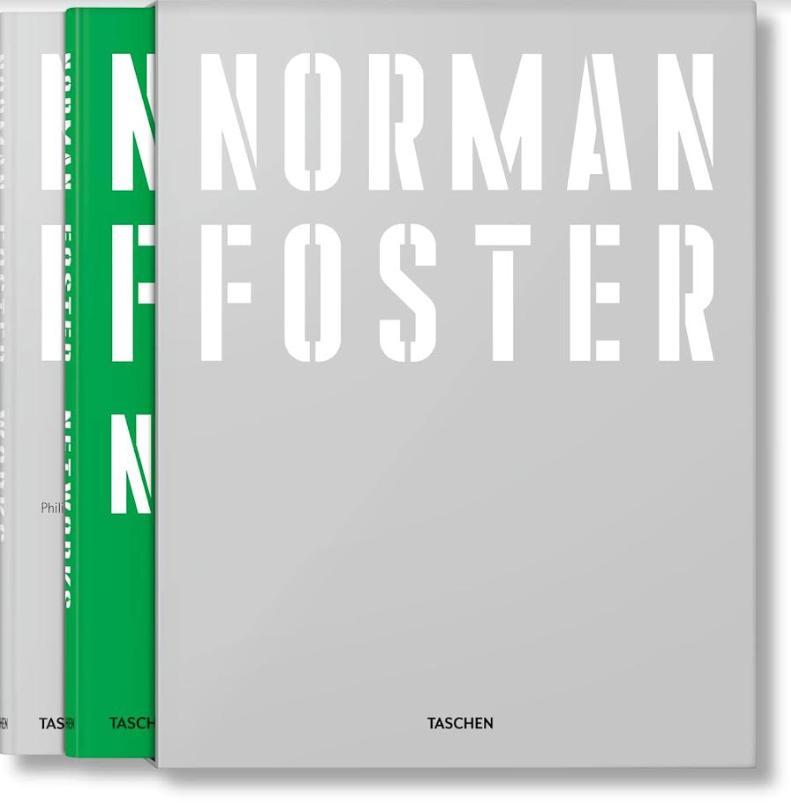
Norman Foster: Net Works / Works

Norman Foster: Net Works

Author: Philip Jodidio
Illustrator: Norman Foster

With a career spanning across continents and over six decades, the work of the renowned architect Norman Foster is nothing short of extraordinary. His creative innovation and holistic approach have made him one of the world’s most influential and well-known architects. From the Apple Park campus in Cupertino, California, to the Reichstag in Berlin, the enclosed court of the British Museum in London to the Millau Viaduct in France, with his practice of Foster + Partners, he has created celebrated landmarks that stand out for their inventive modernity and for what he calls “a sustainable approach to the design of the built environment.”

This is the first time Foster’s complete body of work has been published in one edition on such a grand scale. Giving a rare insight into the inner workings of his creative practice. It details his personal approach to his work, his inspirations, the link between art and architecture, and the significance and correlation between his passions, such as being an avid aviator, and his work.

The XXL monograph encompasses a lifetime of achievement and originality in two volumes. The first presents his architectural œuvre and is filled with numerous unpublished images and sketches handpicked by Foster from his archives. Paired with nearly 1000 illustrations, the second book contains eight essays he wrote explaining his sources of inspiration.

Aside from the 1999 Pritzker Prize, he has won the American Institute of Architects Gold Medal for Architecture, the Royal Gold Medal for Architecture, and the Gold Medal of the French Academy of Architecture. This is a magnificent visual journey not only through significant buildings of our time but also into the mind of a genius. Norman Foster sketched every page of this book and spent countless hours with the author and the graphic designer to make it one of the most remarkable architecture books ever published.

Also available as an Art Edition of 300 copies with a 1-meter-wide signed print of a drawing by Norman Foster, picturing the upcoming multifunctional community and business center InnHub in La Punt, Switzerland. The two volumes of this edition are collected in a custom-designed slipcase that folds into a book stand.

Find out more about Norman Foster: Net Works / Works →