



Update: BOA added 5 new online courses in Architecture and Interior Desing offered by EduCBA and EdNext
Blueprints: How Mathematics Shapes Creativity by Marcus du Sautoy

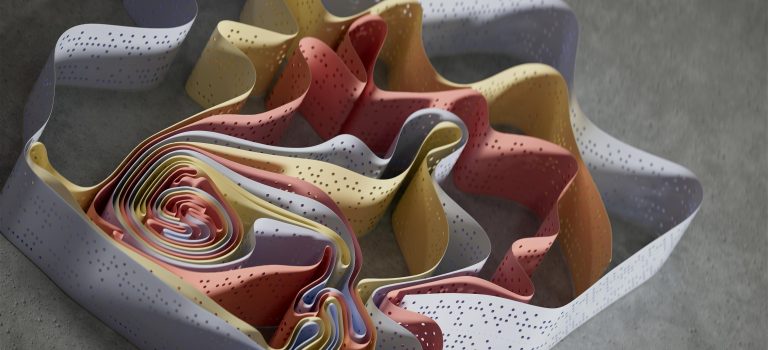
When Shakespeare has the Three Witches cast Macbeth’s lot, he uses something very weird to do it: not simply “eye of newt and toe of frog,” but the number seven. And when Hamlet claims, “To be or not to be, that is the question,” Shakespeare reaches for eleven. For Shakespeare, prime numbers were magical. And he is not alone.
As Marcus du Sautoy showcases in Blueprints, creativity is inseparable from mathematics. The designs of Le Corbusier and Leonardo; the music of Glass, Bach, and Debussy; the wild visions of Dali, the choreography of Laban, the animation of Pixar—all are shot through with mathematics, from primes and fractals to the weirder worlds of Hamiltonian cycles and hyperbolic geometry. And Du Sautoy argues that the relationship runs both ways. Just as mathematics inspires new art, the artistic mindset is a necessity for discovering new mathematics.
Find out more about Blueprints: How Mathematics Shapes Creativity by Marcus du Sautoy →

The Renaissance of Expression: Mapping Modern Education Trends in Art Education (Pt.2)
Distributed Studio Sprints and Global Cross-Cultural Collaboration
The globalization of art education enables the rise of highly distributed student syndicates that operate completely outside traditional geographic and socioeconomic boundaries. In the legacy university model, cross-cultural artistic exchanges were expensive privileges reserved exclusively for a small subset of wealthy students who could manage international travel fees and institutional exchange programs. Cloud-native collaborative environments entirely dissolve these geographic limits, enabling synchronous design sprints where international student teams solve complex creative challenges across multiple time zones simultaneously.
These distributed student cells form independent creative collectives, delivering complex visual, social, and structural solutions to global commercial clients through structured micro-internship networks. For instance, a remote student team combining a digital illustrator in Warsaw, a multimedia artist in Seoul, and an interaction designer in Nairobi can unite to develop a public awareness campaign for a major global humanitarian organization. The team collaborates seamlessly inside shared cloud workspaces, utilizing automated vector boards, real-time spatial engines, and mutual feedback channels to refine the creative layout without ever meeting in physical space.
This active framework completely replaces the traditional academic thesis project with a series of verified, real-world social and commercial outcomes. Students are evaluated not by a rigid local academic committee reading a theoretical essay, but by the tangible functionality of their delivered solutions and the feedback of their global clients. This high-accountability environment prepares future visual artists for the realities of the modern distributed workforce far better than a legacy classroom environment ever could. By the time these designers complete their alternative educational journey, they possess an international portfolio of commercial work, completely bypassing the entry-level hiring bottlenecks that traditional university graduates face.
The Whole-Career Subscription Model and Continuous Technical Retraining
The rapid velocity of technological innovation means that any technical skill set acquired at the start of a creative career faces an increasingly short shelf life. In the modern design landscape, the concept of a “completed education” is an obsolete relic of the industrial age. Design professionals can no longer rely on a front-loaded package of knowledge to carry them through a forty-year career. To survive in this volatile market, designers are transitioning to a whole-career subscription model, where continuous retraining is woven directly into the fabric of their daily work routines.
Elite digital learning platforms operate as subscription-based utilities that designers pay for monthly or annually to secure perpetual access to updated technical tracks, advanced tooling tutorials, and peer-to-peer mentorship networks. These platforms deploy machine learning algorithms to continuously analyze a subscriber’s professional output and highlight emerging skill gaps. For example, if an artist’s digital portfolio indicates a lack of experience with new generative engine tools, the platform automatically suggests a targeted, 10-hour micro-credential module to bridge that specific gap.
This continuous retraining loop ensures that design professionals remain ahead of market transformations, mastering new software systems and compliance standards as soon as they emerge. It also changes the role of the educator from a static lecturer into an active mentor who guides students through complex problem definitions and ethical considerations. The classroom is no longer a physical room inside a university; it is a global, persistent digital network that supports the designer through every stage of their professional life. This continuous educational model renders the traditional, discrete four-year degree completely obsolete, ensuring that a designer’s credibility is measured by their current capacity to innovate rather than a historic university credential.
Conclusion: The Strategic Democratization of Creative Problem Solving
The fall of the institutional monopoly in design disciplines represents a necessary step forward for the global creative economy. By dismantling the centralized gatekeeping systems of traditional academia, the industry is transitioning into a democratic, merit-based ecosystem where talent is celebrated regardless of wealth or geography. The rise of alternative credentials, industry-led corporate academies, portfolio-first hiring playbooks, and continuous retraining subscriptions allows anyone with an internet connection to access world-class design knowledge. This shift changes the role of the designer from a visual decorator into a critical systems strategist who is uniquely equipped to tackle complex global challenges.
For global corporate enterprises, municipal planning boards, and technology organizations, the fall of the university monopoly provides an unprecedented opportunity to tap into a highly diverse pool of global talent. True innovation is no longer confined to the design studios of elite Western institutions; it is happening inside distributed cloud networks, decentralized peer-to-peer academies, and open-source project repositories worldwide. Investing in these alternative learning frameworks ensures that our future infrastructure, digital platforms, and consumer products are designed by professionals who possess verified technical skills and exceptional real-world agility. Ultimately, the forecast for online design and architecture education promises a world where creative problem solving is fully democratized, ensuring that the power to shape our environment belongs to anyone with the drive, execution speed, and systemic vision to build a better future.
Update: BOA added 6 free video tutorials offered by Howard Pinsky
Comrades in Art. Artists Against Fascism 1933-1943 by Andy Friend, Frances Spalding

From the Great Depression to World War II, the lives and work of British artists intersected with a world in crisis. A compelling group biography, Comrades in Art explores the political forces that shaped the development of modern art in Britain, tracing how artists set aside aesthetic differences to mobilize on an unprecedented scale to resist fascism and campaign for cultural freedom and democracy.
Featuring some of the best-known names in British, European, and American art, such as Barbara Hepworth, Paul Nash, David Bomberg, Pablo Picasso, Oskar Kokoschka, Henry Moore, Stuart Davis, and Diego Rivera, Comrades in Art explores the lives of its diverse and talented protagonists. Taking the first ten years of the Artists International Association (AIA) as his point of focus, author Andy Friend brings to life the captivating drama of the organization as it rapidly grew to attract the support of a majority of Britain’s aspiring and established artists, offering new insights into art and culture during this decade of political extremes. By situating the AIA within a global context, and uncovering connections with Moscow, New York, Paris, Barcelona, and elsewhere, including the New Deal Federal Art Project, this impressive work of research and scholarship is a revealing read for anyone seeking to understand the dynamic interplay of politics and art during one of the most turbulent periods in modern history.
The Landscape Painter’s Workbook: Essential Studies in Shape, Composition, and Color (Volume 6)

Written by celebrated landscape artist, instructor, and author Mitchell Albala, this richly informative and beautifully illustrated volume leads you step by step through his approach to the genre, from establishing a composition using basic shapes to applying time-tested color strategies, with all-new lessons, practical exercises, and special topics,
Free download exhausted

The Renaissance of Expression: Mapping Modern Education Trends in Art Education (Pt.1)
Introduction: The Fluid Dematerialization of Creative Pedagogies
The contemporary landscape of art education is experiencing a profound paradigm shift that challenges the historical foundations of creative training. For over a century, formal arts pedagogy was anchored strictly inside physical studio spaces, reliant on traditional media like charcoal, oil paints, and clay. This long-standing framework operated on a linear, master-apprentice model where success was judged by structural accuracy, material mastery, and adherence to established classical aesthetics. However, the modern intersection of digital technologies, shifting socioeconomic demands, and cross-disciplinary market industries has dismantled these rigid institutional boundaries. Today, art education is no longer an isolated pursuit of fine craft; it has transformed into a fluid, hyper-connected laboratory of systemic creative expression.
This comprehensive evolution aligns directly with international educational frameworks established by UNESCO, which champion the integration of flexible, modern competencies into core creative curricula. By transforming the contemporary classroom into a multidisciplinary sandbox, modern art education is opening its doors to an incredibly diverse global student cohort. Students are no longer trained to look backward toward historic European techniques exclusively; they are encouraged to look forward, exploring how human emotional expression interfaces with technological infrastructure. The ultimate destination of this ongoing transformation is the cultivation of a deeply strategic creative class capable of deploying visual language to solve complex global narratives.
The Integration of Hybrid Skill Sets: Blending Code, Data, and Fine Art
The primary trend redefining modern art education is the radical dismantling of legacy fine arts departments in favor of hybrid, multi-media curricula. Top-tier creative institutions are systematically replacing isolated printmaking and sculpture silos with integrated classrooms that combine digital literacy, creative coding, and data visualization alongside classical studio techniques. Students are trained to understand that contemporary creative expression requires fluency across both physical and digital media. A modern painting student might spend their morning mastering oil glazing techniques and their afternoon using processing scripts or creative coding languages to generate algorithmic light overlays.
This cross-pollination of skills creates what industry experts call the “T-shaped creative practitioner”—an individual with a deep, specialized knowledge of a core artistic discipline paired with broad, collaborative literacy in emerging technological fields. Curriculums now incorporate advanced data science modules, instructing students on how to transform complex statistical data fields into immersive visual narratives and abstract artistic installations. This method forces future visual artists to treat data not as a cold, analytical corporate product, but as a vibrant, malleable creative medium. By teaching artists to analyze, interpret, and visually challenge quantitative data structures, modern faculties are positioning their graduates at the very forefront of digital media, interactive experience design, and human-computer interface development.
Furthermore, this hybrid educational approach shifts the nature of critique inside the art studio by introducing new parameters for creative validation. Student portfolios are no longer evaluated solely on the basis of physical composition, color harmony, or raw manual precision. Instead, professors and peer juries evaluate submissions based on systemic concept development, interactive user engagement, and structural multi-media performance. A student’s work might combine traditional hand-woven textiles with embedded biometric sensors that adjust digital ambient soundscapes based on the viewer’s heart rate. This blend of craft and code prepares visual artists to thrive within modern creative economies where tech conglomerates, public cultural institutions, and global design agencies require absolute cross-disciplinary agility.
The Rise of Industry-Vetted Corporate Academies and Alternative Credentials
As traditional higher-education institutions struggle with high tuition costs and sluggish administrative update cycles, alternative credentialing frameworks are quickly gaining market dominance. The global digital education market is projected to expand exponentially toward the year 2030, heavily driven by alternative creative learning channels and specialized corporate training networks. Students are increasingly bypassing formal four-year fine arts degrees, which frequently saddle graduates with long-term financial debt without offering clear avenues to professional stability. Instead, they are routing their personal capital toward agile micro-credentials, industry-led short courses, and localized studio residencies.
To meet this clear demand for agile learning pathways, global creative agencies and multinational technology enterprises are launching their own targeted art academies. These industry-led initiatives bypass abstract academic theory to focus entirely on high-utility capabilities optimized for immediate integration into fast-paced commercial production pipelines. For example, digital entertainment giants and animation studios build intensive, online micro-academies that function as hyper-focused vetting pipelines for top-tier digital illustrators, character concept artists, and spatial world builders. These programs disregard historical institutional benchmarks, prioritizing production-ready software tools, collaborative engine mechanics, and the rapid execution of real-world client briefs.
By 2030, this industry-vetted paradigm will completely redefine standard creative recruitment practices across the globe. When a modern design agency or digital media enterprise seeks to hire a creative director or visual artist, human resource departments do not filter resumes based on institutional prestige. Instead, they deploy specialized screening mechanisms that evaluate a candidate’s live digital repositories, collaborative open-source contributions, and real-time design sprint capabilities. Cryptographic, blockchain-verified digital badges and stackable micro-credentials are automatically checked against the candidate’s live portfolio log. This transparent approach levels the global playing field, ensuring that career opportunities are extended to talented individuals based on their current execution speed and technical ingenuity rather than their socio-economic capacity to afford an elite university degree.
Immersive Pedagogies: Extended Reality (XR) and Virtual Reality Critiques
The classical format of art history lectures and flat, two-dimensional critique boards is rapidly disappearing from modern art classrooms. Contemporary visual arts programs are engineering high-fidelity, active simulation environments that utilize extended reality (XR) tools, virtual display engines, and multi-user digital spaces. This trend transforms the classroom from a passive listening space into an immersive, highly collaborative testing ground where physical location presents zero operational friction.
Students utilize cloud-native virtual environments to model, arrange, and display their creative projects inside digital twin replicas of major international galleries and public museum spaces. A sculpture student operating out of a remote regional studio can place a digital model of their installation inside a virtual replication of a premium gallery space, evaluating lighting conditions, spatial scale, and viewer movement vectors with high precision. Juries consisting of international art critics, remote professors, and peer cohorts can put on headsets, step into the 1:1 scale virtual gallery space, and collaboratively walk around the active asset to leave spatial notes directly onto its surfaces.
This immediate, immersive feedback loop changes the nature of artistic experimentation, allowing students to test large-scale installations that would be financially and logistically impossible to build in physical campus environments. Students can dynamically alter materials, scale, and environmental lighting variables within seconds based on real-time notes from remote jurors. This agility allows for a massive increase in concept testing and spatial risk-taking, accelerating the conceptual development of the student’s portfolio. Visual artists learn to defend their spatial work not with vague artistic narratives alone, but with calculated interactive data tracks that prove a sophisticated understanding of scale, human behavior, and immersive architectural volume.
The History of Asian Art by Deborah Hutton, De-nin D. Lee

A flexible, chronological history of art across Asia. Organized chronologically, The History of Asian Art: A Global View covers the diverse art produced across all of Asia, including East Asia, South Asia, and Southeast Asia, in one volume. With a strong visual focus, two expert authors encourage readers to develop and apply art historical skills to Asian art. Twelve “Seeing Connections” help students make cross-cultural connections both within Asia and with cultures outside Asia.
Find out more about The History of Asian Art by Deborah Hutton, De-nin D. Lee →
Update: BOA added 5 new online courses in 3D Design and Animation offered by LinkedIn Learning
Update: BOA added 7 free video tutorials offered by The Futur