


BOA has expanded its “Reading List”, adding the book, “Understanding the World: An Atlas of Infographic” by Sandra Rengen and Julius Wiedmann. It is a visual atlas that uses information graphics to explain our vast, fragile world.
Understanding the World: The Atlas of Infographics by Sandra Rendgen, Julius Wiedemann
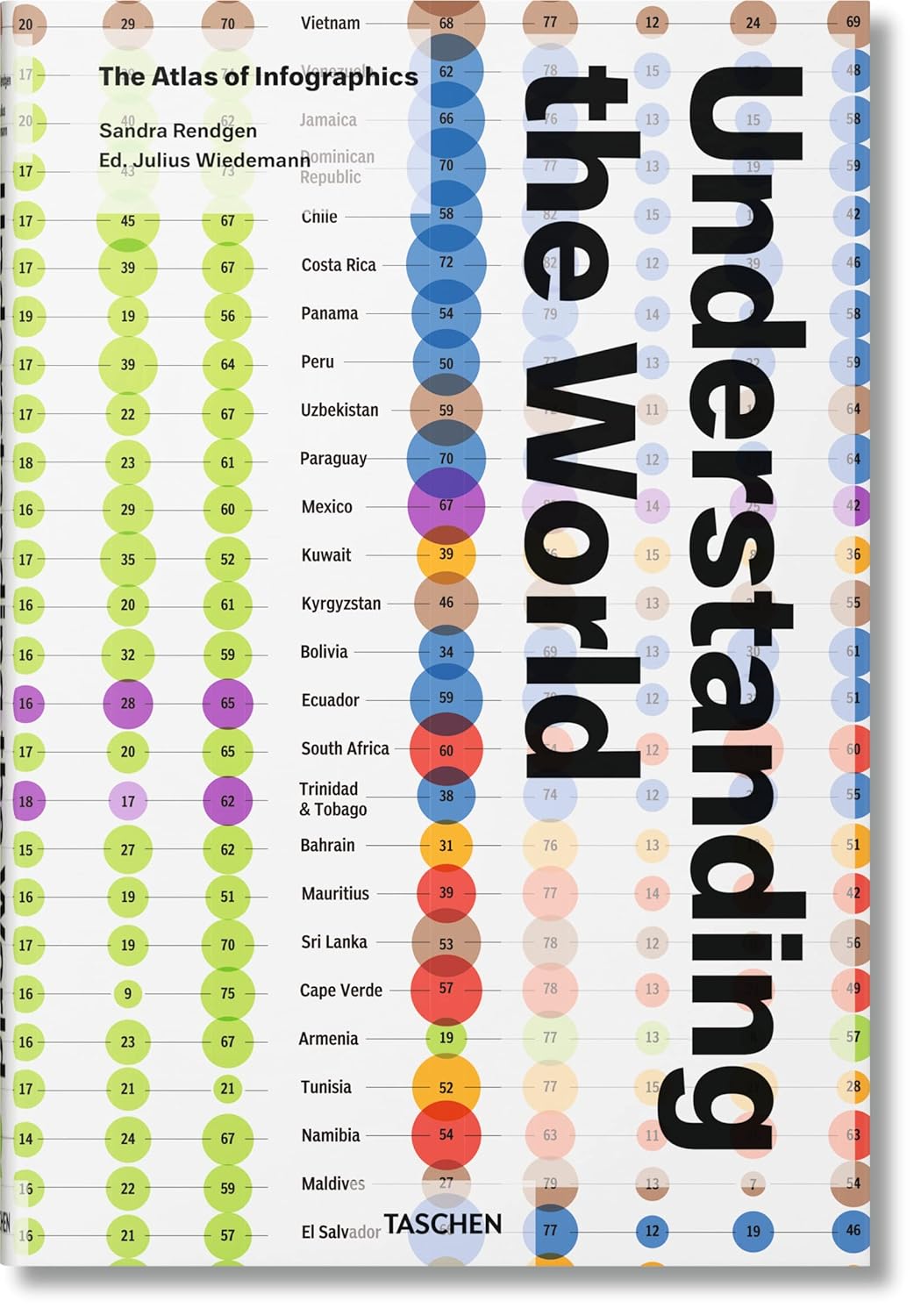
A visual atlas with information graphics that explain our vast and fragile world
Dazzling in scale, diversity and detail, the world never ceases to open our eyes and captivate our curiosity. Ever since the earliest cave paintings, humans have looked at this Earth that is our home and endeavored to understand it.
This expansive visual atlas presents the most exciting, creative and inspiring ways of explaining the world in information graphics. Divided into five chapters, the book covers the environment, technology, economics, society, and culture to reveal some of the Earth’s greatest intricacies in accessible visual form. Featuring more than 280 graphics, reproduced in large scale including seven fold-out spreads, the collection focuses on the 21st century, but also includes historical masterpieces to put our current situation into perspective.
Nigel Holmes introduces the book with an exclusive infographic of his own, while Sandra Rendgen provides an illustrated historical essay to explore how we have studied and interpreted our world over the centuries. With graphics drawn from such sources as Fortune, National Geographic, and The Guardian, this is not only a showcase of outstanding data design, but also a fascinating digest of where and how we live.
Design for Sustainability: A Step-by-Step Approach
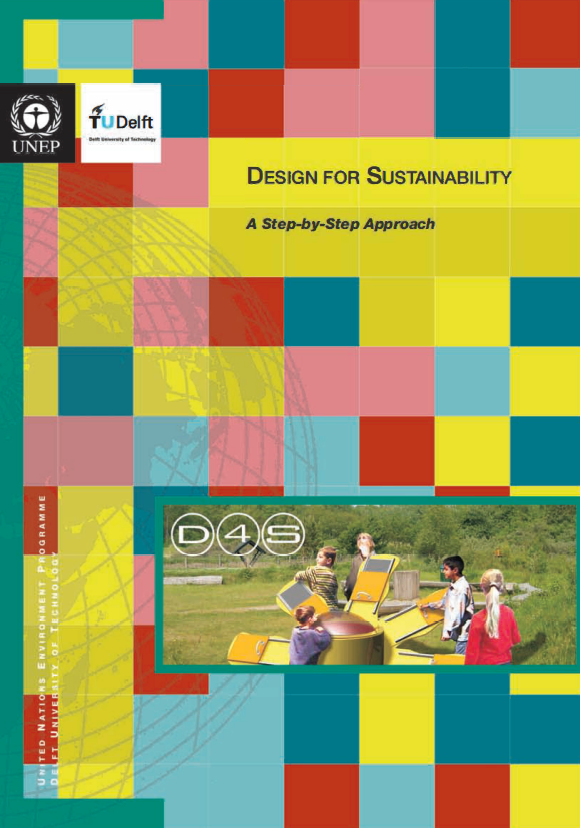
Authors: UNEP, Delft University of Technology, international D4S experts
Design for Sustainability: A Step-by-Step Approach is the latest in the D4S publication series. A global guide for designers and industry, it provides support to ecodesign novices and those looking to further their understanding of the field. The manual focuses on three different design approaches: redesign of existing products, radical sustainable product innovation and new product development. An additional section acts as a comprehensive ‘how-to’ guide for first time users.
Online materials – including case studies, additional design and management tools and worksheets – compliment the print version. The manual is the result of a long term partnership between UNEP, Delft University of Technology and international D4S experts from the Netherlands, Sweden, Italy, France, Germany, Japan, and Australia, with support from UNIDO, the Swedish EPA, and in Went, Germany.
Update: BOA added 5 free video tutorials offered by The Futur
Update: BOA added 5 free video tutorials offered by The Futur

The Benefits of Design Education: Unleashing Creativity and Innovation (Pt.3)
Embracing Technology and Digital Transformation
In today’s digital age, technology plays a pivotal role in design. Design education equips students with the digital skills necessary to leverage technology effectively. From mastering design software to understanding the principles of user experience (UX) and user interface (UI) design, students are prepared to thrive in a digital-first world.
Additionally, design education explores the emerging fields of virtual reality (VR), augmented reality (AR), and artificial intelligence (AI). Students are exposed to the potential of these technologies in enhancing user experiences, creating immersive environments, and solving complex problems. By embracing technology, designers stay at the forefront of innovation and adapt to the ever-evolving digital landscape.
The Economic Impact of Design Education
Design education not only benefits individuals but also contributes significantly to the economy. The design industry, spanning various sectors such as advertising, fashion, and product design, generates substantial revenue worldwide. According to the World Design Organization, the global design industry was valued at $162 billion in 2020, with a projected annual growth rate of 3.5% between 2021 and 2027.
Design-driven companies like Apple, Nike, and Airbnb have achieved tremendous success by prioritising design excellence. These companies understand the value of design in enhancing user experiences, driving brand differentiation, and ultimately increasing market share. Design education is crucial in supplying these companies with a talented pool of designers who contribute to their success.
Benefits of Design Education in the Future

As we step into an ever more intricate and interconnected world, the demand for design education is set to soar. It’s becoming increasingly apparent that creativity, originality, and critical thinking will be indispensable skills in the future job market, as highlighted in the World Economic Forum’s insightful “Future of Jobs” report. This means that design education is pivotal in equipping individuals with these sought-after abilities, positioning them for success in an ever-evolving professional landscape.
However, the impact of design education goes far beyond preparing individuals for future employment. It holds immense potential to tackle pressing societal challenges head-on, ranging from sustainability and social inequality to healthcare. By infusing design principles into various domains, we can develop solutions that serve their intended purpose and promote environmental friendliness and social inclusivity. In essence, design education empowers individuals to become catalysts for positive change within their communities and globally.
Consider the realm of sustainability, for instance. Design education allows individuals to think holistically and consider the environmental impact of their creations. By encouraging sustainable practices, materials, and manufacturing techniques, designers can contribute to a greener, more eco-friendly future. Whether designing energy-efficient buildings, creating innovative renewable energy solutions, or crafting sustainable products, design education plays a pivotal role in shaping a sustainable society.
Social inequality is another area where design education can make a substantial difference. By instilling principles of inclusivity, accessibility, and human-centred design, designers can create solutions that address the needs of marginalised communities and bridge societal gaps. Whether designing public spaces accessible to people with disabilities, developing educational tools that cater to diverse learning styles, or creating affordable housing solutions, design education equips individuals with the skills to promote social equity and inclusion.
Furthermore, design education holds the potential to revolutionise healthcare. Integrating design thinking into healthcare systems and processes can enhance patient experiences, improve healthcare delivery, and even shape medical breakthroughs. Designers can collaborate with healthcare professionals to create intuitive interfaces for medical devices, design patient-centric healthcare facilities that prioritise comfort and well-being, and develop innovative medical technologies that save lives. Design education empowers individuals to use creative problem-solving skills to reimagine and improve healthcare approaches.
Conclusion
Design education empowers individuals with the skills, mindset, and creativity needed to thrive in today’s world. Designers can create meaningful solutions that address societal needs by fostering collaboration, critical thinking, and innovation. As we embrace digital transformation and navigate future challenges, design education will continue to play a pivotal role in shaping a better, more sustainable world. Whether you aspire to become a designer or appreciate the power of design, investing in design education is an investment in our collective future.
So, let us embrace the power of design education and unleash our creative potential to drive innovation, solve complex problems, and create a brighter tomorrow.
Written By Stuart Crawford
GLOBAL FUTURES OF CLIMATE
“Global Futures of Climate” is the first Course in the series on Global Systems designed for individuals and organisations committed to facing global challenges and finding solutions.
Course Content includes 12 Lessons across 3 Modules:
- Climate Change
- Energy Systems
- Ecosystem
There are two lessons in each, examining the challenges, and addressing the alternatives. This self-paced, web-based Course is incredibly well researched to give you a deep understanding of our emerging world and provides a solid basis for you to build your personal, professional, and family futures.
Why you should take this course:
- Learn from Professor Jennifer Gidley’s valuable expertise gained from 30 years’ experience as an international futures consultant at the highest levels of global thinking into the complexity and wide impacts of Climate Crisis, Energy Systems and Ecosystem collapse
- Join an international cohort of futures-ready citizens informed about the real challenges of climate change and how to find solutions
- Be empowered to appreciate and implement the wide range of solutions available to mitigate and adapt to climate crisis; reduce emissions through new energy systems; and rebuild ecosystems through regenerative agriculture and ocean practices
- Boost your career opportunities at a time when most corporations are beginning to realise they need to be climate literate
- Learn how solutions offered align with the UN Sustainable Development Goals (SDGs)
- Receive a Certificate of Completion (Global Futures of Climate)
- Continuing Professional Development (CPD) – 30 Points
To enroll, please contact info@beopenfuture.com
BOA examined the book “Looking at Photographs”
BOA examined the book “Looking at Photographs” authored by Laurent Jullier. It is a new introductory guide to the art of looking at and engaging with photography.
Looking at Photographs
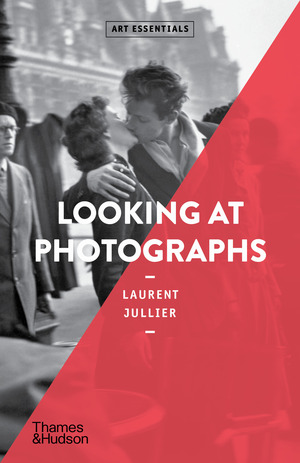
Author: Laurent Jullier
A new introductory guide to the art of looking at and engaging with photography.
Photographs, even the most iconic, often have something seemingly obvious about them. They appear to represent the “real” world and our first instinct is that they can be easily interpreted, which is not always the case with paintings. But this sense of familiarity with photography can lead to ambiguities. Looking at Photographs outlines key approaches to help us understand why a photograph captures our attention and moves us. This introductory reference is structured to help you develop new and more in-depth ways of looking at images, whether as a viewer or practitioner—or just out snapping with your smartphone.
Everything counts in a good photograph, even down to the smallest details. Across seven chapters, visual culture expert Laurent Jullier discusses themes and concepts that are essential to understanding the medium, including photography as a reflection of reality; manipulation and defamiliarization; focus, perspective, and space; time and the moment; identity, portraits, and selfies; and the power of images.
With examples drawn from across the world and throughout the history of photography, from Louis Daguerre to Julia Margaret Cameron, László Moholy-Nagy, Dorothea Lange, Andreas Gursky, Hiroshi Sugimoto, Dayanita Singh, Eva Woolridge, and many others; in addition to a helpful glossary of terms, Looking at Photographs is not just about learning “how to read” photographs, it is about knowing how to ask the right questions when you look at images.
BOA added “The History of Graphic Design 1960-Today” to its “Reading List” section
BOA added “The History of Graphic Design 1960-Today” to its “Reading List” section. This second volume completes a comprehensive journey through the history of graphic design from 1960 to the present.
Update: BOA added 6 new online courses in 3D Design and Animation offered by LinkedIn Learning
Update: BOA added 6 new online courses in 3D Design and Animation offered by LinkedIn Learning